
In an increasingly digitized world, the ability to manipulate and understand numerical representations is paramount. From designing responsive web layouts to processing complex datasets, a firm grasp of mathematical fundamentals, even seemingly simple ones like converting whole numbers into fractions, can significantly enhance problem-solving capabilities. While manual calculation remains the bedrock, modern technology offers powerful tools to simplify, verify, and apply these conversions at scale. This article explores the process of transforming whole numbers into fractions, emphasizing how digital tools and technological understanding can streamline this essential mathematical operation.

Understanding the Foundation: What is a Whole Number and a Fraction?
Before diving into the conversion process, it’s crucial to establish a clear understanding of the components involved. In the realm of digital literacy and software development, precise definitions ensure accurate data handling and algorithm design.
Whole Numbers: The Building Blocks
A whole number is any non-negative integer (0, 1, 2, 3, …). These are the numbers we commonly use for counting discrete items or representing quantities without parts. In computing, whole numbers often represent integers, array indices, pixel counts, or discrete units of data. Their simplicity makes them foundational, yet even these seemingly straightforward numbers can be represented in more complex forms when required by specific applications or calculations.
Fractions: Representing Parts of a Whole
A fraction represents a part of a whole or a ratio between two quantities. It is typically written as a numerator (the top number) over a denominator (the bottom number), separated by a horizontal line (e.g., a/b). The numerator indicates how many parts are being considered, while the denominator indicates the total number of equal parts the whole is divided into. In digital contexts, fractions are crucial for representing proportions, scaling factors, probability, or even resource allocation (e.g., 1/3 of CPU cycles). Understanding how to work with fractions is vital for maintaining precision in computations where integers alone might lose important contextual information.
The Importance of Equivalence
The core idea behind converting a whole number into a fraction, or indeed any fraction manipulation, is the concept of equivalence. Equivalent fractions represent the same value even though they have different numerators and denominators (e.g., 1/2 is equivalent to 2/4). For whole numbers, the conversion process leverages this principle to express an integer as a ratio without altering its fundamental value. This flexibility is essential in programming where data types might need conversion, or in design where scaling needs to maintain proportional integrity.
The Core Conversion Method: Manual Calculation
While technology offers significant advantages, understanding the manual method is key to grasping the underlying logic and for effective troubleshooting when using digital tools. This foundational knowledge empowers users to verify computational outputs and develop more robust algorithms.
The Denominator of One Rule
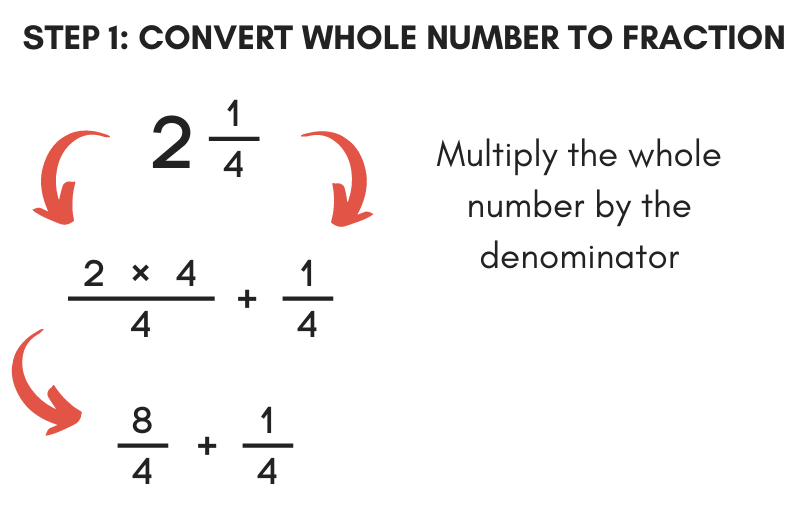
The simplest and most fundamental way to convert any whole number into a fraction is to place the whole number over the number 1. For instance, the whole number 5 can be written as 5/1. This works because any number divided by 1 remains unchanged, thus preserving the original value. The numerator becomes the whole number itself, and the denominator is always 1.
- Example:
- Whole number 7 becomes 7/1
- Whole number 23 becomes 23/1
- Whole number 0 becomes 0/1 (which simplifies to 0)
This rule is universally applicable and serves as the starting point for more complex fractional representations. In programming, this is often the implicit conversion when an integer needs to interact with fractional operations.
Generating Equivalent Fractions
Once a whole number is expressed as a fraction with a denominator of 1, it can then be converted into an equivalent fraction with any desired non-zero denominator. This is achieved by multiplying both the numerator and the denominator by the same non-zero whole number.
-
Formula: If you have a whole number
W, it can be written asW/1. To get an equivalent fraction with a denominatorD, multiply both numerator and denominator byD:(W * D) / (1 * D). -
Example: Let’s convert the whole number 4 into a fraction with a denominator of 3.
- Start with 4/1.
- Multiply both numerator and denominator by 3: (4 * 3) / (1 * 3) = 12/3.
- Thus, 4 is equivalent to 12/3. (Check: 12 divided by 3 is indeed 4).
This technique is invaluable in scenarios like digital image scaling, where you might need to convert pixel dimensions into a common fractional unit for proportional adjustments, or in database operations requiring consistent data formats.
Practical Examples in Digital Contexts
Consider a scenario in web development where you need to divide a container into equal parts. If you have a container of 600 pixels and want to divide it into 4 equal parts, each part is 150 pixels. If you want to represent the whole container (600 pixels) as a fraction of a larger, conceptual unit (say, 100 pixels per unit), the whole number 6 can be represented as 6/1. If you then need to show it as parts of, for example, a 10-part grid, you’d convert 6/1 to 60/10. This intuitive conversion underpins many UI/UX scaling and layout decisions.
Leveraging Technology for Conversion Accuracy and Speed
While the manual method is crucial for understanding, technology provides unparalleled efficiency, accuracy, and scalability for numerical conversions. From simple calculators to complex programming environments, digital tools empower users to perform these operations with ease.
Online Calculators and Web Tools
Numerous free online calculators and web tools are designed specifically for fraction manipulation. Websites like Wolfram Alpha, Mathway, or simple dedicated fraction calculators can instantly convert whole numbers to fractions and perform various operations. Users simply input the whole number and, optionally, the desired denominator, and the tool provides the result. These are excellent for quick checks, educational purposes, or for individuals who don’t frequently perform such calculations. Their accessibility makes them invaluable for a broad audience.
Spreadsheet Software (Excel, Google Sheets) for Bulk Conversions
Spreadsheet applications like Microsoft Excel and Google Sheets are powerful platforms for handling numerical data, including fractions. While they typically display numbers as decimals by default, they can be formatted to display fractions.
To convert a whole number W in a cell (e.g., A1) into a fraction with a denominator D (e.g., 3):
- You can use a simple formula like
=A1&"/"&D. This concatenates the whole number with the slash and the desired denominator, resulting in a text string like “5/3”. - For calculations that treat it as a true fraction, you might need to work with separate numerator and denominator cells or convert to decimals for intermediate calculations.
- Advanced users can create custom number formats or use VBA/Apps Script to automate fraction displays and conversions, making spreadsheets ideal for financial modeling, scientific data analysis, or inventory management where fractional units are common.
Programming Languages (Python, JavaScript) for Automation
For developers and data scientists, programming languages offer the ultimate control and automation for number conversions.
-
Python: Python’s
fractionsmodule is incredibly powerful.from fractions import Fraction whole_number = 7 # Convert to fraction with denominator 1 fraction_obj = Fraction(whole_number, 1) print(f"{whole_number} as a simple fraction: {fraction_obj}") # Output: 7 as a simple fraction: 7/1 # Convert to an equivalent fraction with a specific denominator (e.g., 4) desired_denominator = 4 equivalent_fraction = Fraction(whole_number * desired_denominator, desired_denominator) print(f"{whole_number} as a fraction with denominator {desired_denominator}: {equivalent_fraction}") # Output: 7 as a fraction with denominator 4: 28/4This demonstrates how easily whole numbers can be represented and manipulated as fractions programmatically, which is crucial for precise calculations in scientific computing, machine learning, or financial algorithms.
-
JavaScript: In JavaScript, direct fraction objects are not built-in, but you can easily implement this logic:
function wholeNumberToFraction(wholeNum, denominator = 1) {
    if (denominator === 0) {
        throw new Error("Denominator cannot be zero.");
    }
    return `${wholeNum * denominator}/${denominator}`;
}

console.log(wholeNumberToFraction(5)); // Output: "5/1"
console.log(wholeNumberToFraction(5, 2)); // Output: "10/2"
This shows how custom functions can be written to handle fraction representations, especially useful in web applications requiring dynamic display of numerical data or user input validation.
Educational Apps and Interactive Platforms
Many educational apps and interactive platforms (like Khan Academy, Prodigy, or even specialized math apps) incorporate tools for fraction conversion. These platforms often use gamification and visual aids to help users understand the concept intuitively, providing immediate feedback and step-by-step guidance. They are invaluable for learners of all ages to practice and master these mathematical skills in an engaging digital environment.
Applications in the Digital World: Why This Matters
The ability to convert whole numbers into fractions and understand their interplay is not merely an academic exercise; it has tangible applications across various technological domains.
Data Representation and Storage
In computer science, data types and precision are critical. While integers are efficient for whole numbers, representing ratios, proportions, or values that are not perfectly divisible often requires fractional or floating-point representations. Understanding the conversion helps in choosing appropriate data structures and avoiding loss of precision, especially in databases or data streams where exact values are paramount. For instance, representing stock shares or ownership stakes might involve fractions.
Algorithm Design and Software Development
Many algorithms, particularly in graphics, signal processing, or numerical analysis, rely on fractional mathematics. From calculating aspect ratios for images (e.g., 16/9 for widescreen displays) to implementing precise scaling factors in animations or scientific simulations, converting whole numbers to fractions is a foundational step. Developers frequently use this understanding to write code that handles division, ratios, and percentages accurately, preventing common rounding errors that can plague floating-point arithmetic.
Digital Design and Proportions
Graphic designers, UI/UX professionals, and architects frequently deal with proportions and scaling. Whether it’s ensuring an image scales correctly across different screen sizes, maintaining consistent font sizes relative to container widths, or designing grids with equal subdivisions, the underlying math often involves converting whole numbers (like pixel dimensions or relative units) into fractional relationships to achieve fluid and responsive designs.
Financial Modeling and Tools
Although finance is a separate category, the mathematical basis for financial tools heavily relies on number conversions. Financial models, investment analysis software, and budgeting applications frequently deal with percentages, interest rates, and proportional allocations. Converting whole numbers (e.g., the number of shares) into fractions (e.g., representing a portion of total outstanding shares) is a routine operation to ensure accuracy in reports and forecasts.
Best Practices and Troubleshooting
Even with powerful digital tools, a strategic approach ensures accuracy and efficiency in whole number to fraction conversions.
Verifying Your Conversions
Always double-check your conversions, especially when performing them manually or setting up new formulas in spreadsheets or code. For fractions, you can always divide the numerator by the denominator to get the original whole number (or its decimal equivalent). Digital tools offer speed, but critical thinking and verification remain essential.
Understanding Common Pitfalls
One common pitfall is misunderstanding the context for a desired denominator. Ensure that the denominator chosen makes logical sense for the problem you are solving. Another pitfall in programming is floating-point inaccuracy when converting between fractions and decimals repeatedly; using dedicated fraction libraries (like Python’s fractions module) can mitigate this.
When to Use Fractions vs. Decimals
The choice between fractions and decimals often depends on the specific application. Fractions are ideal when precise representation of exact ratios is needed, such as in ingredient lists, musical notation, or specific engineering tolerances. Decimals are generally preferred for ease of comparison, calculation, and often for financial figures (though even here, underlying fractional understanding can be vital). In computing, the decision influences data type selection and potential for rounding errors.
Conclusion
Converting a whole number into a fraction is a fundamental mathematical skill that gains significant power and relevance when integrated with technology. From basic online calculators to sophisticated programming environments, digital tools empower individuals to perform these conversions with speed, accuracy, and automation. By understanding both the manual method and how technology facilitates it, users across various tech domains—from web development and data science to digital design and financial modeling—can enhance their precision, efficiency, and problem-solving capabilities in an increasingly number-driven world. Mastery of this seemingly simple concept unlocks a deeper understanding of how numbers interact and are represented in the digital landscape.
aViewFromTheCave is a participant in the Amazon Services LLC Associates Program, an affiliate advertising program designed to provide a means for sites to earn advertising fees by advertising and linking to Amazon.com. Amazon, the Amazon logo, AmazonSupply, and the AmazonSupply logo are trademarks of Amazon.com, Inc. or its affiliates. As an Amazon Associate we earn affiliate commissions from qualifying purchases.