
The question “Who controls the stock market?” is one that has captivated investors, economists, and casual observers for centuries. It conjures images of powerful cabals, clandestine meetings, and puppet masters pulling the strings of global finance. Yet, the reality is far more complex, nuanced, and frankly, far more democratic than any single entity could ever manage. The stock market is not a singular, monolithic machine directed by a hidden hand; rather, it is a vast, intricate, and ever-evolving ecosystem influenced by a multitude of participants, forces, and systems, making its “control” an illusion. Understanding this decentralization is fundamental to comprehending how financial markets truly operate and how wealth is generated, preserved, and lost within them.
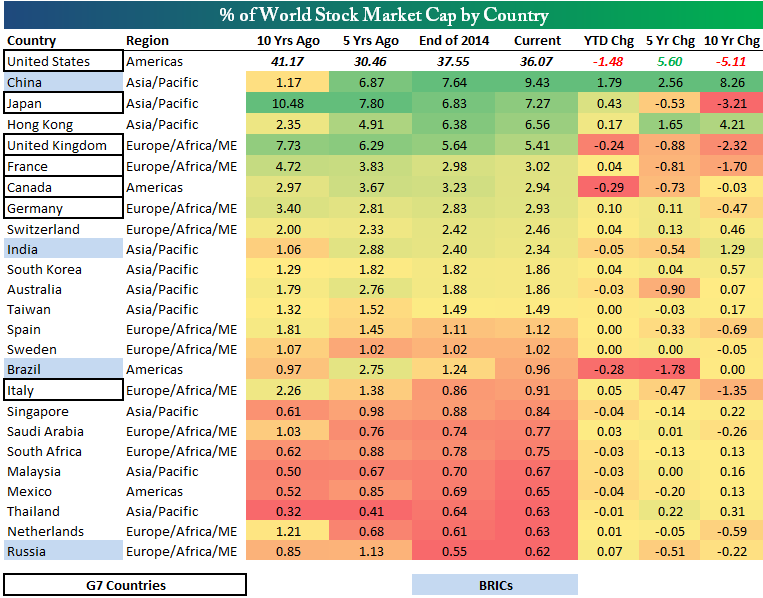
This article delves into the intricate web of power and influence that shapes the global stock market, moving beyond simplistic notions of control to reveal the true architects of its movements. We will explore the major players, the underlying economic and technological forces, the critical role of regulatory bodies, and ultimately, why the concept of singular control is a misnomer in such a dynamic environment.
Dissecting the Myth of Centralized Control
The idea that a handful of individuals or institutions “control” the stock market is a persistent misconception, often fueled by sensationalism or a misunderstanding of market mechanics. While certain entities undeniably wield immense influence, the sheer scale and complexity of global financial markets make absolute control an impossibility.
Dispelling Conspiracy Theories: Why No Single Entity Dominates
The notion of a secret society or a powerful financial elite dictating market movements is a captivating narrative, but it fundamentally misunderstands the nature of modern finance. The global stock market encompasses trillions of dollars in transactions daily, involving millions of participants from every corner of the world. No single bank, no government, and certainly no individual possesses the capital, information, or coordinated power to unilaterally command such a vast and dynamic system. Attempts to manipulate markets on a significant, sustained scale are not only illegal but also incredibly difficult to execute successfully without being detected and counteracted by opposing forces. The market’s immense liquidity and the diversity of its participants act as natural checks against such centralized control.
The Market as a Decentralized Network: Millions of Participants
Instead of a top-down hierarchy, envision the stock market as a colossal, decentralized network. At any given moment, millions of individual investors, institutional funds, corporations, and algorithms are making buy and sell decisions based on a myriad of factors. These decisions, though often small in isolation, collectively generate the enormous volume and liquidity that define market activity. Each participant, from the retail investor buying a few shares to the multi-billion-dollar hedge fund executing complex strategies, contributes to the continuous tug-of-war between supply and demand that ultimately determines prices. This constant interplay of diverse interests and motivations ensures that no single point of failure or control can fully dictate the market’s trajectory. It is the aggregate behavior, often emergent and unpredictable, that truly shapes the market’s path.
Key Architects of Market Influence: Who Holds the Power?
While no one controls the market, significant entities certainly exert considerable influence. These are the major players whose actions, decisions, and sheer financial weight can move prices, create trends, and reshape market sentiment.
Institutional Investors: The Titans of Capital
The undisputed heavyweights of the stock market are institutional investors. These include pension funds, mutual funds, hedge funds, sovereign wealth funds, and endowment funds, managing trillions of dollars on behalf of their clients and beneficiaries. When a large institutional investor decides to buy or sell a significant block of shares in a particular company, or even an entire sector, the sheer volume of their trades can dramatically impact prices. Their investment decisions are meticulously researched, often setting trends that other market participants follow. Furthermore, their long-term investment horizons and diversified portfolios mean they have a vested interest in market stability and growth, making their collective actions a powerful force for both opportunity and volatility.
Central Banks and Governments: Architects of Macro-Economic Policy
Central banks, such as the U.S. Federal Reserve, the European Central Bank, and the Bank of Japan, wield immense power over financial markets through their monetary policy tools. Decisions on interest rates, quantitative easing (buying bonds), or quantitative tightening (selling bonds) directly influence the cost of borrowing, corporate profits, and investor appetite for risk. Lower interest rates, for instance, can make stocks more attractive relative to bonds, driving up equity valuations. Governments also play a crucial role through fiscal policies (taxation, spending), regulatory frameworks (security laws, insider trading rules), and geopolitical decisions. A new trade agreement, a change in corporate tax rates, or even political instability can send shockwaves through the market, illustrating the profound influence these entities possess over the broader economic environment in which stocks operate.
Large Corporations: The Market’s Cornerstone
The very companies whose shares are traded on the stock market are themselves powerful influencers. Earnings reports, guidance statements, mergers and acquisitions (M&A) announcements, share buyback programs, and dividend policies can significantly impact their own stock price and, if the company is large enough, even move broader market indices. For example, a surprise earnings miss from a tech giant can drag down the entire technology sector. Moreover, the aggregate health and innovation of these corporations drive economic growth, which is a fundamental underpinning of market performance. Their strategic decisions, technological breakthroughs, and financial performance form the bedrock upon which market valuations are built.
The Invisible Hands: Economic, Geopolitical, and Technological Forces
Beyond the identifiable players, several pervasive, often less tangible forces exert immense influence on stock market movements, acting as powerful “invisible hands” that guide its trajectory.

Economic Fundamentals: The Unyielding Gravity
The most fundamental forces driving the stock market are economic principles. Gross Domestic Product (GDP) growth, inflation rates, employment figures, consumer confidence, and corporate earnings are the bedrock upon which market valuations are built. A strong economy typically translates to higher corporate profits, which in turn fuels investor optimism and drives up stock prices. Conversely, economic slowdowns, rising inflation, or high unemployment can erode confidence and lead to market downturns. These macro-economic indicators provide a constant gravitational pull, ensuring that market valuations, over the long term, tend to reflect underlying economic reality, even amidst short-term volatility. Investors constantly analyze these data points to form their outlooks and adjust their portfolios accordingly.
Geopolitical Events: Unpredictable Shocks and Ripples
Global politics, international relations, and unforeseen crises can trigger rapid and dramatic shifts in market sentiment and prices. A war in a critical region, a major trade dispute between economic superpowers, political instability in a key market, or even a global pandemic can introduce immense uncertainty, leading to investor panic and market sell-offs. Conversely, peace treaties, diplomatic breakthroughs, or successful containment of global crises can spur rallies. These geopolitical events are often unpredictable and outside the control of any single market participant, yet their impact can be profound and far-reaching, reminding us that the stock market is deeply interconnected with the broader global landscape.
Technological Advancements: The Speed and Precision of Modern Trading
Technology has revolutionized the stock market, fundamentally changing how trades are executed and how information is disseminated. High-frequency trading (HFT) firms, employing sophisticated algorithms and powerful computers, execute millions of trades in fractions of a second, capitalizing on tiny price discrepancies. While HFT can provide liquidity, it can also amplify market movements during periods of volatility. Furthermore, the rapid spread of information through digital channels – from financial news sites to social media – means that market-moving news can instantly reach a global audience, leading to faster reactions and more synchronized market movements. AI and machine learning are also increasingly used for predictive analysis and automated trading, adding another layer of complexity and speed to market dynamics. These technological forces are not “controlled” by anyone but rather are inherent drivers of the modern market’s efficiency and occasional frenzy.
Safeguarding the System: The Role of Regulation and Oversight
Given the immense capital involved and the potential for abuse, regulatory bodies play a critical role in establishing rules, enforcing fairness, and protecting investors. They don’t control the market’s direction, but they profoundly influence its structure and integrity.
Government Agencies: Guardians of Market Integrity
In the United States, the Securities and Exchange Commission (SEC) is the primary federal agency responsible for regulating the securities industry, protecting investors, and maintaining fair and orderly functioning markets. The SEC mandates transparency, requiring public companies to disclose financial information, and enforces rules against fraud, insider trading, and market manipulation. Similar agencies exist in other countries, such as the Financial Conduct Authority (FCA) in the UK or the China Securities Regulatory Commission (CSRC). These bodies are crucial for building investor confidence and preventing the kind of systemic abuses that could undermine the entire financial system. While they don’t dictate stock prices, their existence ensures a level playing field and penalizes those who attempt to game the system.
Self-Regulatory Organizations (SROs) and Exchanges
Alongside government agencies, Self-Regulatory Organizations (SROs) like FINRA (Financial Industry Regulatory Authority) in the U.S., along with the stock exchanges themselves (e.g., New York Stock Exchange, NASDAQ), establish and enforce rules for their members. They are responsible for overseeing the conduct of brokerage firms and their registered representatives, ensuring ethical practices and compliance with federal securities laws. Stock exchanges set listing requirements for companies, manage trading rules, and provide the infrastructure for market operations. Their role is to ensure transparent price discovery, efficient trade execution, and fair access for all participants, thereby fostering trust in the market’s mechanisms.
Importance of Transparency and Investor Protection
The collective efforts of regulators and SROs underscore the paramount importance of transparency and investor protection. By mandating disclosure, prosecuting fraud, and setting standards for conduct, these entities aim to prevent market manipulation and ensure that all investors have access to the information necessary to make informed decisions. While no regulatory framework is perfect, and loopholes or new forms of manipulation can emerge, their continuous vigilance is a fundamental pillar preventing any single entity or group from gaining undue, illicit control over market outcomes. They help ensure the market functions as a meritocracy of ideas and capital, not a rigged game.
Navigating the Unpredictable: Can the Market Be Truly Controlled?
Ultimately, the stock market’s inherent complexity and the interplay of myriad forces make it inherently resistant to singular control. It is a system that thrives on decentralized decision-making and adapts constantly to new information.
The Adaptive Market Hypothesis: Efficiency and Unpredictability
The Adaptive Market Hypothesis, proposed by Andrew Lo, suggests that markets are not always perfectly rational or irrational but rather adapt over time based on the evolutionary pressures of competition and arbitrage. This means that while periods of efficiency and predictable patterns may emerge, they are constantly challenged and eroded by participants seeking to exploit them. As new information, technologies, and strategies arise, the market adapts, making it incredibly difficult for any single entity to maintain a consistent edge or exert lasting control. The constant struggle for information advantage and profit ensures that the market remains a dynamic, often unpredictable, arena where even the most powerful players face limits to their influence.
The Role of Information Asymmetry and Disruption
Information is the lifeblood of the stock market. While regulators strive for transparency, information asymmetry — where some parties have more or better information than others — inevitably exists. However, in the age of instant communication and big data, prolonged or exclusive control over market-moving information is increasingly difficult. Disruptive events, whether technological innovations, geopolitical shocks, or unexpected corporate developments, can instantly render previous information or strategies obsolete. These disruptions are forces of chaos and creation, constantly reordering the market and preventing any fixed center of control from taking hold. The market’s ability to price in new information, even if imperfectly, is a testament to its decentralized intelligence.

Embracing Complexity: A Sum of Its Parts
The stock market is a vibrant, chaotic, and self-organizing system that is far greater than the sum of its individual parts. It is a reflection of collective human economic activity, aspirations, fears, and innovations. From the decisions of individual day traders to the vast portfolios of sovereign wealth funds, from the pronouncements of central bankers to the subtle shifts in consumer sentiment, every element contributes to its ebb and flow. To ask “who controls the stock market” is to misunderstand its fundamental nature. It is controlled by no one, yet influenced by everyone and everything that touches the global economy.
In conclusion, the stock market is not a monolith under the thumb of a puppet master, but a sprawling, interconnected organism driven by a myriad of forces and participants. While institutional investors, central banks, governments, and corporations exert significant influence, their power is always constrained by economic fundamentals, geopolitical realities, technological advancements, and the collective wisdom (and folly) of millions of other market players. Regulatory bodies strive to maintain fairness and transparency, but even they do not control the market’s direction. Instead of control, we observe a continuous interplay of influence, adaptation, and unpredictable dynamics. Understanding this intricate dance is key to demystifying the stock market and appreciating its essential role in the global economy.
aViewFromTheCave is a participant in the Amazon Services LLC Associates Program, an affiliate advertising program designed to provide a means for sites to earn advertising fees by advertising and linking to Amazon.com. Amazon, the Amazon logo, AmazonSupply, and the AmazonSupply logo are trademarks of Amazon.com, Inc. or its affiliates. As an Amazon Associate we earn affiliate commissions from qualifying purchases.