
In an era increasingly defined by centralized institutions and digital intermediaries, Bitcoin emerged as a radical experiment: a peer-to-peer electronic cash system devoid of a central authority. The provocative question, “Who controls Bitcoin?” cuts to the very heart of its financial philosophy and investment thesis. For those navigating the world of personal finance, investing, and business finance, understanding this unique control mechanism is not merely an academic exercise; it’s fundamental to grasping Bitcoin’s value proposition, risks, and its potential role in a diversified financial portfolio. Bitcoin’s architecture eschews traditional hierarchies, distributing power across a global network, a design choice with profound implications for its stability, security, and long-term financial viability.
The Illusion of Central Control: Bitcoin’s Core Philosophy
At first glance, the concept of a valuable asset without a discernible owner or governing body seems counter-intuitive, even alarming, to those accustomed to traditional financial systems. Banks have boards, companies have CEOs, and currencies have central banks. Bitcoin, however, intentionally breaks this mold, operating on principles that challenge the very foundations of centralized financial control. This design choice is not arbitrary; it’s a deliberate philosophical stance against the vulnerabilities inherent in systems susceptible to single points of failure, censorship, or manipulation by a concentrated power.
Genesis of Decentralization: A Response to Centralized Finance
Bitcoin was conceived in the aftermath of the 2008 global financial crisis, a period that exposed the fragilities and potential abuses of a highly centralized financial system. Its pseudonymous creator, Satoshi Nakamoto, articulated a vision for a “new electronic cash system that’s fully peer-to-peer, with no trusted third party.” This foundational principle meant creating a currency where transactions could occur directly between users without the need for banks or payment processors to verify or facilitate them. The implicit trust required in traditional finance—trust in governments not to debase currency, trust in banks not to mismanage funds—is replaced in Bitcoin by cryptographic proof and a transparent, immutable ledger. This shift is not just technological; it’s a paradigm change for how value is exchanged and stored, offering individuals a degree of financial sovereignty previously unattainable.
The Distributed Ledger: A Network of Equal Participants
The backbone of Bitcoin’s decentralized control is its blockchain—a distributed public ledger. Unlike a conventional database controlled by a single entity, the Bitcoin blockchain is maintained and verified by a vast network of independent participants. Every transaction ever made on the network is recorded on this ledger, which is then replicated across thousands of computers globally. This distribution means no single party holds the definitive record or has the power to alter it unilaterally. If one copy of the ledger were compromised, thousands of others would remain intact, ensuring the integrity and continuity of the financial history. This redundancy and transparency are crucial for establishing trust in a system without a central guarantor, ensuring that every participant can independently verify the network’s state and validate transactions, thereby fostering a robust and resilient financial ecosystem.
Pillars of Decentralization: How Control is Dispersed
While no single entity “controls” Bitcoin in the traditional sense, its operation and evolution are guided by a complex interplay of various stakeholder groups, each playing a critical, yet decentralized, role. Understanding these groups is essential for investors and financial professionals to assess the network’s governance, resilience, and potential for future development. The distributed nature of control means that no one group can unilaterally dictate the terms or direction of the network, demanding consensus and collaboration for significant changes.
Miners: The Proof-of-Work Guardians
Bitcoin miners are perhaps the most visible and often misunderstood contributors to the network’s operation. These entities, ranging from individual hobbyists to large-scale industrial operations, dedicate significant computational power (and electricity) to solve complex cryptographic puzzles. The first miner to solve a puzzle gets to add the next “block” of verified transactions to the blockchain and is rewarded with newly minted Bitcoin (the block reward) and transaction fees. This “Proof-of-Work” mechanism serves two critical financial functions: it secures the network by making it economically infeasible for any single entity to maliciously alter the ledger (as it would require controlling over 50% of the network’s total computational power), and it creates new Bitcoin, managing its supply according to a predetermined schedule. While miners wield significant influence through their validation of transactions and their role in securing the network, they do not dictate the rules; they merely enforce them. Their financial incentive is directly tied to maintaining the integrity and security of the network.
Nodes: Verifiers of Truth
Beyond miners, a global network of “nodes” forms the bedrock of Bitcoin’s decentralized verification system. A full node is a computer running Bitcoin software that downloads and validates every transaction and block, ensuring they adhere to the network’s established rules. These nodes don’t create new blocks or earn rewards like miners, but their existence is paramount. They independently verify the legitimacy of transactions, check for double-spending, and ensure that miners are playing by the rules. If a miner attempts to include an invalid transaction, full nodes will reject it. This distributed verification process prevents any single miner or group of miners from gaining undue control over the network’s financial history. For investors, the presence of a vast, geographically dispersed network of full nodes is a powerful indicator of Bitcoin’s censorship resistance and the integrity of its financial ledger.
Developers: Stewards of the Protocol
While developers don’t “control” Bitcoin in an executive capacity, their role in maintaining and evolving the underlying software protocol is undeniably significant. A core group of open-source developers, largely contributing voluntarily, propose, review, and implement changes to Bitcoin’s code. These changes often relate to security enhancements, efficiency improvements, or scaling solutions. However, any proposed change must undergo rigorous peer review and ultimately gain broad consensus from the wider Bitcoin community, including miners, nodes, and users, to be adopted. Without such consensus, a “hard fork” could occur, splitting the network into two incompatible versions, a financially disruptive event that all stakeholders generally seek to avoid. This consensus-driven development model underscores Bitcoin’s decentralized governance, ensuring that no small group of developers can arbitrarily alter the monetary policy or fundamental characteristics of the asset.
Users and Holders: The Ultimate Arbiters of Value
Ultimately, the power to define Bitcoin’s value and influence its future direction resides with its vast base of users and holders. If the majority of users and businesses decide to adopt a specific version of the software or reject proposed changes, that collective choice dictates the network’s path. An investment in Bitcoin is an investment in the collective belief in its decentralized principles and its long-term utility as a financial asset. Should a significant portion of holders lose faith in the network’s integrity, security, or its ability to resist centralization, its financial value would inevitably erode. This distributed power of choice makes Bitcoin uniquely resilient to top-down control and reinforces its nature as a truly market-driven, community-governed financial instrument.
The Economic Implications of a Leaderless Currency
Bitcoin’s leaderless nature is not merely an interesting technical detail; it carries profound economic implications that distinguish it from traditional currencies and assets. For personal finance, investing, and business finance, these implications translate into unique opportunities and considerations. The absence of a central bank, government, or corporation influencing its supply or policies fundamentally alters its risk profile and potential as a store of value.
Resilience Against Censorship and Seizure

One of the most compelling economic advantages of Bitcoin’s decentralization is its inherent resistance to censorship and seizure. In traditional finance, governments can freeze bank accounts, sanction individuals, or restrict cross-border payments. Bitcoin transactions, once confirmed on the blockchain, are irreversible and not subject to the whims of any single authority. This makes it a powerful tool for individuals in politically unstable regions, for those seeking to protect their wealth from government overreach, or for businesses operating in jurisdictions with unreliable banking systems. For investors, this translates into a unique hedge against geopolitical risk and a mechanism for financial autonomy, offering a parallel financial system outside the direct control of nation-states.
Supply Scarcity and Deflationary Pressure
Unlike fiat currencies, which can be printed ad infinitum by central banks, Bitcoin has a hard-capped supply of 21 million coins. This fixed supply, combined with a decreasing rate of new coin issuance (halving every four years), creates an inherently deflationary monetary policy. In an era where central banks globally are engaged in quantitative easing and expanding money supplies, Bitcoin offers a stark alternative: a predictable, transparent, and immutable supply schedule. This scarcity is a cornerstone of Bitcoin’s “digital gold” narrative, positioning it as a potential hedge against inflation and a superior store of value over the long term. For sophisticated investors and financial planners, understanding this fundamental supply-side dynamic is crucial for evaluating Bitcoin’s role in inflation hedging and asset diversification.
Accessibility and Financial Inclusion
Bitcoin’s decentralized nature also champions financial inclusion. Anyone with an internet connection can access Bitcoin, send or receive payments, and store value, regardless of their nationality, socioeconomic status, or access to traditional banking services. This open and permissionless system offers a pathway to financial participation for the “unbanked” or “underbanked” populations globally. For businesses, especially those engaging in international trade or serving diverse customer bases, Bitcoin offers a cost-effective and efficient alternative to traditional remittance and cross-border payment systems, bypassing costly intermediaries and lengthy settlement times. This democratizing effect on finance has significant implications for global economic development and individual empowerment.
The Challenges and Nuances of Distributed Governance
While decentralization offers numerous benefits, it also presents unique challenges, particularly in governance and adaptability. The absence of a central decision-making body means that consensus-building can be slow and arduous. For financial institutions and investors, understanding these nuances is critical for assessing Bitcoin’s long-term viability and the potential for disruption.
Protocol Development and Forks: The Balancing Act
The decentralized development process, while robust, can be slow. Significant upgrades or changes to the protocol, such as increasing block size or implementing new features, require broad agreement among developers, miners, nodes, and users. Disagreements can lead to “forks,” where the blockchain splits into two separate chains. A “hard fork,” if not universally adopted, can create two distinct cryptocurrencies, as seen with Bitcoin Cash. While forks demonstrate the network’s resistance to unilateral control, they also introduce uncertainty and potential market volatility. For investors, the risk of contentious forks is a factor to consider, as it can temporarily divide the community and dilute market liquidity. The need for robust consensus mechanisms is a constant tension in Bitcoin’s decentralized evolution.
Concentration of Mining Power: A Potential Vulnerability
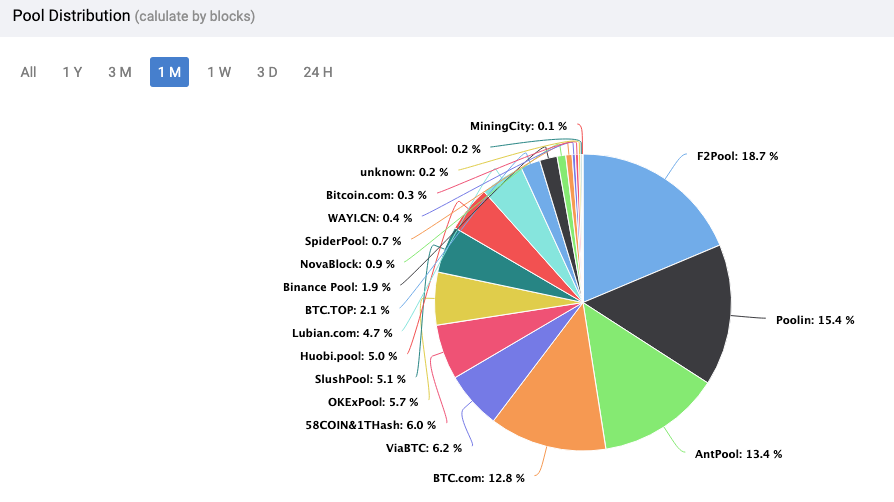
Despite its decentralized design, there remains a degree of concern regarding the concentration of mining power. If a small number of mining pools or entities were to control a majority (e.g., over 50%) of the network’s total hashing power, they could theoretically attempt to execute a “51% attack,” enabling them to prevent new transactions from being confirmed, reverse their own transactions, or cause other disruptions. While such an attack would be incredibly expensive and likely self-defeating (as it would erode trust in Bitcoin and thus the value of their own holdings), it remains a theoretical vulnerability. Monitoring the distribution of mining power is an important aspect for financial analysts evaluating Bitcoin’s security posture and the robustness of its decentralized consensus mechanism.
Regulatory Scrutiny and External Influence
While Bitcoin is decentralized, its interaction with the traditional financial world is subject to governmental and regulatory oversight. Exchanges, custodial services, and businesses dealing with Bitcoin often operate within existing legal frameworks, requiring KYC (Know Your Customer) and AML (Anti-Money Laundering) compliance. Governments can influence Bitcoin’s accessibility and adoption through legislation, taxation, and restrictions on its use. While these external pressures don’t directly “control” the Bitcoin protocol itself, they can significantly impact its usability, liquidity, and overall market dynamics. For businesses and investors, navigating this evolving regulatory landscape is a key component of managing risk associated with Bitcoin.
Investing in Decentralization: Bitcoin’s Value Proposition
For investors, understanding who (or what) controls Bitcoin is paramount to assessing its unique value proposition within a diversified financial strategy. Bitcoin isn’t just another tech stock or commodity; its decentralized, leaderless nature underpins its claims as a revolutionary financial asset.
A Hedge Against Inflation and Monetary Policy
In an economic climate characterized by unprecedented fiscal spending and expansionary monetary policies, many investors are seeking hedges against inflation and currency debasement. Bitcoin’s fixed supply and predictable issuance schedule position it as a potential store of value similar to gold, but with the added advantages of digital native properties like divisibility, portability, and censorship resistance. Its independence from central bank policy offers a significant draw for those wary of the erosion of purchasing power in traditional fiat currencies. For financial advisors, Bitcoin represents a new class of uncorrelated asset that can potentially enhance portfolio resilience against macroeconomic uncertainties.
Digital Gold: A New Store of Value
The “digital gold” narrative is a direct consequence of Bitcoin’s decentralized control and finite supply. Like gold, it is scarce, durable, and universally recognized as valuable. Unlike gold, it is digital, easily transferable across borders, and verifiable without physical inspection. This makes it an appealing alternative or complement to traditional safe-haven assets, particularly for younger generations of investors. Its inherent independence from sovereign entities also appeals to those seeking an asset that cannot be inflated away or confiscated by governments, offering a novel form of financial security in an increasingly interconnected and volatile world.
The Future of Cross-Border Finance
Bitcoin’s peer-to-peer nature and global accessibility make it a powerful tool for revolutionizing cross-border finance. For individuals sending remittances, businesses conducting international trade, or those seeking financial refuge across borders, Bitcoin offers a faster, cheaper, and more transparent alternative to legacy banking systems. Its independence from correspondent banks and traditional SWIFT networks reduces friction and costs, embodying a truly global financial infrastructure. This potential to disrupt the multi-trillion-dollar remittance and international payments industry represents a significant long-term growth driver and a compelling investment thesis for those looking towards the future of global commerce and finance.
In conclusion, the question “Who controls Bitcoin?” reveals a sophisticated system of distributed power rather than a centralized authority. Miners, nodes, developers, and users each play a crucial role in maintaining its integrity and guiding its evolution through a delicate balance of economic incentives and collective consensus. For investors, understanding this decentralized paradigm is not just about comprehending a technological marvel, but about grasping the profound financial implications of a truly leaderless currency—its resilience, its scarcity, its accessibility, and its potential as a transformative force in personal finance, global investing, and the future of money itself.
aViewFromTheCave is a participant in the Amazon Services LLC Associates Program, an affiliate advertising program designed to provide a means for sites to earn advertising fees by advertising and linking to Amazon.com. Amazon, the Amazon logo, AmazonSupply, and the AmazonSupply logo are trademarks of Amazon.com, Inc. or its affiliates. As an Amazon Associate we earn affiliate commissions from qualifying purchases.