
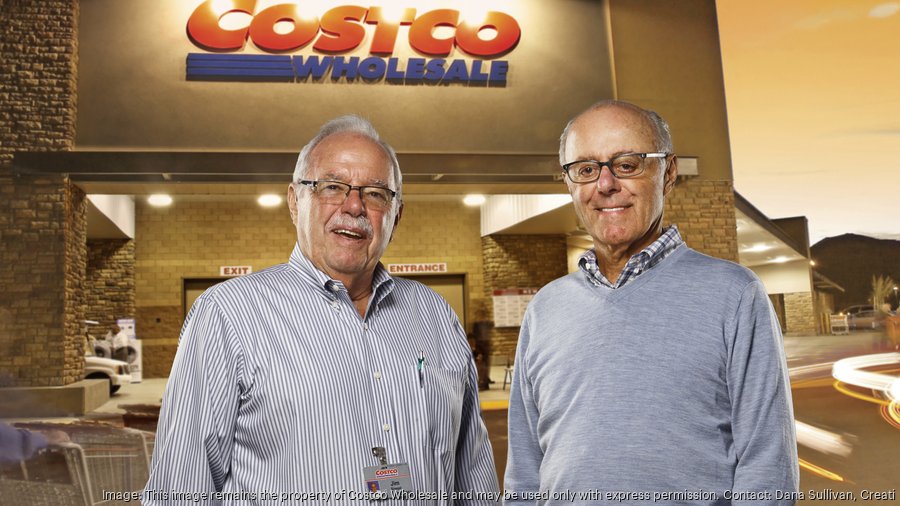
Costco Wholesale Corporation stands as an undisputed titan in the global retail landscape, a ubiquitous presence characterized by its sprawling warehouses, bulk offerings, and fiercely loyal membership base. But behind this monumental brand, which consistently ranks among the most valuable and trusted worldwide, lie the pioneering visions and strategic acumen of two key individuals: James Sinegal and Jeffrey Brotman. Their collaboration, combined with the foundational insights gleaned from an earlier retail innovator, meticulously crafted the corporate identity and operational philosophy that define Costco today. Understanding their contributions is not merely an exercise in corporate history; it is an essential deep dive into the very genesis of a brand built on value, efficiency, and an unwavering commitment to both its members and its employees.

The story of Costco’s founders is a compelling case study in brand development, illustrating how core principles established at inception can dictate a company’s long-term trajectory, market positioning, and enduring brand equity. It’s a narrative of strategic foresight, operational excellence, and the powerful integration of diverse talents to forge a retail model that not only disrupted its industry but also built a brand recognized for its distinct value proposition and corporate integrity.
The Genesis of a Retail Giant: James Sinegal and Jeffrey Brotman
The formation of Costco in 1983 was not an overnight phenomenon but rather the culmination of extensive experience, strategic partnerships, and a clear vision to redefine the wholesale retail experience. At its heart were two men, each bringing a distinct yet complementary set of skills to the table, whose combined efforts laid the indelible groundwork for what would become a global brand powerhouse.
The Visionary Behind the Operations: James Sinegal
James Sinegal, often lauded as the operational mastermind and moral compass of Costco, brought decades of hands-on retail experience to the venture. His journey through the retail world began with FedMart, a discount department store chain, where he was mentored by the legendary Sol Price, widely credited with inventing the membership warehouse club concept. Sinegal then spent several years at Price Club, Price’s next groundbreaking endeavor, further honing his understanding of high-volume, low-margin retail.
Sinegal’s operational philosophy, which became deeply embedded in Costco’s brand DNA, was revolutionary for its time and remains a cornerstone of its success. He advocated for a business model centered on lean operations, ruthless cost control, and a relentless focus on providing unparalleled value to the customer. This wasn’t merely about selling cheap goods; it was about offering high-quality, often branded or premium, products at prices significantly below traditional retail, made possible by an efficient supply chain, minimal merchandising, and bulk purchasing.
Crucially, Sinegal also championed an employee-centric culture. He firmly believed that well-paid, well-treated employees would lead to better customer service and higher productivity, ultimately enhancing the brand’s reputation and bottom line. This focus on internal brand building—fostering a positive workplace environment—translated directly into a superior external brand experience, differentiating Costco from many competitors who prioritized cost-cutting at the expense of their workforce. His leadership ensured that Costco’s brand promise of value extended beyond products to encompass a commitment to its people, a powerful yet often underestimated aspect of corporate identity.
The Strategic Architect and Legal Mind: Jeffrey Brotman
While Sinegal meticulously crafted the operational blueprint, Jeffrey Brotman provided the strategic vision, business acumen, and legal framework essential for launching and scaling a venture of Costco’s ambition. A Seattle-based attorney with a keen entrepreneurial spirit, Brotman’s background was diverse, encompassing legal practice, real estate, and various business ventures. He possessed a profound understanding of corporate structuring, financing, and market strategy, skills that were critical in navigating the complex landscape of retail startups.
Brotman was instrumental in securing the initial funding for Costco and in shaping its corporate governance. His legal expertise ensured that the company was built on a solid foundation, capable of rapid expansion and future consolidation. More than just a lawyer, Brotman was a strategic thinker who recognized the immense potential of the membership warehouse model, especially when paired with Sinegal’s operational prowess. He envisioned Costco not just as a store, but as a robust business entity capable of scaling across multiple markets and competing with established retail giants.
Together, Sinegal and Brotman formed a formidable partnership. Sinegal’s hands-on operational leadership, grounded in efficiency and employee welfare, complemented Brotman’s strategic foresight and corporate structuring expertise. This synergy allowed them to build a brand that was not only operationally sound but also strategically positioned for long-term growth and market dominance, creating a corporate identity rooted in both practical value and aspirational leadership within the retail sector.
The Merger That Forged a Brand Powerhouse: Costco and Price Club
The story of Costco’s brand evolution is incomplete without acknowledging a pivotal event that fundamentally reshaped its identity and cemented its position as a retail powerhouse: the 1993 merger with Price Club. This wasn’t just a business transaction; it was a strategic integration of two formidable brands that resulted in a stronger, more resilient corporate entity.
Price Club: The Original Membership Warehouse Model
To truly appreciate the merger’s significance, one must understand the legacy of Sol Price and his pioneering creation, Price Club. Founded in San Diego in 1976, Price Club was the world’s first membership warehouse club. Sol Price, a visionary retailer, developed a model based on selling a limited assortment of products in bulk directly from a warehouse, bypassing traditional retail intermediaries. This approach dramatically reduced overhead, allowing Price Club to offer significantly lower prices to its members, primarily small businesses and select non-profit organizations.
Price Club’s brand was synonymous with revolutionary value, efficiency, and a no-frills shopping experience. It proved that customers were willing to pay an annual membership fee for access to unparalleled savings. Sol Price’s innovative concept not only created a new retail category but also heavily influenced James Sinegal, who worked for Price, embedding many of these core principles into his own vision for Costco. Therefore, Price Club wasn’t just a competitor; it was, in many ways, Costco’s conceptual progenitor.
The Strategic Rationale and Brand Integration
By the early 1990s, both Costco and Price Club had emerged as leading players in the burgeoning warehouse club segment. While similar in concept, they each had strong regional identities and loyal customer bases. The 1993 merger, which created Price/Costco Inc. (later renamed Costco Wholesale Corporation), was a strategic masterstroke. It eliminated a major competitor, created massive economies of scale, and combined the best operational and strategic practices of two highly successful brands.
The integration process was a delicate balancing act of merging corporate cultures, operational systems, and brand identities. The leadership, including James Sinegal and Sol Price himself (who served on the board), worked to seamlessly blend the strengths of both organizations. This meant standardizing product assortments, optimizing supply chains, and harmonizing membership benefits. The goal was not to simply absorb one brand into another, but to forge a new, stronger entity that inherited the legacy of both.
The resulting Costco Wholesale Corporation retained the best practices from both Price Club’s pioneering spirit and Costco’s refined operational efficiency. It consolidated market share, enhanced purchasing power with suppliers, and streamlined distribution networks. From a brand perspective, the merger solidified Costco’s position as the dominant player, projecting an image of unparalleled market leadership and consistent value. It effectively merged two distinct brand legacies into one cohesive, powerful corporate identity, signaling a new era of warehouse retail.
Core Brand Pillars Rooted in Founder Philosophy
The enduring success and distinct corporate identity of Costco are not accidental; they are direct manifestations of the philosophies and principles championed by its founders, James Sinegal and Jeffrey Brotman. These principles, ingrained from the company’s inception, have become the bedrock of Costco’s brand pillars, differentiating it in a crowded retail market and fostering an exceptionally strong connection with its members.
Unwavering Commitment to Value and Quality
At the heart of Costco’s brand promise, directly inherited from Sinegal’s operational vision, is an unwavering commitment to delivering exceptional value and uncompromising quality. This isn’t just a marketing slogan; it’s an operational imperative that dictates everything from product selection to pricing strategy. The founders understood that for the membership model to thrive, members must consistently perceive significant savings and superior quality that justifies their annual fee.
This commitment translates into specific brand strategies:
-
Limited SKU Count: Unlike traditional supermarkets, Costco offers a highly curated selection of products. This strategy, championed by Sinegal, allows for bulk purchasing discounts and reduces inventory management costs, passing savings to members.
-
Aggressive Price Ceilings: Costco famously maintains very low profit margins on its products, often adhering to an internal policy of not marking up any item more than 14-15%. This disciplined approach reinforces its value proposition.
-
Kirkland Signature: The successful development of its private label, Kirkland Signature, is perhaps the ultimate testament to this brand pillar. Launched in 1995, Kirkland Signature products are positioned to meet or exceed the quality of national brands, often at a lower price point. It’s a direct extension of the founders’ belief that quality and value should not be mutually exclusive, building immense trust and loyalty for the Costco brand itself.
Employee-Centric Culture as a Brand Differentiator
Another powerful, yet often subtle, brand differentiator for Costco is its renowned employee-centric culture, a direct reflection of James Sinegal’s deeply held convictions. From its earliest days, Costco established itself as a leader in retail for its compensation, benefits, and respectful treatment of employees. Sinegal believed that investing in employees—paying fair wages, providing comprehensive benefits, and fostering a positive work environment—was not merely ethical but also a sound business strategy.
This internal brand building translates into tangible external brand benefits:
-
Superior Customer Service: Happy, well-trained employees are more engaged and provide better service, enhancing the overall member experience and reinforcing a positive brand image.
-
Low Turnover: A stable workforce leads to greater expertise and efficiency, further contributing to a consistent and positive brand interaction.
-
Positive Public Perception: Costco’s reputation as a good employer garners positive media attention and public goodwill, strengthening its corporate identity as a responsible and ethical company.
This focus on valuing its human capital creates a virtuous cycle: employees are proud to work for Costco, leading to better service, which in turn leads to greater member satisfaction and loyalty, ultimately strengthening the Costco brand.
The Membership Model: A Foundation of Loyalty
The membership model, refined and perfected by Costco’s founders building on Sol Price’s original concept, is not just a revenue stream; it’s a foundational brand pillar that fosters an exclusive community and deep loyalty. By paying an annual fee, members implicitly commit to the Costco brand and gain access to a unique shopping experience.
This model creates:
-
Exclusivity and Belonging: The membership card signifies entry into a club, creating a sense of shared identity and belonging among its members.
-
Perceived Value: The fee reinforces the idea that the savings and quality offered are substantial enough to warrant an upfront investment, constantly reminding members of the brand’s value proposition.
-
Predictable Revenue Stream: Membership fees provide a stable income regardless of sales fluctuations, allowing Costco to maintain its low-margin product pricing strategy, which further enhances its value-driven brand image.
The membership model, therefore, is integral to Costco’s brand strategy, transforming mere customers into loyal members who are invested in the brand experience and its unique benefits.
Legacy and Enduring Brand Impact
The vision and foundational principles established by James Sinegal and Jeffrey Brotman have bequeathed an enduring legacy that continues to shape not only Costco but the broader retail industry. Their work created more than just a successful business; it built a brand model that stands as a testament to the power of thoughtful strategy, operational integrity, and an unshakeable commitment to core values.
Shaping the Retail Landscape
Costco, under the guidance of its founders, didn’t just compete in the retail sector; it profoundly reshaped it. The membership warehouse club concept, perfected by Costco, became a blueprint for efficiency, value, and bulk sales. It challenged traditional retail paradigms by proving that customers valued exceptional deals and efficiency over elaborate displays and extensive service. This disruption compelled other retailers to re-evaluate their own models, leading to innovations across the industry.
Costco’s success story has become a prominent case study in business schools and boardrooms globally, demonstrating how a clear brand identity, built on strong founder philosophies, can create sustained competitive advantage. Its approach to supply chain management, merchandising, and customer engagement has influenced countless subsequent retail ventures, establishing Costco as an industry pioneer and an icon of modern retail strategy.

A Model for Sustainable Branding and Growth
Perhaps the most significant aspect of the founders’ legacy is the blueprint they provided for sustainable branding and long-term growth. Sinegal and Brotman built Costco on principles designed for durability, prioritizing long-term relationships with members and employees over short-term profit maximization. This ethos is reflected in Costco’s consistent focus on value, its ethical treatment of workers, and its careful, deliberate expansion strategies.
The brand’s resilience through economic downturns and changing consumer trends is a testament to the robustness of its foundational values. The commitment to quality, fair pricing, and a positive corporate culture has fostered deep trust and loyalty, which are invaluable assets for any brand. Costco’s ability to maintain its distinct identity and thrive in an increasingly competitive market showcases how a brand rooted in strong, ethical founder philosophies can achieve not just success, but enduring relevance and widespread admiration.
In conclusion, the story of Costco’s founders, James Sinegal and Jeffrey Brotman, is far more than a chronicle of its origins. It is a profound exploration of how strategic vision, operational genius, and deeply held values coalesce to create a powerful, resonant corporate identity. Their tireless efforts and visionary leadership not only established a retail giant but also forged a brand synonymous with trust, value, and a unique membership experience that continues to thrive and inspire globally. The essence of Costco today is undeniably a reflection of the formidable brand architecture laid down by its founders.
aViewFromTheCave is a participant in the Amazon Services LLC Associates Program, an affiliate advertising program designed to provide a means for sites to earn advertising fees by advertising and linking to Amazon.com. Amazon, the Amazon logo, AmazonSupply, and the AmazonSupply logo are trademarks of Amazon.com, Inc. or its affiliates. As an Amazon Associate we earn affiliate commissions from qualifying purchases.