
Nvidia Corporation stands as a titan in the technology world, synonymous with cutting-edge graphics processing units (GPUs) that power everything from immersive gaming experiences to groundbreaking artificial intelligence research. Its remarkable innovation has propelled it to a position of significant influence, particularly in the realm of high-performance computing, data centers, and generative AI. However, no company, regardless of its dominance, operates in a vacuum. Nvidia faces a complex and ever-evolving competitive landscape, challenged by established tech giants, agile startups, and even its own customers developing bespoke solutions. Understanding “who are Nvidia’s competitors” requires a multi-faceted analysis, dissecting the various market segments where its technologies are deployed and identifying the direct and indirect rivals vying for market share, mindshare, and future innovation.

The Core Battleground: Graphics Processing Units (GPUs)
Nvidia built its empire on the back of the GPU, transforming what was once a specialized graphics rendering chip into a parallel processing powerhouse. In this foundational domain, competition remains fierce, albeit with varying degrees of intensity across different sub-segments.
Consumer Graphics: Gaming and Content Creation
For decades, the most visible rivalry for Nvidia has been in the consumer market, primarily gaming GPUs. Here, the competition is a duopoly, with one dominant and one persistent challenger.
-
AMD (Advanced Micro Devices): AMD is Nvidia’s most direct and enduring competitor in consumer graphics. Its Radeon line of GPUs directly challenges Nvidia’s GeForce series across all price points. While Nvidia often holds a lead in market share, especially in the high-end segment, AMD consistently pushes innovation with its RDNA architecture, offering competitive performance, attractive pricing, and features like FidelityFX Super Resolution (FSR) as an alternative to Nvidia’s DLSS. The battle between these two companies drives innovation, with each striving to offer superior frame rates, ray tracing performance, and power efficiency for PC gamers and content creators.
-
Intel: After a long hiatus, Intel re-entered the discrete GPU market with its Arc series. While still a nascent player, Intel’s immense resources and manufacturing capabilities make it a potential long-term threat. Its initial offerings have focused on the mid-range market, aiming to carve out a niche with competitive pricing and a strong software stack. As Intel refines its architecture and expands its product line, it could become a more significant force, particularly by leveraging its existing CPU dominance and integrated graphics expertise.
Professional Visualization and Workstations
Beyond gaming, GPUs are critical tools for professionals in fields like CAD (Computer-Aided Design), scientific visualization, animation, and video editing. Nvidia’s Quadro (now RTX A-series) GPUs have traditionally been the gold standard in this space, known for their stability, certified drivers, and specialized features.
-
AMD’s Radeon Pro Series: AMD directly competes here with its Radeon Pro series, offering powerful workstation-grade GPUs designed for similar professional workloads. AMD aims to attract professionals seeking cost-effective solutions without compromising on performance for tasks like rendering, simulation, and data analysis. The choice often comes down to specific software optimizations, budget, and ecosystem preferences.
-
Integrated Solutions: While not direct discrete GPU competitors, the increasing power of integrated graphics solutions, particularly those found in high-end Intel and AMD CPUs (especially AMD’s APUs), can serve as alternatives for less demanding professional workflows, reducing the immediate need for a dedicated discrete GPU for some users.
The AI and Data Center Frontier
While consumer GPUs remain important, Nvidia’s exponential growth and market valuation have largely been driven by its strategic pivot and dominance in the data center and AI segments. Here, the competitive landscape is far broader and more complex, involving specialized hardware, custom silicon, and robust software ecosystems.
AI Accelerators and Training Hardware
Nvidia’s A100 and H100 Tensor Core GPUs are the de facto standard for AI training and inference in data centers. Their parallel processing capabilities are perfectly suited for the massive matrix multiplication operations required by deep learning models.
-
Intel: Intel is a formidable challenger with a multi-pronged strategy. Its Xeon CPUs are foundational for many AI workloads, and it has heavily invested in dedicated AI accelerators. The acquisition of Habana Labs brought the Gaudi series of AI training processors, designed specifically for deep learning workloads, aiming for higher efficiency and lower cost than general-purpose GPUs. Intel also offers dedicated AI acceleration capabilities within its Data Center GPUs (e.g., Ponte Vecchio for HPC and AI).
-
AMD: AMD’s Instinct MI series GPUs are Nvidia’s most direct competitor in the data center and AI training space. These accelerators are designed for high-performance computing (HPC) and AI workloads, leveraging AMD’s CDNA architecture. AMD is aggressively investing in its software ecosystem, ROCm, to provide a viable alternative to Nvidia’s CUDA.
-
Specialized AI Startups: A wave of innovative startups has emerged, developing highly specialized AI chips (ASICs – Application-Specific Integrated Circuits). Companies like Cerebras Systems with its massive Wafer-Scale Engine, Graphcore (though facing financial challenges, their IP is relevant), and SambaNova Systems aim to outperform general-purpose GPUs for specific AI tasks by optimizing hardware from the ground up. While none have achieved Nvidia’s broad market penetration, they represent a long-term threat by demonstrating alternative architectural approaches.
Data Center GPUs and High-Performance Computing (HPC)
Beyond pure AI, Nvidia’s data center GPUs are critical for HPC, scientific simulations, and other compute-intensive workloads.
-
AMD’s Instinct Series: As mentioned, AMD’s Instinct MI series is positioned directly against Nvidia’s data center GPUs for HPC applications. The competition is fierce in supercomputing, with both companies vying for contracts in national labs and large research institutions.
-
Intel’s Max Series (Ponte Vecchio): Intel’s re-entry into high-end discrete GPUs with its Max series (built on the Xe-HPC architecture, like Ponte Vecchio) specifically targets the HPC and AI segments. These highly complex chips are designed to compete with Nvidia and AMD in demanding data center environments.
-
Cloud Provider Custom Silicon: Perhaps one of the most significant emerging threats comes from Nvidia’s own customers – the hyperscale cloud providers. Companies like Google (Tensor Processing Units – TPUs), Amazon (Inferentia and Trainium), and Microsoft are investing heavily in designing their own custom AI accelerators. These custom chips are optimized for their specific cloud infrastructure and AI workloads, potentially reducing their reliance on external vendors like Nvidia over time. While they may still purchase Nvidia GPUs for various reasons, the in-house development signifies a strategic shift.
Emerging Threats and Adjacent Markets
Nvidia’s influence extends into various other burgeoning markets, each with its own set of competitors and evolving dynamics.
CPU Integration and Hybrid Approaches
The clear distinction between CPUs and GPUs is blurring.
-
Integrated Graphics & APUs: Intel and AMD continue to enhance the graphics capabilities integrated directly into their CPUs. AMD’s Accelerated Processing Units (APUs), which combine CPU and GPU cores on a single die, offer a compelling package for mainstream computing and lighter gaming. This trend pushes the envelope for what integrated solutions can achieve, potentially reducing the need for discrete GPUs in certain segments.
-
Heterogeneous Computing: The industry is moving towards heterogeneous computing, where specialized processors work in concert. This could mean a future where Nvidia GPUs are part of a larger system that also includes specialized processing units from various vendors, rather than being the sole compute engine.
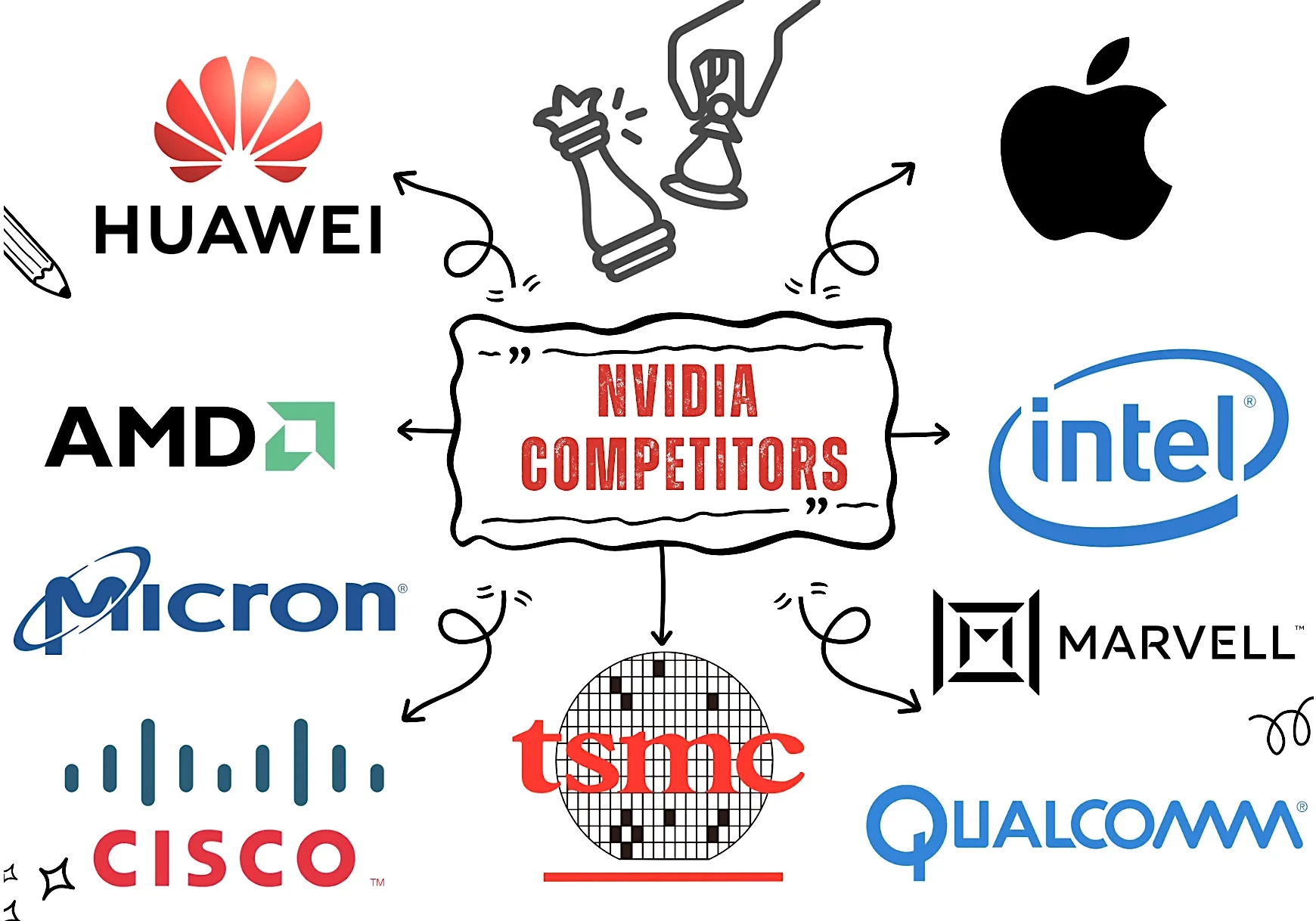
Cloud Provider Custom Silicon
The development of custom AI chips by cloud giants is a game-changer. These companies have the financial muscle and the specific workload knowledge to design highly optimized accelerators.
-
AWS (Amazon Web Services): With Inferentia for inference and Trainium for training, AWS offers alternatives to Nvidia’s GPUs for its cloud customers, potentially impacting Nvidia’s sales to one of its largest customer segments.
-
Google: Google’s TPUs have been instrumental in its own AI development and are offered as a service to Google Cloud users, providing a powerful alternative to GPU-based AI training.
-
Microsoft: Microsoft is also reportedly developing its own custom AI chips, further signaling a trend among hyperscalers to reduce reliance on third-party hardware for their core AI infrastructure.
Automotive and Autonomous Vehicles
Nvidia’s Drive platform is a major player in the autonomous vehicle (AV) space, providing computing platforms for self-driving cars. This is a highly specialized and rapidly evolving market.
-
Qualcomm: Qualcomm is a strong competitor in automotive, leveraging its expertise in mobile SoCs (System on a Chip) to offer solutions for infotainment, ADAS (Advanced Driver-Assistance Systems), and increasingly, autonomous driving. Its Snapdragon Ride platform directly competes with Nvidia Drive.
-
Mobileye (Intel): Intel’s acquisition of Mobileye made it a significant force in AVs. Mobileye offers end-to-end solutions, including perception systems and its EyeQ series of custom SoCs, making it a key rival in both hardware and software for autonomous driving.
-
Tesla: Tesla famously designs its own Full Self-Driving (FSD) chip, demonstrating how vertical integration can remove external hardware dependencies in the automotive sector. Other automotive OEMs might follow suit or partner with different chip providers.
Software Ecosystems: A Critical Differentiator
Hardware prowess alone is insufficient. Nvidia’s enduring strength, particularly in AI, is underpinned by its robust software ecosystem.
CUDA’s Dominance and its Open-Source Challengers
Nvidia’s CUDA parallel computing platform has been a monumental advantage, creating a significant “moat.” It provides developers with tools, libraries, and APIs to leverage Nvidia GPUs effectively.
-
AMD’s ROCm: AMD’s ROCm (Radeon Open Compute platform) is its direct response to CUDA, offering an open-source alternative for programming AMD GPUs. While ROCm has made significant strides, it faces the challenge of overcoming CUDA’s decade-plus lead in developer adoption and established libraries.
-
Open Standard Initiatives: Efforts like SYCL (based on OpenCL) and other open standards aim to provide hardware-agnostic programming models, reducing vendor lock-in and fostering broader competition.
AI Software Stacks and Libraries
Nvidia has invested heavily in developing comprehensive AI software stacks, including cuDNN, TensorRT, and various frameworks and SDKs that accelerate deep learning workloads.
- Competitors’ Efforts: AMD, Intel, and the specialized AI chip companies are all building their own software stacks and optimizing popular AI frameworks (TensorFlow, PyTorch) for their hardware. The success of these efforts is crucial for attracting developers and expanding market share. The ease of development, debugging, and deployment often dictates hardware adoption in the AI community.
Strategic Positioning and Future Landscape
Nvidia is not merely a chip manufacturer; it has strategically evolved into a platform company, offering integrated hardware, software, and services.
Beyond Hardware: Platform and Ecosystem Play
Nvidia’s competitive strategy extends beyond selling individual chips to offering comprehensive platforms.
-
Nvidia AI Enterprise: This software suite helps businesses deploy and manage AI at scale, showcasing Nvidia’s push into enterprise software and services.
-
Omniverse: Nvidia’s platform for 3D design collaboration and simulation, built on open standards, aims to become the foundational layer for industrial metaverse applications. This positions Nvidia against a new set of competitors in simulation, design software, and digital twins.
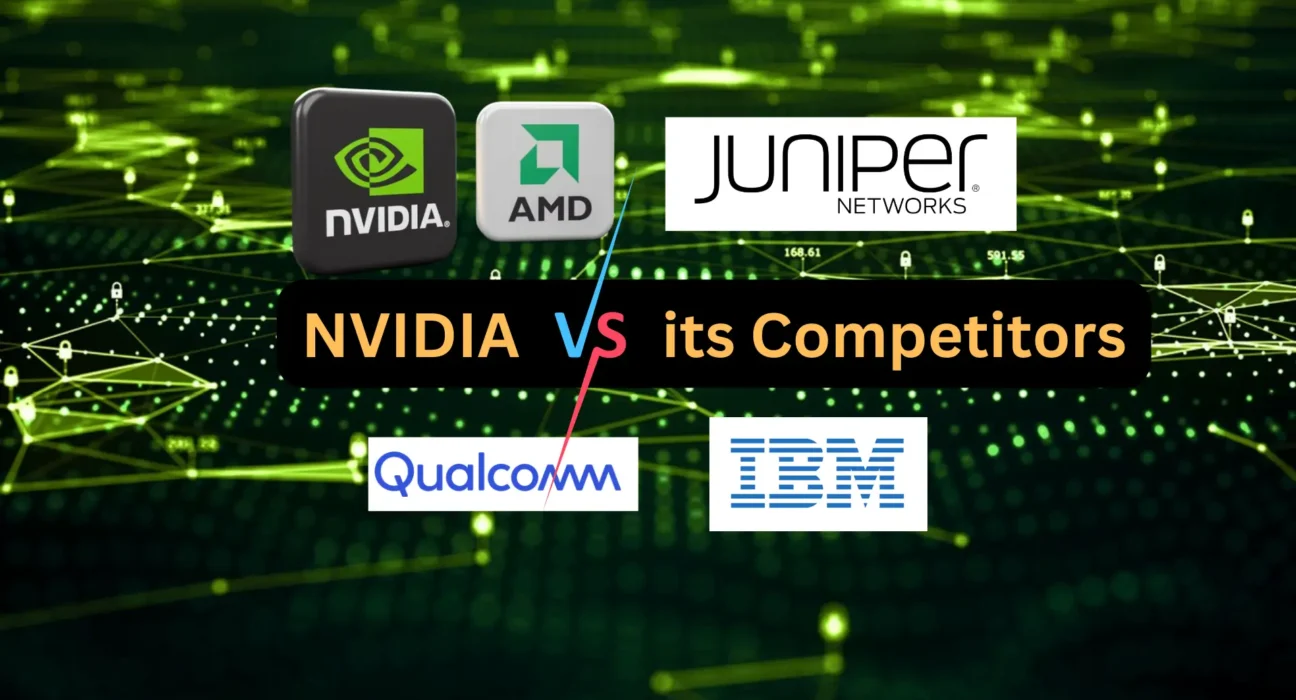
The Battle for Innovation and Supply Chain
The competitive landscape is also shaped by R&D investment and the complexities of the global semiconductor supply chain.
-
R&D Spending: All major players are pouring billions into research and development to maintain a technological edge. The ability to innovate faster and bring next-generation architectures to market is paramount.
-
Supply Chain Resilience: Reliance on advanced semiconductor foundries (like TSMC) means that geopolitical factors and supply chain disruptions can significantly impact a company’s ability to compete and deliver products. Diversification and strategic partnerships are becoming increasingly important.
In conclusion, Nvidia’s competitive environment is a dynamic mosaic. While AMD remains its primary challenger in general-purpose GPUs, the rise of specialized AI accelerators from Intel, a host of startups, and critically, custom silicon from hyperscale cloud providers, presents a more multifaceted and strategic challenge. The automotive sector introduces another layer of sophisticated embedded systems competition. Ultimately, Nvidia’s continued dominance hinges not just on its hardware prowess but equally on the strength of its CUDA ecosystem, its ability to innovate rapidly across diverse domains, and its strategic shift towards becoming a full-stack AI computing platform provider. The technological race is far from over, promising continued innovation and intense competition across the entire spectrum of computing.
aViewFromTheCave is a participant in the Amazon Services LLC Associates Program, an affiliate advertising program designed to provide a means for sites to earn advertising fees by advertising and linking to Amazon.com. Amazon, the Amazon logo, AmazonSupply, and the AmazonSupply logo are trademarks of Amazon.com, Inc. or its affiliates. As an Amazon Associate we earn affiliate commissions from qualifying purchases.