
In the modern era of digital wallets, instant peer-to-peer transfers, and contactless payments, the humble paper check remains a cornerstone of the American financial system. Whether you are setting up a direct deposit for a new job, authorizing an automatic monthly mortgage payment, or moving funds between brokerage accounts, you will inevitably be asked for two critical pieces of information: your account number and your routing number.
To the untrained eye, the string of stylized numbers at the bottom of a check can appear as an indecipherable code. However, these digits are the DNA of your financial transactions. Identifying which number is the routing number is not just a matter of convenience; it is a fundamental skill in managing personal finances and ensuring the security and accuracy of your money movement.

Decoding the Bottom of Your Check: The Anatomy of Financial Routing
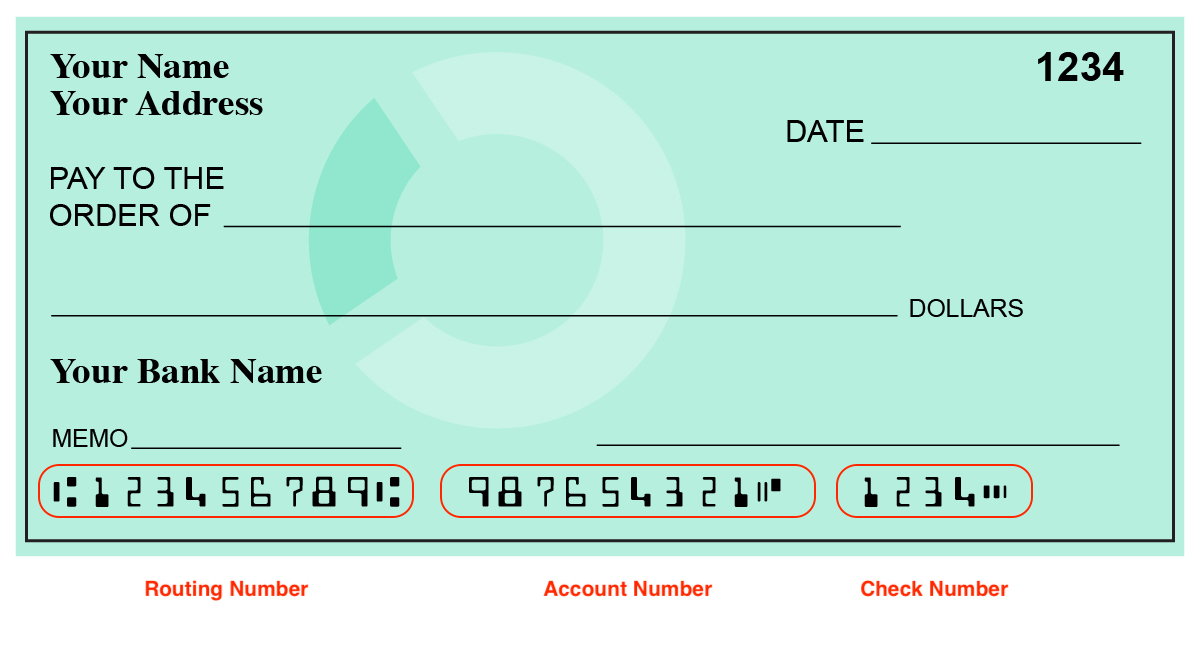
When you look at a standard personal or business check, your eyes should gravitate toward the bottom edge. Here, you will find a line of numbers printed in a unique, blocky typeface. This is known as the MICR line, which stands for Magnetic Ink Character Recognition. This technology, developed in the mid-1950s, allows high-speed readers at clearinghouses and banks to process checks with near-perfect accuracy.
On a standard check, there are typically three distinct sets of numbers located within this MICR line.
The Routing Number (ABA Transit Number)
The routing number is almost always the first set of numbers on the bottom left-hand side of your check. It is exactly nine digits long and is flanked by a specific symbol that resembles a vertical line with a small colon.
Formally known as an ABA Routing Transit Number (RTN), this code was developed by the American Bankers Association in 1910. Its primary purpose is to identify the specific financial institution responsible for the funds. Think of it as the “address” for your bank within the vast federal reserve system. The nine digits are not random; they follow a specific formula:
-
The first two digits identify the Federal Reserve district where the bank is located.
-
The third digit indicates the specific Federal Reserve check processing center assigned to the bank.
-
The fourth digit identifies the state in which the bank is headquartered.
-
Digits five through eight are unique to the specific bank or credit union.
-
The ninth digit is a “check digit,” used to verify the validity of the previous eight digits through a complex mathematical algorithm.
The Account Number
The second set of numbers, usually located in the middle or toward the right of the MICR line, is your unique account number. Unlike the routing number, which is shared by every customer at your specific branch or region of a bank, the account number is yours alone. It tells the bank exactly which internal “bucket” the money should be drawn from or deposited into.
Account numbers vary in length depending on the institution, typically ranging from eight to twelve digits, though some can be shorter or longer. It is often followed by a symbol that looks like a closing bracket or a dash.
The Check Number
The third and final set of numbers on the MICR line is the check number. This should match the number printed in the upper right-hand corner of your check. It is used for your personal record-keeping and helps the bank track which checks have been cashed, allowing you to easily identify specific transactions on your monthly statement or stop payment on a specific check if it is lost.
Why the Routing Number Matters for Your Personal Finances
Understanding your routing number is about more than just filling out a form; it is about understanding how the plumbing of the financial world functions. This number is the key that unlocks various automated financial services that make modern life manageable.
Direct Deposits and Payroll
The most common use for a routing number is the setup of direct deposits. When you provide your employer with your routing and account numbers, you are essentially providing a roadmap for their payroll software. The routing number ensures the money leaves the employer’s bank and finds your specific bank, while the account number ensures it lands in your pocket rather than someone else’s. An error in even one digit of the routing number can result in significant delays, with funds being “bounced” back to the sender or, in rare cases, misdirected.

Automated Bill Payments and ACH Transfers
Automated Clearing House (ACH) transfers are the backbone of recurring payments, such as utility bills, gym memberships, and insurance premiums. When you authorize a company to withdraw funds from your account, they use the routing number to “pull” the money through the ACH network. Because these transactions are processed in batches, having the correct routing number is essential for the overnight settlement process that keeps your accounts in good standing.
The Distinction Between Paper, Wire, and Electronic Routing
It is a common misconception that every bank has only one routing number. In reality, large national banks often have different routing numbers for different purposes and different geographic regions.
-
Paper/ACH Routing: This is the number found on your physical checks and is used for standard electronic transfers.
-
Wire Transfer Routing: If you are sending or receiving a domestic wire transfer—a process that happens in real-time rather than in batches—your bank may require a different routing number. Using a standard ACH routing number for a wire transfer can lead to the transaction failing or the bank charging additional research fees to correct the mistake.
Common Misconceptions and How to Avoid Costly Errors
Navigating the world of banking codes can be confusing, especially as financial technology evolves. Distinguishing between similar-sounding terms is crucial for any savvy consumer.
Routing Number vs. SWIFT Code
If you are conducting international business or sending money to a relative abroad, you might be asked for a SWIFT code (also known as a BIC). A routing number is a purely domestic identifier used within the United States. A SWIFT code, conversely, is an 8 to 11-character alphanumeric code used for international transactions. You cannot use a nine-digit American routing number to receive a wire from Europe; you must obtain your bank’s unique SWIFT/BIC code.
The “Fractional” Routing Number
Look at the top right-hand corner of your check, usually near the check number or the date line. You will see a small fraction-like number (e.g., 12-345/678). This is the “fractional” routing number. While it contains much of the same information as the MICR line, it is largely a relic of manual check processing. In the digital age, you should almost always use the nine-digit number at the bottom of the check for your forms and online setups, rather than the fractional version.
The Problem of Mergers and Acquisitions
The banking industry is a landscape of constant change. If your local bank is bought out by a larger national chain, your routing number may eventually change. While banks typically provide a grace period of several months or even years where they will honor the old routing number, it is vital to update your direct deposit and auto-pay settings as soon as you are issued new checks. Failing to do so can result in “Account Not Found” errors once the old routing number is officially retired from the Federal Reserve’s database.
Digital Alternatives: Finding Your Routing Number Without a Physical Check
We are rapidly moving toward a “checkless” society. Many online-only banks do not even issue physical checkbooks unless specifically requested. If you find yourself needing your routing number but lack a physical check, there are several reliable ways to find it.
-
Mobile Banking Apps: Most modern banking apps have a “Details” or “Account Info” section for each account. This will typically list the routing number, the full account number, and sometimes even a “Voided Check” feature that generates a PDF image you can send to your HR department.
-
Online Banking Portals: Logging into your bank’s website via a desktop browser is often the most direct way to find routing information. Look for “Account Services” or “Direct Deposit Setup.”
-
Monthly Statements: Your paper or electronic bank statement usually lists the routing number in the header or the footer of the first page.
-
The Bank’s Public Website: Since routing numbers are not private (everyone at your branch uses the same one), many banks list them publicly on their “Contact Us” or “FAQ” pages. However, always ensure you are on the official, encrypted website of the bank before taking this information.
Security Protocols: Protecting Your Banking Credentials
While the routing number is public information, the combination of your routing number and your account number is a sensitive key to your financial life. With these two numbers, an unauthorized individual could potentially initiate an ACH “pull” to pay their own bills or create fraudulent checks.
To protect yourself, treat your checks like cash. Never leave your checkbook in an unlocked vehicle or a visible area of your home. If you are sending a check through the mail, ensure it is in a secure, opaque envelope. When a business asks for a “voided check” to set up payments, ensure you write “VOID” in large, bold letters across the center of the check in permanent ink, making sure not to obscure the routing and account numbers at the bottom. This prevents the check from being cashed while still providing the necessary routing data.
In the digital realm, never provide your routing and account numbers via email or unencrypted chat services. Only enter this information into secure, “https” websites of reputable institutions. By understanding the simple nine-digit code on the bottom of your check, you gain greater control over your financial ecosystem, ensuring that your money moves safely, quickly, and accurately to its intended destination.
aViewFromTheCave is a participant in the Amazon Services LLC Associates Program, an affiliate advertising program designed to provide a means for sites to earn advertising fees by advertising and linking to Amazon.com. Amazon, the Amazon logo, AmazonSupply, and the AmazonSupply logo are trademarks of Amazon.com, Inc. or its affiliates. As an Amazon Associate we earn affiliate commissions from qualifying purchases.