
Navigating the landscape of personal finance often requires a blend of traditional knowledge and modern digital literacy. Despite the rise of peer-to-peer payment apps and contactless cards, the paper check—and the digital information it represents—remains a cornerstone of the global financial system. Whether you are setting up a direct deposit for a new job, authorizing an automated bill payment, or transferring funds between investment accounts, you will inevitably be asked for your routing number.
Understanding how to identify this number and recognizing its function is more than just a clerical necessity; it is a fundamental aspect of managing your financial identity and ensuring the secure flow of your capital.

The Visual Guide to Deciphering Your Check
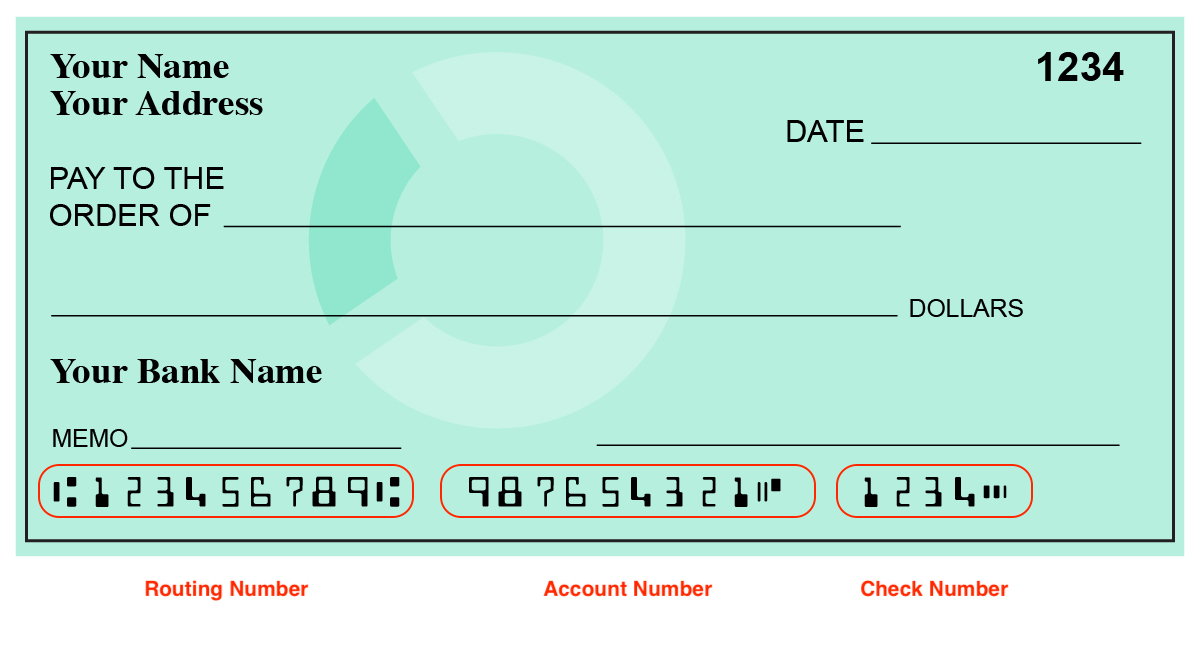
When you look at a standard personal or business check, the bottom margin contains a series of numbers printed in a unique, blocky typeface. This is known as the MICR (Magnetic Ink Character Recognition) line. To the uninitiated, these digits can appear as a confusing string of data, but they are organized into three distinct sections that provide all the information necessary for a financial institution to process a transaction.
Identifying the Nine-Digit String
The routing number, also frequently referred to as the ABA (American Bankers Association) routing transit number (RTN), is almost always the first set of numbers appearing on the far-left side of the bottom of your check. In the United States, a routing number is strictly nine digits long.
Visually, the routing number is flanked by a specific symbol that looks like a vertical bar with a colon-like pair of squares. These are “transit symbols” used by high-speed sorting machines to recognize where the routing number begins and ends. If you see a string of numbers that is shorter or longer than nine digits, you are likely looking at the account number or the check number.
The Role of MICR Technology
The specific font used at the bottom of your check is not merely an aesthetic choice. It is printed using magnetic ink or toner, which allows specialized computers to read the information even if it has been obscured by stamps or signatures. This technology, developed in the 1950s, remains the standard because of its incredibly high accuracy rate.
Within those nine digits of the routing number, there is a hidden logic. The first two digits represent the Federal Reserve district where the bank is located. The third digit identifies the specific Federal Reserve processing center. The fourth through eighth digits are unique to your specific financial institution, and the final ninth digit is a “check digit.” This last digit is calculated using a complex mathematical algorithm based on the previous eight digits; if the calculation doesn’t match, the banking system flags the check as an error, preventing misdirected funds or fraud.
The Crucial Role of Routing Numbers in Modern Banking
The routing number functions as an address for your money. Just as a zip code tells the postal service which town to deliver a letter to, the routing number tells the banking system which specific “vault” or financial institution holds your funds.
Facilitating the ACH Network
Most modern financial transactions do not involve the physical movement of paper checks but rather move through the Automated Clearing House (ACH) network. When you provide your routing number for an online side hustle payment or a recurring utility bill, you are utilizing this network.
The ACH network is a batch processing system that banks use to aggregate transactions, making them faster and cheaper than individual wire transfers. Without the nine-digit routing number, the ACH network would have no way of identifying which of the thousands of credit unions and banks across the country should receive the request. It acts as the primary filter for the trillions of dollars that move through the American economy every year.
Direct Deposits and Financial Efficiency
For many, the first time they need to locate their routing number is during the “onboarding” phase of a new career or side hustle. Setting up a direct deposit is one of the most effective ways to automate your personal finances. By providing your employer with your routing and account numbers, you bypass the manual labor of depositing a physical check, allowing your income to begin earning interest or being diverted into investment vehicles the moment it is issued.
Furthermore, the routing number is essential for transactions with the Internal Revenue Service (IRS). Whether you are paying your quarterly estimated taxes as a freelancer or receiving a tax refund, the routing number ensures that the capital reaches the correct destination without the delays associated with the mail system.
Finding Your Routing Number in a Digital-First World

As we move toward a “cashless” society, many consumers no longer carry physical checkbooks. However, the need for the routing number has not diminished. If you do not have a check handy, there are several professional ways to retrieve this information through your bank’s digital infrastructure.
Leveraging Mobile Banking Apps
Most modern financial institutions have optimized their mobile apps to provide quick access to routing and account information. Usually, by clicking on a specific account (such as “Total Checking” or “High-Yield Savings”), there will be an “Account Details” or “Show Details” link.
In these menus, banks often list two different routing numbers: one for “Electronic” or “ACH” transactions and another for “Wire Transfers.” It is vital to use the correct one for your specific purpose. Using an ACH routing number for an international wire transfer can result in a rejected transaction and significant “failed payment” fees.
The Federal Reserve E-Payments Directory
If you are ever in doubt about a routing number provided to you, or if you want to verify the legitimacy of a financial institution, the Federal Reserve maintains a public E-Payments Routing Directory. By searching the name of the bank, you can verify their official ABA routing number. This is a powerful tool for business owners and individuals who want to ensure they are sending funds to a verified and regulated entity.
Advanced Financial Considerations: When Routing Numbers Change
In the world of corporate finance and personal banking, things are not always static. Mergers, acquisitions, and internal restructuring can lead to changes in routing numbers that catch consumers off guard.
Bank Mergers and Systemic Transitions
When two large banks merge—a common occurrence in the current financial climate—they often consolidate their routing numbers to streamline their internal ledgers. If your bank undergoes a merger, they will typically provide a “grace period” during which the old routing number will still function. However, as a proactive participant in your own financial management, it is your responsibility to update your direct deposit and autopay settings to reflect the new routing number. Failing to do so after the transition period ends can lead to missed payments and credit score damage.
Wire Routing vs. Paper Routing Numbers
A common point of confusion in business finance is the distinction between the routing number found on a check and a wire routing number. While they are often the same for smaller community banks, larger national banks frequently use a separate nine-digit code specifically for domestic or international wire transfers.
Wire transfers are processed through the Fedwire Funds Service, which operates in real-time, unlike the batch-processed ACH network. If you are conducting a high-value transaction, such as a down payment on a home or a large investment in a private business, double-checking that you have the “Wire Routing Number” rather than the “Check Routing Number” is a critical step in financial due diligence.
Security and Best Practices for Financial Data
Because the routing number identifies your bank and your account number identifies your specific funds, the combination of these two numbers is highly sensitive. In the wrong hands, this information can be used to create fraudulent “demand drafts” or unauthorized ACH withdrawals.
Protecting Your Information from Fraud
You should treat the bottom line of your check with the same level of security as you would a Social Security number or a digital password. Avoid emailing images of voided checks through unencrypted channels. If a service provider requires a voided check for autopay, consider using the secure upload portal provided by their official website rather than a standard email attachment.
Additionally, regularly monitoring your bank statements is the best defense against routing number fraud. Since ACH transactions can be reversed within a specific timeframe if they are flagged as unauthorized, early detection is key to preserving your capital.
The Future of Domestic Fund Transfers
While the nine-digit ABA routing number has served as the gold standard for decades, the landscape is shifting. The introduction of “FedNow” and other real-time payment rails is beginning to change how we think about bank identifiers. However, even as the speed of transactions moves toward “instant,” the underlying need for a standardized “address” for financial institutions remains.
The routing number is more than just a sequence on a check; it is the DNA of the American financial system. By mastering these small details of personal and business finance, you position yourself as a more capable and secure participant in the modern economy. Whether you are writing a physical check for rent or linking a high-tech investment app to your primary account, knowing exactly which number is the routing number—and what it represents—is a vital piece of financial literacy.
aViewFromTheCave is a participant in the Amazon Services LLC Associates Program, an affiliate advertising program designed to provide a means for sites to earn advertising fees by advertising and linking to Amazon.com. Amazon, the Amazon logo, AmazonSupply, and the AmazonSupply logo are trademarks of Amazon.com, Inc. or its affiliates. As an Amazon Associate we earn affiliate commissions from qualifying purchases.