
The name “Microsoft” resonates globally, synonymous with personal computing, operating systems, office productivity, and, increasingly, cloud computing and artificial intelligence. Its ubiquitous presence makes it easy to overlook its humble and, for many, surprising origins. While today its sprawling campus in Redmond, Washington, is a testament to its colossal scale, the story of where Microsoft truly began is a fascinating journey that highlights the nascent days of personal computing and the relentless ambition of its founders. Understanding this genesis is not just a historical curiosity; it’s fundamental to grasping the technological ethos and strategic trajectory that defined Microsoft’s rise as a titan of the tech world.

The Albuquerque Anomaly: A Surprising Birthplace
The popular perception often links Microsoft directly to the Pacific Northwest, specifically Seattle or its suburbs. However, the very first “office” and the official birthplace of Microsoft was actually in a rather unexpected location: Albuquerque, New Mexico. This geographical detail is crucial because it directly ties into the specific technological challenge Bill Gates and Paul Allen sought to solve, which in turn launched their company.
The Altair 8800 and the BASIC Interpreter
The spark for Microsoft ignited with the Altair 8800, a microcomputer kit introduced by Micro Instrumentation and Telemetry Systems (MITS) in January 1975. The Altair, featured on the cover of Popular Electronics, was a revelation. For the first time, a truly affordable personal computer (albeit one requiring assembly) was available to hobbyists and enthusiasts. However, there was a significant technological hurdle: programming it. The Altair could only be programmed in machine code, a tedious and complex process involving flipping switches on the front panel.
This limitation presented an immense opportunity. Bill Gates and Paul Allen, then still in Massachusetts, recognized that for the Altair—and indeed, for personal computing itself—to truly take off, a higher-level programming language was essential. They envisioned a version of BASIC (Beginner’s All-purpose Symbolic Instruction Code), a language known for its relative simplicity and accessibility, that could run on the Altair. This wasn’t just about convenience; it was about democratizing access to computing power, a foundational tenet of the personal computer revolution. Their audacious claim to MITS was that they had an interpreter ready, a claim based more on ambition than current reality.
Gates, Allen, and the First Breakthrough
Driven by a sheer force of will and a profound understanding of software architecture, Gates and Allen spent intense weeks, often working around the clock, to develop their Altair BASIC interpreter. Allen, in particular, made a critical 1,500-mile cross-country flight to Albuquerque with a paper tape containing the BASIC code, never having tested it on an actual Altair 8800. The demonstration at MITS, famously, worked on the first try, a moment that cemented their partnership and validated their vision.
This successful demo wasn’t just a technical triumph; it was a commercial one. MITS agreed to license their Altair BASIC, and in April 1975, Gates and Allen officially founded “Micro-Soft” (the hyphen would be dropped later) in Albuquerque. The name itself, a portmanteau of “microcomputer” and “software,” clearly articulated their technological focus.
MITS and the Early Days of Microsoft
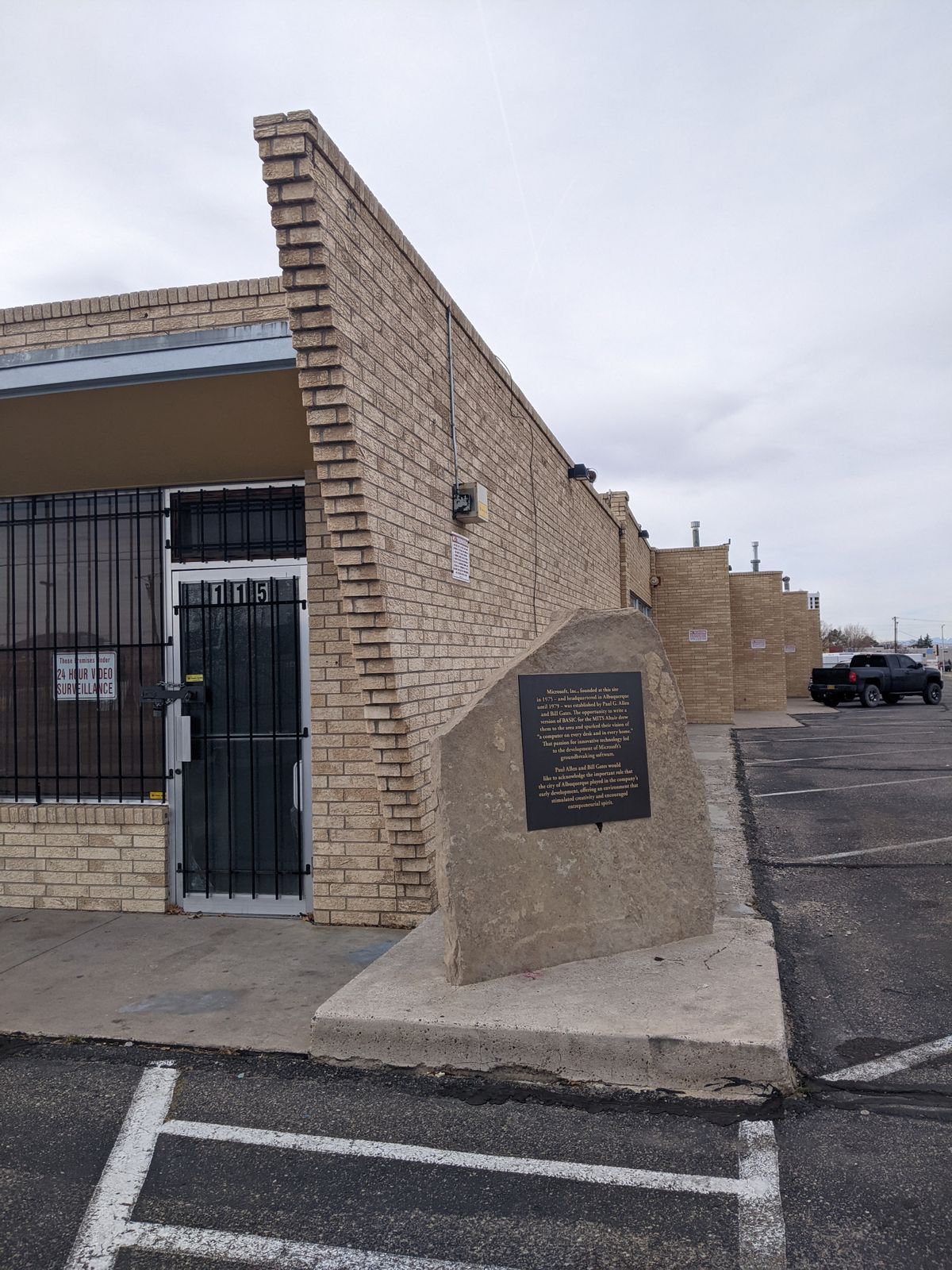
The decision to establish Microsoft in Albuquerque wasn’t arbitrary; it was a pragmatic necessity dictated by their primary client and product. To effectively develop and refine software for the Altair, they needed to be in close proximity to MITS, its hardware, and its engineers. Their first “office” was a leased space in the Nob Hill area of Albuquerque, a humble setting for what would become a global powerhouse.
The early days were characterized by the lean, intense, and often chaotic environment typical of a nascent tech startup. Gates and Allen, along with a small but dedicated team, worked tirelessly to improve Altair BASIC, fix bugs, and adapt it for various iterations of the Altair. They were pioneers in a brand-new industry, grappling with the technical challenges of developing complex software for limited hardware, all while simultaneously trying to build a viable business. Albuquerque, for all its remoteness from established tech hubs, provided the crucible in which Microsoft’s initial technological identity was forged: a company deeply committed to fundamental software development for personal computers.
The Return to the Pacific Northwest: Cultivating a Tech Ecosystem
While Albuquerque was Microsoft’s birthplace, it wasn’t destined to be its long-term home. By the late 1970s, the burgeoning software company recognized the limitations of its isolated location and made a pivotal strategic move that would profoundly influence its future technological trajectory: a return to the Pacific Northwest.
A Strategic Relocation
In January 1979, Microsoft moved its operations from Albuquerque to Bellevue, Washington, a suburb of Seattle. This wasn’t a sentimental move; it was a calculated decision driven by several key factors crucial for a growing tech company. Firstly, both Gates and Allen were originally from the Seattle area, making it a natural fit for personal reasons, but more importantly, for attracting talent. The nascent tech industry was already beginning to coalesce around areas with strong educational institutions and a growing pool of skilled engineers. Albuquerque, at the time, lacked the critical mass of technical talent and the broader infrastructure that Bellevue, with its proximity to the University of Washington and a burgeoning aerospace industry (Boeing), could offer.
Secondly, the relationship with MITS had become less central to Microsoft’s overall strategy. As the personal computing landscape expanded, Gates and Allen envisioned Microsoft as a purveyor of software for many hardware platforms, not just the Altair. Diversifying their product line beyond BASIC for a single machine required broader market access and less dependence on a single client’s location. The move signaled Microsoft’s ambition to become a broader software provider.
Bellevue and Redmond: The Growth Spurt
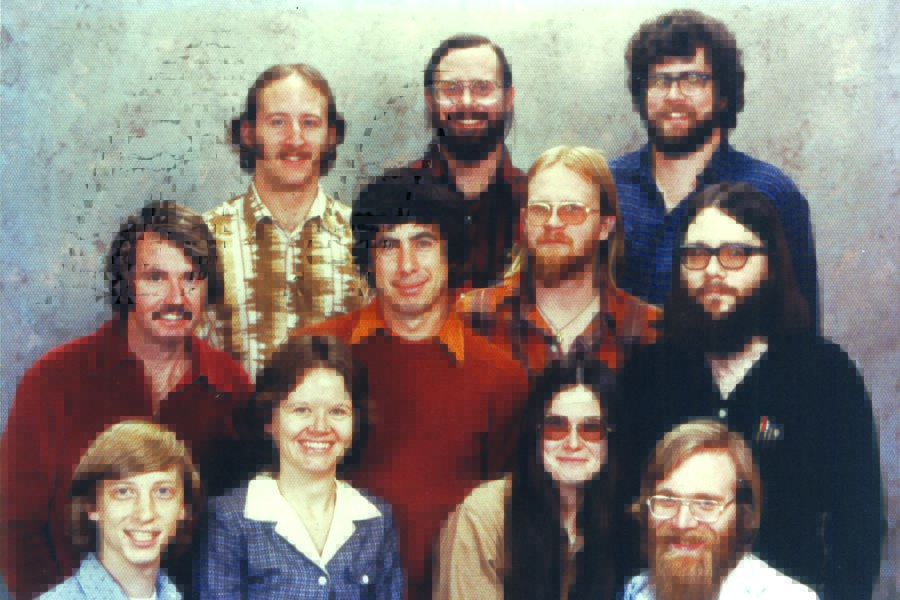
The early years in Bellevue saw Microsoft begin its significant expansion. From a handful of employees, the company grew rapidly, attracting some of the brightest minds in early computing. This period was characterized by an explosion of product development beyond the initial BASIC interpreters. Microsoft began to develop compilers for other programming languages like Fortran and COBOL, and critically, early applications like Multiplan (a spreadsheet program that was a precursor to Excel).
This rapid growth necessitated further physical expansion, leading to the eventual move to Redmond, Washington, in 1986, where the company established its now-famous corporate campus. Redmond became synonymous with Microsoft, a location that offered the space and infrastructure required for a company on an explosive growth path.
The IBM PC Deal: A Game-Changer
Being situated in the evolving tech hub of the Pacific Northwest proved instrumental for Microsoft’s most significant breakthrough: the deal with IBM for the original IBM PC. In 1980, IBM approached Microsoft, not for an operating system, but initially for programming languages. Gates famously referred IBM to another company for the OS, but when that fell through, he seized the opportunity.
Crucially, Microsoft didn’t have an operating system suitable for the PC, but their strategic location and connections allowed them to quickly acquire QDOS (Quick and Dirty Operating System) from Seattle Computer Products, rebranding and refining it as MS-DOS. The ability to make this agile acquisition and subsequent development was facilitated by their position in a vibrant, if still small, tech ecosystem. The subsequent licensing agreement for MS-DOS to run on the IBM PC was a technological watershed, establishing MS-DOS as the de facto standard operating system and catapulting Microsoft into the mainstream of the burgeoning personal computer industry. This deal was not just a business coup; it fundamentally shaped the architecture and accessibility of personal computing for decades, firmly positioning Microsoft at the center of the tech world.
The Cultural and Technological Blueprint Forged in Early Environments
The geographical journey of Microsoft from Albuquerque to Bellevue and ultimately to Redmond is more than just a series of moves on a map. It represents the evolution of a company whose core technological blueprint was continuously shaped by its early environments, the challenges it faced, and the solutions it engineered.
The Hacker Ethos and Problem-Solving
The intense, collaborative, and often improvisational problem-solving culture that defined Microsoft’s earliest days in Albuquerque laid a critical foundation. The founders and early employees were driven by a “hacker ethos”—a relentless pursuit of elegant software solutions for complex technical problems, often with limited resources. This spirit of innovation and engineering excellence became deeply ingrained in Microsoft’s DNA. Whether it was squeezing BASIC into tiny memory footprints or adapting DOS to run on a diverse array of hardware, the focus was always on pushing the boundaries of what software could do. This engineering-first approach, born from practical necessity, fueled decades of product development.
From Niche Software to Platform Dominance
Microsoft’s journey from developing a BASIC interpreter for a single microcomputer to creating the dominant operating system (MS-DOS, then Windows) and productivity suite (Office) demonstrates a consistent technological vision. The initial goal was to make computing accessible. This evolved into building robust, user-friendly platforms and applications that would allow millions to interact with technology. Their focus shifted from merely enabling programming to enabling productivity and communication on personal computers. Each technological leap, from the graphical user interface of Windows to the integrated suite of Office applications, built upon this foundational commitment to making computing ubiquitous and powerful for the masses.
Cultivating Talent and Innovation
The move to the Pacific Northwest was instrumental in Microsoft’s ability to attract and retain top engineering talent. This concentration of brilliant minds in one geographical area created a virtuous cycle of innovation. Microsoft’s campus became a magnet for software developers, fostering an environment where ideas could be freely exchanged, ambitious projects undertaken, and groundbreaking technologies brought to fruition. The company’s massive investment in R&D, labs, and incubators—all centered in its Redmond headquarters—is a direct descendant of this early recognition that human ingenuity and technical expertise are the ultimate drivers of technological progress.
Legacy and The Future: More Than Just a Place
The story of “where Microsoft was started” is a narrative far richer than a simple address. It’s a testament to how specific historical contexts, geographical circumstances, and foundational technological challenges combined to shape one of the world’s most enduring tech companies.
The Enduring Impact of Its Origins
The lessons learned from its humble beginnings – adaptability, aggressive pursuit of opportunities, and a deep, abiding focus on fundamental software development – continue to influence Microsoft’s strategic direction today. Whether it’s its pivot to cloud computing with Azure, its ambitious ventures into artificial intelligence, or its dominance in gaming with Xbox, the underlying principle remains constant: leverage software and platform expertise to solve complex problems and create new technological paradigms. The vision that began with making a microcomputer usable continues in its efforts to make AI accessible and cloud infrastructure scalable.
Microsoft as a Global Tech Nexus
From a small, rented office in Albuquerque to a global behemoth headquartered in Redmond, Washington, Microsoft’s journey underscores the transformative potential of tech startups. Its initial location in Albuquerque provided the initial spark and the specific technological problem to solve. Its move to the Pacific Northwest provided the fertile ground, talent pool, and strategic positioning to blossom into a company that would define the personal computing era. Today, Microsoft is not just a company; it is a global tech nexus, continuously innovating and shaping the future of digital technology across virtually every sector. The story of its start is a powerful reminder that monumental technological empires can indeed grow from the most unexpected of places, driven by vision, talent, and an unwavering commitment to software.
In conclusion, while Albuquerque holds the historical distinction as Microsoft’s first official home, it was the strategic relocation to Bellevue and subsequently Redmond, Washington, that provided the fertile ground for Microsoft to evolve from a niche software developer into the global tech giant we recognize today. Its journey is a compelling case study in how location, talent, and technological vision intertwine to dictate the destiny of an enterprise in the ever-evolving landscape of technology.
aViewFromTheCave is a participant in the Amazon Services LLC Associates Program, an affiliate advertising program designed to provide a means for sites to earn advertising fees by advertising and linking to Amazon.com. Amazon, the Amazon logo, AmazonSupply, and the AmazonSupply logo are trademarks of Amazon.com, Inc. or its affiliates. As an Amazon Associate we earn affiliate commissions from qualifying purchases.