
The term “share market” often conjures images of bustling trading floors, flashing screens, and the thrilling highs and lows of financial speculation. While these cinematic portrayals capture a sliver of the reality, the share market, more formally known as the stock market, is a far more fundamental and intricate mechanism within the global economy. It is a crucial platform where individuals and institutions can invest their capital into publicly traded companies, thereby becoming part-owners and participating in their growth—or decline. For many, it represents a powerful avenue for wealth creation, a means to achieve long-term financial goals, and a window into the health of various industries and the broader economy.
However, navigating this complex landscape requires more than just an understanding of the lingo; it demands a solid grasp of its underlying principles, risks, and potential rewards. This comprehensive guide aims to demystify the share market, breaking down its components, operations, and the considerations essential for any aspiring investor. Whether you’re a complete novice or looking to deepen your understanding, comprehending “what’s share market” is the first step towards making informed and strategic financial decisions.
Demystifying the Share Market: The Basics
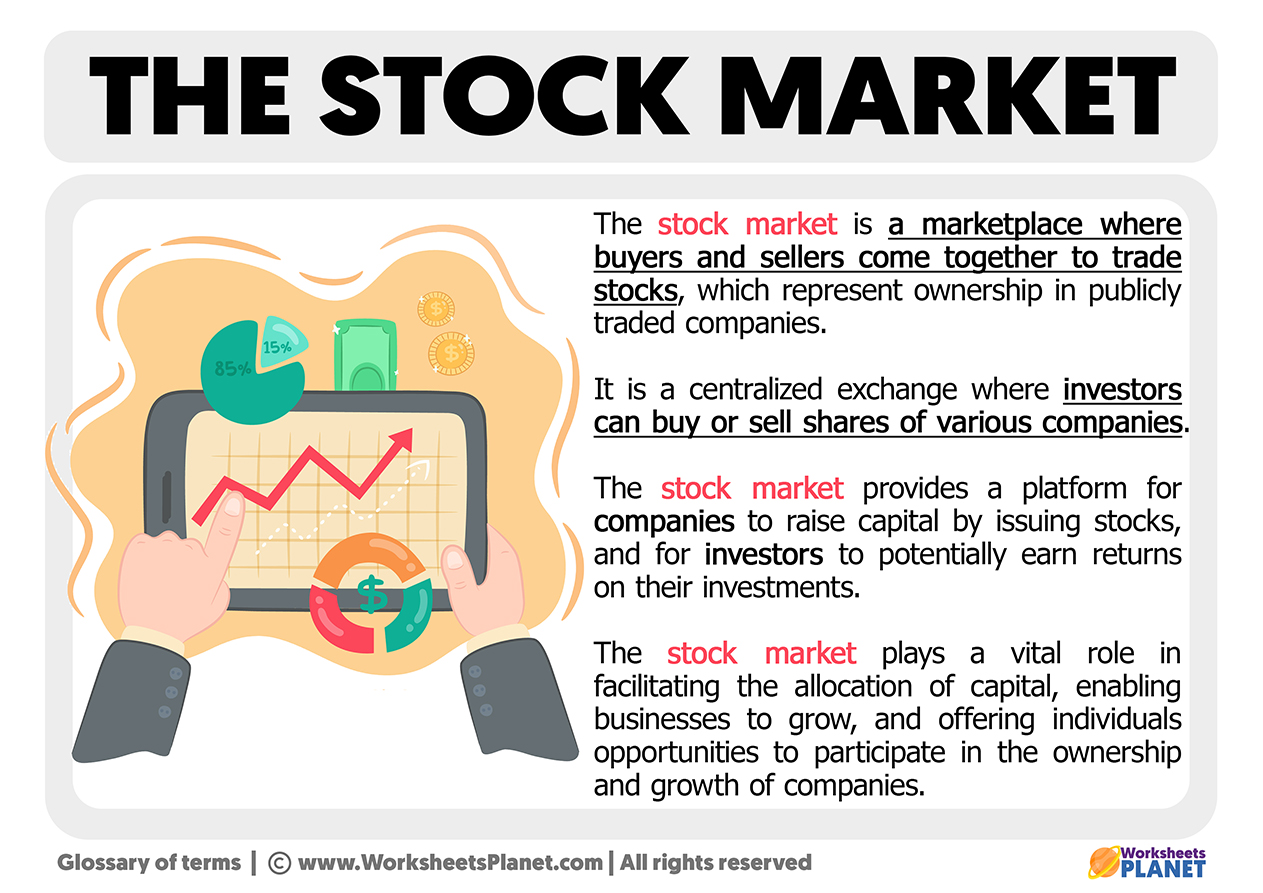
At its core, the share market is a marketplace where shares, or stocks, of publicly listed companies are bought and sold. It facilitates the transfer of ownership of small portions of a company between investors. Understanding these fundamental building blocks is paramount before delving into the market’s complexities.
What is a Share (Stock)?
A share, often used interchangeably with “stock,” represents a unit of ownership in a company. When you own a share, you own a tiny fraction of that company. This ownership comes with certain rights, typically including a claim on a portion of the company’s assets and earnings, and often, the right to vote on certain corporate matters (especially for common shares). The value of a share is primarily driven by the company’s performance, its future prospects, and overall market sentiment. Companies issue shares to raise capital for various purposes, such as expanding operations, research and development, paying off debt, or making acquisitions.
Why Do Companies Issue Shares?
Companies primarily issue shares to raise capital without incurring debt. This process is known as “going public” or an Initial Public Offering (IPO). Instead of borrowing money from banks (which requires interest payments and collateral), companies can sell ownership stakes to investors. This allows them to fund growth initiatives, innovate, and scale operations more rapidly. For the company, it’s a way to access a broader pool of capital. For investors, it offers an opportunity to participate in the company’s success and potentially benefit from its growth through capital appreciation and dividends.
Primary vs. Secondary Markets
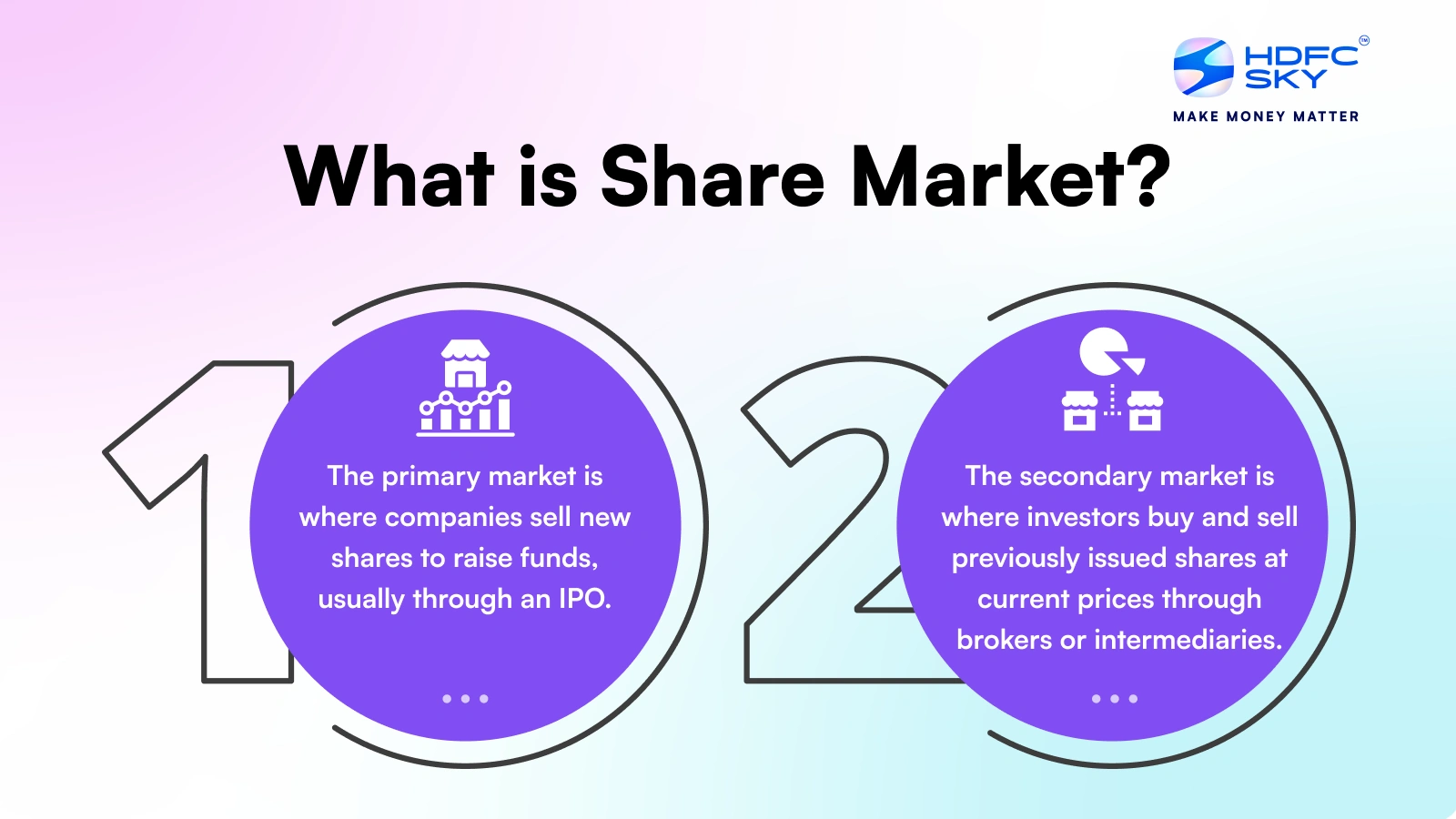
The share market is conceptually divided into two main components: the primary market and the secondary market.
- Primary Market: This is where new shares are issued for the first time by a company to the public. This typically occurs through an Initial Public Offering (IPO), where a company offers its shares to institutional investors and the general public. Once sold in the primary market, these shares are then listed on a stock exchange. The funds raised in the primary market go directly to the issuing company.
- Secondary Market: After shares are issued in the primary market, they are traded among investors in the secondary market. This is what most people refer to when they talk about the “share market.” Stock exchanges like the NYSE, Nasdaq, LSE, or BSE provide the infrastructure for these transactions. The company whose shares are being traded does not directly receive any money from sales in the secondary market; the transaction is between two investors. The price of shares in the secondary market fluctuates based on supply and demand, company performance, economic news, and investor sentiment.
The Mechanics of Share Market Operations
The operation of the share market is a sophisticated dance involving various participants, regulated by established rules, and facilitated by advanced technology. Understanding how these elements interact is crucial to grasp market dynamics.
Key Players in the Market
Several critical entities contribute to the functioning of the share market:
- Investors: These are individuals, institutions (like mutual funds, pension funds, hedge funds), or corporations that buy and sell shares with the goal of making a profit. Investors can range from short-term traders looking to capitalize on daily fluctuations to long-term investors focused on a company’s fundamental growth.
- Brokers: Stockbrokers act as intermediaries between investors and the stock exchange. Investors cannot directly trade on exchanges; they must go through a licensed broker. Brokers execute buy and sell orders on behalf of their clients and charge a commission or fee for their services. With the rise of online trading platforms, discount brokers have become increasingly popular, offering lower fees and direct access to trading tools.
- Stock Exchanges: These are regulated marketplaces where shares are bought and sold. They provide the platform, rules, and infrastructure for trading, ensuring transparency, fairness, and efficiency. Examples include the New York Stock Exchange (NYSE), Nasdaq, London Stock Exchange (LSE), Bombay Stock Exchange (BSE), and Tokyo Stock Exchange (TSE).
- Regulators: Government bodies and self-regulatory organizations oversee the share market to protect investors and maintain market integrity. In the United States, this is primarily the Securities and Exchange Commission (SEC); in the UK, the Financial Conduct Authority (FCA); and in India, SEBI. They set rules regarding disclosures, trading practices, and prevent fraud and manipulation.
How Shares Are Traded
The process of trading shares involves placing an order through a broker. When an investor decides to buy or sell shares, they place an order (e.g., “buy 100 shares of Company X at market price” or “sell 50 shares of Company Y at $150”). The broker then transmits this order to the stock exchange. On the exchange, buyer orders (bids) and seller orders (asks) are matched. When a buyer’s bid matches a seller’s ask, a trade is executed. This entire process, especially with modern electronic trading systems, can happen within milliseconds.
Market Indices and Their Significance
Market indices are hypothetical portfolios of stocks that represent a particular market or a segment of it. They serve as benchmarks to gauge the overall health and performance of the stock market or specific industries. Popular indices include:
- Dow Jones Industrial Average (DJIA): Tracks 30 large, publicly owned companies based in the United States.
- S&P 500: Represents 500 of the largest U.S. publicly traded companies, widely considered a benchmark for the broader U.S. stock market.
- Nasdaq Composite: Heavily weighted towards technology and growth companies, reflecting their performance.
- FTSE 100 (UK): Comprises the 100 companies listed on the London Stock Exchange with the highest market capitalization.
- Nifty 50 (India): A diversified 50 stock index representing major sectors of the Indian economy.
These indices are critical because they provide a quick snapshot of market trends. If an index is up, it generally means the overall market or that specific segment is performing well, and vice versa. Investors often use them to compare their own portfolio’s performance.
Understanding Risk and Reward in Share Investing
Investing in the share market inherently involves both potential rewards and significant risks. A balanced understanding of both is crucial for making prudent investment decisions and managing expectations.
Types of Investment Risks
While the allure of high returns is strong, investors must be aware of the inherent risks:
- Market Risk (Systematic Risk): This is the risk that the entire market or a broad segment of it will decline, impacting even well-performing stocks. Factors like economic recessions, geopolitical events, interest rate changes, or pandemics can trigger market-wide downturns. This risk cannot be eliminated through diversification within the stock market alone.
- Company-Specific Risk (Unsystematic Risk): Also known as specific risk, this refers to risks unique to a particular company or industry. Examples include poor management decisions, product recalls, intense competition, regulatory changes affecting a specific sector, or adverse financial results. This type of risk can be mitigated through diversification, by investing in a variety of companies across different industries.
- Liquidity Risk: The risk that you may not be able to sell your shares quickly enough at a fair price, especially for less popular stocks or in volatile market conditions.
- Inflation Risk: The risk that the returns on your investment may not keep pace with the rate of inflation, eroding the purchasing power of your money over time.
Potential Returns: Capital Appreciation and Dividends
The primary reasons investors venture into the share market are the potential for two types of returns:
- Capital Appreciation: This is the most common form of return. It occurs when the price of the shares you own increases from your purchase price. If you buy a share at $100 and sell it later at $120, you have gained $20 per share in capital appreciation. The goal for many investors is to buy low and sell high.
- Dividends: Some companies distribute a portion of their profits to shareholders in the form of dividends. Dividends are typically paid out per share on a regular basis (quarterly or annually). Not all companies pay dividends; growth companies, for instance, often reinvest all their earnings back into the business to fuel further expansion. Dividends can provide a steady income stream and are often favored by income-seeking investors.

The Importance of Diversification
Diversification is a cornerstone of sound investment strategy, especially in the share market. It involves spreading your investments across various assets, industries, and geographical regions to reduce risk. By not putting all your eggs in one basket, you mitigate the impact of a poor performance by any single investment. For example, if you invest solely in one technology stock and it tanks, your entire portfolio suffers. However, if you’re diversified across tech, healthcare, consumer goods, and energy stocks, the poor performance of one might be offset by the strong performance of another. Diversification primarily helps in reducing company-specific risk.
Getting Started: A Practical Approach to Share Investing
For newcomers, the prospect of entering the share market can seem daunting. However, with a structured approach and a commitment to learning, anyone can begin their investment journey.
Setting Investment Goals and Risk Tolerance
Before investing a single dollar, it’s crucial to define your financial goals. Are you saving for retirement, a down payment on a house, your child’s education, or simply long-term wealth growth? Your goals will influence your investment horizon (how long you plan to invest) and, consequently, your strategy.
Equally important is understanding your risk tolerance. How comfortable are you with the possibility of losing money? High-growth stocks can offer substantial returns but also come with higher volatility. Conservative investors might prefer stable, dividend-paying companies. Your age, income stability, existing savings, and personality all play a role in determining your appropriate risk level.
Choosing a Brokerage Account
To trade shares, you’ll need to open an investment account with a licensed brokerage firm. There are generally two types:
- Full-Service Brokers: These offer personalized advice, research, and comprehensive financial planning. They typically charge higher fees but can be beneficial for investors who need extensive guidance.
- Discount Brokers (Online Brokers): These provide platforms for self-directed trading, often with lower commissions or even commission-free trades for stocks. They are ideal for investors who are comfortable doing their own research and making their own decisions. Examples include Fidelity, Charles Schwab, Robinhood, or local platforms specific to your region.
When choosing a broker, consider factors like fees, minimum deposit requirements, available investment products, research tools, customer service, and the ease of use of their trading platform.
Researching and Selecting Stocks
This is arguably the most critical step. Never invest in a company you don’t understand. Effective research involves:
- Fundamental Analysis: This involves evaluating a company’s financial health, management team, industry position, competitive advantages, and future growth prospects. Key metrics include earnings per share (EPS), price-to-earnings (P/E) ratio, revenue growth, debt levels, and profit margins. Reading financial statements (income statements, balance sheets, cash flow statements) and annual reports is essential.
- Industry Analysis: Understand the industry in which the company operates. Is it growing? What are the competitive pressures? Are there regulatory risks?
- Macroeconomic Factors: Consider broader economic conditions (e.g., interest rates, inflation, GDP growth) that can impact overall market performance.
Many brokerage platforms offer research tools, analyst reports, and news feeds to assist investors.
The Role of Long-Term vs. Short-Term Strategies
Investors typically adopt one of two broad strategies:
- Long-Term Investing: This involves buying shares and holding them for many years, often decades, with the expectation that the company will grow over time. This strategy emphasizes compounding returns and weathering short-term market fluctuations. It often involves investing in fundamentally strong companies and periodically rebalancing the portfolio.
- Short-Term Trading: This strategy involves buying and selling shares frequently, sometimes within the same day (day trading), to profit from small price movements. This is a much higher-risk approach, requiring significant time commitment, advanced analytical skills (often technical analysis), and a strong understanding of market psychology. It is generally not recommended for beginners.
Most financial advisors recommend a long-term, diversified approach for building wealth over time, as it generally has a higher success rate for average investors.
Navigating the Share Market Landscape: Advanced Concepts and Future Trends
As you gain experience, you might encounter more sophisticated concepts and observe evolving trends that shape the share market.
Fundamental vs. Technical Analysis
While we touched upon fundamental analysis for stock selection, it’s worth contrasting it with technical analysis:
- Fundamental Analysis: Focuses on a company’s intrinsic value by examining economic, industry, and company-specific factors. It seeks to determine if a stock is undervalued or overvalued based on its financial health and future prospects.
- Technical Analysis: Studies past market data, primarily price and volume, to identify patterns and predict future price movements. Technical analysts use charts, indicators, and trends to make trading decisions, often disregarding a company’s underlying fundamentals.
Both approaches have their proponents, and some investors use a combination of both.
Understanding Market Volatility
Volatility refers to the rate at which the price of a security or market index increases or decreases. A highly volatile market experiences rapid and significant price swings. While volatility can present opportunities for traders, it also magnifies risk for investors. Economic news, company announcements, political events, and even social media sentiment can contribute to market volatility. Long-term investors generally ride out periods of high volatility, trusting in the eventual recovery and growth of solid companies.
The Rise of Digital Platforms and Robo-Advisors
The share market has been significantly democratized by technology. Online brokerage platforms have made trading accessible to millions, often with commission-free options. Furthermore, “robo-advisors” have emerged—automated, algorithm-driven financial planning services that manage portfolios with minimal human intervention. They typically offer low-cost, diversified portfolios tailored to an investor’s risk tolerance and goals, making investing simpler and more affordable for many.
Ethical Investing and ESG
A growing trend in the share market is Ethical Investing, also known as ESG (Environmental, Social, and Governance) investing. This approach considers not only financial returns but also a company’s impact on the environment, its social responsibility, and its corporate governance practices. Investors are increasingly seeking companies that align with their values, investing in those with strong records on climate change, labor practices, diversity, and transparent leadership. This trend influences capital flows and encourages companies to adopt more sustainable and responsible business models.
The share market, while complex, is an accessible and powerful tool for building wealth and participating in economic growth. It is not a get-rich-quick scheme, but rather a long-term endeavor requiring patience, discipline, and continuous learning. By understanding its foundational principles, managing risks through diversification, and adopting a well-thought-out strategy aligned with personal goals, individuals can effectively navigate “what’s share market” and harness its potential to achieve their financial aspirations. Remember, informed decisions are the best investments.
aViewFromTheCave is a participant in the Amazon Services LLC Associates Program, an affiliate advertising program designed to provide a means for sites to earn advertising fees by advertising and linking to Amazon.com. Amazon, the Amazon logo, AmazonSupply, and the AmazonSupply logo are trademarks of Amazon.com, Inc. or its affiliates. As an Amazon Associate we earn affiliate commissions from qualifying purchases.