
The landscape of sports consumption has undergone a radical transformation. Gone are the days when a pair of “rabbit ear” antennas or a basic cable subscription were the only gateways to watching a high-stakes Major League Soccer (MLS) match. As the LA Galaxy prepares to face off against the Seattle Sounders, the question of “where to watch” is no longer just about a channel number; it is about navigating a sophisticated technological ecosystem. This guide explores the software, hardware, and digital infrastructure required to experience this premier West Coast rivalry in the modern era.

The Evolution of the Streaming Stack: MLS Season Pass and the Apple TV Ecosystem
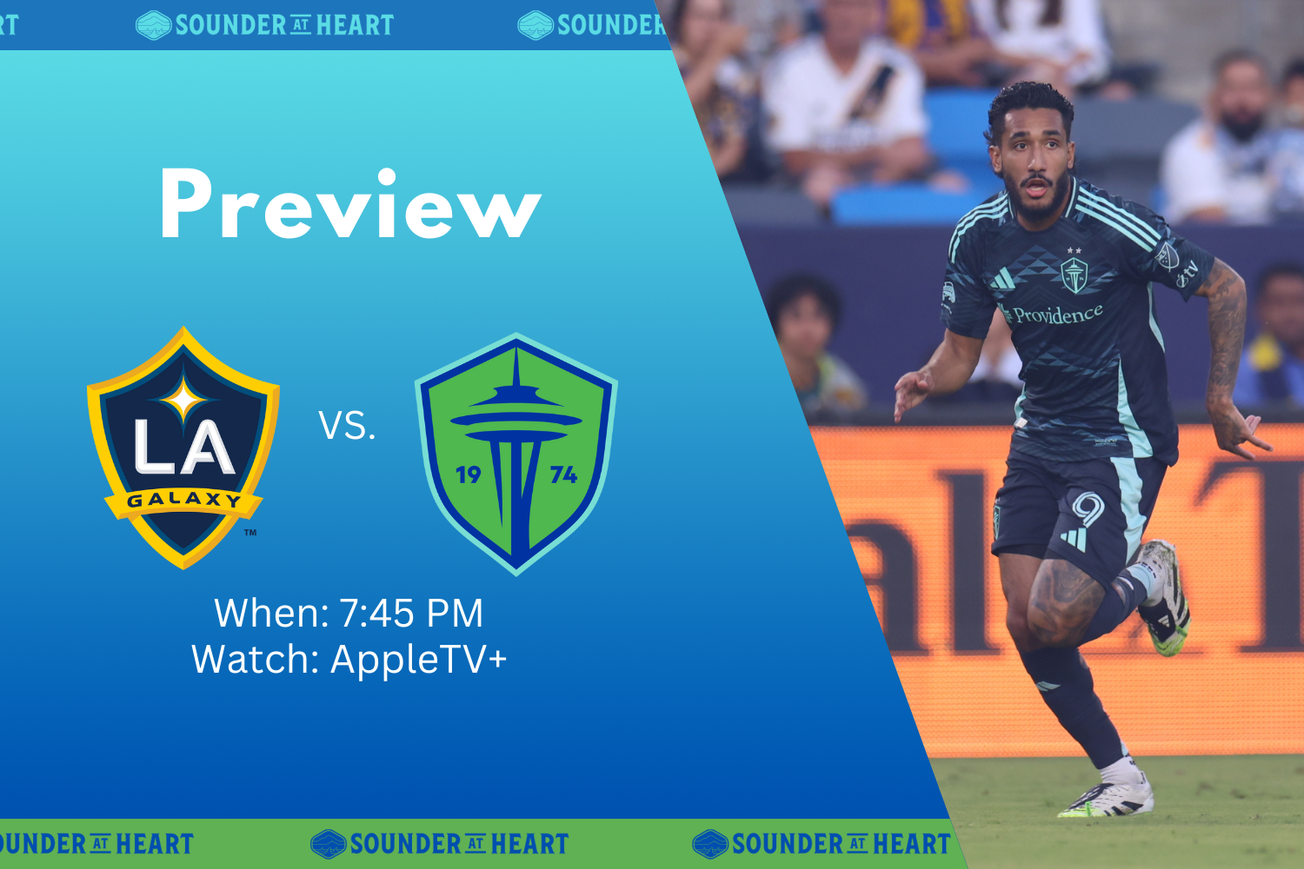
The primary destination for watching the LA Galaxy vs. Seattle Sounders is the MLS Season Pass, a proprietary streaming service housed within the Apple TV app. This partnership represents a significant shift in sports technology, moving away from fragmented regional sports networks (RSNs) toward a centralized, global digital platform.
The Integration of Software and User Interface
The Apple TV app serves as the software hub for this experience. Unlike traditional broadcasting, which is linear and passive, the software architecture here is designed for interactivity. When users tune in to the Galaxy vs. Sounders match, they are interacting with a sophisticated UI that leverages metadata to provide real-time updates. The “Follow Your Team” feature uses algorithmic curation to ensure that fans of these specific clubs receive push notifications, lineup changes, and live scores directly on their device’s home screen.
From a technical perspective, the app utilizes a unified backend that delivers a consistent experience across iOS, macOS, and third-party platforms like Roku or Android TV. This cross-platform compatibility is achieved through robust API integrations, ensuring that the stream’s latency is minimized regardless of the operating system.
Multi-View Technology and Data Overlays
For the tech-savvy viewer, watching the LA Galaxy vs. Seattle Sounders isn’t just about the visual feed; it’s about the data. The MLS Season Pass software allows for “Multi-View” on supported devices (such as the Apple TV 4K hardware), enabling fans to monitor multiple matches simultaneously.
Furthermore, the integration of Opta data into the stream provides real-time advanced metrics. As Riqui Puig orchestrates the Galaxy’s midfield or Jordan Morris breaks on a counter-attack for the Sounders, viewers can toggle overlays that display possession percentages, expected goals (xG), and player heat maps. This level of data integration requires high-speed data processing at the “edge,” where statistics are ingested, processed, and overlaid onto the video feed with less than a second of delay.
Optimizing Your Hardware for the Ultimate Viewing Experience
Finding where to watch the game is only half the battle; the other half is ensuring your hardware can handle the high-bitrate demands of a live professional sports broadcast. A 1080p or 4K sports stream requires a specific synergy between your display, your streaming device, and your network infrastructure.
Smart TVs, Casting, and Refresh Rates
To capture the fluid motion of a soccer ball and the rapid transitions characteristic of a Sounders-Galaxy match, the hardware’s refresh rate is critical. Most modern displays offer a 60Hz or 120Hz refresh rate. When streaming via the Apple TV app or a dedicated console like a PlayStation 5 or Xbox Series X, the software communicates with the display’s “Game Mode” or “Sports Mode” to reduce motion blur and input lag.
For those who do not have a native app on their television, casting technologies like AirPlay 2 and Chromecast are essential. These protocols use a direct peer-to-peer wireless connection to hand off the stream from a smartphone to a TV. However, for the most stable connection during a high-traffic event like a playoff-contention match, a hardwired HDMI 2.1 connection from a dedicated streaming box is the gold standard, supporting higher bandwidth for HDR (High Dynamic Range) content.
Network Infrastructure: Wi-Fi 6 and Low-Latency Demands
The biggest bottleneck in streaming live sports is often the local area network (LAN). A live 1080p stream at 60 frames per second (fps) generally requires a consistent downward speed of at least 15–25 Mbps. However, for a buffer-free experience during the LA Galaxy vs. Seattle Sounders match, especially if other devices in the house are active, a Wi-Fi 6 (804.11ax) router is recommended.

Wi-Fi 6 introduces OFDMA (Orthogonal Frequency Division Multiple Access), which allows the router to handle multiple “talkers” simultaneously. This ensures that while you are watching the match, other background processes—like smart home updates or cloud backups—do not cause the dreaded “spinning wheel” during a crucial goal-scoring opportunity. For those demanding absolute perfection, an Ethernet (Cat6) cable remains the most reliable method to eliminate jitter and packet loss.
Digital Security and Navigating Regional Boundaries
Because the MLS Season Pass is a global service, the traditional “blackout” rules that plagued sports broadcasting for decades have largely been eliminated. However, digital security and regional access remain relevant for fans traveling abroad or those using corporate networks.
Utilizing VPNs for Secure Global Access
If you find yourself in a region where specific streaming services are restricted, a Virtual Private Network (VPN) is the primary tool for maintaining access to your subscription. A VPN works by creating an encrypted tunnel between your device and a server in a different geographic location.
For a Sounders fan traveling in a country where the Apple TV app might have limited functionality, connecting to a US-based or Canadian-based server via a high-performance VPN (using protocols like WireGuard or OpenVPN) allows them to bypass geo-fencing. It is vital, however, to use a VPN that offers “obfuscated servers” to prevent the streaming service from detecting and blocking the VPN IP address.
Cybersecurity and Stream Integrity
When searching for “where to watch” the match, viewers are often tempted by “gray market” or pirated streams. From a tech and security standpoint, these sites are minefields. They often utilize malicious scripts, cross-site scripting (XSS), and intrusive adware that can compromise a user’s digital security.
Sticking to official platforms like the MLS Season Pass ensures that your device is protected by the host’s end-to-end encryption. Furthermore, using a password manager and enabling Multi-Factor Authentication (MFA) on your streaming accounts prevents unauthorized access and protects the financial data associated with your subscription.
The Future of Interactive Sports Consumption
The current method of watching the LA Galaxy vs. Seattle Sounders is just the beginning. The convergence of AI, spatial computing, and high-speed 5G connectivity is set to redefine the “watch” experience in the coming years.
AI-Driven Highlights and Personalization
Artificial Intelligence is already working behind the scenes of major sports broadcasts. AI algorithms are used to automatically clip highlights based on crowd noise levels and on-field action. In the future, “where you watch” might include a personalized highlight reel generated in real-time, specifically tailored to your favorite players. If you are a fan of Galaxy’s defensive structure, the AI could curate a feed focusing on defensive positioning and interceptions, providing a customized tactical view that was previously reserved for professional coaches.
Spatial Computing and the Immersive Frontier
With the release of hardware like the Apple Vision Pro, the concept of “watching” a game is moving into spatial computing. Instead of a flat screen, fans may soon be able to watch the Galaxy vs. Sounders match in a virtual “stadium view,” where the pitch is rendered in 3D on their coffee table, or they can sit “virtually” in the front row of Dignity Health Sports Park or Lumen Field.
This requires massive technological overhead: volumetric video capture, which uses dozens of cameras to record the action from every angle, and high-bandwidth 5G or 6G networks to stream those millions of data points to a headset in real-time. We are moving toward a future where “where to watch” is no longer a physical or digital location, but a fully immersive experience.
Conclusion: A New Standard for the Digital Fan
The match between the LA Galaxy and the Seattle Sounders serves as a perfect case study for the state of modern sports technology. Whether it is the sophisticated software architecture of the MLS Season Pass, the hardware requirements of a 4K 60fps stream, or the security protocols needed to protect a digital identity, the act of “watching” has become a high-tech endeavor. By understanding and optimizing this tech stack, fans can ensure they never miss a moment of the action, experiencing every goal and tackle with the clarity and speed that 21st-century technology demands.
aViewFromTheCave is a participant in the Amazon Services LLC Associates Program, an affiliate advertising program designed to provide a means for sites to earn advertising fees by advertising and linking to Amazon.com. Amazon, the Amazon logo, AmazonSupply, and the AmazonSupply logo are trademarks of Amazon.com, Inc. or its affiliates. As an Amazon Associate we earn affiliate commissions from qualifying purchases.