
The intersection of professional sports and digital technology has reached a fever pitch, transforming the way fans consume high-stakes matchups like the Philadelphia Eagles versus the Green Bay Packers. No longer confined to traditional linear television, the modern viewer must navigate a sophisticated landscape of over-the-top (OTT) platforms, high-speed hardware requirements, and complex network configurations. Identifying where to watch the Eagles vs Packers is only the first step; optimizing the technical environment to ensure a buffer-free, ultra-high-definition experience is where the true challenge lies for today’s tech-savvy enthusiast.
The Evolution of NFL Broadcasting: Moving from Cable to OTT Platforms
The shift from traditional cable to digital streaming has fundamentally altered the broadcast architecture of the NFL. For marquee matchups like the Eagles vs Packers, the rights are often distributed across a variety of digital ecosystems, each with its own proprietary software and hardware demands.
Peacock, Prime Video, and the Shift to Digital Exclusivity
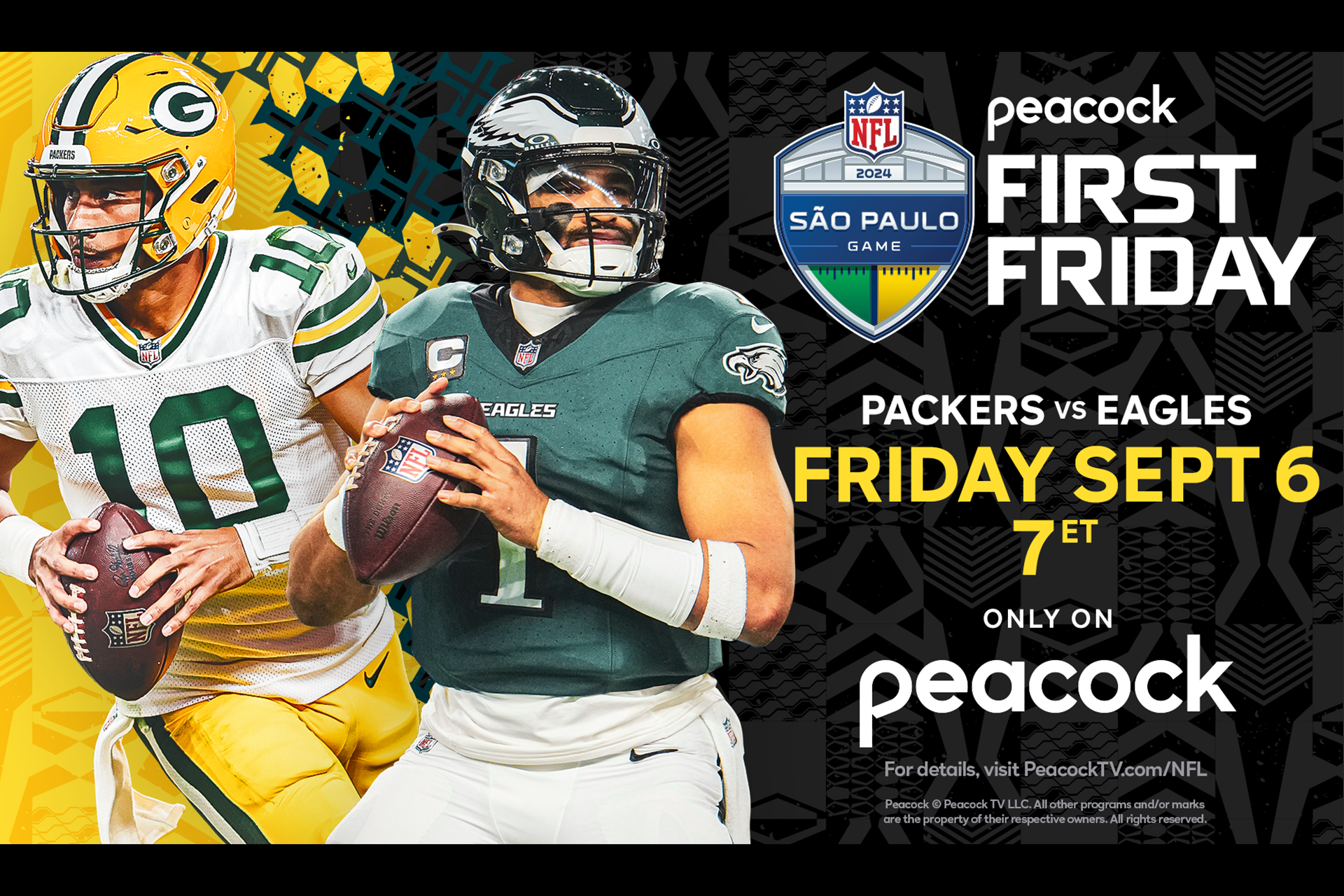
In recent seasons, the NFL has moved toward a model of digital exclusivity. When the Eagles and Packers face off, particularly in international series or special Friday night windows, the broadcast often lands on NBC’s Peacock platform. From a technological standpoint, this requires viewers to engage with a specific app environment that manages DRM (Digital Rights Management) and adaptive bitrate streaming differently than a standard cable box.
Peacock utilizes the Comcast Technology Solutions (CTS) stack, which is designed to handle massive concurrent viewership spikes. For the user, this means having a device capable of running the latest version of the Peacock app to support features like “Catch Up with Key Plays,” an AI-driven tool that summarizes the game for latecomers.
Technical Infrastructure Required for 4K Sports Streaming
While many broadcasts are still delivered in 1080p, the push toward 4K (Ultra HD) and HDR (High Dynamic Range) is the current frontier of sports tech. Streaming the Eagles vs Packers in 4K requires a consistent downstream bandwidth of at least 25 Mbps. However, network engineers recommend a “headroom” of 50 Mbps to account for other devices on the network.
The use of HEVC (High-Efficiency Video Coding) or H.265 compression allows these platforms to deliver high-quality images without saturating the user’s entire bandwidth. If you are watching via a platform like YouTube TV or FuboTV, these services utilize advanced transcoding at the edge of the network to ensure that the “last mile” delivery to your home is as efficient as possible.
Best Streaming Apps and Services for the Eagles vs Packers Matchup
Selecting the right software interface is critical for accessing the game. The “best” platform often depends on the viewer’s specific hardware ecosystem and their requirement for low-latency performance.
YouTube TV and the Sunday Ticket Integration
YouTube TV has become the gold standard for NFL streaming due to its acquisition of NFL Sunday Ticket. For a game involving the Eagles and Packers, YouTube TV offers a “Multiview” feature. This is a significant piece of software engineering that allows the server side to stitch together four different live feeds into a single stream. This reduces the processing load on the user’s local device, as the “stitching” happens in the cloud rather than on the smart TV or streaming stick.
Furthermore, YouTube TV’s DVR functionality is entirely cloud-based, meaning there is zero impact on local storage. Its integration with Google Assistant also allows for voice-activated channel switching, which is a hallmark of the modern smart home tech stack.
FuboTV: The Sports-First Tech Stack
FuboTV differentiates itself through a heavy focus on high-frame-rate (HFR) streaming. Sports content, characterized by rapid lateral movement, often suffers from “motion blur” on standard 30fps (frames per second) streams. FuboTV prioritizes 60fps across its sports channels, which requires more robust GPU processing on the viewer’s device. For an Eagles vs Packers game, where every yard matters, the clarity provided by HFR can be the difference between seeing a catch in-bounds and seeing a blurred pixelated mess.
Hulu + Live TV and the Disney Bundle Ecosystem
For those entrenched in the Disney/ESPN ecosystem, Hulu + Live TV offers a seamless integration of live broadcast channels and the ESPN+ app. This is particularly relevant if the Eagles vs Packers game is being simulcast on ESPN or ABC. Hulu’s interface uses a proprietary recommendation engine that analyzes viewing habits to surface live sports events prominently on the home screen, reducing the “time to content” metric that UX designers prioritize.
Overcoming Geo-Restrictions: Digital Security and VPN Technology
The NFL’s complex licensing agreements often lead to “blackouts” or geo-restrictions, where a game might not be available in a specific region due to local broadcast rights. Navigating these hurdles requires a basic understanding of digital security and location-masking tools.
Why Geo-Blocking Happens in Professional Sports
Geo-blocking is enforced through IP-based location tracking. When you attempt to watch the Eagles vs Packers, the streaming service checks your IP address against a database of geographical regions. If your IP is flagged as being inside a restricted zone, the stream is “blacked out.” This is a programmatic enforcement of legal contracts between the league and local affiliates.
Selecting a Low-Latency VPN for Live Events
To circumvent these restrictions, many tech enthusiasts employ a Virtual Private Network (VPN). However, not all VPNs are created equal for live sports. The primary concern is “latency” or “ping.” A VPN encrypts your data and routes it through a remote server, which naturally adds a delay.
When watching a live game, a delay of even 30 seconds can lead to “spoiler alerts” from social media or neighbors cheering. Using a VPN with high-speed protocols like WireGuard is essential. WireGuard offers better performance than the older OpenVPN protocol because it uses state-of-the-art cryptography and a smaller codebase, resulting in faster data throughput and lower overhead.
Hardware Optimization: Getting the Most Out of the Viewing Experience
The software is only as good as the hardware it runs on. To truly experience the Eagles vs Packers in its best light, the physical layer of the tech stack must be optimized.
Smart TVs vs. Dedicated Streaming Dongles
While most modern TVs come with built-in apps, they often lack the processing power found in dedicated streaming devices like the Apple TV 4K, NVIDIA Shield, or Amazon Fire TV Cube. These devices feature dedicated SOCs (System on a Chip) designed specifically for video decoding.
The Apple TV 4K, for instance, uses the A15 Bionic chip, which allows for instantaneous app switching and superior upscaling of non-4K content. For a high-motion event like an NFL game, the hardware-level frame rate matching feature on these devices ensures that the TV’s refresh rate matches the broadcast’s frame rate, eliminating “judder.”
Network Optimization: Ethernet vs. Wi-Fi 6 for Live Sports
Even the best streaming device will fail on a congested Wi-Fi network. For live sports, a hardwired Ethernet connection is always the superior choice. Ethernet provides a full-duplex connection with zero interference from other household appliances.
If a wired connection is impossible, upgrading to a Wi-Fi 6 (802.11ax) or Wi-Fi 6E router is the next best step. Wi-Fi 6 introduces OFDMA (Orthogonal Frequency Division Multiple Access), which allows the router to serve multiple devices more efficiently by dividing a single channel into smaller sub-channels. This ensures that your Eagles vs Packers stream doesn’t drop in quality just because another family member is downloading a large file in another room.
The Future of Sports Consumption: AI, AR, and Multi-View Technology
As we look at where to watch the Eagles vs Packers today, we can see the seeds of tomorrow’s technology being planted in the current broadcast infrastructure.
AI-Driven Real-Time Stats and Overlays
The “Next Gen Stats” powered by AWS (Amazon Web Services) are a prime example of AI in sports tech. Using RFID chips embedded in players’ shoulder pads and the ball, the system tracks location, speed, and acceleration in real-time. This data is processed in the cloud and returned to the broadcast feed as an augmented reality (AR) overlay. As a viewer, you are not just watching a game; you are consuming a data-rich environment where “Expected Rushing Yards” and “Probability of Completion” are calculated on the fly by machine learning models.

The Impact of Low-Latency Protocols on the Fan Experience
The ultimate goal for streaming engineers is “sub-second latency.” Currently, most digital streams lag behind the live action by 20 to 60 seconds. However, the adoption of LL-HLS (Low Latency HTTP Live Streaming) and WebRTC is shrinking this gap. These protocols allow for smaller data chunks to be sent to the player, reducing the buffer time required. When these technologies become standard, the “digital” fan watching the Eagles vs Packers will finally be in perfect sync with the “linear” fan, creating a unified global viewing experience that was previously impossible.
In conclusion, knowing where to watch the Eagles vs Packers is an exercise in understanding the current state of digital media, networking, and hardware optimization. By selecting the right platforms, securing the connection, and utilizing high-performance hardware, viewers can ensure they are at the forefront of the technological revolution in sports broadcasting.
aViewFromTheCave is a participant in the Amazon Services LLC Associates Program, an affiliate advertising program designed to provide a means for sites to earn advertising fees by advertising and linking to Amazon.com. Amazon, the Amazon logo, AmazonSupply, and the AmazonSupply logo are trademarks of Amazon.com, Inc. or its affiliates. As an Amazon Associate we earn affiliate commissions from qualifying purchases.