
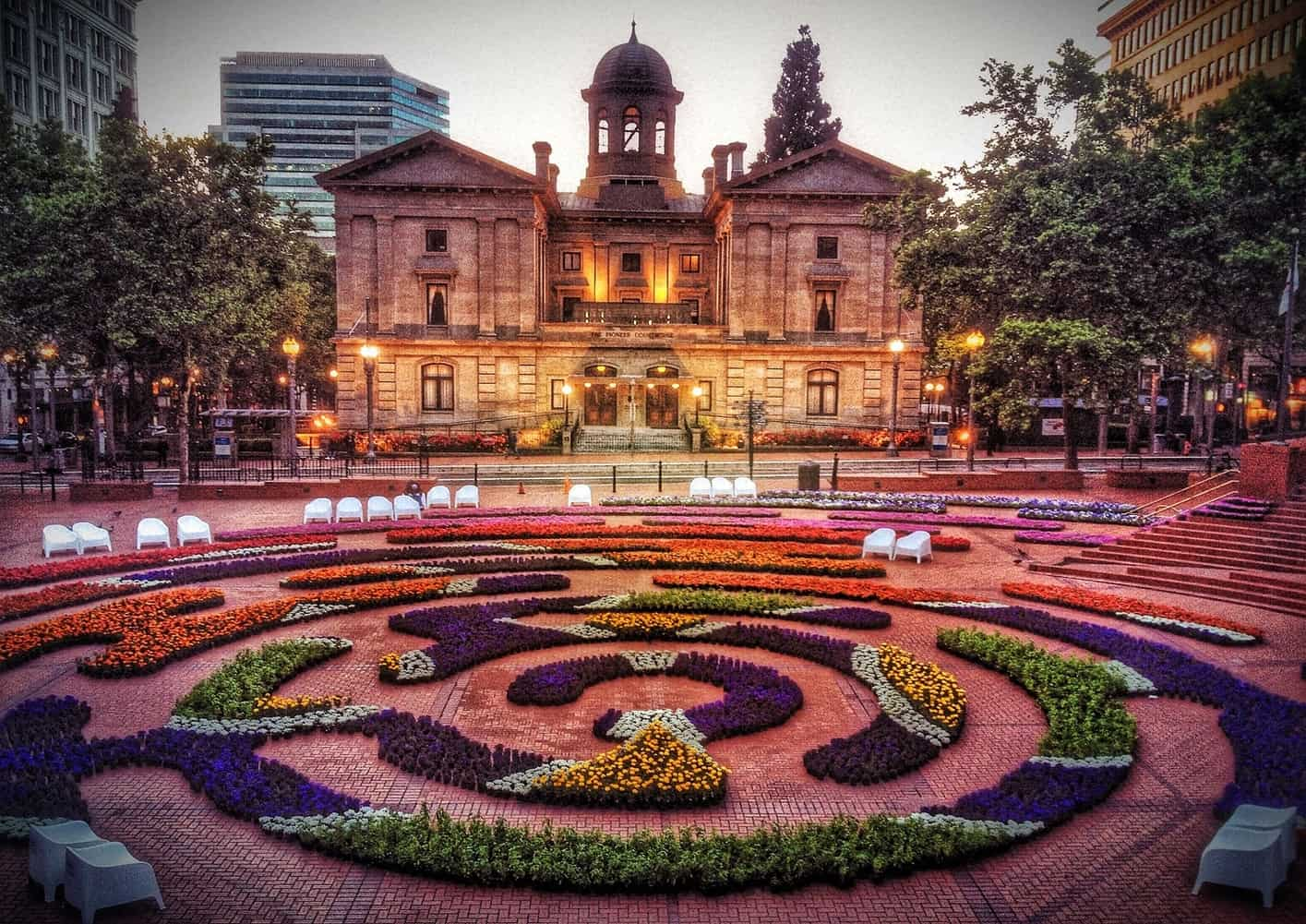
Portland, Oregon, is far more than a Pacific Northwest hub for coffee enthusiasts and nature lovers; it is a global epicenter for brand innovation, design-led thinking, and the “maker” economy. For professionals in brand strategy, corporate identity, and marketing, a visit to the Rose City is an immersive study in how a distinct local culture can be scaled into a world-recognized identity. Often referred to as the “Silicon Forest,” Portland provides a unique intersection of heritage branding and disruptive retail experiences. To understand where to visit in Portland is to understand the physical manifestation of brand equity, community-driven narratives, and the power of experiential marketing.
The Epicenters of Global Corporate Identity
While the city center pulsates with independent spirit, the outskirts and surrounding districts house some of the most influential corporate brands in the world. These locations are not merely offices; they are the architectural embodiments of brand missions.
The Nike World Headquarters and the Athlete-Centric Narrative
Located just outside the city in Beaverton, the Nike World Headquarters represents the gold standard in brand storytelling through environment. A visit here—even to the public-facing peripheries—reveals a masterclass in brand consistency. Every building is named after a legendary athlete, reinforcing the company’s core mission to “bring inspiration and innovation to every athlete in the world.”
From a brand strategy perspective, Nike’s campus demonstrates how a corporate identity can be integrated into the physical landscape. The use of the “Swoosh” is curated with surgical precision, appearing in subtle textures and grand architectural statements alike. For a brand professional, observing the synergy between Nike’s heritage and its futuristic innovation labs offers insights into how to maintain a legacy brand while remaining at the cutting edge of cultural relevance.
Columbia Sportswear and the Heritage of Resilience
In contrast to Nike’s high-performance futurism, Columbia Sportswear’s presence in Portland—specifically its flagship store downtown—showcases the power of “heritage branding.” The brand has successfully leveraged the persona of its late chairperson, Gert Boyle (the “Tough Mother”), to create an identity centered on durability and no-nonsense quality.
Visiting the flagship retail space allows one to see how Columbia uses local Pacific Northwest imagery to anchor its global marketing strategy. The store acts as a touchpoint for the brand’s “Tested Tough” promise, utilizing materials and visual merchandising that reflect the rugged environments for which the products are designed. It is a lesson in how a brand can own a specific geographical narrative to build trust with a global audience.
The “Keep Portland Weird” Phenomenon: Community-Driven Brand Narratives
One of the most successful examples of city branding in the 21st century is the “Keep Portland Weird” slogan. While originally borrowed from Austin, Texas, Portland adopted it so thoroughly that it became the definitive filter through which all local business branding is viewed. For brand strategists, the city’s smaller boutiques and local chains provide a case study in “anti-corporate” branding that achieves massive commercial success.
Powell’s Books: Scaling the Local Experience
Powell’s City of Books is not just the world’s largest independent bookstore; it is a landmark in experiential branding. In an era where digital disruption has decimated traditional retail, Powell’s remains a thriving destination. Its brand strategy relies on the “treasure hunt” experience. The color-coded rooms and the labyrinthine layout are intentional design choices that encourage exploration—a physical manifestation of the intellectual curiosity the brand represents.
Powell’s success demonstrates that a brand’s physical footprint can be its most powerful marketing tool. By positioning itself as a “city” within a city, the brand creates an indispensable community hub that a digital interface cannot replicate. It provides a blueprint for how traditional businesses can leverage physical space to create a moat against digital-first competitors.
Voodoo Doughnut and the Power of Disruptive Visual Identity
Voodoo Doughnut is perhaps the most prominent example of how “weirdness” can be codified into a scalable brand. From its pink boxes to its unconventional flavor profiles and occult-themed decor, Voodoo bypassed traditional bakery marketing to create a cult-like following.
The brand’s strategy focuses on “the line” as a marketing asset. The long queues outside its Old Town location serve as social proof, signaling to tourists and locals alike that the experience is an essential rite of passage. For brand designers, Voodoo represents the triumph of a high-concept visual identity over standard industry norms. It proves that a strong, even polarizing, brand voice can drive international recognition and expansion.
The Design Districts: Where Aesthetics Meet Strategy
Portland’s urban planning and the revitalization of its industrial sectors provide a framework for understanding how geography influences brand perception. Two specific areas, the Pearl District and the Central Eastside, offer contrasting lessons in corporate identity and the maker movement.
The Pearl District: Industrial Rebranding and Luxury Positioning
The Pearl District is a premier example of urban rebranding. Once a neglected warehouse district, it has been transformed into a hub of high-end galleries, luxury lofts, and premium retail. This transition was not accidental; it was a curated effort to create a “luxury-industrial” aesthetic that has since been emulated in cities worldwide.
For brand professionals, the Pearl District offers a look at how visual consistency—reclaimed wood, exposed brick, and minimalist signage—can elevate the perceived value of a neighborhood. Brands that choose to locate here, such as Filson or REI, are engaging in “associative branding,” aligning themselves with the district’s reputation for quality, craftsmanship, and sophisticated urban living.
Central Eastside: The Maker Movement as a Brand Pillar
On the opposite bank of the Willamette River, the Central Eastside Industrial District serves as the engine room for Portland’s “maker” brand. This area is home to craft breweries, coffee roasters, and design studios. The brand strategy here is one of “radical transparency.”
Visiting a roastery like Coava Coffee or a distillery on Distillery Row allows one to see the production process in real-time. This “open-kitchen” approach to branding builds authenticity and trust. It shifts the consumer’s role from a passive buyer to an engaged participant in the craft. In the modern market, where consumers demand to know the origin and ethics of their products, the Central Eastside provides a roadmap for building a brand based on artisanal integrity.
Hospitality as Brand Experience
The hospitality sector in Portland has redefined the concept of “lifestyle branding.” No visit to the city from a strategic perspective is complete without analyzing how the local hotels and culinary establishments have exported the Portland aesthetic to the rest of the world.
The Ace Hotel: Revolutionizing Boutique Branding
The Ace Hotel Portland is arguably the birthplace of the modern “hipster” aesthetic in hospitality. By integrating local art, custom furniture, and a high-low mix of luxury and utilitarianism, the Ace created a brand that felt curated rather than manufactured.
The strategy here was to create a “social hub” rather than just a place to sleep. The lobby, with its communal tables and Stumptown Coffee bar, became a workspace for the city’s creative class. This approach demonstrated that a hotel brand could achieve global influence by being intensely local. The “Ace aesthetic” has since become a global shorthand for creative, design-led hospitality, proving that a strong brand POV can disrupt a legacy industry dominated by standardized chains.

The Gastronomic Brand: From Food Carts to Fine Dining
Portland’s food scene is a vital component of its city brand. The “food cart pod” model is a unique retail strategy that allows for low-barrier market entry for new brands. For a marketing professional, these pods are incubators for brand testing.
When a food cart scales to a brick-and-mortar location—as seen with brands like Pine State Biscuits or Lardo—it provides a case study in brand evolution. These businesses must maintain their “scrappy” origins while professionalizing their operations and visual identity for a broader audience. Observing this transition across the city’s various culinary neighborhoods offers profound insights into brand scalability and the maintenance of “authenticity” during growth.
In conclusion, Portland is a living laboratory for brand strategy. Whether it is the global dominance of Nike’s athletic narrative, the disruptive “weirdness” of Voodoo Doughnut, or the artisanal transparency of the Central Eastside, the city offers endless examples of how identity, design, and community engagement can be synthesized into powerful, lasting brands. For those looking to understand the future of brand experience, Portland is an essential destination.
aViewFromTheCave is a participant in the Amazon Services LLC Associates Program, an affiliate advertising program designed to provide a means for sites to earn advertising fees by advertising and linking to Amazon.com. Amazon, the Amazon logo, AmazonSupply, and the AmazonSupply logo are trademarks of Amazon.com, Inc. or its affiliates. As an Amazon Associate we earn affiliate commissions from qualifying purchases.