
Understanding and fulfilling your federal estimated tax obligations is a critical aspect of sound financial management, particularly for those whose income isn’t subject to standard payroll withholding. Whether you’re a burgeoning freelancer, a seasoned small business owner, an investor with significant capital gains, or an individual receiving alimony, dividends, or rental income, estimated taxes ensure you meet your tax liability throughout the year, preventing unwelcome surprises and penalties come tax season. While electronic payment methods have gained significant traction, the traditional method of mailing a check or money order remains a viable option for many taxpayers. Navigating the correct mailing procedures, however, is paramount to ensure your payments are accurately processed by the Internal Revenue Service (IRS).
Understanding Estimated Taxes and Why They Matter
The U.S. tax system operates on a “pay-as-you-go” principle. This means taxpayers are generally required to pay income tax as they earn or receive income throughout the year, rather than waiting until the annual tax deadline. For most employed individuals, this is handled through payroll withholding by their employer. However, for those with income not subject to withholding, estimated tax payments become essential.
Who Needs to Pay Estimated Taxes?
You are generally required to pay estimated tax if you expect to owe at least $1,000 in tax for the year. This primarily applies to:
- Self-Employed Individuals: Sole proprietors, partners in a partnership, and S corporation shareholders who expect to owe tax on their business income.
- Gig Economy Workers: Individuals earning income through platforms like ride-sharing, food delivery, or freelance marketplaces.
- Investors: Those with significant income from interest, dividends, capital gains, or other investment earnings.
- Individuals with Other Unwithheld Income: This can include income from rental properties, alimony, prizes, awards, or pensions and annuities if withholding isn’t sufficient.
- Corporations: Businesses (other than S corporations) generally must also make estimated tax payments if they expect to owe $500 or more in tax for the year.
Failing to pay enough tax through withholding or estimated tax payments throughout the year could result in an underpayment penalty. The IRS levies this penalty to encourage compliance with the pay-as-you-go system.
The “Pay-as-You-Go” System
The purpose of estimated taxes is to approximate your total tax liability for the year and pay it in quarterly installments. This prevents taxpayers from accumulating a large tax bill by year-end that they might struggle to pay, and it ensures a steady flow of revenue for the government. The IRS’s Form 1040-ES, Estimated Tax for Individuals, is the primary tool for calculating and paying these taxes. It guides you through estimating your adjusted gross income, deductions, credits, and ultimately, your tax liability for the year.
Calculating Your Estimated Tax
Accurately calculating your estimated tax is crucial. You’ll need to project your income, deductions, and credits for the entire tax year. Many individuals use their previous year’s tax return as a starting point, adjusting for any anticipated changes in income or expenses. The Form 1040-ES includes a worksheet to help with this calculation. If your financial situation changes significantly during the year, you may need to recalculate and adjust your remaining estimated tax payments. Tax preparation software or a qualified tax professional can also assist with these projections.
The Traditional Method: Mailing Your Payment
Despite the rise of digital options, mailing a physical payment remains a widely used method for submitting federal estimated taxes. However, it requires careful attention to detail to ensure your payment reaches the correct IRS facility and is processed promptly.
Form 1040-ES Payment Vouchers
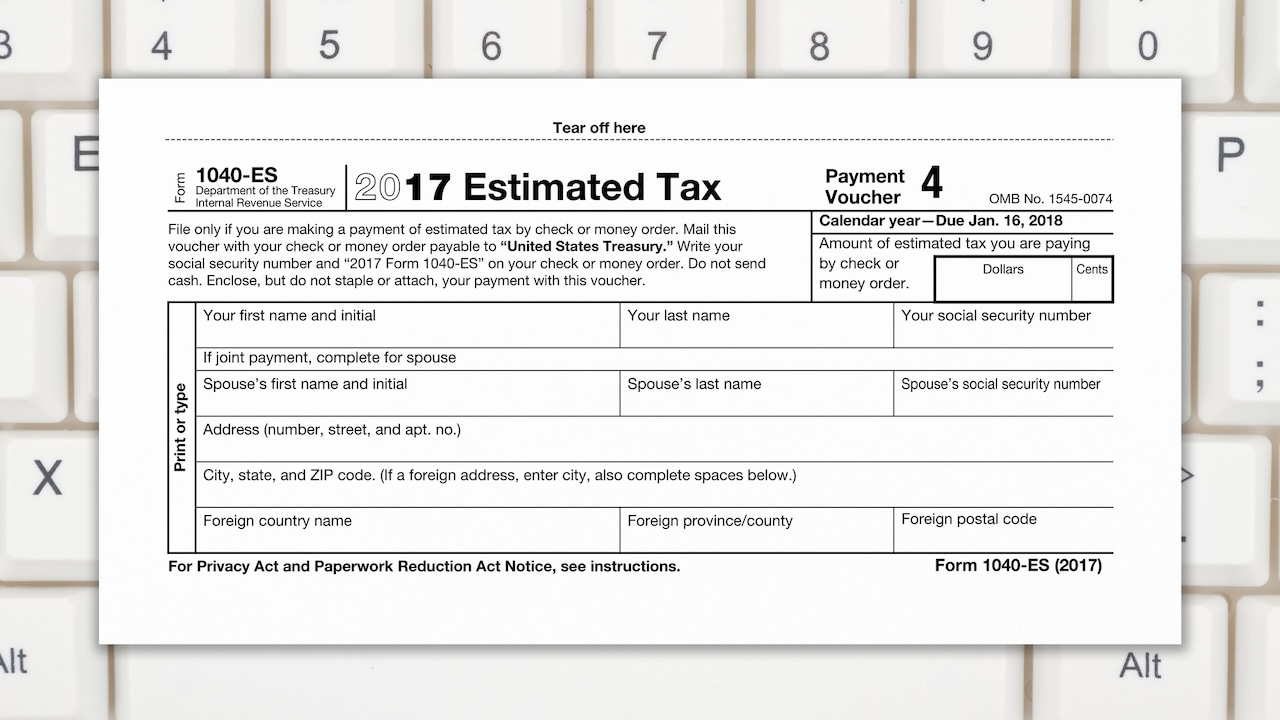
When mailing your estimated tax payment, you must include a payment voucher from Form 1040-ES. Each voucher is specifically designated for a particular payment period (e.g., “Voucher 1,” “Voucher 2,” etc.). It’s imperative to use the correct voucher for the quarter you are paying, as it contains information critical for the IRS to identify your payment correctly, including your name, address, Social Security number, and the amount being paid. Do not staple your check or money order to the voucher; simply enclose it.
Identifying the Correct Mailing Address
Perhaps the most critical step in mailing your payment is using the correct IRS mailing address. These addresses are geographically specific and depend on the state in which you reside and, in some cases, the type of tax form you are filing.
- For Individuals (Form 1040-ES): The IRS publishes specific mailing addresses for Form 1040-ES payments in the instructions for the form itself. These addresses are grouped by state. For example, taxpayers residing in California, Hawaii, or Alaska might mail their payments to a processing center in California, while those in New York or New Jersey might send theirs to an address in Pennsylvania. It is absolutely essential to consult the most current Form 1040-ES instructions or the official IRS website (IRS.gov) to find the precise address for your state. Mailing to an incorrect address can significantly delay processing and potentially result in penalties.
- For Corporations (Form 1120-ES): Corporations also have estimated tax obligations and use Form 1120-ES. The mailing addresses for corporate estimated tax payments are also found in the instructions for that specific form and vary based on the corporation’s location.
Always verify the current mailing address directly from IRS.gov or the most recent form instructions. Do not rely on old forms or third-party websites without cross-referencing, as addresses can change.
Essential Mailing Best Practices
To ensure your mailed estimated tax payment is handled efficiently and securely:
- Payment Instrument: Always use a check or money order. Never mail cash. Make your check or money order payable to “United States Treasury.”
- Identification on Payment: Write your name, address, daytime phone number, Social Security number (SSN) or Employer Identification Number (EIN), the tax year, and “Form 1040-ES” (or “Form 1120-ES” for corporations) on your check or money order. This information acts as a backup identifier should the voucher become separated.
- Postmark Date: Your payment is considered “on time” if it is postmarked by the due date. The IRS uses the U.S. Postal Service (USPS) postmark date as proof of timely filing. If you use a private delivery service, the IRS recognizes specific designated services (e.g., FedEx, UPS) and their postmarks.
- Proof of Mailing: For your records and peace of mind, consider sending your payment via certified mail with a return receipt requested. This provides irrefutable proof that you mailed your payment and that the IRS received it.
- Keep Records: Always make a copy of your check or money order, the completed payment voucher, and your proof of mailing before sending it.
Modern Alternatives: Electronic Payment Methods
While mailing is a valid option, the IRS strongly encourages electronic payments due to their speed, security, and convenience. Several reliable digital methods are available for federal estimated tax payments.
IRS Direct Pay
IRS Direct Pay allows you to pay your taxes directly from your checking or savings account for free. It’s a simple, secure way to make various tax payments, including estimated taxes (Form 1040-ES).
- Pros: It’s free, secure, and available 24/7. You receive immediate confirmation once your payment is submitted.
- Cons: You can only schedule payments up to 365 days in advance. It doesn’t allow for partial payments towards a single estimated tax period; each payment is a distinct transaction.
Electronic Federal Tax Payment System (EFTPS)
EFTPS is a free service provided by the U.S. Department of the Treasury that allows individual and business taxpayers to make federal tax payments electronically. It’s especially popular among businesses and individuals who need to schedule payments well in advance or manage multiple types of federal tax obligations.
- Pros: You can schedule payments up to 365 days in advance, providing excellent control over your payment schedule. It handles all types of federal taxes (estimated, payroll, corporate, etc.). It offers a comprehensive history of your payments.
- Cons: Requires an enrollment process, which can take 5-7 business days to complete as a PIN is mailed to you. It might have a slightly steeper learning curve than IRS Direct Pay initially.
Credit or Debit Card Payments
The IRS allows taxpayers to pay estimated taxes using a credit card, debit card, or digital wallet through authorized third-party payment processors.
- Pros: Offers convenience and the potential to earn credit card rewards (points, miles, cashback).
- Cons: Third-party processors charge a fee for this service, typically a percentage of the payment amount (for credit cards) or a flat fee (for debit cards). These fees can add up, potentially negating any credit card rewards.
Tax Software Integration
Many popular tax preparation software programs (e.g., TurboTax, H&R Block) allow you to calculate your estimated taxes and then make the payments directly through their platform, often integrating with IRS Direct Pay or EFTPS. This streamlines the process, keeping all your tax activities in one place.
Important Deadlines and Penalties
Adhering to the quarterly due dates for estimated taxes is crucial to avoid underpayment penalties.
Quarterly Payment Due Dates
The tax year is divided into four payment periods with specific due dates:
- Period 1 (January 1 to March 31): Due April 15
- Period 2 (April 1 to May 31): Due June 15
- Period 3 (June 1 to August 31): Due September 15
- Period 4 (September 1 to December 31): Due January 15 of the following year
If any of these dates fall on a weekend or holiday, the deadline shifts to the next business day. For example, if April 15 is a Saturday, the due date moves to Monday, April 17.
Avoiding Underpayment Penalties
The IRS generally charges a penalty if you don’t pay enough tax throughout the year through withholding or estimated payments. You can typically avoid this penalty if you meet one of the “safe harbor” rules:
- 90% Rule: You pay at least 90% of your current year’s tax liability.
- 100% (or 110%) Rule: You pay 100% of your prior year’s tax liability (or 110% if your Adjusted Gross Income (AGI) in the prior year was more than $150,000 for single filers, married filing separately, or head of household; or $75,000 for married filing separately).
The penalty is calculated on the underpaid amount for the period of underpayment.
What If You Miss a Payment?
If you miss an estimated tax payment or pay less than required for a quarter, you should pay the missed amount as soon as possible, ideally with your next quarterly payment. While this won’t fully erase the penalty for the earlier underpayment, it will reduce the duration of the underpayment period, thereby mitigating the penalty. The IRS Form 2210, Underpayment of Estimated Tax by Individuals, Estates, and Trusts, can help you determine if you owe a penalty and calculate its amount.
Record Keeping and Verification
Diligent record-keeping is your best defense in case of any discrepancies with the IRS. It provides proof that you met your obligations.
Maintaining Thorough Records
For every estimated tax payment, keep a detailed record that includes:
- A copy of the completed payment voucher (Form 1040-ES).
- A copy of your check or money order.
- Proof of mailing (e.g., certified mail receipt) if you mailed the payment.
- Confirmation numbers if you paid electronically through IRS Direct Pay, EFTPS, or a third-party processor.
- Bank statements showing the payment cleared your account.
Organize these records by tax year and payment quarter for easy retrieval.
Confirming IRS Receipt
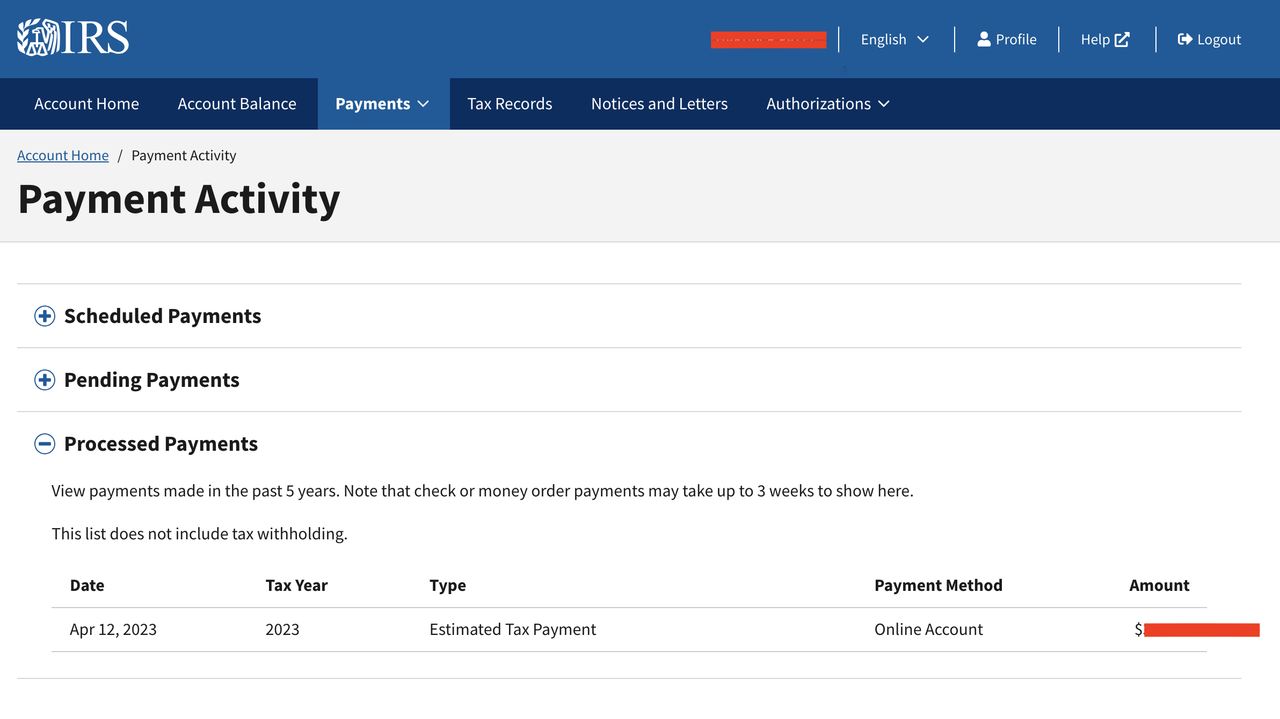
If you pay electronically, you’ll typically receive an immediate confirmation number. For mailed payments, it may take several weeks for the IRS to process and reflect the payment on your tax account. You can check your tax account transcript on IRS.gov for payment history, but often this is only updated periodically. If you used certified mail, the return receipt is your primary confirmation.

When to Contact the IRS
If you suspect a payment issue, such as a payment not being reflected on your account after a reasonable time, or if you receive a notice from the IRS regarding underpayment despite having made payments, contact the IRS directly. Have all your payment records readily available to provide accurate information.
Whether you choose the traditional mailing method or one of the convenient electronic options, the key to successful estimated tax payments lies in accuracy, timeliness, and meticulous record-keeping. By understanding the process and leveraging available resources, you can confidently fulfill your obligations and maintain a healthy financial standing with the federal government.
aViewFromTheCave is a participant in the Amazon Services LLC Associates Program, an affiliate advertising program designed to provide a means for sites to earn advertising fees by advertising and linking to Amazon.com. Amazon, the Amazon logo, AmazonSupply, and the AmazonSupply logo are trademarks of Amazon.com, Inc. or its affiliates. As an Amazon Associate we earn affiliate commissions from qualifying purchases.