
In the dynamic world of finance, from personal savings to complex investment portfolios, the ability to accurately measure growth is paramount. Whether you’re a seasoned investor, a budding entrepreneur, or simply managing your household budget, understanding “percent gain” is a foundational skill that empowers informed decision-making. This metric provides a standardized way to evaluate the relative increase in value of an asset, investment, or even a business’s revenue over a specific period. It moves beyond mere absolute numbers, offering a clear, comparative view of performance that is essential for setting goals, assessing strategies, and identifying opportunities.
This article will demystify the calculation of percent gain, walking you through its fundamental formula, practical applications, and advanced considerations. By mastering this seemingly simple calculation, you unlock a powerful lens through which to view and optimize your financial journey.
I. Understanding the Fundamentals of Percent Gain
At its core, percent gain is a measure of relative change. It quantifies how much an item’s value has increased in proportion to its initial value, expressed as a percentage. This relative perspective is crucial because an absolute gain of $1,000 means very different things if your initial investment was $1,000 versus $100,000.
Defining Percent Gain: The Essence of Growth Measurement
Percent gain, also known as percentage increase or return on investment (ROI) in certain contexts, measures the positive change in value of an item relative to its starting point. It answers the question: “By what percentage has this asset grown?” For instance, if you buy a stock for $100 and it later sells for $120, your absolute gain is $20. But the percent gain tells you that your money has grown by 20%, offering a much clearer picture of efficiency and performance, especially when comparing against other investments or benchmarks.
Why Percent Gain Matters: From Portfolios to Profitability
The significance of percent gain extends across virtually all aspects of financial management:
- Investment Performance: It’s the primary metric for evaluating stocks, bonds, mutual funds, real estate, and other assets. It allows investors to compare the effectiveness of different investments regardless of their initial capital outlay.
- Business Analysis: Companies use percent gain to assess revenue growth, profit margin improvements, and market share expansion. It’s vital for stakeholders to understand the health and trajectory of a business.
- Personal Finance: Tracking percent gain on savings accounts, retirement funds, or even the value of personal assets (like a home) helps individuals monitor their financial progress towards long-term goals.
- Economic Indicators: Governments and economists use percent gain to report on GDP growth, inflation rates, and other macroeconomic trends.
Without understanding percent gain, evaluating financial decisions becomes akin to driving without a speedometer – you know you’re moving, but not how fast or efficiently.
The Core Formula Unveiled: The Universal Equation
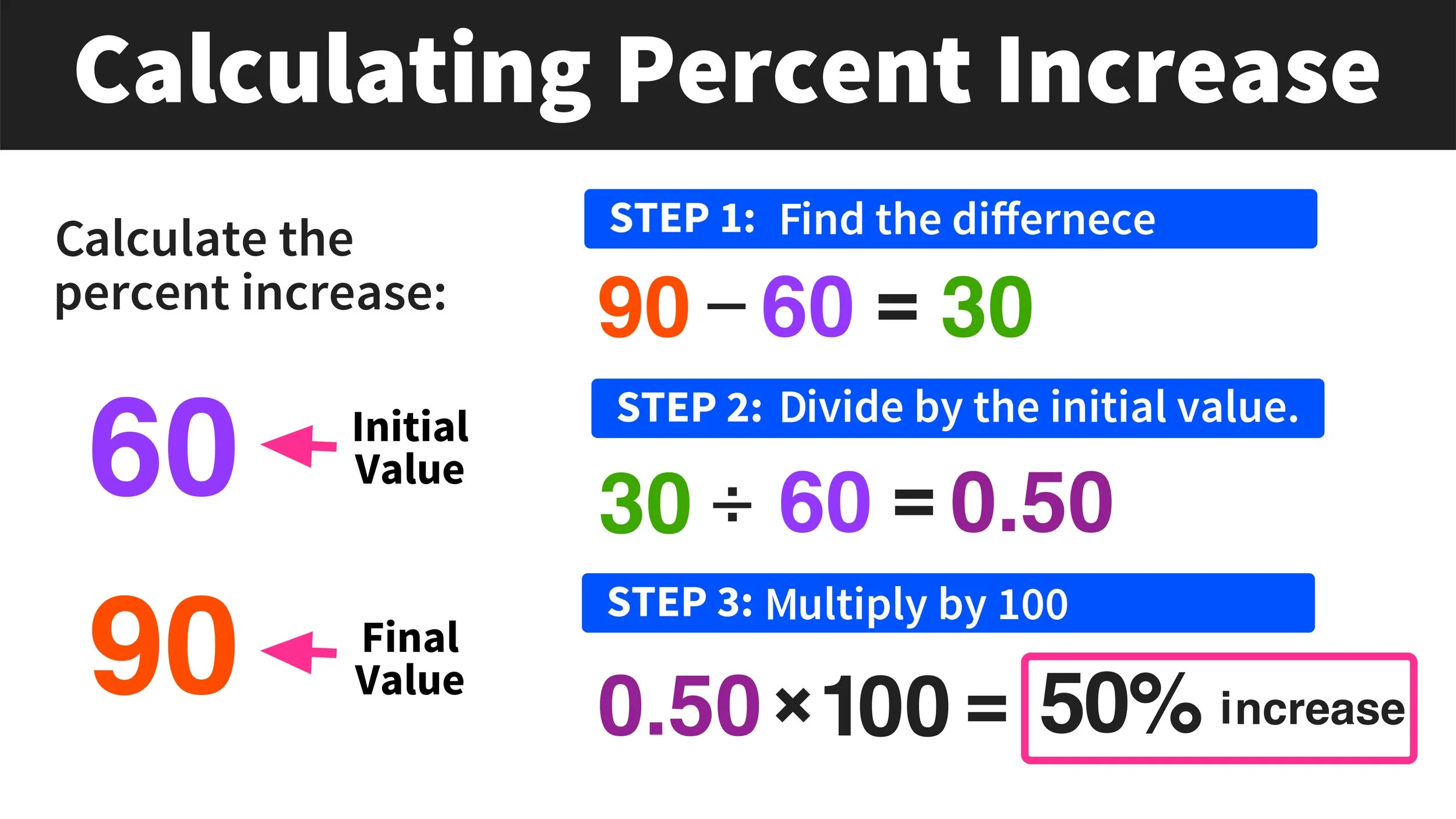
The formula for calculating percent gain is elegantly straightforward and universally applicable:
Percent Gain = [ (Final Value – Initial Value) / Initial Value ] * 100
Let’s break down each component:
- Final Value (FV): This is the current or selling value of the asset, investment, or financial metric after a period of growth.
- Initial Value (IV): This is the original purchase price or starting value of the asset, investment, or financial metric.
- Subtracting (FV – IV): This step calculates the absolute gain or the raw dollar amount of increase.
- Dividing by Initial Value: This converts the absolute gain into a decimal representing the relative proportion of increase against the original amount.
- Multiplying by 100: This converts the decimal into a percentage, making it easy to interpret and compare.
This formula serves as the bedrock for all percent gain calculations, regardless of the complexity of the underlying asset or scenario.
II. Step-by-Step Calculation and Practical Examples
Applying the percent gain formula is best understood through practical scenarios. Let’s walk through several examples that highlight its versatility across different financial contexts.
A Simple Walkthrough: Your First Savings Calculation
Imagine you deposited $500 into a new savings account. After one year, the account balance grew to $525 due to interest.
- Identify Initial Value (IV): $500
- Identify Final Value (FV): $525
- Calculate Absolute Gain: $525 – $500 = $25
- Divide by Initial Value: $25 / $500 = 0.05
- Multiply by 100: 0.05 * 100 = 5%
Your savings account experienced a 5% percent gain over the year.
Example 1: Stock Market Investment
Let’s say you bought 100 shares of XYZ Corp. at $75 per share, for a total initial investment of $7,500. A year later, you sold all 100 shares at $90 per share, yielding $9,000. (For simplicity, we’ll ignore commissions and taxes for now).
- Initial Value (IV): 100 shares * $75/share = $7,500
- Final Value (FV): 100 shares * $90/share = $9,000
- Calculate Percent Gain:
(( $9,000 - $7,500 ) / $7,500) * 100($1,500 / $7,500) * 1000.20 * 100 = 20%
Your stock investment yielded a 20% percent gain.
Example 2: Real Estate Appreciation
Consider purchasing an investment property for $300,000. Five years later, you receive an offer to sell it for $390,000.
- Initial Value (IV): $300,000
- Final Value (FV): $390,000
- Calculate Percent Gain:
(( $390,000 - $300,000 ) / $300,000) * 100($90,000 / $300,000) * 1000.30 * 100 = 30%
The property appreciated by 30% over five years.
Example 3: Business Profit Margin Improvement
A small business had a net profit of $50,000 last year. This year, through various cost-cutting and revenue-enhancing strategies, its net profit increased to $65,000.
- Initial Value (IV): $50,000 (last year’s profit)
- Final Value (FV): $65,000 (this year’s profit)
- Calculate Percent Gain:
(( $65,000 - $50,000 ) / $50,000) * 100($15,000 / $50,000) * 1000.30 * 100 = 30%
The business improved its net profit by 30%. These examples demonstrate how the same fundamental formula can be applied across diverse financial situations, providing consistent and comparable performance metrics.
III. Advanced Considerations and Related Concepts
While the basic percent gain formula is powerful, a deeper understanding involves nuances and related concepts that can provide even greater clarity in financial analysis.
Differentiating Percent Gain from Absolute Gain: The Power of Context
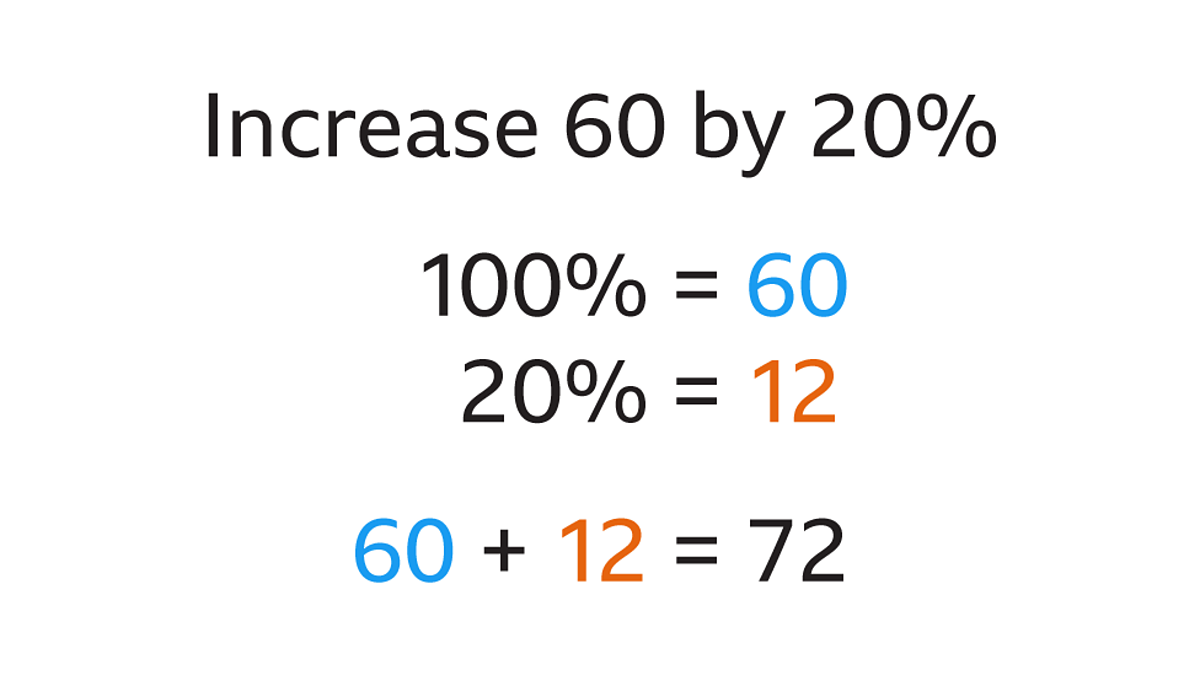
As briefly touched upon, percent gain offers context that absolute gain lacks. A $10,000 absolute gain on a $100,000 investment (10% gain) is far less impressive than a $10,000 absolute gain on a $10,000 investment (100% gain). In financial analysis, the relative measure (percent gain) is almost always preferred for comparison and evaluation because it normalizes the performance against the capital employed.
Understanding Percent Loss: The Inevitable Flip Side
Not every financial venture results in a gain. When the final value is less than the initial value, you experience a “percent loss.” The formula remains essentially the same, but the result will be a negative percentage.
Percent Loss = [ (Final Value – Initial Value) / Initial Value ] * 100
If you bought a stock for $100 and it dropped to $80, your calculation would be: (( $80 - $100 ) / $100) * 100 = ( -$20 / $100 ) * 100 = -20%. This signifies a 20% loss. Understanding percent loss is as crucial as understanding percent gain for managing risk and making recovery strategies.
Annualized Percent Gain vs. Simple Percent Gain: When Time Matters
A simple percent gain tells you the total increase over a period, but it doesn’t account for the duration of that period. A 20% gain over one year is excellent; a 20% gain over ten years is mediocre. This is where annualized percent gain comes in.
For investments held longer than one year, the Compound Annual Growth Rate (CAGR) is often used. It represents the mean annual growth rate of an investment over a specified period longer than one year, assuming the profits are reinvested at the end of each year.
The CAGR formula is:
CAGR = [ (Final Value / Initial Value)^(1 / Number of Years) – 1 ] * 100
Using our real estate example:
- Initial Value: $300,000
- Final Value: $390,000
- Number of Years: 5
CAGR = [ ($390,000 / $300,000)^(1 / 5) - 1 ] * 100
CAGR = [ (1.3)^(0.2) - 1 ] * 100
CAGR = [ 1.0538 - 1 ] * 100
CAGR = 0.0538 * 100 = 5.38%
So, while the simple percent gain was 30% over five years, the annualized percent gain was approximately 5.38%. This provides a much more accurate picture for comparing performance across different timeframes.
The Impact of Dividends and Interest: Accounting for All Returns
For investments, simply comparing the purchase price to the selling price might not capture the full picture of your return, especially if the asset generates income along the way.
- Dividends: Many stocks pay out dividends, which are distributions of a company’s earnings to its shareholders.
- Interest: Bonds, savings accounts, and certain other investments generate interest income.
To calculate the total percent gain (often referred to as total return), you must add any dividends or interest received to the final value before performing the calculation.
Total Percent Gain = [ ( (Final Value + Total Dividends/Interest) – Initial Value ) / Initial Value ] * 100
This comprehensive approach ensures you’re assessing the full financial benefit derived from your investment.
IV. Leveraging Tools and Avoiding Common Pitfalls
Calculating percent gain, especially with additional factors like dividends or annualized rates, can become tedious manually. Fortunately, various tools can streamline this process. Simultaneously, being aware of common errors can prevent misinterpretations of your financial performance.
Digital Calculators and Spreadsheets: Your Allies in Analysis
- Online Calculators: A plethora of free online percent gain or ROI calculators are available. These are excellent for quick, one-off calculations.
- Spreadsheet Software (Excel, Google Sheets): For managing multiple investments or tracking performance over time, spreadsheets are indispensable. You can set up formulas once and simply update the initial and final values, and any dividends, to get instant results.
- Example Excel Formula for Simple Percent Gain:
=(B2-A2)/A2(where A2 is Initial Value, B2 is Final Value). Remember to format the cell as a percentage. - Example Excel Formula for CAGR:
=( (B2/A2)^(1/C2) - 1 )(where A2 is Initial Value, B2 is Final Value, C2 is Number of Years).
- Example Excel Formula for Simple Percent Gain:
Common Mistakes to Avoid: Ensuring Accuracy
- Incorrect Initial/Final Values: Double-check that you’re using the correct values. For investments, factor in all costs (commissions, fees) into the initial value and deduct selling costs from the final value for a true net return.
- Ignoring Dividends/Interest: As discussed, neglecting income generated by an asset will lead to an underestimation of total percent gain.
- Mixing Timeframes: Do not compare a simple percent gain over five years with an annualized percent gain over one year. Always compare apples to apples (e.g., annualized returns vs. annualized returns).
- Focusing Only on Gains: It’s crucial to also calculate and understand percent losses. A balanced perspective on both helps in risk management.
- Not Accounting for Inflation: While beyond the scope of a basic percent gain calculation, experienced investors often adjust their returns for inflation to understand their “real” gain, i.e., their increase in purchasing power.
The Psychological Aspect of Gains and Losses: Behavioral Finance Insights
Understanding percent gain also touches upon behavioral finance. People often exhibit loss aversion, feeling the pain of a loss more acutely than the pleasure of an equivalent gain. This can lead to irrational financial decisions, such as holding onto losing investments too long hoping for recovery, or selling winning investments too soon to “lock in” profits. Objectively calculating percent gain and loss helps provide a rational basis for decision-making, countering these emotional biases.
V. Strategic Importance of Percent Gain in Financial Planning
Mastering percent gain calculation is not just an academic exercise; it’s a strategic tool that profoundly impacts your ability to manage and grow your wealth.
Setting Realistic Financial Goals: Mapping Your Future
Whether you’re saving for retirement, a down payment on a house, or a child’s education, percent gain allows you to project how long it might take to reach your goals. By estimating a realistic annual percent gain (e.g., from investments or business growth), you can forecast future values and adjust your contributions or timelines accordingly. This makes abstract goals tangible and actionable.
Evaluating Investment Performance: Making Smarter Choices
Percent gain is the ultimate benchmark for comparing different investment opportunities.
- Comparing Asset Classes: Is real estate outperforming stocks this decade?
- Evaluating Fund Managers: Is your mutual fund manager generating sufficient returns compared to their peers or a benchmark index?
- Assessing Personal Strategy: Are your chosen investment strategies yielding the expected results?
This comparative power of percent gain is indispensable for constructing a diversified and high-performing portfolio.
Making Informed Financial Decisions: Empowering Your Wealth Journey
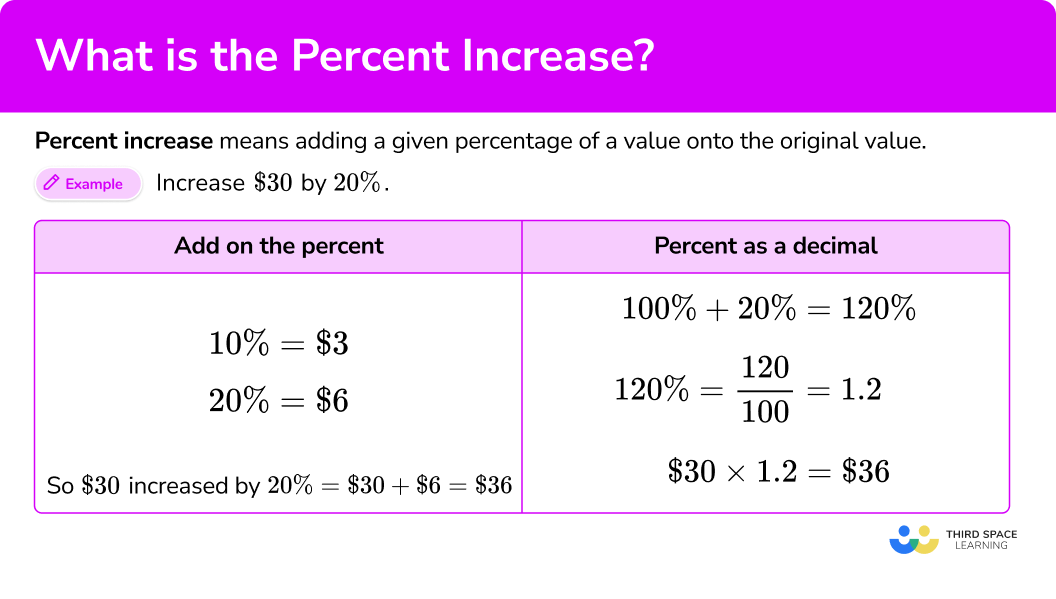
Ultimately, understanding percent gain empowers you to make data-driven decisions. It helps you:
- Identify high-performing assets and divest from underperformers.
- Negotiate better terms in business transactions by understanding profit margins.
- Gauge the effectiveness of personal financial habits, such as the interest earned on savings.
- Develop a clearer picture of your net worth growth and overall financial health.
It transforms vague notions of “doing well” into precise, measurable, and actionable insights, putting you firmly in control of your financial destiny.
In conclusion, the ability to calculate percent gain is more than a mathematical trick; it is a fundamental pillar of financial literacy. From evaluating a single stock trade to assessing the long-term growth of your entire financial empire, this simple formula provides clarity, context, and the confidence to navigate the complex world of money. Embrace this crucial skill, and you’ll be better equipped to make insightful decisions that propel you toward your financial aspirations.
aViewFromTheCave is a participant in the Amazon Services LLC Associates Program, an affiliate advertising program designed to provide a means for sites to earn advertising fees by advertising and linking to Amazon.com. Amazon, the Amazon logo, AmazonSupply, and the AmazonSupply logo are trademarks of Amazon.com, Inc. or its affiliates. As an Amazon Associate we earn affiliate commissions from qualifying purchases.