
The digital audio landscape has undergone a seismic shift over the last decade. We have moved from the era of compressed MP3s and physical media to a world where “where to listen” is no longer just a question of which app you have installed, but a question of which technical ecosystem provides the highest fidelity, the best spatial rendering, and the most intelligent discovery algorithms. As hardware capabilities in smartphones and specialized players have advanced, the software and platforms delivering audio have had to evolve to meet the demands of an increasingly tech-savvy audience. Today, the choice of where to listen is dictated by bitrates, codecs, hardware compatibility, and the integration of artificial intelligence.
The Evolution of Streaming Platforms: Lossless Audio and Spatial Sound
The primary battleground for digital audio today is high-fidelity (Hi-Fi) streaming. For years, the industry standard was lossy compression—formats like Ogg Vorbis or AAC at 320kbps—which sacrificed audio data to ensure smooth streaming on slower connections. However, the proliferation of high-speed 5G and fiber optics has paved the way for lossless audio to become the new benchmark.
Tidal and the Shift to Open Standards
Tidal was an early pioneer in the high-resolution space, originally banking on Master Quality Authenticated (MQA) technology to deliver studio-quality sound in smaller file sizes. However, the tech landscape shifted toward more open, non-proprietary formats. Recently, Tidal transitioned its “Max” tier toward FLAC (Free Lossless Audio Codec), supporting resolutions up to 24-bit, 192 kHz. This move is significant because FLAC is widely supported across various digital-to-analog converters (DACs) and software players, making Tidal a top-tier destination for those who prioritize bit-perfect playback without the need for specialized MQA-certified hardware.
Apple Music and the Rise of Spatial Audio
Apple changed the market dynamics by including its “Lossless” and “Hi-Res Lossless” tiers at no extra cost to subscribers. Using the ALAC (Apple Lossless Audio Codec), they provide a massive library of high-resolution tracks. Perhaps more influential, however, is their push for Spatial Audio via Dolby Atmos. By leveraging the computational power of the H1 and H2 chips in their AirPods and Beats lineup, Apple has created an immersive “where to listen” experience that simulates a multi-speaker environment. This isn’t just about stereo separation; it is about object-based audio where sound moves in a three-dimensional space, a feat made possible by complex head-tracking algorithms.
Qobuz: The Audiophile’s Boutique
While the giants focus on mass appeal, Qobuz has carved out a niche as the premier destination for serious audiophiles. It eschews the “gamification” of music streaming in favor of a massive catalog of true 24-bit Hi-Res files. For those using high-end home systems or dedicated digital audio players (DAPs), Qobuz is often the preferred choice because it offers an integrated store to purchase and download files, ensuring that the listener truly “owns” the high-bitrate data rather than just renting access to it.
Beyond the Mainstream: Where to Listen to Specialized Audio Content
The question of where to listen extends beyond music into the realms of long-form spoken word and independent creations. The technology behind podcast distribution and independent music hosting has diversified, offering different advantages for different types of listeners.
The Fragmented World of Podcast Aggregators
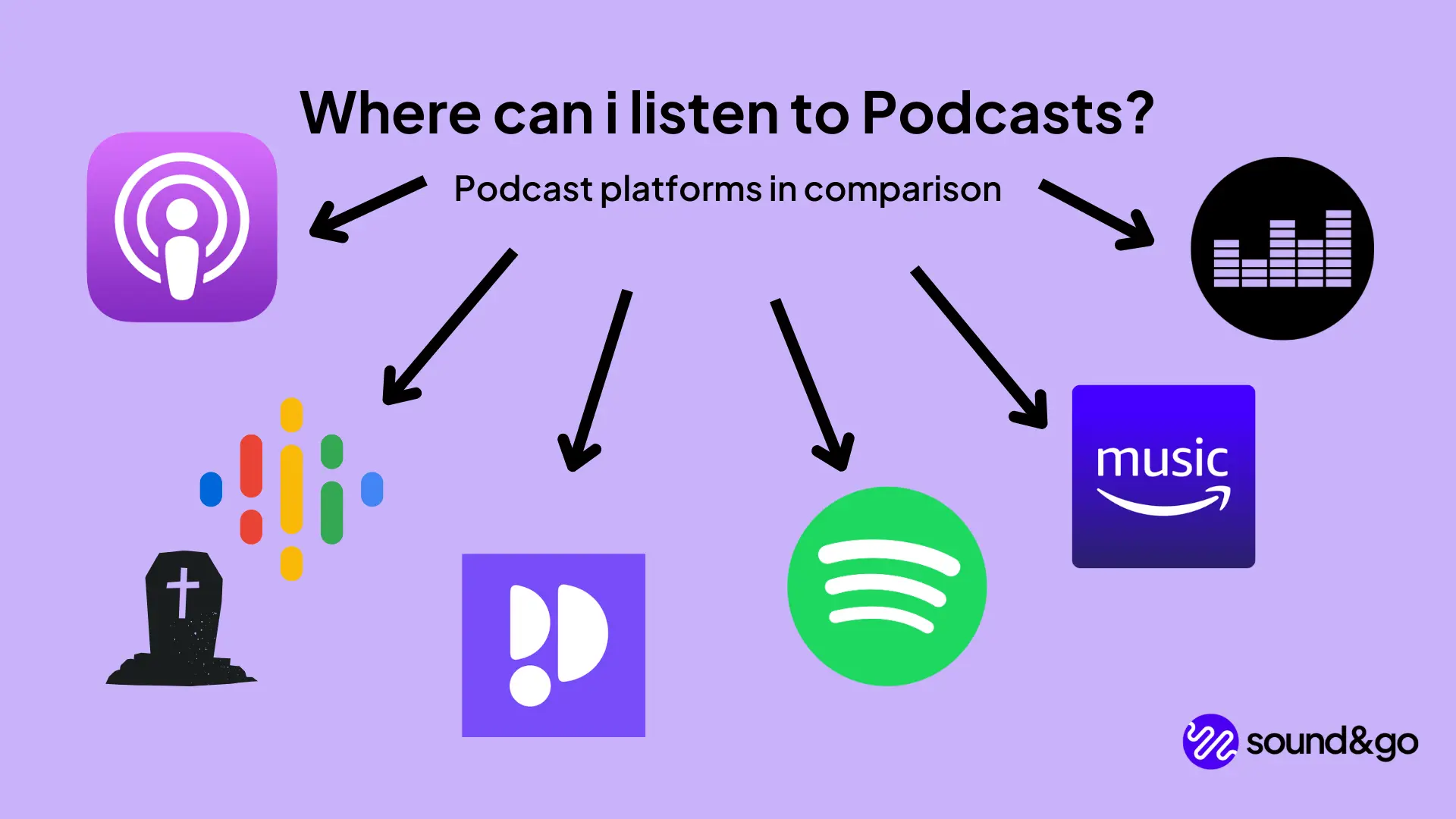
While Spotify and Apple Podcasts dominate the market share, power users often look toward specialized aggregators like Overcast or Pocket Casts. These apps offer superior technical features such as “Voice Boost,” which uses equalization and compression to normalize speech levels in noisy environments, and “Smart Speed,” an algorithm that dynamically removes silences without distorting the natural cadence of speech. For those who listen to hundreds of hours of content, these technical efficiencies are more important than the platform’s exclusive content.
Bandcamp and the Direct-to-Fan Ecosystem
For listeners who want to support independent artists while maintaining control over their file formats, Bandcamp remains the gold standard. Technically, it serves as both a streaming platform and a digital locker. When you buy an album on Bandcamp, you are given the choice of downloading it in FLAC, WAV, ALAC, or even AIFF formats. This transparency in file quality is a stark contrast to the “black box” nature of mainstream streaming services where the user is often unaware of the specific bitrate being delivered at any given moment.
The High-Resolution Audio Storefronts
For the ultimate listening experience, many turn to dedicated stores like HDtracks or ProStudioMasters. These are not streaming services but digital boutiques where one can purchase studio master recordings. The tech behind these stores involves strict quality control to ensure that the files provided are not merely “upsampled” from lower-quality sources but are genuine high-resolution transfers from the original master tapes.
The Role of AI and Machine Learning in Audio Curation

A significant part of “where to listen” involves how content is discovered. The underlying technology of recommendation engines has moved from simple collaborative filtering to deep learning models that analyze the waveform of the audio itself.
Algorithmic Playlisting vs. Human Curation
Spotify’s “Discover Weekly” is perhaps the most famous implementation of machine learning in audio. It uses Natural Language Processing (NLP) to crawl the web for discussions about music, combined with Convolutional Neural Networks (CNNs) to analyze the acoustic characteristics of songs—such as tempo, key, and “danceability.” This technical stack allows the platform to suggest music that fits a listener’s mathematical profile, even if the artist is entirely unknown to the user.
AI-Driven Personalization and Dynamic Audio
Newer platforms are experimenting with AI that doesn’t just find music but changes it. Some apps now offer “generative” soundscapes for focus or sleep, where the audio is rendered in real-time based on the user’s heart rate or the time of day. This is a shift from “listening to a recording” to “listening to a process,” where the software is constantly synthesizing new auditory data.
Hardware Integration: Where the Device Meets the Stream
The platform is only half of the equation; the “where” also refers to the hardware interface. The bottleneck for high-quality audio is often the transmission protocol between the device and the ear.
The Bluetooth Codec Wars
For the majority of listeners, “where to listen” means a smartphone connected to wireless earbuds. However, standard Bluetooth (SBC) is technically incapable of transmitting high-resolution audio. This has led to the development of advanced codecs like Sony’s LDAC and Qualcomm’s aptX Lossless. LDAC allows for a bitrate of up to 990kbps, which is significantly higher than standard Bluetooth, though it requires both the source device and the headphones to support the protocol. Understanding these technical requirements is essential for anyone looking to maximize their listening experience in a mobile-first world.
The Resurrection of Dedicated Digital Audio Players (DAPs)
For the purist, the smartphone is a compromised environment due to internal electrical interference and subpar Digital-to-Analog Converters. This has led to a resurgence of DAPs from companies like FiiO, Astell&Kern, and Sony. These devices are essentially high-end computers dedicated solely to audio. They feature balanced outputs, high-grade capacitors, and dual-DAC configurations that can handle DSD (Direct Stream Digital) files—a format that samples audio at a much higher frequency than standard CDs.
Smart Home Ecosystems and Multi-Room Audio
In the home, the “where” involves protocols like AirPlay 2, Google Cast, and Sonos’s proprietary mesh networks. These technologies allow for bit-perfect streaming over Wi-Fi, bypassing the limitations of Bluetooth. The technical challenge here is synchronization; ensuring that audio playing in multiple rooms remains perfectly in phase requires sophisticated network timing protocols and buffer management.
The Future of Auditory Experiences: Decentralization and Immersive Environments
As we look forward, the technology of where we listen is moving toward decentralized models and even more immersive spatial environments.
Web3 and Decentralized Audio
There is a growing movement toward decentralized streaming platforms built on blockchain technology, such as Audius. These platforms aim to remove the middleman, allowing creators to upload high-quality audio directly to a distributed ledger. From a technical standpoint, this ensures that the metadata and the audio files are immutable and that the “where to listen” is a global, peer-to-peer network rather than a centralized corporate server.

Spatial Computing and AR Audio
With the advent of spatial computing devices like the Apple Vision Pro and Meta Quest, the concept of “where to listen” is becoming literal. In these environments, audio is tied to virtual objects. As you move your head or walk through a virtual space, the HRTF (Head-Related Transfer Function) filters change the audio in real-time to simulate how sound waves would interact with your ears in a physical room. This represent the pinnacle of audio technology: a completely synthetic yet perfectly realistic auditory environment.
In conclusion, the decision of where to listen is no longer a simple one. It is a sophisticated choice involving a stack of technologies—from the codec used to compress the file, to the AI that recommended it, to the hardware and protocols used to deliver it to our ears. Whether you are a casual listener on a standard streaming service or an audiophile with a dedicated high-resolution setup, the current tech landscape offers unprecedented control over the auditory experience.
aViewFromTheCave is a participant in the Amazon Services LLC Associates Program, an affiliate advertising program designed to provide a means for sites to earn advertising fees by advertising and linking to Amazon.com. Amazon, the Amazon logo, AmazonSupply, and the AmazonSupply logo are trademarks of Amazon.com, Inc. or its affiliates. As an Amazon Associate we earn affiliate commissions from qualifying purchases.