
In an increasingly digital financial landscape, the notion of converting physical cash into a usable digital format remains a critical touchpoint for many individuals. Cash App, a prominent mobile payment service, has become an indispensable tool for peer-to-peer transactions, direct deposits, and even investing. However, the fundamental question of how to funnel tangible currency into this digital ecosystem often arises. Understanding the available mechanisms, along with their associated financial implications, is paramount for effective personal finance management.
Navigating Cash App’s Ecosystem for Physical Cash Deposits
For many, cash remains a primary form of income or transaction, particularly for those in the gig economy, receiving tips, or simply preferring to manage their finances offline. The ability to seamlessly transfer these physical funds into a digital wallet like Cash App unlocks a realm of convenience, from online purchases and bill payments to sending money to friends and family instantly.
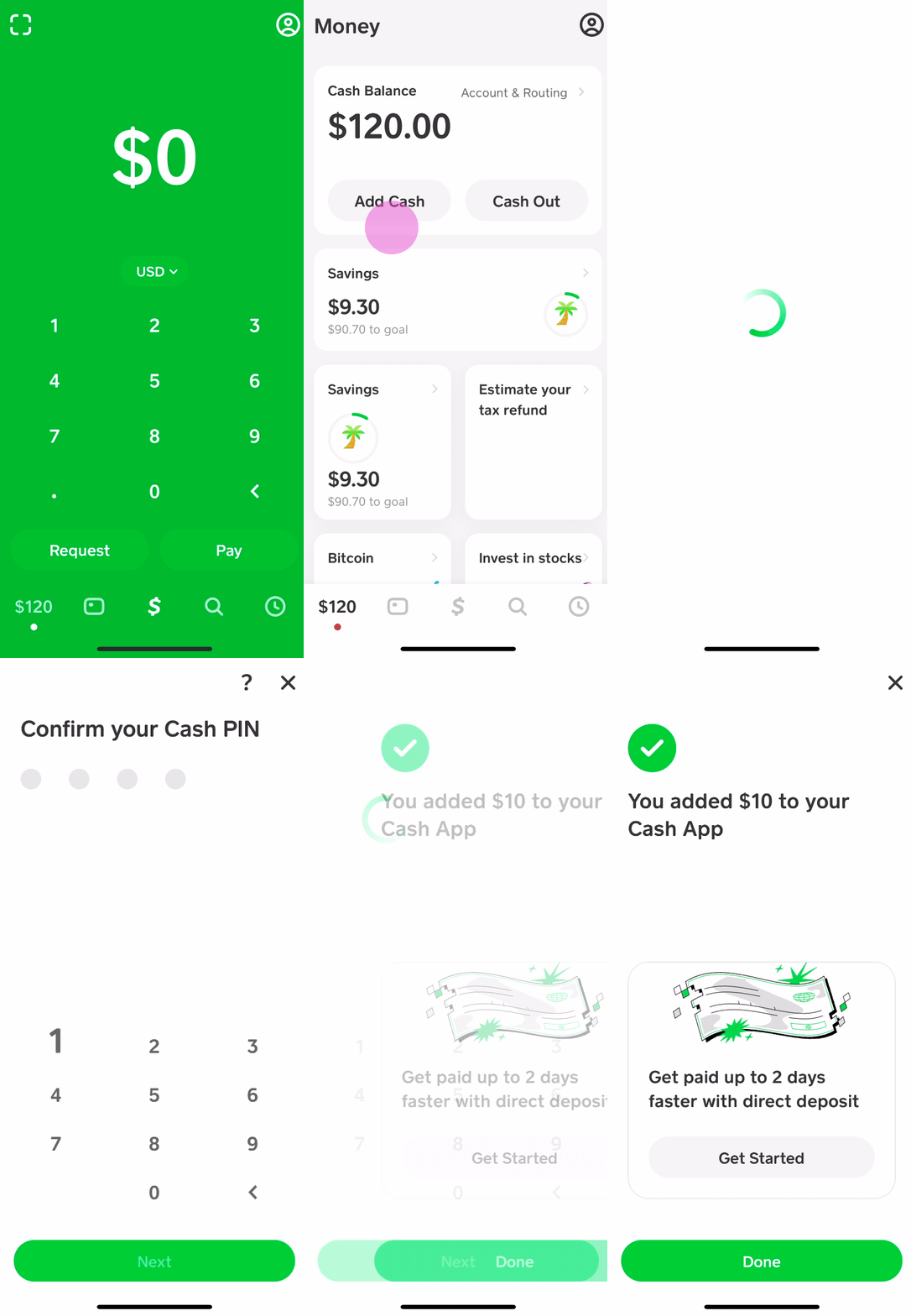
Why Deposit Cash into a Digital Wallet?
The rationale behind converting physical cash into a digital balance within Cash App is multifaceted. Firstly, it offers unparalleled convenience. Instead of needing to visit a traditional bank branch, users can deposit cash at various retail locations, often with extended hours. Secondly, it enables participation in the digital economy; once funds are on Cash App, they can be spent using the Cash Card (a linked Visa debit card), invested in stocks or Bitcoin, or sent to others. This integration allows for easier budgeting and tracking of expenses compared to fragmented cash transactions. Moreover, for individuals who are unbanked or underbanked, Cash App can serve as a vital financial tool, providing access to services often reserved for traditional bank account holders.
Cash App’s Primary Functionality in Money Movement
Cash App excels at facilitating the movement of money. Its core features include instant peer-to-peer payments, which allow users to send and receive money from contacts. It also offers the ability to receive direct deposits from employers or government benefits, effectively functioning as a bank account for payroll. Beyond these, users can invest in fractional shares of stocks and Bitcoin, creating a diverse financial ecosystem within a single app. The bridge between these digital capabilities and the physical world of cash is crucial, allowing users to leverage all features regardless of their initial form of funds.
Direct Deposit Methods for Physical Cash
The most direct and widely utilized method for getting physical cash into your Cash App account involves retailer partnerships. These partnerships bridge the gap between your physical currency and your digital wallet, making the process accessible and efficient for most users.
Paper Money Deposits at Retailers
Cash App has partnered with various major retail chains to facilitate cash deposits. This method typically involves a simple process:
-
Generate a Barcode: Within the Cash App, users can initiate a cash deposit, which will generate a unique barcode.
-
Visit a Participating Retailer: Take your physical cash and the generated barcode to a cashier at a participating store. Common retailers that often support Cash App cash deposits include Walmart, 7-Eleven, Walgreens, and CVS, among others. Availability can vary by location and retailer, so it’s always wise to confirm within the app or with the store directly.
-
Complete the Transaction: The cashier will scan your barcode, accept your cash, and process the deposit. The funds are usually available in your Cash App balance almost instantly, though sometimes there can be a brief processing delay.
Fees and Limits for Retail Deposits
It is essential to be aware of the financial implications associated with these convenient deposit methods. Retailers typically charge a fee for cash deposits, which can range from a nominal flat fee per transaction to a percentage of the deposited amount. These fees are deducted from the deposit, meaning if you deposit $100 with a $2 fee, your Cash App balance will reflect $98. Users should always check the exact fee structure within the Cash App prior to making a deposit, as these can change and vary by retailer.
Furthermore, Cash App and its retail partners impose limits on cash deposits. These limits are generally structured daily, weekly, and monthly, designed to comply with financial regulations and minimize fraud. For example, a common daily limit might be $500 to $1,000, with weekly and monthly limits extending higher. These limits are subject to change and may vary based on the user’s account verification status. Verified accounts, which typically require linking a bank account and providing personal information like a Social Security Number, often have higher limits.
Security and Best Practices for Cash Deposits
When depositing cash, a few best practices enhance security and ensure a smooth transaction:
-
Always Get a Receipt: After handing over your cash and the transaction is processed, ensure you receive a physical receipt from the retailer. This serves as proof of deposit in case of any discrepancies.
-
Verify Funds Immediately: Check your Cash App balance right after the transaction to confirm the funds have been added correctly.
-
Be Aware of Your Surroundings: Like any cash transaction, exercise caution and awareness, especially when carrying larger sums of money.
Alternative “Cash-Like” Deposit Methods (Indirect)
While the retailer method is for physical cash, it’s worth noting other ways to load funds that might originate as cash but pass through an intermediary:
-
Connecting a Bank Account: If you deposit cash into a traditional bank account, you can then link that bank account to your Cash App and transfer funds digitally. This is a common indirect route.
-
Debit Card Linking: Similarly, linking a debit card (which is tied to a bank account where you might deposit cash) allows for instant transfers from your bank account to Cash App.
-
Receiving Payments: Receiving P2P payments from others or direct deposits from employers or benefit providers directly loads your Cash App balance, often eliminating the need to handle physical cash at all.
Fees, Limits, and Key Financial Considerations
The decision to use Cash App for managing your funds, especially cash deposits, should be informed by a clear understanding of its financial framework. This includes not just the convenience but also the costs and security aspects.
Transaction Fees for Cash Deposits

As highlighted, the fees for depositing cash at retailers are a critical consideration. These small fees can accumulate, especially for frequent users depositing smaller amounts. For instance, a $2 fee on a $50 deposit represents a 4% cost, which is substantial. Users should evaluate if the convenience outweighs these costs based on their financial habits and access to alternative, potentially free, methods like traditional bank deposits.
Daily, Weekly, and Monthly Deposit Limits
The imposed deposit limits serve multiple purposes, from regulatory compliance (like anti-money laundering laws) to fraud prevention. While these limits are generally sufficient for routine personal use, they can pose challenges for individuals needing to deposit very large sums of cash. Understanding your specific limits within the app, especially after account verification, is crucial for planning. Attempting to exceed these limits will result in transaction rejection.
Potential Impact on Budgeting and Spending
Integrating cash deposits into Cash App can significantly impact personal budgeting. For those who meticulously track digital spending, converting cash allows for a unified view of their finances. The Cash App provides transaction history, which can be useful for monitoring where money goes. However, the ease of spending with the Cash Card could also lead to overspending for some. Employing discipline and utilizing any budgeting features within the app or external tools is advisable.
Cash App’s FDIC Insurance Status
A crucial aspect of financial security pertains to deposit insurance. Cash App’s funds, when held by its partner banks (Sutton Bank or Lincoln Savings Bank), are FDIC insured up to $250,000 per depositor for each ownership category. This means that if the partner bank were to fail, your funds would be protected up to the specified limit. However, funds held directly by Cash App or invested in stocks or Bitcoin are not covered by FDIC insurance. It is vital for users to understand where their funds reside and the extent of their protection. This distinction is critical for comprehensive financial planning and risk assessment.
Strategic Financial Management with Cash App
Beyond mere transactions, Cash App can be a strategic component of a broader financial plan. Its features, combined with careful management, can enhance financial agility and control.
Leveraging Cash App for Everyday Transactions
The Cash Card allows for seamless spending wherever Visa is accepted. This includes online purchases, in-store payments, and ATM withdrawals (though ATM fees may apply). For those who receive cash income, depositing it into Cash App enables them to participate fully in the digital economy without needing a traditional bank account for every transaction. The “Boosts” feature, offering instant discounts at various merchants, further incentivizes its use for everyday spending, providing tangible savings.
Integrating Cash App into a Broader Financial Plan
For many, Cash App complements rather than replaces traditional banking relationships. It can be used for specific purposes, such as managing a portion of income, facilitating quick peer-to-peer payments, or for micro-investments. By integrating Cash App thoughtfully—for example, using it for discretionary spending while maintaining a primary bank account for larger savings and bill payments—users can leverage its strengths while benefiting from the comprehensive services of traditional banks.
Security Best Practices for Cash App Users
Maintaining robust security is paramount. Users should always enable a PIN or Touch ID/Face ID for app access. Activating two-factor authentication (2FA) adds an extra layer of security for transactions and account changes. Regularly reviewing transaction history for any unauthorized activity and being wary of phishing attempts or scams are also essential. Never share your Cash App PIN or login credentials with anyone. These measures help protect your financial assets within the app.
Weighing the Pros and Cons of Cash App Deposits
The decision to deposit cash into Cash App should be a calculated one, balancing convenience against costs and individual financial needs.
Advantages: Convenience and Digitalization
The primary advantage is the sheer convenience of transforming physical cash into a digital balance accessible for a wide range of online and in-person transactions. It eliminates the need to carry large amounts of cash and simplifies budgeting for those who prefer to track expenses digitally. For the unbanked, it offers a pathway to participate in the digital financial system.
Disadvantages: Fees, Limits, and Cash Accessibility
The fees associated with cash deposits, though often small per transaction, can accumulate over time. The deposit limits, while necessary, can be restrictive for individuals needing to handle substantial cash amounts. Furthermore, while the Cash Card is widely accepted, certain situations might still necessitate physical cash, or some vendors may not accept digital payments, requiring users to withdraw funds (often with ATM fees).

When is Cash App the Right Tool for Your Cash?
Cash App is an excellent tool for individuals who frequently receive cash (e.g., tips, freelance payments) and wish to quickly convert it for digital spending, peer-to-peer payments, or small investments. It’s also beneficial for those managing a specific portion of their budget digitally. However, for large sums of cash, complex banking needs, or individuals seeking advanced financial planning tools, a traditional bank account might offer more comprehensive and cost-effective solutions. Ultimately, the choice depends on personal financial habits, transaction volume, and the desired balance between convenience and cost.
aViewFromTheCave is a participant in the Amazon Services LLC Associates Program, an affiliate advertising program designed to provide a means for sites to earn advertising fees by advertising and linking to Amazon.com. Amazon, the Amazon logo, AmazonSupply, and the AmazonSupply logo are trademarks of Amazon.com, Inc. or its affiliates. As an Amazon Associate we earn affiliate commissions from qualifying purchases.