
Cashing a check, especially one drawn on a major financial institution like Bank of America, might seem like a straightforward task. However, depending on whether you hold an account with the bank, the check amount, and your urgency, the process can involve various options, fees, and requirements. For millions of individuals, receiving a check from a Bank of America account holder necessitates understanding the most efficient and cost-effective ways to convert that paper into usable funds. This guide delves into the diverse avenues available for cashing Bank of America checks, offering insights into each method’s pros, cons, and essential considerations.
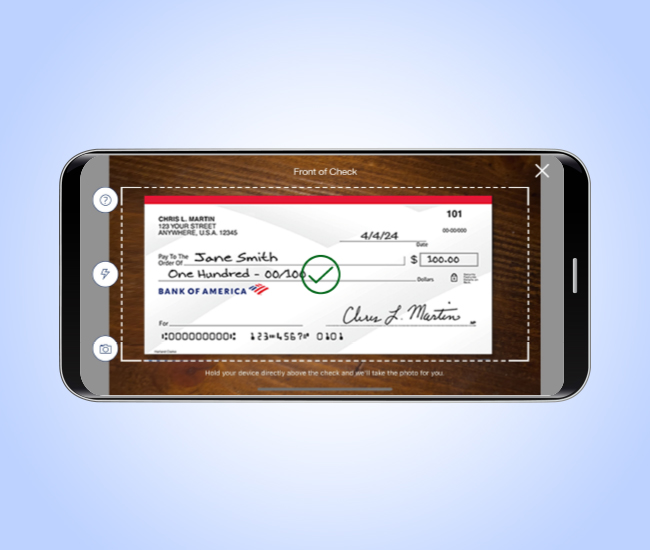
Whether you’re a loyal Bank of America customer, a patron of another financial institution, or someone without a traditional bank account, navigating the landscape of check-cashing services requires a clear understanding of your choices. From direct bank services to alternative retail solutions, we’ll explore how to get your money, keep your costs low, and ensure your financial transactions are secure and seamless.
Cashing Your Check Directly at Bank of America Branches
The most intuitive and often the most cost-effective method for cashing a Bank of America check is, unsurprisingly, at a Bank of America branch itself. While this option offers unparalleled ease for account holders, it presents a slightly different set of rules for those who bank elsewhere.
For Bank of America Account Holders
If you possess an active checking or savings account with Bank of America, cashing a check drawn on the same bank is typically a seamless process. You can simply visit any Bank of America branch, present the check and a valid form of identification (though often, a quick account lookup is sufficient), and receive the full amount in cash or have it deposited into your account without incurring any fees. For added convenience, you can also deposit the check directly into your account via an ATM, which often provides immediate access to a portion of the funds, or through the bank’s mobile app using mobile check deposit. This latter option is particularly useful for those who prefer digital solutions and wish to avoid a physical trip to the bank.
The primary advantages here are speed, zero fees, and the security of dealing with your own financial institution. Funds are typically available immediately for cashing, or within 1-2 business days for deposits, subject to the bank’s funds availability policy.
For Non-Account Holders
Cashing a Bank of America check when you don’t have an account with them is still possible at one of their branches, but it comes with specific requirements and often a fee. Banks are generally obligated to cash checks drawn on their institution, provided the funds are available and the check is legitimate.
To cash a Bank of America check as a non-customer, you will typically need:
- Valid Government-Issued Photo ID: This is non-negotiable. A driver’s license, state ID card, or passport are commonly accepted. Some banks may require a second form of ID.
- The Check: Ensure it is properly endorsed (signed) on the back exactly as your name appears on the front.
- A Fee: Bank of America, like many other large banks, charges a non-customer check cashing fee. This fee can vary but is generally in the range of $8 to $10. It’s important to note that this fee is deducted directly from the amount of the check. While it’s a cost, it guarantees immediate access to your funds without the need for an account.
The bank will verify the check’s authenticity and ensure the account it’s drawn from has sufficient funds. This process is usually quick but can take longer for larger amounts or if there are any suspicious details.
Leveraging Your Own Financial Institution
If cashing the check directly at Bank of America isn’t feasible or desirable, your next best option is often your own bank or credit union. This method offers a familiar environment and potentially more favorable terms than non-bank services.
Your Own Bank or Credit Union
Cashing a Bank of America check at your own bank or credit union is often a preferred route for account holders of other institutions. While your bank doesn’t technically “cash” the check in the same way the issuing bank does (by verifying funds from the source account), they will accept it for deposit. Once deposited, the funds become available according to your bank’s funds availability policy.
The process is straightforward:
- Deposit: Take the Bank of America check to your bank or credit union.
- Endorse: Sign the back of the check.
- ID: Present a valid ID if requested by the teller.
- Availability: The funds will be deposited into your account. Your bank may place a hold on some or all of the funds, especially for larger amounts, new accounts, or checks from out-of-state banks. Typically, the first $225 (under Regulation CC) is made available on the next business day, with the remainder becoming available within 1-5 business days. For established accounts with good standing, smaller checks might clear instantly.
The significant advantage here is that there are usually no fees for depositing a check into your own account. This makes it a cost-effective solution, though it requires patience if a hold is placed on the funds.
Other Commercial Banks
While you can try to cash a Bank of America check at another commercial bank where you don’t have an account, this option is generally less successful or more costly. Banks are under no obligation to cash checks drawn on other institutions for non-customers. If they do, they often treat it as a high-risk transaction.
Policies vary widely:
- Some banks may refuse to cash any checks for non-customers.
- Others might only do so for a very high fee (sometimes a percentage of the check amount), even higher than the issuing bank’s flat fee.
- They will rigorously verify your identity and the check’s legitimacy. They may even call Bank of America to confirm funds and check details, which can be time-consuming.
Due to the potential for refusal and high fees, this is generally not the recommended primary option unless other avenues are exhausted, or the check amount is very small.
Exploring Non-Bank Check Cashing Services
For those without bank accounts or who need immediate cash without bank-imposed holds, various non-bank check cashing services offer a viable, albeit sometimes more expensive, alternative.
Supermarkets and Retail Stores
Many large supermarket chains and retail stores offer check cashing services, often as a convenience for their customers. These include popular names like Walmart, Kroger, Meijer, and sometimes even smaller grocery stores or gas stations.
Advantages:
- Convenience: Extended hours beyond typical bank operating times, often open evenings and weekends.
- Accessibility: Widely available locations.
- Lower Fees: While they do charge a fee, it’s often a percentage of the check amount and can be lower than dedicated check-cashing stores, often capped at a reasonable limit (e.g., Walmart’s $4 fee for checks up to $1,000 and $8 for checks over $1,000 up to $5,000).
Requirements:
- Valid ID: Government-issued photo ID is always required.
- Check Type: Most will cash payroll checks, government checks, and some personal checks. Policies vary on maximum amounts.
- Endorsement: Proper endorsement on the back.
This option is particularly popular for payroll and government checks, which are generally considered lower risk.
Dedicated Check Cashing Stores
Dedicated check cashing stores, such as ACE Cash Express, Money Mart, or Check Into Cash, specialize in providing immediate cash for checks. These businesses cater specifically to individuals who need quick access to funds and may not have a traditional banking relationship.
Advantages:
- Guaranteed Cash: They are designed to provide immediate cash.
- Flexibility: More lenient on check types and often higher maximum limits than retail stores.
- No Bank Account Needed: Their core clientele are those without bank accounts.
Disadvantages:
- Higher Fees: These services typically charge the highest fees, often a percentage ranging from 2% to 5% (or more) of the check’s face value. For a large check, these fees can accumulate significantly.
- Predatory Practices (Historical): While regulations have improved, some have historically faced criticism for high fees targeting vulnerable populations.
Requirements:
- Valid ID: Strict ID verification.
- Endorsement: Properly endorsed check.
- Verification: They may call the issuing bank to verify funds, especially for larger amounts.
While a reliable option for immediate cash, the cost-conscious consumer should weigh the convenience against the higher fees.
Navigating Fees, Holds, and Identification
Understanding the nuances of fees, funds availability, and identification requirements is crucial for a smooth check-cashing experience, regardless of the method chosen.
Understanding Associated Costs
The cost of cashing a Bank of America check can vary dramatically:
- Free: If you have a Bank of America account and deposit or cash it at their branch. Also generally free if you deposit it into your account at your own bank/credit union.
- Flat Fee: Bank of America (and other issuing banks) typically charge a flat fee (e.g., $8-$10) for non-account holders to cash a check at their branch.
- Percentage-Based Fees: Supermarkets usually charge a smaller percentage (e.g., 1-3%) with a low cap. Dedicated check-cashing stores charge higher percentages (e.g., 2-5% or more).
Always inquire about fees upfront. For a check of $500, a 3% fee would be $15, whereas a flat $8 fee from the issuing bank is more economical. Calculate which option saves you the most money.
Essential Identification Requirements
Robust identification is a universal requirement for cking a check, regardless of the venue. This is primarily to prevent fraud and comply with Know Your Customer (KYC) regulations.
- Primary ID: A valid, unexpired government-issued photo ID is mandatory. Acceptable forms include:
- State-issued driver’s license
- State-issued identification card
- U.S. Passport or Passport Card
- Military ID
- Secondary ID (Sometimes Required): Some institutions, especially when cashing for non-customers or for larger amounts, may request a second form of ID. This could be a credit card (with your signature), a utility bill showing your address, or another valid photo ID.
- Matching Names: The name on your ID must exactly match the payee name on the check.
Always carry at least two forms of valid identification when planning to cash a check to avoid delays or refusal.
Check Holds and Funds Availability
When you deposit a check into your own account (as opposed to outright cashing it), banks operate under Regulation CC (Expedited Funds Availability Act). This regulation dictates how quickly deposited funds must be made available to customers.
- Immediate Access: For checks deposited into your own account at the issuing bank or for very small amounts, a portion (usually up to $225) might be available on the same business day or the next.
- Standard Holds: Most checks deposited into your bank will have funds fully available within 1-2 business days.
- Extended Holds: For larger checks (over $5,525), new accounts (under 30 days old), or if the bank suspects the check might be fraudulent, holds can extend to 5-7 business days or even longer.
It’s crucial to differentiate between “cashing” (receiving immediate cash) and “depositing” (funds made available after a hold period). If you need immediate access to the full amount, physical cashing at Bank of America (with a fee) or a check-cashing service (with a higher fee) might be your only options.
Modern Alternatives and Best Practices
Beyond traditional check cashing, the financial landscape offers several modern alternatives that can simplify money management and reduce the reliance on physical checks altogether.
Embracing Mobile Check Deposit
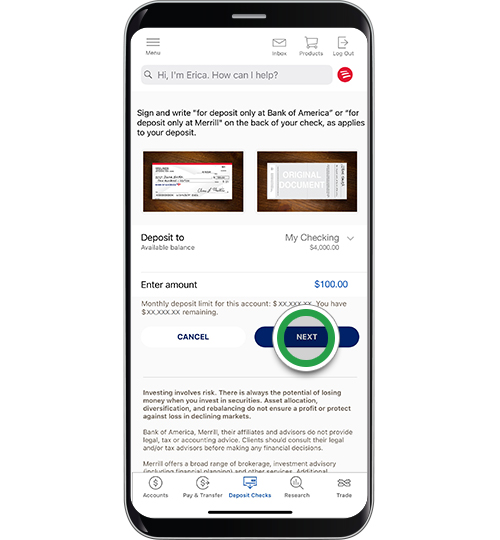
For those with a smartphone and a bank account, mobile check deposit has revolutionized the way checks are handled. Bank of America, like most major banks, offers this feature through its mobile app.
- How it works: Simply endorse the check with “For Mobile Deposit Only” (or as directed by your bank), snap photos of the front and back using the app, and submit.
- Convenience: Deposit checks anytime, anywhere, without visiting a branch or ATM.
- Limitations: Daily and monthly deposit limits typically apply, and funds are subject to the same availability holds as a physical deposit.
While not “cashing” in the immediate sense, it’s an incredibly convenient way to get funds into your account without a physical trip.
The Power of Direct Deposit
For recurring payments such as salaries, government benefits, or tax refunds, direct deposit is the most efficient and secure method.
- Eliminates Checks: Funds are electronically transferred directly into your bank account, bypassing paper checks entirely.
- Immediate Availability: Funds are typically available on the payment date, with no holds.
- Security: Reduces the risk of lost, stolen, or fraudulent checks.
If you regularly receive checks, inquiring about direct deposit options with the payer is a highly recommended best practice.

Digital Payment Platforms and Financial Literacy
Beyond traditional banking, various digital payment platforms like Zelle, Venmo, or PayPal allow for instant or near-instant money transfers, often sidestepping the need for checks altogether for person-to-person payments.
- Zelle: Integrated directly into many bank apps, allowing for quick transfers between participating banks.
- Venmo/PayPal: Popular for peer-to-peer payments, though fees can apply for instant transfers or business transactions.
Finally, managing your finances effectively by maintaining a bank account, understanding your bank’s policies, and being aware of fees across different services empowers you to make informed decisions. Avoiding high-fee check-cashing services when possible, and utilizing modern banking tools, are cornerstones of responsible personal finance. Always keep records of your transactions, especially when dealing with checks, to track your funds and prevent potential disputes.
In conclusion, while the classic paper check remains a common form of payment, understanding the myriad ways to convert a Bank of America check into usable cash, from direct bank services to retail alternatives and modern digital solutions, is essential for navigating your financial life with confidence and economy. Choose the method that best aligns with your access, urgency, and cost considerations.
aViewFromTheCave is a participant in the Amazon Services LLC Associates Program, an affiliate advertising program designed to provide a means for sites to earn advertising fees by advertising and linking to Amazon.com. Amazon, the Amazon logo, AmazonSupply, and the AmazonSupply logo are trademarks of Amazon.com, Inc. or its affiliates. As an Amazon Associate we earn affiliate commissions from qualifying purchases.