
The arrival of a new family member is one of the most significant life events a household can experience, yet it is often accompanied by a sudden and dramatic shift in financial dynamics. From the perspective of personal finance and wealth management, the “baby industry” represents a multibillion-dollar machine designed to capitalize on the emotional vulnerability and urgency of new parents. Understanding where to buy baby stuff is not merely a logistical challenge; it is a strategic exercise in capital allocation, budget optimization, and long-term financial planning.
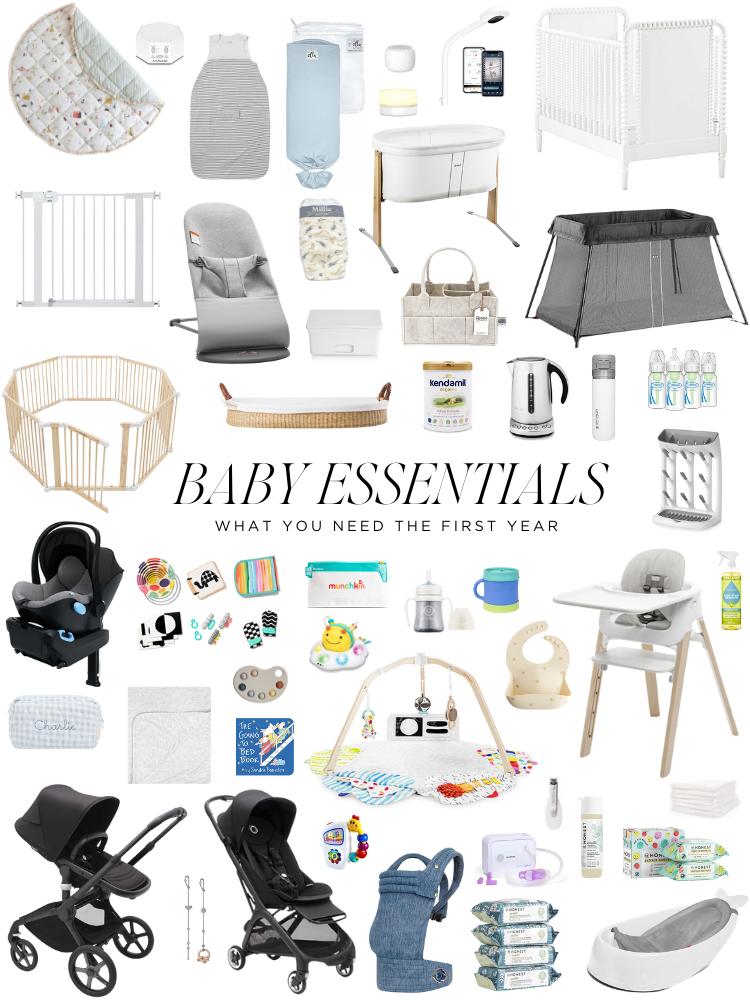
To navigate this landscape effectively, consumers must move beyond impulse purchasing and adopt the mindset of a procurement officer. This involves analyzing price-per-unit metrics, understanding the lifecycle value of products, and leveraging modern financial tools to minimize the impact on a household’s net worth.
The Financial Landscape of Early Parenthood
Before selecting a vendor, it is essential to quantify the economic impact of the initial gear acquisition phase. According to various economic studies, the average middle-income family can expect to spend between $12,000 and $15,000 during a child’s first year of life. A significant portion of this is directed toward durable goods—strollers, car seats, and furniture—and consumables like diapers and formula.
Identifying the “New Parent Premium”
The market often applies a “premium” to products marketed as essential for safety or developmental milestones. From a financial standpoint, this is a form of value-based pricing rather than cost-plus pricing. Retailers know that parents are less price-sensitive when it comes to their child’s perceived well-being. To counter this, savvy consumers must distinguish between mandatory safety requirements (such as updated car seat standards) and discretionary luxury features that do not offer a commensurate return on investment (ROI) in terms of utility or safety.
Cash Flow Management and Sinking Funds
The most successful financial approach to buying baby stuff is the implementation of a “sinking fund.” By setting aside a specific monthly amount well before the child arrives, parents can avoid the high-interest debt often associated with large-scale retail therapy. This allows for a cash-buy strategy, which opens the door to vendors that do not offer financing but provide better raw pricing, such as warehouse clubs or secondary market liquidators.
Strategic Sourcing: Maximizing Value Through Multi-Channel Retail
The question of “where” to buy is best answered by categorizing retailers based on their unique financial advantages. Different platforms serve different roles in a diversified household budget.
Big-Box Retailers and the Economics of Scale
Large-scale retailers like Target and Walmart leverage massive supply chains to offer competitive pricing on consumables. For the consumer, the financial advantage here lies in loyalty programs and “loss leader” strategies. For instance, Target’s “buy two, get a gift card” promotions on diapers effectively reduce the unit price by 15-20%, a margin that outperforms most standard discount codes.
Warehouse Clubs: The Bulk Discount Advantage
For recurring expenses, Costco and Sam’s Club offer the most favorable price-per-unit metrics. From a business finance perspective, these memberships are a form of “subscription to savings.” For high-volume items like wipes and formula, the annual membership fee is typically recovered within the first three months of purchasing. However, parents must be wary of “inventory carry costs”—the physical space required to store bulk goods and the risk of the child outgrowing a specific size before the inventory is exhausted.
Specialized E-Commerce and Subscription Models
Online giants like Amazon have revolutionized the “Subscribe & Save” model. This is essentially a recurring revenue model for the brand and a cost-containment strategy for the parent. By committing to a monthly delivery, consumers can lock in discounts of up to 15%. Financially, this provides the benefit of predictable monthly expenses, which simplifies household budgeting and prevents the “emergency run” to a local convenience store where prices are significantly marked up.
Leveraging Digital Tools for Price Optimization

In the modern economy, the price listed on a tag is rarely the final price a financially literate consumer should pay. Buying baby stuff requires a sophisticated layers-of-savings approach using various digital and financial tools.
Cashback and Rebate Ecosystems
Platforms like Rakuten, Honey, and TopCashback offer a percentage of the purchase price back in cash. While 2% or 5% may seem negligible on a single item, when applied to a $1,000 nursery setup, the returns are substantial. Furthermore, integrating these with credit card rewards—specifically cards that offer high percentages on “wholesale clubs” or “online retail”—can create a stacked discount of 10% or more.
Registry Arbitrage
One of the most overlooked financial tools is the “registry completion discount.” Most major retailers (Amazon, Target, Babylist) offer a 15% discount on remaining items in a registry as the due date approaches. A strategic buyer will add high-ticket items to their registry specifically to trigger this discount, essentially creating their own sale on items that rarely go on discount otherwise.
Price Tracking and Volatility
The prices of baby gear on platforms like Amazon fluctuate daily based on algorithmic demand. Using tools like CamelCamelCamel allows buyers to view price histories and set alerts. Buying a high-end stroller during a “trough” in the price cycle rather than a “peak” can result in savings of $100 to $200, which can then be redirected into a 529 College Savings Plan or a high-yield savings account for the child.
The Economics of the Secondary Market
A key principle of personal finance is understanding depreciation. Much like a new car, baby gear loses a significant portion of its value the moment it leaves the store. Consequently, the secondary market is perhaps the most powerful tool for wealth preservation during the parenting years.
The “Buy Used, Sell Used” Cycle
Items such as high chairs, infant swings, and designer baby clothing have short utility windows—often less than six months. By purchasing these items via Facebook Marketplace, Mercari, or specialized consignment shops like Once Upon A Child, parents can acquire premium brands at 40-70% off retail prices.
The true financial mastery, however, lies in the resale. If an item is purchased used for $50 and sold six months later for $40, the “cost of ownership” was only $10. In contrast, buying the same item new for $150 and selling it for $40 results in a $110 loss. In a long-term financial plan, these hundreds of small wins aggregate into thousands of dollars in saved capital.
Safety and Regulatory Considerations
From an investment standpoint, one must account for risk. The only area where the secondary market is discouraged is in “safety-critical” gear, specifically car seats. Because the structural integrity of a car seat cannot be verified after it has been in a collision, and because materials degrade over time, the “risk-adjusted cost” of buying a used car seat is too high. In this specific instance, buying new is a form of insurance against the catastrophic financial and personal costs of an accident.
Building a Long-Term Financial Roadmap for Growing Families
The process of buying baby stuff should not be viewed as a series of isolated transactions, but as a component of a larger financial strategy.
Opportunity Cost of Consumer Spending
Every dollar spent on an over-engineered diaper pail is a dollar that is not compounding in an index fund. For example, $1,000 saved by optimizing baby gear purchases, if invested in a total stock market fund with a 7% average annual return, could grow to over $3,800 by the time the child reaches age 20. Viewing “where to buy” through the lens of opportunity cost shifts the focus from “getting a deal” to “building a legacy.”

Transitioning from Gear to Education Savings
As the child grows, the “gear” phase eventually ends. The financial habit of sourcing value and budgeting for child-related expenses should then transition seamlessly into funding education or a “launch fund.” The “where to buy” mindset—finding the highest quality at the lowest cost—applies equally to choosing a 529 plan provider or navigating the complex world of college tuition and financial aid.
In conclusion, knowing where to buy baby stuff is about understanding the intersection of retail psychology, supply chain economics, and personal financial management. By utilizing big-box loyalty, e-commerce subscriptions, digital price-tracking tools, and the secondary market, parents can provide for their children’s needs without compromising their own financial future. The goal is to be a conscious consumer in an industry built on impulse, ensuring that your household’s capital is used as a tool for growth rather than being consumed by unnecessary retail margins.
aViewFromTheCave is a participant in the Amazon Services LLC Associates Program, an affiliate advertising program designed to provide a means for sites to earn advertising fees by advertising and linking to Amazon.com. Amazon, the Amazon logo, AmazonSupply, and the AmazonSupply logo are trademarks of Amazon.com, Inc. or its affiliates. As an Amazon Associate we earn affiliate commissions from qualifying purchases.