
The landscape of retail investing underwent a seismic shift in 2013 when Robinhood launched its commission-free trading platform. By stripping away the traditional $5 to $10 per-trade fees that were standard at legacy brokerages, the company forced a multi-billion dollar industry to pivot toward a zero-commission model. However, for any serious investor or person managing personal finances, the question remains: if the service is free, how does the platform sustain itself, and what are the actual costs of using it?
Understanding the fee structure of Robinhood is essential for optimizing your investment returns. While “commission-free” is the headline, there are various subscriptions, administrative charges, regulatory fees, and indirect costs that can impact your bottom line. To navigate the platform effectively, one must look beyond the surface of zero-dollar trades and analyze the full ecosystem of Robinhood’s financial model.

The Foundation of Commission-Free Trading
At its core, Robinhood offers zero-commission trading for stocks, exchange-traded funds (ETFs), and options. This is the primary draw for the majority of its users. In a traditional sense, when you execute a buy or sell order for a listed equity, Robinhood does not take a cut of the transaction as a service fee. This applies to both domestic and many international stocks listed on U.S. exchanges.
Options and Cryptocurrency Trading
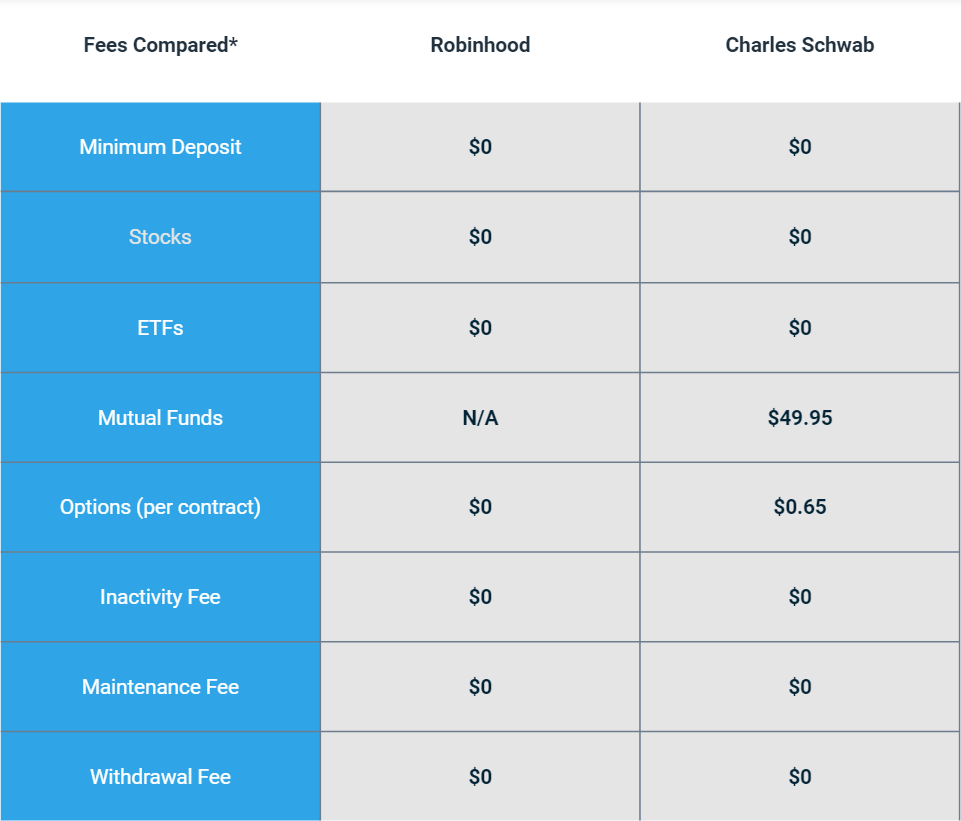
Unlike some competitors who charge a per-contract fee for options (often ranging from $0.50 to $0.65), Robinhood maintains a $0 fee for options contracts. This makes it particularly attractive for high-volume options traders. However, it is important to note that while Robinhood doesn’t charge a fee, regulatory fees still apply to these transactions, which are passed through to the user.
Cryptocurrency trading on the platform also carries a $0 commission tag. However, the cost of trading crypto on Robinhood is often baked into the “spread.” The spread is the difference between the buy price and the sell price. While you aren’t paying a flat $2.00 fee to buy Bitcoin, you may be buying it at a slightly higher price than the current global market average, which is how the platform and its liquidity providers facilitate the trade.
The Role of Payment for Order Flow (PFOF)
To understand why Robinhood can afford to charge zero commissions, one must understand Payment for Order Flow. When you place a trade on Robinhood, the platform doesn’t always send that trade directly to the New York Stock Exchange or NASDAQ. Instead, it routes the order to market makers—large financial institutions that execute the trades.
In exchange for this order flow, the market makers pay Robinhood a small fee (typically fractions of a penny per share). While this does not result in a direct charge to the user’s account balance, critics argue it can lead to slightly less favorable execution prices compared to brokers that prioritize price improvement. For the average retail investor, this “cost” is negligible, but for those moving very large blocks of shares, the lack of direct exchange routing is a factor to consider.
Robinhood Gold: The Premium Subscription Model
The most visible direct charge for many users is Robinhood Gold. This is a monthly subscription service designed for more active investors who want access to advanced tools, higher interest rates, and margin investing. As of current standards, Robinhood Gold typically costs $5 per month, though there are annual billing options that may offer slight discounts.
High-Yield Cash Sweep
One of the most significant financial benefits of Robinhood Gold is the enhanced interest rate on uninvested cash. For many personal finance enthusiasts, this feature alone can offset the $5 monthly fee. Robinhood partners with several banks to “sweep” your uninvested cash into interest-bearing accounts. Gold members often receive an APY that is significantly higher than the standard rate offered to free users. If an investor keeps a few thousand dollars in their brokerage account as a cash reserve, the interest earned can easily exceed the $60 annual cost of the subscription.
Margin Investing and Interest Rates
Robinhood Gold is the gateway to margin investing—borrowing money from the broker to purchase securities. The first $1,000 of margin used is often interest-free for Gold members. Beyond that $1,000 threshold, Robinhood charges a competitive annual interest rate.
Margin interest is calculated daily and charged monthly. Because these rates are tied to the federal funds rate, they fluctuate based on the economic environment. For investors looking to use leverage, it is critical to compare Robinhood’s margin rates against those of Interactive Brokers or Fidelity, as these costs can compound quickly and significantly impact the net performance of a portfolio.
Professional Research and Level II Data
Gold subscribers also receive access to professional research reports from Morningstar and Level II Market Data from Nasdaq. Level II data provides multiple levels of buy and sell orders for a specific stock, giving the trader a better sense of market depth and potential price movement. While many professional platforms charge high fees for this data, Robinhood bundles it into the Gold subscription, adding value for technical traders.
Regulatory and Administrative Fees
Even when a broker claims to be free, they are legally required to pass certain regulatory fees onto the consumer. These are not fees kept by Robinhood, but rather fees mandated by the Securities and Exchange Commission (SEC) and the Financial Industry Regulatory Authority (FINRA).
SEC and FINRA Charges
The SEC fee is applied only to the sale of equities. It is calculated as a small percentage of the total dollar amount sold (e.g., $8.00 per $1,000,000 of principal, though the rate is subject to change). Additionally, FINRA charges a Trading Activity Fee (TAF) on the sale of shares, usually a fraction of a cent per share. While these fees often amount to only a few cents on standard retail trades, they will appear on your trade confirmations and are subtracted from the total proceeds of your sale.
Account Transfer Fees (ACATS)
One of the most substantial “one-time” charges an investor might face is the account transfer fee. If you decide to leave Robinhood and move your entire portfolio to another brokerage (like Vanguard or Charles Schwab), Robinhood charges an ACATS (Automated Customer Account Transfer Service) fee. Currently, this fee is approximately $100. This is a standard practice across the industry, though some receiving brokers will reimburse this fee to entice new clients.
Paper Statements and Confirmations
In an effort to keep costs low and remain environmentally conscious, Robinhood defaults to electronic delivery for all documents. However, if a user requests physical paper copies of their monthly account statements or trade confirmations, Robinhood charges a fee. Typically, paper statements cost $2 per month, and paper trade confirmations can cost $5 per document. Avoiding these fees is as simple as maintaining electronic delivery settings.
Retirement Accounts and Hidden Incentives
Robinhood has recently expanded into the retirement space, offering Traditional and Roth IRAs. In a move that is relatively unique in the industry, they offer a “match” on contributions. For standard users, this is typically a 1% match, while Gold members can receive a 3% match on their contributions.
The Cost of the Match
While the match is a “reverse fee” (meaning they pay you), there are terms and conditions that represent a potential cost if not followed. To keep the match, Robinhood requires that the funds remain in the account for at least five years. If you transfer your IRA out of Robinhood before this five-year period is up, the company will claw back the matched amount. Therefore, the “charge” in this scenario is the loss of the incentive if you seek liquidity or a different brokerage platform prematurely.
Robinhood Credit Card and Cash Management
The Robinhood ecosystem now includes a credit card and various cash management features. While the card itself often carries no annual fee, users are subject to the standard costs of credit: interest rates (APR) on balances and potential late fees. From a personal finance perspective, these are not “brokerage fees,” but they are part of the total cost of engaging with the Robinhood brand as a comprehensive financial hub.
Comparing the Value Proposition
When analyzing how much Robinhood charges, one must compare it to the alternative costs of traditional wealth management. A traditional financial advisor might charge 1% of Assets Under Management (AUM) annually. On a $100,000 portfolio, that is $1,000 per year. In contrast, an investor using Robinhood for free, or even paying $60 a year for Gold, is operating at a fraction of that cost.
However, the “cost” of Robinhood can also be measured in the lack of certain services. Robinhood does not offer complex wealth planning, estate management, or personalized tax-loss harvesting services that a full-service firm might provide. For the self-directed investor, the low-fee structure is a massive advantage. For the investor who requires significant guidance, the “hidden cost” might be the mistakes made due to a lack of professional oversight.
In conclusion, Robinhood is remarkably inexpensive for the average buy-and-hold investor. The vast majority of users will never pay a direct fee to the platform. The primary costs to watch out for are the $5 monthly Gold subscription, the $100 outgoing transfer fee, and the interest on margin loans. By staying informed about these specific triggers and understanding the mechanics of PFOF and regulatory pass-throughs, investors can utilize Robinhood as a powerful, low-cost tool in their wealth-building journey.
aViewFromTheCave is a participant in the Amazon Services LLC Associates Program, an affiliate advertising program designed to provide a means for sites to earn advertising fees by advertising and linking to Amazon.com. Amazon, the Amazon logo, AmazonSupply, and the AmazonSupply logo are trademarks of Amazon.com, Inc. or its affiliates. As an Amazon Associate we earn affiliate commissions from qualifying purchases.