
Securing a mortgage is one of the most significant financial decisions many individuals and families will make in their lifetime. It’s the gateway to homeownership, a cornerstone of personal wealth and stability. However, the sheer number of options and institutions offering mortgage loans can feel overwhelming, leaving prospective homeowners wondering exactly where to begin their application journey. This comprehensive guide will demystify the mortgage application landscape, outlining the primary avenues available and equipping you with the knowledge to make an informed, confident choice that aligns with your financial goals and personal preferences. Understanding the distinct characteristics of each lender type is crucial, as the right fit can save you time, money, and considerable stress throughout the homebuying process. From traditional brick-and-mortar banks to agile online platforms and expert mortgage brokers, each option presents its own set of advantages and considerations, all designed to connect you with the financing you need to turn your homeownership dreams into reality.
Understanding Your Mortgage Application Options
The mortgage market is diverse, populated by various types of lenders, each with unique operational models, product offerings, and customer service approaches. Before diving into specific institutions, it’s essential to grasp the broad categories of mortgage providers available to you. This initial understanding will serve as a foundational map, guiding your exploration and helping you narrow down the field based on what truly matters to your individual situation. The decision of where to apply extends beyond merely finding the lowest interest rate; it encompasses the entire experience, from initial inquiry to closing, and the long-term relationship you might forge with your chosen lender.
The Landscape of Mortgage Providers
Broadly, mortgage providers can be categorized into a few distinct groups: traditional banks and credit unions, independent mortgage brokers, and direct online lenders. Each category operates under different regulatory frameworks and business models, influencing their product range, fee structures, and the level of personalized service they typically offer. Some focus on a wide array of financial products, while others specialize solely in lending. The emergence of financial technology (FinTech) has also significantly transformed the mortgage space, introducing streamlined digital processes and expanding accessibility for many borrowers. Knowing these general classifications is the first step in identifying where your unique needs might best be met.
Key Factors Influencing Your Choice
When deciding where to apply for a mortgage, several critical factors should guide your decision-making process. These include interest rates and fees, which directly impact the total cost of your loan; the variety of loan products available, as not all lenders offer every type of mortgage (e.g., FHA, VA, USDA, jumbo loans); the quality of customer service and the lender’s responsiveness; the convenience of the application process, whether it’s in-person, over the phone, or entirely online; and the lender’s reputation for reliability and transparency. Your personal financial situation, including your credit score, debt-to-income ratio, and down payment capabilities, will also dictate which lenders are most willing and able to work with you, making it imperative to assess these elements before you even begin comparison shopping.
Traditional Lenders: Banks and Credit Unions
Traditional financial institutions have long been the bedrock of mortgage lending. These established entities offer a sense of security and familiarity, often serving as a primary point of contact for all an individual’s financial needs. For many, starting the mortgage search with their existing bank or credit union feels like a natural and logical first step, leveraging pre-existing relationships and accounts.
National and Regional Banks
Large national banks, such as Chase, Wells Fargo, Bank of America, and Citibank, offer a comprehensive suite of financial products, including a wide range of mortgage options. Their extensive branch networks provide convenience for in-person consultations, and their considerable resources often translate into competitive rates and diverse loan programs. Regional banks, while smaller in scale, offer similar services but often with a more localized focus and potentially more personalized customer service, especially if you reside within their primary operational area. Both types of banks are often able to service loans they originate, meaning your mortgage payments will typically be made to the same institution that approved your loan.
Local Credit Unions: A Community-Focused Approach
Credit unions are non-profit financial cooperatives owned by their members. This structure often translates into a member-centric approach, potentially offering lower interest rates, fewer fees, and more flexible underwriting standards compared to traditional banks. Credit unions are known for their personalized service and commitment to their local communities. While their product offerings might be slightly less diverse than larger national banks, their competitive rates and strong focus on member satisfaction make them an excellent option, particularly for those seeking a more personal touch and a sense of belonging to a financial community. Membership is usually required, often based on geographic location, employer, or association.
Pros and Cons of Traditional Lenders
The primary advantages of traditional banks and credit unions include their established reputations, physical branch locations for in-person support, and a comprehensive suite of other financial services (checking, savings, investments) that can be bundled. Existing customers may also receive preferential treatment or streamlined application processes. However, a potential downside can be a more rigid application process, which might be slower compared to some online lenders. Large banks, in particular, can sometimes feel less personal, and their customer service may vary significantly depending on the specific branch or loan officer. For those with unique financial situations or less-than-perfect credit, credit unions might offer more flexibility than large banks due to their individualized approach to underwriting.
Navigating the World of Mortgage Brokers
For many, the complexity of the mortgage market necessitates expert guidance. Mortgage brokers serve as intermediaries, acting on behalf of the borrower to find the best loan products available from a variety of wholesale lenders. They offer a unique value proposition by simplifying the comparison shopping process and leveraging their expertise and industry connections.
What a Mortgage Broker Does
A mortgage broker acts as a matchmaker between you, the borrower, and a vast network of wholesale lenders. Unlike direct lenders, brokers don’t lend their own money. Instead, they gather your financial information, assess your needs, and then shop around different lenders to find the most suitable mortgage products, rates, and terms. They handle much of the paperwork, facilitate communication with lenders, and guide you through the intricacies of the loan application and closing process. Their compensation typically comes from the lender (a “lender-paid” fee) or directly from the borrower (a “borrower-paid” fee), or a combination of both.
Advantages of Using a Broker
One of the most significant advantages of using a mortgage broker is their ability to access a wide array of loan products and rates from multiple lenders, including those that might not directly deal with the public. This can save borrowers considerable time and effort in comparison shopping, potentially leading to a better deal than they might find on their own. Brokers are also experts in the mortgage market, understanding complex eligibility requirements, current rates, and industry trends. They can offer personalized advice, help you navigate challenges, and often find solutions for borrowers with unique financial circumstances. Their expertise can be particularly valuable for first-time homebuyers or those with complex financial profiles.
Potential Drawbacks and Considerations
While beneficial, working with a mortgage broker also has potential drawbacks. Their compensation structure should be fully transparent; ensure you understand how they are paid and whether their recommendations are truly in your best interest or influenced by higher commissions from certain lenders. It’s also important to verify that a broker is licensed and reputable. While they can access many lenders, they don’t have access to every lender, so it’s still wise to do some independent research. The level of service can also vary greatly depending on the individual broker, so seeking recommendations and checking reviews is advisable.
Exploring Online Mortgage Lenders
The digital age has revolutionized the mortgage industry, giving rise to online-only lenders that offer convenience, speed, and often competitive rates by leveraging technology and reducing overhead costs associated with physical branches. These platforms appeal to a tech-savvy generation and anyone looking for a more streamlined, self-directed application experience.
The Rise of Digital Mortgage Platforms
Online mortgage lenders, such as Rocket Mortgage by Quicken Loans, Better Mortgage, and LoanDepot, operate primarily or exclusively through their websites and mobile apps. They have invested heavily in technology to automate much of the application, underwriting, and approval processes. This digital-first approach often means faster processing times, less paperwork (as documents can be uploaded digitally), and the ability to apply for and manage your mortgage from anywhere, at any time. Many platforms also offer tools like online calculators, educational resources, and secure portals for tracking your application progress.
Benefits of Online Applications
The primary benefits of applying for a mortgage online are convenience and speed. Borrowers can complete applications on their own schedule, avoiding bank hours and appointments. The automated systems can often provide instant rate quotes and pre-approvals, allowing for quicker decision-making in a competitive housing market. Online lenders often boast lower overhead costs, which can translate into more competitive interest rates and fewer fees compared to some traditional lenders. Their platforms are designed to be user-friendly, guiding borrowers step-by-step through the process and often providing immediate feedback on missing information or next steps.
What to Look Out For with Online Lenders
While convenient, online lenders require a certain level of self-reliance. While customer support is typically available via phone, email, or chat, the face-to-face interaction might be limited, which could be a concern for those who prefer personal guidance. It’s crucial to ensure the online platform is secure and reputable, protecting your sensitive financial data. Pay close attention to all terms and conditions, as the digital nature can sometimes make it easier to overlook fine print. Always verify their licensing and read customer reviews to gauge their service quality and responsiveness. Comparing several online lenders is just as important as comparing traditional ones to ensure you’re getting the best deal.
Specialized Lenders and Government Programs
Beyond the mainstream options, there are also specialized lenders and government-backed programs designed to address specific needs or demographics. These options can be a lifeline for borrowers who might not qualify for conventional loans or who belong to specific groups.
Non-Bank Lenders and Their Offerings
Non-bank lenders, also known as independent mortgage bankers, are financial institutions that specialize solely in originating and often servicing mortgage loans. Unlike banks, they do not accept deposits. Companies like New American Funding or Guild Mortgage fall into this category. They can offer a wide range of loan products, often including conventional, FHA, VA, and USDA loans, and may have more flexible underwriting guidelines than large banks, especially for niche products or complex financial situations. They are often highly competitive on rates and fees, and many pride themselves on providing excellent customer service due to their singular focus on mortgages.
FHA, VA, and USDA Loans: Government-Backed Options
Government-backed loans are a crucial resource, especially for first-time homebuyers, veterans, or those with lower income or credit scores.
- FHA Loans: Insured by the Federal Housing Administration, these loans require lower down payments (as little as 3.5%) and have more lenient credit score requirements, making homeownership more accessible.
- VA Loans: Guaranteed by the U.S. Department of Veterans Affairs, these loans offer eligible veterans, service members, and surviving spouses the opportunity to purchase a home with no down payment and no private mortgage insurance.
- USDA Loans: Backed by the U.S. Department of Agriculture, these loans are designed to help low- and moderate-income individuals purchase homes in eligible rural areas, often requiring no down payment.
While these loans are attractive, they come with specific eligibility criteria and often involve mortgage insurance premiums, even if no down payment is required. Many lenders (banks, credit unions, online lenders, and non-bank lenders) offer these government-backed programs.
Preparing for Your Mortgage Application
Regardless of where you choose to apply, a well-prepared application can significantly smooth the process, increase your chances of approval, and potentially secure better terms. Preparation is key to navigating the mortgage journey successfully.
Essential Documentation Checklist
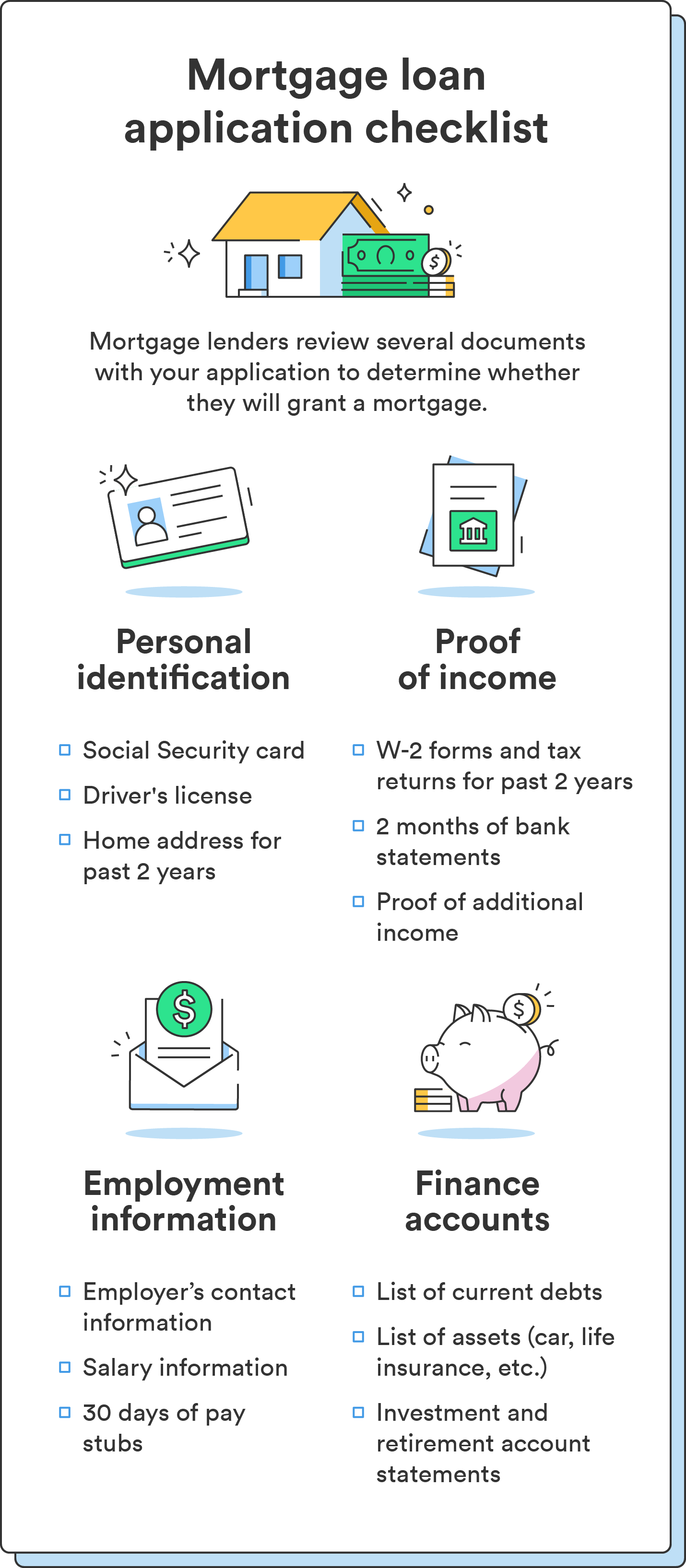
Lenders will require extensive documentation to verify your income, assets, and liabilities. Be ready to provide:
- Proof of Income: Pay stubs (last 30 days), W-2 forms (last two years), federal tax returns (last two years), and, for self-employed individuals, profit and loss statements and business tax returns.
- Asset Verification: Bank statements (last two months) for checking and savings accounts, investment account statements, and retirement account statements.
- Credit History: Lenders will pull your credit report, but it’s wise to review it yourself beforehand for errors.
- Debt Information: Statements for credit cards, auto loans, student loans, and any other outstanding debts.
- Employment History: Contact information for employers over the last two years.
- Identification: Government-issued ID (driver’s license, passport).
- Rent/Mortgage History: Proof of consistent payments, if applicable.
Having these documents organized and readily accessible will expedite your application.
Understanding Your Credit Score and Debt-to-Income Ratio
Two critical factors lenders assess are your credit score and your debt-to-income (DTI) ratio.
- Credit Score: A higher credit score (generally 740+) indicates a lower risk to lenders and typically qualifies you for the best interest rates. If your score is low, consider taking steps to improve it before applying.
- Debt-to-Income Ratio: This is a percentage that compares your total monthly debt payments to your gross monthly income. Lenders typically look for a DTI ratio of 36% or less, though some programs allow up to 43% or even higher. A lower DTI indicates you can comfortably manage additional mortgage payments. Understand these metrics, as they heavily influence your eligibility and the terms you’re offered.
Getting Pre-Approved vs. Pre-Qualified
It’s important to distinguish between pre-qualification and pre-approval.
- Pre-qualification is an informal estimate of how much you might be able to borrow, based on a brief review of your financial information, often without a hard credit pull. It’s a good starting point for budgeting but carries little weight with sellers.
- Pre-approval is a much more rigorous process. A lender formally reviews your credit, income, and assets, often involving a hard credit pull, and provides a conditional commitment for a specific loan amount. A pre-approval letter is a powerful tool when making an offer on a home, showing sellers you are a serious and qualified buyer. Always aim for pre-approval before actively house hunting.
Choosing where to apply for a mortgage is a deeply personal decision, influenced by your financial situation, your comfort level with technology, and your preference for personalized service versus self-direction. By understanding the distinct offerings of traditional banks, credit unions, mortgage brokers, online lenders, and specialized programs, and by diligently preparing your financial documentation, you can confidently navigate the mortgage market. Remember to compare interest rates, fees, loan options, and customer service across multiple providers. The right choice will not only secure your home loan but also set you on a path toward stable and successful homeownership.
aViewFromTheCave is a participant in the Amazon Services LLC Associates Program, an affiliate advertising program designed to provide a means for sites to earn advertising fees by advertising and linking to Amazon.com. Amazon, the Amazon logo, AmazonSupply, and the AmazonSupply logo are trademarks of Amazon.com, Inc. or its affiliates. As an Amazon Associate we earn affiliate commissions from qualifying purchases.