
Tesla, a name synonymous with electric vehicles and sustainable energy, has consistently pushed the boundaries of automotive engineering and software integration. Yet, equally revolutionary, and often less spotlighted, is the sophisticated network of manufacturing facilities where these innovative products come to life. These “Gigafactories” are not merely assembly plants; they are colossal testaments to advanced automation, AI-driven processes, and a vertically integrated approach to production that seeks to redefine manufacturing in the 21st century. Understanding where Tesla is made is fundamentally understanding the technological bedrock that supports its audacious mission.
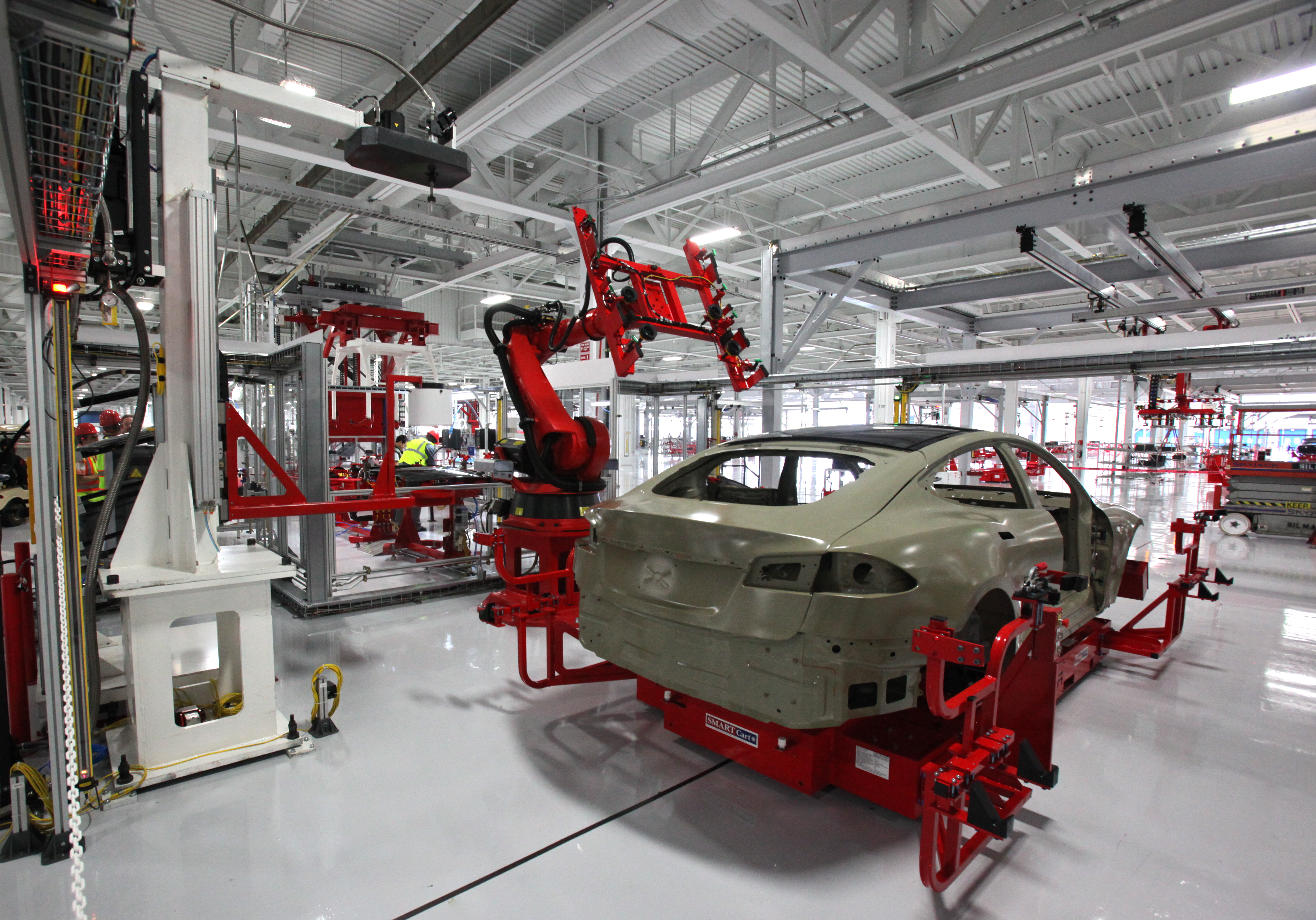
Tesla’s manufacturing strategy revolves around several core tenets: extreme vertical integration, a relentless pursuit of automation, and an iterative development cycle that applies not just to its products but also to its production lines. Each Gigafactory serves a strategic purpose, often specializing in certain components or catering to specific markets, all while acting as a crucible for new manufacturing technologies.
The Dawn of the Gigafactory: Reimagining Production at Scale
The concept of the “Gigafactory” was born from a necessity to scale battery production far beyond existing capacities, recognizing that the bottleneck for electric vehicles would be cell supply. This vision rapidly expanded to encompass entire vehicle production, transforming the traditional automotive factory into a high-tech ecosystem.
Gigafactory Nevada: The Battery Powerhouse
Located outside Sparks, Nevada, Gigafactory 1 was the genesis of Tesla’s manufacturing revolution. Inaugurated in 2016, its primary mission was to produce lithium-ion battery cells, battery packs, and drive units on an unprecedented scale. This facility is a joint venture with Panasonic for cell production and showcases early iterations of Tesla’s ambitious automation goals.
Technologically, Gigafactory Nevada pioneered several innovations. It was designed with a focus on streamlining the entire battery manufacturing process under one roof, from raw material input to finished powerwall or vehicle battery pack. This includes advanced material handling systems, highly automated cell assembly lines, and sophisticated quality control mechanisms that leverage sensor data and machine vision. The sheer scale and complexity required bespoke robotic solutions and intelligent logistics to manage the flow of materials and finished goods, making it an early blueprint for future Gigafactories. The integration of energy storage solutions on-site, powered by solar, further exemplifies Tesla’s tech-driven approach to sustainable operations.
Fremont Factory: The Cradle of Innovation
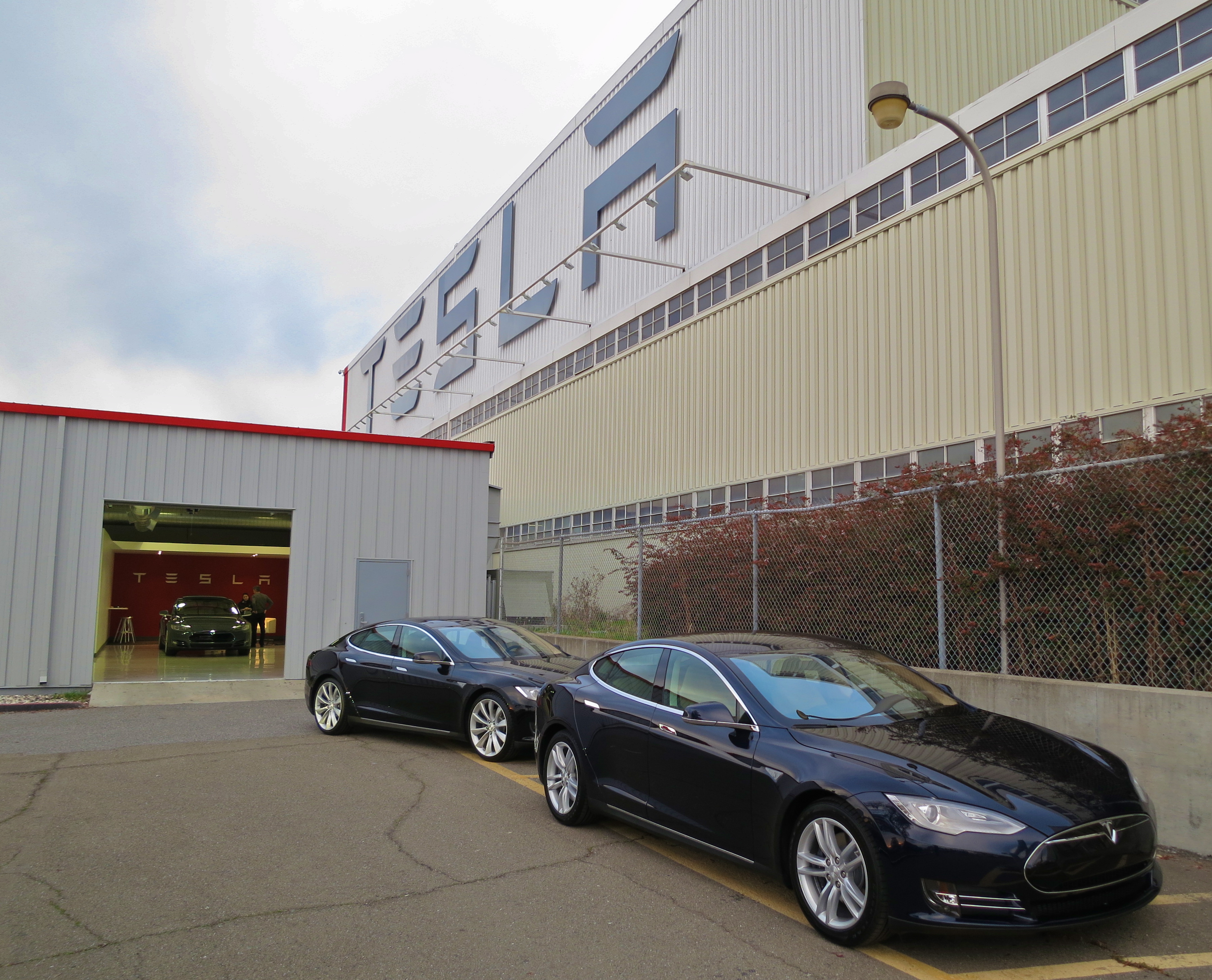
While Gigafactory Nevada laid the groundwork for battery production, the Fremont Factory in California remains the heart of Tesla’s vehicle assembly operations. Acquired from GM and Toyota in 2010, this facility has undergone a profound technological transformation, evolving from a conventional automotive plant into a hub for cutting-edge manufacturing.
Fremont is where Tesla refines its vehicle production processes, acting as a proving ground for new assembly techniques, robotic applications, and software-controlled production lines before they are scaled to other Gigafactories. It’s known for its high level of automation in specific areas, such as the body shop, where hundreds of robots perform precision welding and assembly. The factory leverages advanced manufacturing execution systems (MES) and sophisticated data analytics to monitor every stage of production, enabling real-time adjustments and predictive maintenance. This continuous technological refinement allows Tesla to iterate on its manufacturing processes almost as rapidly as it iterates on its software and vehicle designs, making Fremont a living lab for advanced automotive production technology.
Global Expansion and Technological Refinement
Tesla’s growth strategy necessitates localized production to reduce logistics costs, mitigate supply chain risks, and adapt to regional market demands. This global expansion has led to the development of even more technologically advanced Gigafactories.
Gigafactory Shanghai: Speed, Efficiency, and Localized Tech Adoption
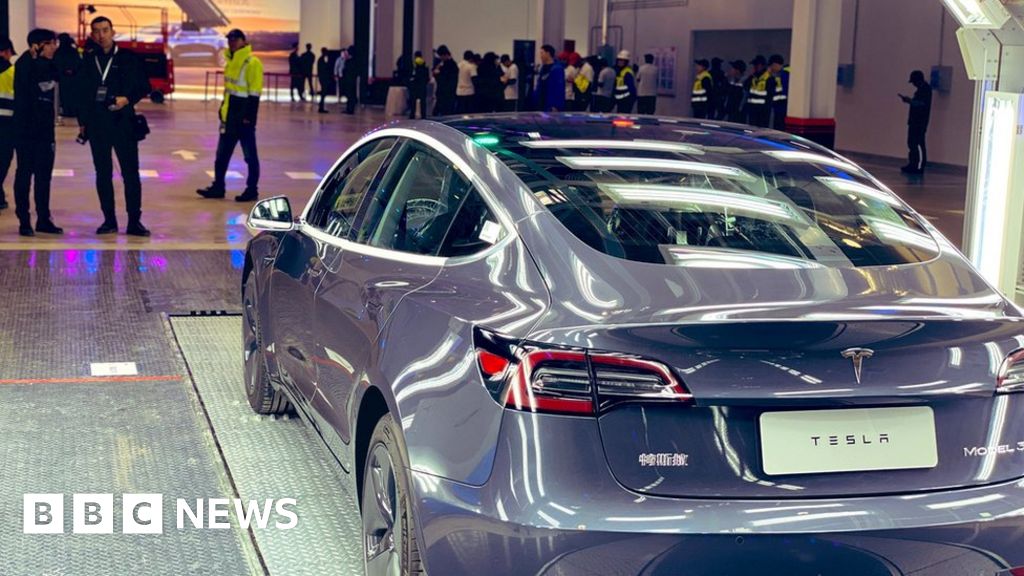
Gigafactory Shanghai, operational since late 2019, represents a significant leap forward in Tesla’s manufacturing prowess. Built at an astonishing pace, it quickly became a benchmark for production efficiency and speed within the automotive industry. Technologically, Shanghai integrates lessons learned from Fremont and Nevada, featuring a higher degree of automation and optimized layouts.
This facility boasts some of the most advanced robotics for stamping, welding, painting, and general assembly. Its sophisticated digital infrastructure allows for seamless integration of supply chain management with production scheduling, leading to unparalleled output rates. Furthermore, Gigafactory Shanghai demonstrates Tesla’s capability to rapidly deploy and adapt its manufacturing technology to new environments, often incorporating local innovations and supply chain efficiencies. The “Made-in-China” Teslas are a testament to the factory’s technological sophistication and its role as a global export hub, proving that advanced manufacturing can be scaled and refined across diverse operational landscapes.
Gigafactory Berlin and Texas: Pioneering Next-Gen Manufacturing
The newest additions to Tesla’s global manufacturing footprint, Gigafactory Berlin-Brandenburg (Giga Berlin) and Gigafactory Texas (Giga Texas), embody the pinnacle of Tesla’s current manufacturing technology and future aspirations. These facilities are designed from the ground up to incorporate the company’s latest innovations in vehicle structure, battery technology, and production processes.
Giga Berlin, which began production in 2022, is designed for extreme efficiency and sustainability. It features some of the world’s largest casting machines for “Gigacasting” structural components, a radical departure from traditional multi-part stamping and welding. This reduces parts count, simplifies assembly, and significantly lowers production complexity and cost. Furthermore, Giga Berlin is pioneering a highly automated paint shop, aiming for superior finishes and more environmentally friendly processes.
Giga Texas, also launched in 2022, is not only Tesla’s new global headquarters but also a sprawling complex dedicated to the production of the Cybertruck, Model Y, and the critical 4680 battery cells. It represents Tesla’s most ambitious attempt at vertical integration, aiming to produce everything from raw battery materials to final vehicle assembly on a single site. The facility leverages a combination of Gigacasting, the structural battery pack design, and advanced 4680 cell manufacturing, all integrated within an optimized, highly automated factory layout. The scale of robotic deployment and the intricate dance of autonomous guided vehicles (AGVs) managing material flow are truly state-of-the-art, representing a significant advancement in smart manufacturing.
Core Technological Pillars of Tesla’s Production
At the heart of Tesla’s Gigafactories are several transformative technological pillars that fundamentally differentiate its manufacturing approach.
Advanced Automation and AI-Driven Robotics
Tesla factories are characterized by an exceptional density of industrial robots performing a vast array of tasks, from precise welding and assembly to complex material handling. These robots are increasingly integrated with AI-driven vision systems and machine learning algorithms. This allows them to perform complex inspections, identify defects with greater accuracy than human operators, and even learn to optimize their movements for increased speed and efficiency. The goal is not just automation for speed, but automation for precision, consistency, and adaptability, with robots communicating and coordinating in a highly synchronized manufacturing ballet.
The Evolution of Battery Cell Manufacturing
Battery technology is core to Tesla’s product, and its manufacturing is equally crucial. Tesla has invested heavily in developing its own battery cell production capabilities, epitomized by the 4680 cell. The manufacturing process for these larger, more energy-dense cells involves complex dry electrode technology and tabless designs. Producing these cells at Gigafactory Texas and potentially other sites requires a new generation of high-precision manufacturing equipment, ultra-clean room environments, and sophisticated process control systems to ensure quality and consistency at astronomical volumes. This vertical integration of cell production directly into vehicle assembly lines represents a profound technological undertaking.
Gigacasting and Structural Battery Packs: A Paradigm Shift
Perhaps the most visually striking technological innovation is Gigacasting. Instead of assembling a vehicle underbody from hundreds of individual stamped metal parts, Tesla uses massive die-casting machines to create large sections of the car’s frame (front and rear underbody) as single, monolithic pieces. This dramatically reduces the number of parts, simplifies the assembly process, eliminates numerous welding points, and reduces overall vehicle weight and manufacturing complexity. Coupled with the structural battery pack, where the battery itself becomes a load-bearing chassis component, these innovations fundamentally redesign the car manufacturing process from the ground up, moving closer to a single-piece vehicle architecture.
The Software-Defined Factory: Data, Connectivity, and Optimization
Underlying the hardware and robotics in Tesla’s Gigafactories is a sophisticated software ecosystem that orchestrates the entire production process. This “software-defined factory” approach is critical to achieving the agility and efficiency that Tesla targets.
Predictive Maintenance and Process Control
Every machine, robot, and sensor in a Gigafactory generates vast amounts of data. Tesla leverages this data through advanced analytics and machine learning to implement predictive maintenance. Instead of reactive repairs, systems can anticipate failures before they occur, scheduling maintenance during downtimes and preventing costly disruptions. Similarly, real-time process control systems constantly monitor production parameters, making micro-adjustments to ensure product quality and consistency. This level of data-driven optimization is crucial for operating at the scale and complexity of a Gigafactory.
Digital Twins and Simulation in Production
Before a new production line is built or a process is changed, Tesla extensively uses digital twins and simulation. A “digital twin” is a virtual model of a physical asset, process, or system. Engineers can simulate entire factory layouts, robot movements, material flows, and production scenarios in a virtual environment. This allows for optimization of efficiency, identification of bottlenecks, and testing of new technologies or configurations without interrupting actual production. This iterative, simulation-driven approach accelerates the deployment of new manufacturing capabilities and minimizes costly real-world trial and error.
Future Horizons: Innovation, Sustainability, and Scaling Production
Tesla’s journey in manufacturing is far from over. The company continues to invest heavily in R&D not just for its products, but for its production machinery and processes, aiming for what Elon Musk describes as “the machine that builds the machine.”
The Continuous Pursuit of Manufacturing Perfection
Future Gigafactories and expansions are expected to further refine the concepts of automation, vertical integration, and Gigacasting. The goal is to reduce capital expenditure per unit of capacity, increase manufacturing throughput, and simplify the vehicle architecture to a point where a car can be produced in a matter of hours, if not minutes. This relentless pursuit of manufacturing perfection leverages AI, advanced robotics, and bespoke machinery to achieve unprecedented levels of efficiency and scale.
Supply Chain Tech and Raw Material Integration
As Tesla scales, the technological integration of its supply chain becomes even more critical. This involves using advanced analytics for demand forecasting, optimizing logistics through real-time tracking and automation, and forging direct relationships with raw material suppliers. Future developments might see even more vertical integration into mining and refining processes, all managed and optimized through sophisticated digital tools to secure sustainable and ethical sourcing of critical battery materials.
In conclusion, “where Tesla is made” extends far beyond mere geographic locations. It encompasses a technologically advanced manufacturing ecosystem characterized by groundbreaking automation, innovative production techniques like Gigacasting, and a deep integration of software and data science. From the battery cells powering the vehicles to the final assembly on a software-defined line, Tesla’s Gigafactories are not just building electric cars; they are building the future of manufacturing itself, pushing the boundaries of what’s possible with industrial technology.
aViewFromTheCave is a participant in the Amazon Services LLC Associates Program, an affiliate advertising program designed to provide a means for sites to earn advertising fees by advertising and linking to Amazon.com. Amazon, the Amazon logo, AmazonSupply, and the AmazonSupply logo are trademarks of Amazon.com, Inc. or its affiliates. As an Amazon Associate we earn affiliate commissions from qualifying purchases.