
In an increasingly digital financial world, the traditional paper check might seem like a relic of the past. Yet, it continues to play a surprisingly significant role in various transactions, from receiving a tax refund to paying rent or managing business expenses. For many, understanding the fundamental components of a check, particularly their own account number, remains a crucial piece of financial literacy. This number is not just a sequence of digits; it’s a vital identifier that links directly to your financial holdings, enabling everything from direct deposits to bill payments. Navigating the seemingly simple layout of a check to find this critical information is a skill that empowers individuals to manage their finances effectively and securely.

This comprehensive guide will demystify the anatomy of a check, precisely locate your account number, explain its importance in financial transactions, and delve into best practices for safeguarding this sensitive information. Whether you’re a seasoned financial professional or just starting your journey in personal finance, a clear understanding of your check and its identifiers is an invaluable asset.
Understanding the Fundamentals of a Bank Check
Before we pinpoint the account number, it’s essential to grasp the overall structure of a standard bank check. While designs may vary slightly between financial institutions, the core elements remain universally consistent. These elements are designed to facilitate secure and accurate transactions, ensuring funds are drawn from the correct account and paid to the intended recipient.
Key Elements Beyond the Signature Line
A check is more than just a piece of paper; it’s a legally binding instrument that authorizes your bank to transfer funds. Beyond the obvious spaces for the payee’s name, the date, the amount (both numerical and written), and your signature, several other critical pieces of information are printed on the check:
- Your Name and Address: Typically located in the top left corner, this identifies the account holder.
- Bank Name and Logo: Clearly indicates the financial institution holding the account, usually at the top or bottom center.
- Check Number: A sequential number, usually found in the top right corner and also at the bottom of the check, used for record-keeping and reconciliation.
- Memo Line: An optional space for you to note the purpose of the payment, useful for personal records.
While these elements provide context and aid in tracking, the truly critical information for electronic processing lies at the very bottom of the check.
The MICR Line: Your Check’s Digital Fingerprint
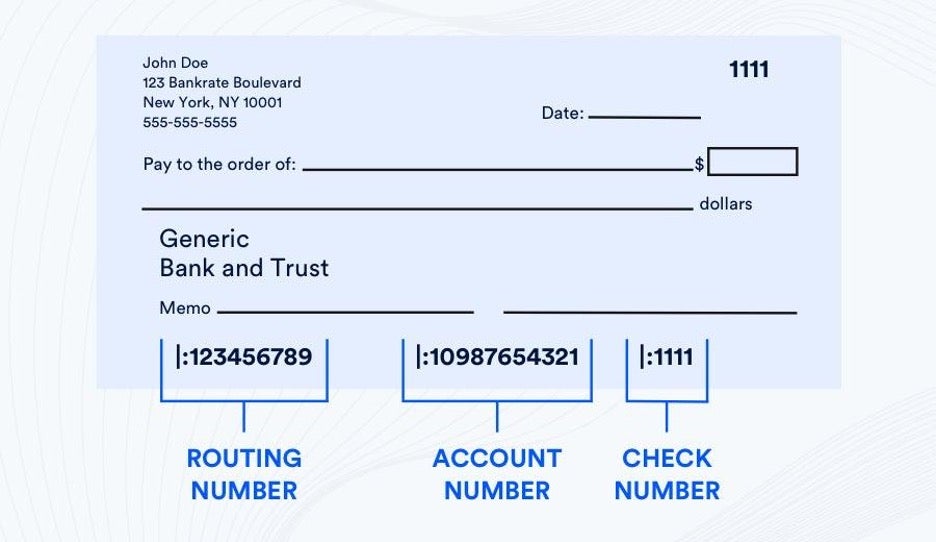
The magnetic ink character recognition (MICR) line is a unique sequence of numbers printed at the bottom of every check, typically in a distinct, slightly bolder font. These characters are printed with special magnetic ink that allows automated check-processing machines to read them quickly and accurately, minimizing errors and speeding up transactions. This line is comprised of three distinct sets of numbers, each serving a crucial purpose in routing funds:
- Routing Number: This nine-digit number is the first set on the left side of the MICR line. It identifies the specific bank and its location, acting like an address for financial institutions. When funds are transferred electronically, the routing number ensures the money goes to the correct bank.
- Account Number: Positioned typically in the middle of the MICR line, this is the unique identifier for your specific bank account.
- Check Number: This is the same check number found in the top right corner, but formatted for machine readability within the MICR line, usually at the far right.
Understanding the MICR line is fundamental to financial literacy, as these numbers are frequently requested for various financial tasks beyond simply writing a check.
Locating Your Account Number: A Step-by-Step Guide
The question “where on a check is your account number?” is a common one, especially for those who infrequently use paper checks or are setting up new financial services. While it’s always printed on the check, knowing exactly where to look and how to distinguish it from other numbers is key.
The Central Identifier: Locating the Account Number
Your bank account number is consistently found in the MICR line at the bottom of your personal or business checks. It is generally the second set of numbers from the left within this magnetic ink strip, following the routing number. The length of an account number can vary, typically ranging from 10 to 12 digits, though some banks may use fewer or more.
To accurately locate it:
- Pick up one of your checks. Ensure it’s a valid, unused check from your current checking account.
- Look at the bottom edge. You’ll see a series of numbers printed in a unique, machine-readable font. This is the MICR line.
- Identify the first set of numbers. This is your bank’s routing number, usually nine digits long, often enclosed by special symbols (e.g.,
:000000000:). - Identify the second set of numbers. This is your personal bank account number. It will be located directly after the routing number. It is also often flanked by unique symbols to denote its start and end.
- Confirm with your bank statement or online banking. If you’re unsure, or for critical transactions, always cross-reference the number with what’s listed on your bank’s official statements or within your secure online banking portal. This step adds an extra layer of verification, crucial for accuracy.
Distinguishing it from Routing and Check Numbers
Confusion often arises because there are three distinct sets of numbers at the bottom of a check. It’s vital to differentiate them to avoid errors in financial transactions:
- Routing Number (First set): This identifies your bank. Think of it as the “street address” for your financial institution. It is always nine digits long.
- Account Number (Second set): This identifies your specific account within that bank. Think of it as your unique “apartment number” within the bank building. Its length varies by bank.
- Check Number (Third set): This is the serial number of that individual check. It helps you keep track of the checks you write and aids in reconciliation. It is usually 3-4 digits long and matches the number in the top right corner of the check.
Mistaking one number for another can lead to significant delays, incorrect transactions, or even funds being sent to the wrong account. Always double-check which number you are providing for any given financial task.
The Indispensable Role of Your Account Number in Modern Finance
While you might primarily associate your account number with traditional paper checks, its utility extends far beyond. In today’s interconnected financial ecosystem, your account number serves as a cornerstone for numerous digital and automated financial processes, making it a truly indispensable piece of information for managing personal and business finances.
Facilitating Direct Deposits and Automatic Payments
One of the most common and beneficial uses of your account number is for setting up direct deposits and automatic payments.
- Direct Deposits: Whether it’s your paycheck, government benefits, tax refunds, or investment dividends, direct deposit ensures funds are transferred electronically and directly into your bank account. This eliminates the need for paper checks, speeds up access to funds, and reduces the risk of lost or stolen checks. To set this up, your employer or payer will typically require both your routing number and your account number.
- Automatic Payments: Similarly, your account number is crucial for automating bill payments for utilities, loans, insurance, or subscriptions. By providing your bank account details, you authorize merchants to automatically debit your account on a recurring basis. This helps avoid late fees, simplifies budgeting, and ensures timely payments, contributing to a healthy credit history.
Both direct deposits and automatic payments are cornerstones of modern personal finance, offering convenience, security, and efficiency that depend entirely on the accurate provision of your account number.
Essential for Online Bill Pay and Bank Transfers
Beyond recurring transactions, your account number is frequently needed for one-time online bill payments and various bank-to-bank transfers.
- Online Bill Pay: Many service providers allow you to pay bills directly from your bank account through their online portals. Instead of using a credit card, you can enter your bank’s routing number and your account number to authorize a direct debit, often avoiding transaction fees associated with card payments.
- Bank Transfers (ACH Transfers): If you need to transfer money between your accounts at different banks (e.g., moving money from a checking account to a savings account at another institution) or send money to another individual’s bank account, your account number, along with the recipient’s, will be required. These are typically processed as Automated Clearing House (ACH) transfers, a highly secure and cost-effective method for electronic fund transfers.
- Funding Investment Accounts: When opening or funding investment accounts with brokerage firms, mutual fund companies, or retirement plan providers, you will almost always need to link your bank account using its routing and account numbers to facilitate deposits and withdrawals.
In essence, your account number acts as the unique address for your money within the banking system, enabling it to travel safely and efficiently to its intended destination in myriad financial scenarios.
When You Might Need to Provide It
It’s helpful to be aware of the common situations where you might be asked for your account number:
- Setting up payroll direct deposit.
- Establishing recurring bill payments (e.g., mortgage, rent, utilities).
- Making one-time online payments to various merchants.
- Transferring funds between your accounts at different banks.
- Receiving wire transfers (though often a SWIFT/BIC code is also needed for international wires).
- Applying for loans or credit, as banks often verify your primary banking relationship.
- Disputing transactions or initiating investigations with your bank.
- Setting up investment accounts or funding digital wallets.
In all these scenarios, providing your account number, often in conjunction with your routing number, is a standard and necessary procedure.
Protecting Your Financial Identity: Security Best Practices
Given the critical role your account number plays in accessing and moving your money, safeguarding this information is paramount. Identity theft and financial fraud are ever-present threats, and exposing your account number unnecessarily can open doors for malicious actors. Personal finance security is not just about strong passwords; it’s about being vigilant with all your financial identifiers.
Understanding the Risks of Exposure
While your account number alone typically isn’t enough for someone to drain your bank account, its exposure, especially when combined with other personal details, significantly increases your vulnerability to various forms of financial fraud:
- Unauthorized Withdrawals: With your account number and routing number, a fraudster might attempt to create a “demand draft” or initiate an unauthorized ACH withdrawal, mimicking a legitimate electronic payment. While banks have fraud detection systems, recovering funds can be a lengthy and stressful process.
- Identity Theft: An account number can be a piece of the puzzle for identity thieves looking to open new accounts in your name, apply for credit, or commit other financial crimes.
- Phishing and Social Engineering: Criminals might use a partial account number or hint that they already have it to trick you into revealing more sensitive information, such as your online banking credentials or Social Security number.
It’s crucial to understand that while a check inherently displays these numbers, the risks are primarily associated with uncontrolled or unnecessary disclosure.
Best Practices for Check Security
To mitigate these risks and maintain the security of your account number and overall financial health, follow these best practices:
- Limit Check Writing: In today’s digital age, many transactions can be handled more securely through online banking portals, direct bank transfers, or secure payment apps. Use paper checks only when necessary.
- Store Unused Checks Securely: Keep your unused checkbooks in a locked drawer or safe place. Treat them like cash. Don’t leave them lying around where they could be easily accessed or stolen.
- Shred Old Checks and Bank Statements: Before discarding old checks, voided checks, or bank statements, always shred them using a cross-cut shredder. Tossing them intact into the trash is an open invitation for dumpster divers looking for personal financial information.
- Be Cautious Online and Over the Phone: Never provide your account number or other sensitive financial information in response to unsolicited emails, texts, or phone calls. Always verify the legitimacy of the request and the requester. If a legitimate entity (like your bank) needs this information, they will usually ask you to log into a secure portal or call them back at a verified number.
- Monitor Your Accounts Regularly: Regularly review your bank statements and online transaction history for any unauthorized or suspicious activity. Promptly report any discrepancies to your bank.
- Use Strong Passwords and Two-Factor Authentication: For your online banking accounts, use unique, strong passwords and enable two-factor authentication (2FA) wherever possible. This adds an extra layer of security, making it much harder for unauthorized users to gain access even if they somehow obtain your credentials.
- Avoid Public Wi-Fi for Banking: When accessing your online banking, avoid using public, unsecured Wi-Fi networks, which can be vulnerable to eavesdropping. Use a secure, private network or a virtual private network (VPN).

Modern Alternatives and Reducing Check Usage
While checks still have their place, the trend is moving towards more secure and efficient digital payment methods. Embracing these alternatives can further enhance your financial security:
- Online Bill Pay through Your Bank: Most banks offer robust online bill pay services that allow you to schedule payments directly from your checking account without revealing your account number to individual merchants.
- ACH Transfers: For larger transfers between known parties, ACH transfers (Automated Clearing House) are secure, traceable, and generally low-cost.
- Digital Payment Apps: Services like Zelle, PayPal, Venmo, or Cash App allow for quick and secure person-to-person transfers using email addresses or phone numbers, abstracting the need to share account numbers directly.
- Credit and Debit Cards: For retail purchases, credit and debit cards offer strong fraud protection features, making them generally safer than writing a check.
- Wire Transfers: For urgent, high-value transfers, wire transfers offer near-instantaneous funds movement, though they typically involve higher fees.
By understanding where your account number is located, its various applications, and how to protect it, you empower yourself with essential financial literacy. While checks may become less frequent, the knowledge of their underlying structure and the security implications of your financial identifiers will remain invaluable in navigating the complexities of personal finance. Remain vigilant, leverage modern tools, and always prioritize the security of your financial information.
aViewFromTheCave is a participant in the Amazon Services LLC Associates Program, an affiliate advertising program designed to provide a means for sites to earn advertising fees by advertising and linking to Amazon.com. Amazon, the Amazon logo, AmazonSupply, and the AmazonSupply logo are trademarks of Amazon.com, Inc. or its affiliates. As an Amazon Associate we earn affiliate commissions from qualifying purchases.