
The question “where is the S&P 500?” isn’t a geographical query; it’s an inquiry into the very heart of the American financial system. It delves into understanding one of the most vital barometers of the U.S. economy, an indicator whose movements ripple through individual portfolios, corporate balance sheets, and global market sentiment. The S&P 500 isn’t a physical entity you can point to on a map; rather, it is a dynamic, ever-evolving index, a conceptual aggregation of the market capitalization of 500 of the largest publicly traded companies in the United States. Its “location” is ubiquitous – it resides in every financial headline, every investor’s portfolio tracker, and in the fundamental health of the corporations that drive the nation’s economic engine. For anyone engaged with personal finance, investing, or simply understanding the broader economic landscape, comprehending the S&P 500’s essence, its influence, and its investable forms is paramount. This article will unravel the multifaceted presence of the S&P 500, exploring its definition, its significance as a market benchmark, the factors that dictate its movements, and how investors can effectively engage with it as a cornerstone of their financial strategy.

Deconstructing The S&P 500: More Than Just A Number
To truly understand “where” the S&P 500 is, we must first grasp “what” it is and “why” it holds such sway. It is far more than a simple numerical value; it is a sophisticated representation of market health and corporate performance.
What is the S&P 500?
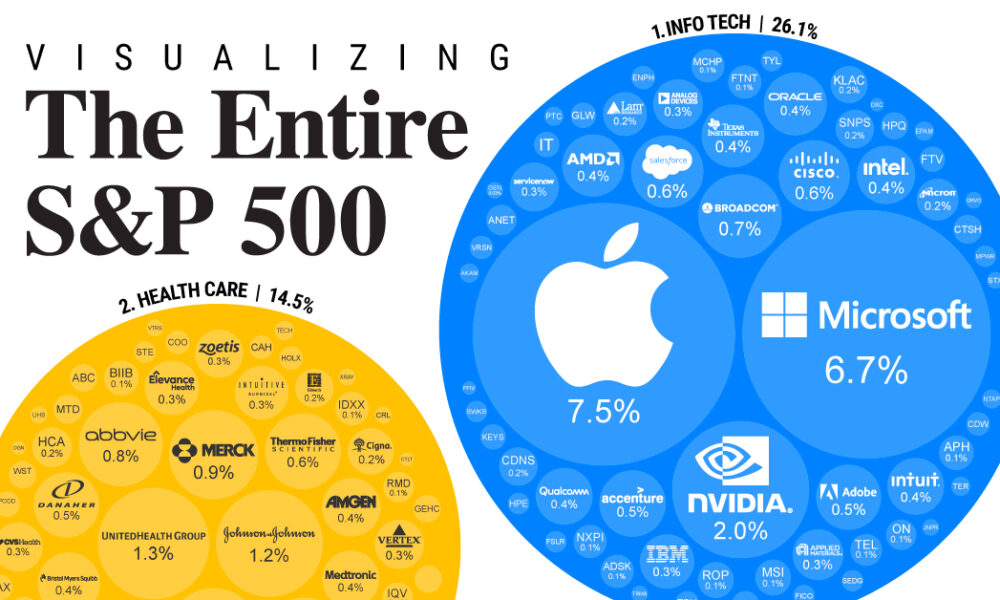
The S&P 500, or the Standard & Poor’s 500, is a stock market index maintained by S&P Dow Jones Indices. It comprises 500 of the largest U.S. publicly traded companies by market capitalization, selected by a committee based on factors like liquidity, size, sector representation, and public float. Unlike simpler indices, the S&P 500 is a market-capitalization-weighted index. This means that companies with larger market values have a greater impact on the index’s movement than smaller companies. For example, a significant price swing in a colossal tech company like Apple or Microsoft will influence the S&P 500 more profoundly than a similar percentage swing in a smaller constituent company. This weighting methodology ensures that the index accurately reflects the overall market trend, as it gives more prominence to the companies that hold a larger share of the market’s total value. The selection criteria are rigorous, ensuring that only the most influential and stable companies are included, providing a robust snapshot of the American corporate landscape.
Why it Matters: A Barometer for the Economy and Your Portfolio
The S&P 500’s significance extends far beyond its mathematical composition. It serves as a critical barometer for the health of the U.S. economy and, by extension, the global economy. Because it encompasses companies across all major sectors – technology, healthcare, financials, consumer discretionary, industrials, and more – its performance offers a diversified view of corporate profitability and economic activity. A rising S&P 500 often signals investor confidence, robust corporate earnings, and economic growth, while a decline can indicate recessionary fears, decreased profitability, or market uncertainty. For investors, the S&P 500 is the de facto benchmark against which professional money managers and individual portfolios are often measured. If your investment portfolio aims to mirror the broad market or outperform it, you’re implicitly or explicitly comparing its returns to those of the S&P 500. Its long-term historical average returns also make it a foundational pillar for retirement planning and wealth accumulation strategies, representing the potential for consistent growth over decades.
Locating The S&P 500: Its Presence In Financial Markets
While not a physical place, the S&P 500 has a pervasive presence across the financial ecosystem, acting as both a measuring stick and an investment vehicle.
As a Benchmark for Performance
The S&P 500’s most common “location” is as a standard of comparison. When a financial advisor discusses the performance of a mutual fund, they will invariably compare it to the S&P 500. Active fund managers strive to “beat the market,” meaning their fund’s returns exceed those of the S&P 500 over a given period. Passive index funds, on the other hand, aim to “match the market,” replicating the index’s performance as closely as possible. Individual investors, too, frequently benchmark their own stock or mutual fund selections against this index. If your portfolio returns 8% in a year when the S&P 500 returned 12%, you’ve underperformed the market. Conversely, if your portfolio returned 15%, you’ve outperformed. This constant comparison helps investors and professionals alike evaluate the efficacy of different investment strategies and managerial prowess. It provides an objective and widely accepted measure of market opportunity and risk.
As an Investable Asset
One of the most powerful ways to “locate” the S&P 500 is through its investable forms. Investors cannot directly buy “the S&P 500” itself, but they can easily invest in financial products designed to track its performance. The most popular avenues are Exchange Traded Funds (ETFs) and index mutual funds. ETFs such as SPDR S&P 500 ETF Trust (SPY), iShares Core S&P 500 (IVV), and Vanguard S&P 500 ETF (VOO) hold the stocks of the 500 companies in proportions that mimic the index’s weighting. By purchasing shares in these ETFs or similar index mutual funds, investors gain instant diversification across 500 leading U.S. companies with a single transaction. This provides broad market exposure, typically at very low expense ratios, making S&P 500-tracking investments a cornerstone of many long-term, passive investment strategies. It allows ordinary investors to participate in the growth of the largest American corporations without needing to research and buy 500 individual stocks.
Its Digital Footprint: Data and Analytics
In the digital age, the S&P 500’s presence is most vividly felt across countless online platforms. It’s prominently featured on every major financial news website (e.g., Bloomberg, Wall Street Journal, Yahoo Finance), displayed in real-time on trading platforms (e.g., Fidelity, E*TRADE, Charles Schwab), and analyzed in depth across financial blogs and economic reports. Its historical data is a goldmine for quantitative analysts and academic researchers, used to study market trends, volatility, and economic cycles. Mobile apps dedicated to personal finance and investing often use the S&P 500 as their default market overview. Its ticker symbol, usually displayed as ^GSPC or SPX, is instantaneously accessible, providing continuous updates on market sentiment and performance. This pervasive digital footprint ensures that its pulse is felt across the globe, influencing trading decisions and economic forecasts minute by minute.
The Driving Forces: What Moves The S&P 500?
Understanding the “where” of the S&P 500 also involves recognizing the forces that dictate its movement. It’s not a static entity; its value is a complex interplay of numerous economic, corporate, and psychological factors.
Economic Indicators and Corporate Earnings
At its core, the S&P 500 is driven by the collective performance of its constituent companies. Therefore, factors that impact corporate profitability are paramount. Key economic indicators such as Gross Domestic Product (GDP) growth, inflation rates, unemployment figures, and consumer spending reports provide a macroeconomic backdrop. Strong GDP growth often translates to higher corporate revenues and earnings, which typically propels the index upward. Conversely, rising inflation or unemployment can signal headwinds for businesses, potentially leading to a market downturn. Corporate earnings reports, released quarterly by individual S&P 500 companies, are perhaps the most direct catalysts. When companies report better-than-expected profits, their stock prices often rise, contributing positively to the index. Earnings guidance – a company’s forecast for future profitability – also plays a significant role, as investors are forward-looking.
Geopolitical Events and Market Sentiment
Beyond fundamental economics, the S&P 500 is highly sensitive to geopolitical developments and broader market sentiment. Wars, trade disputes, elections, international crises, or even significant policy changes in major economies can introduce uncertainty and volatility. Such events can disrupt supply chains, alter consumer behavior, or change regulatory environments, impacting corporate prospects. Market sentiment, often driven by investor psychology, also plays a crucial role. Fear and greed are powerful emotions that can lead to irrational buying or selling, creating market bubbles or crashes that aren’t always tethered to immediate economic fundamentals. News cycles, social media trends, and expert opinions can all shape this sentiment, influencing how investors perceive risk and opportunity.
Monetary Policy and Interest Rates
Central bank actions, particularly those of the U.S. Federal Reserve, are critical determinants of the S&P 500’s trajectory. Monetary policy, through tools like interest rates and quantitative easing/tightening, directly influences the cost of borrowing for businesses and consumers, the availability of credit, and the overall liquidity in the financial system. When the Fed lowers interest rates, borrowing becomes cheaper, encouraging corporate investment and consumer spending, which tends to boost stock prices. Conversely, raising interest rates can increase borrowing costs, cool down economic activity, and make bonds more attractive relative to stocks, often putting downward pressure on the S&P 500. The market is constantly anticipating and reacting to signals from the Fed, making central bank announcements pivotal moments for index movements.
Investing In The S&P 500: A Core Strategy for Growth
Given its pervasive influence and historical performance, investing in the S&P 500 has become a cornerstone strategy for many, offering a straightforward path to long-term wealth accumulation.
The Power of Diversification and Long-Term Growth
One of the primary benefits of investing in an S&P 500 index fund or ETF is instant diversification. By holding shares in 500 companies across various sectors, you significantly reduce the risk associated with investing in individual stocks. The poor performance of one or a few companies is less likely to severely impact your overall portfolio, as the strong performance of others can offset it. Historically, the S&P 500 has demonstrated remarkable resilience and a consistent upward trend over the long term, despite numerous economic downturns, market crashes, and geopolitical upheavals. While past performance is not indicative of future results, its historical average annual return, including dividends, has been approximately 10-12% over many decades. This long-term growth potential, coupled with diversification, makes it an attractive option for retirement savings and other financial goals requiring compounding returns.
Simple Access: ETFs and Index Funds
Investing in the S&P 500 is remarkably accessible to individual investors, regardless of their investment knowledge or capital. Unlike buying individual stocks, which requires extensive research and monitoring, S&P 500 ETFs and index funds offer a “set it and forget it” approach for many. You can purchase shares of these funds through any brokerage account with relative ease. Furthermore, these products are known for their low expense ratios, meaning a smaller portion of your investment goes towards management fees, allowing more of your money to compound over time. This simplicity and cost-effectiveness make S&P 500-tracking investments an ideal choice for beginners and experienced investors alike, facilitating broad market participation.

Considerations and Risks
While investing in the S&P 500 offers substantial benefits, it is not without its considerations and risks. The market can experience significant fluctuations and downturns, sometimes lasting for extended periods (bear markets). While the long-term trend has been upward, there are no guarantees, and investors should be prepared for volatility. Economic recessions, unforeseen global crises, or sustained periods of high inflation can all impact the index negatively. Investors should also understand that while diversified, S&P 500 funds are still concentrated in U.S. equities, meaning they are exposed to the risks specific to the American economy. A truly diversified portfolio might also include international stocks, bonds, and other asset classes. Ultimately, understanding your own risk tolerance and investment horizon is crucial. For long-term investors, market downturns in the S&P 500 are often viewed as opportunities to buy at lower prices, leveraging dollar-cost averaging to build a larger position over time.
In conclusion, “where is the S&P 500?” is a question best answered not with a physical address, but by recognizing its ubiquitous influence across the financial world. It is the definitive measure of U.S. stock market health, a fundamental benchmark for performance, and a highly accessible tool for investors seeking diversified, long-term growth. Its presence is felt in every economic report, every trading screen, and within the core of millions of investment portfolios, continually reflecting the dynamic pulse of American capitalism.
aViewFromTheCave is a participant in the Amazon Services LLC Associates Program, an affiliate advertising program designed to provide a means for sites to earn advertising fees by advertising and linking to Amazon.com. Amazon, the Amazon logo, AmazonSupply, and the AmazonSupply logo are trademarks of Amazon.com, Inc. or its affiliates. As an Amazon Associate we earn affiliate commissions from qualifying purchases.