
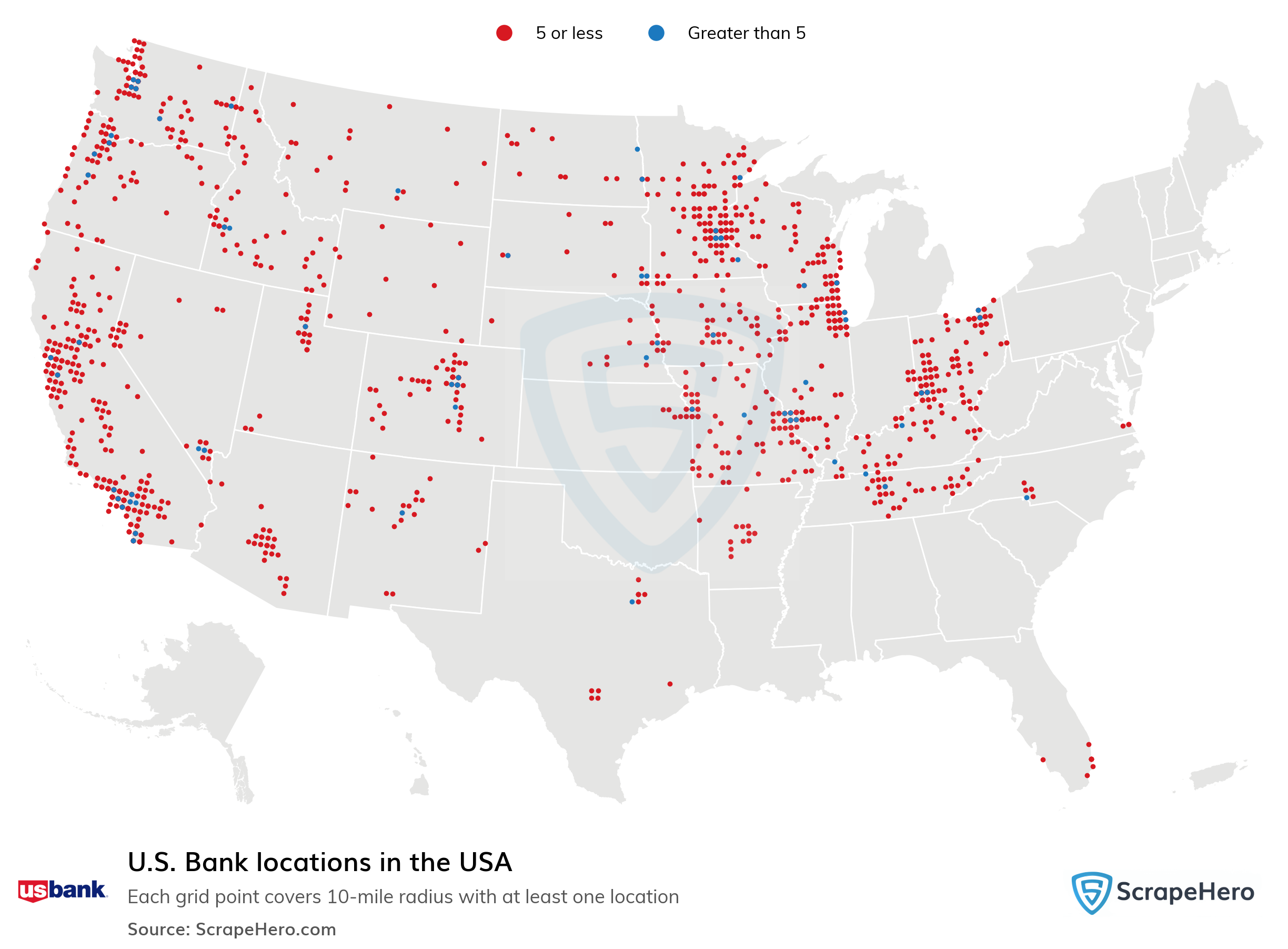
In an increasingly digital world where banking transactions often occur with a few taps on a smartphone, the seemingly simple question, “Where is the nearest US Bank branch?” still holds significant weight for millions. While online banking, mobile apps, and ATMs handle the bulk of routine financial activities, the physical bank branch remains an indispensable pillar of personal and business finance. It serves as a vital touchpoint for complex transactions, personalized advice, and that irreplaceable human connection that digital channels simply cannot replicate.
This article delves into the enduring importance of physical bank branches, particularly focusing on how to efficiently locate one for US Bank and understanding the diverse services they offer. We’ll explore the tools available for your search, the practical considerations that might influence your choice of branch, and what the future holds for these critical financial hubs in an ever-evolving landscape. Whether you’re a long-time customer needing in-depth consultation or a new client looking to open an account, knowing how to access your nearest branch and what to expect there is fundamental to effective financial management.
The Enduring Relevance of Physical Bank Branches in the Digital Age
Despite the meteoric rise of fintech and digital-first banking solutions, the brick-and-mortar bank branch is far from obsolete. Its continued relevance stems from a unique combination of trust, accessibility, and the ability to handle situations that digital platforms cannot yet fully address. For many, a physical branch represents a tangible connection to their financial institution, fostering a sense of security and reliability that digital interfaces, however advanced, sometimes struggle to convey.
Bridging the Digital-Physical Divide
The modern banking experience is a hybrid one, with customers seamlessly moving between digital and physical channels. While routine tasks like checking balances, paying bills, and transferring funds are efficiently handled online, life’s more significant financial moments often necessitate a visit to a branch. This could include applying for a mortgage, discussing complex investment strategies, or setting up a new business account. The branch acts as a critical bridge, offering a tangible space where digital interactions can be supplemented or completely replaced by in-person assistance, ensuring a comprehensive and robust financial service ecosystem. It’s where documents can be securely notarized, large cash transactions can be executed, and sensitive financial planning conversations can take place in a private, professional setting.
When Digital Solutions Fall Short
There are inherent limitations to digital banking that underscore the necessity of physical branches. For instance, direct cash deposits or withdrawals beyond ATM limits, obtaining cashier’s checks, or resolving intricate account disputes often require face-to-face interaction with a banker. Fraud prevention and identity verification, while increasingly digitized, often benefit from an in-person component, particularly for higher-risk transactions or suspicious activity. Furthermore, when technological glitches occur—a mobile app crashes, an online portal is down, or an ATM network experiences an outage—the physical branch provides a crucial fallback, ensuring uninterrupted access to essential financial services. This safety net is invaluable, particularly for individuals or businesses that rely heavily on consistent banking operations.
The Human Element in Financial Guidance
Perhaps the most significant differentiator for physical branches is the human element. For complex financial decisions, such as wealth management, estate planning, or navigating business loans, customers often prefer to speak with a knowledgeable professional who can offer tailored advice, answer nuanced questions, and build a relationship based on trust and understanding. Bankers can interpret complex financial jargon, provide personalized solutions, and guide customers through intimidating processes with empathy and expertise. This personalized guidance is particularly vital for less financially savvy individuals, small business owners grappling with growth challenges, or older demographics who may prefer traditional banking interactions. The ability to look someone in the eye, ask follow-up questions, and feel truly understood is a powerful factor in financial decision-making that digital channels cannot fully replicate.
Navigating Your Search: Efficient Tools for Locating a Branch
Locating your nearest US Bank branch or any financial institution has become remarkably simple thanks to the integration of technology into everyday life. Gone are the days of relying solely on phone books or driving around aimlessly. Today, a variety of digital tools and direct communication methods empower customers to find exactly what they need with speed and accuracy, often providing additional helpful information beyond just an address.
Leveraging Official Bank Websites and Apps
The most reliable and up-to-date source for finding a US Bank branch is typically its official website and dedicated mobile app. Both platforms usually feature a prominent “Find a Branch” or “ATM & Branch Locator” function. On the website, this is often found in the main navigation menu or footer. Within the mobile app, it’s usually accessible from the main dashboard or a dedicated services menu.
These digital tools allow users to:
-
Enter a zip code, city, or address: This provides a list of nearby branches and ATMs.
-
Filter by services: Many locators allow you to filter results based on specific needs, such as drive-thru availability, mortgage specialists, wealth management services, or Saturday hours. This is crucial if you require a specific service that not all branches offer.
-
View hours of operation: Essential for planning your visit, especially around holidays or for late-day banking.
-
Get directions: Integrated mapping features provide turn-by-turn directions directly to the branch.
-
Check wait times (if available): Some advanced locators even offer real-time estimated wait times, allowing you to choose the least busy branch.
Using these official channels ensures you’re getting information directly from the source, minimizing the chance of outdated or incorrect data.
The Power of Online Mapping Services
Beyond the bank’s proprietary tools, general online mapping services like Google Maps, Apple Maps, or Waze are incredibly effective for locating US Bank branches. A simple search query such as “US Bank near me” or “US Bank [city, state]” will yield a list of locations, often with integrated reviews, photos, business hours, and contact information.
The advantages of using these services include:
-
Ubiquity and ease of use: Most people are already familiar with these platforms.
-
Real-time traffic updates: Get the quickest route based on current traffic conditions.
-
User-generated content: Access reviews and tips from other customers regarding service quality or specific branch features.
-
Street View: Visually confirm the branch’s exterior before you arrive, helping with navigation in unfamiliar areas.
While highly convenient, it’s always a good practice to cross-reference the information, especially hours of operation, with the official US Bank website or app, as third-party services might not always update information immediately.
Direct Contact: When All Else Fails
In rare instances where digital tools are inaccessible or yield unclear results, direct contact remains a reliable option. Calling US Bank’s customer service line can provide you with the most current information regarding branch locations, hours, and specific service offerings. The customer service representative can also help clarify any unique requirements you might have or recommend the best branch for your particular needs. This method is particularly useful if you are in an area with spotty internet service or prefer speaking to a person for detailed inquiries. Additionally, if you have a relationship with a specific branch or banker, a direct call to that branch can sometimes offer quicker assistance than going through a general customer service line.
Beyond Location: Understanding Branch Services and Specialists
Once you’ve successfully located a US Bank branch, understanding the breadth of services available can help you maximize your visit. Modern bank branches are more than just transaction centers; they are comprehensive financial hubs designed to meet a wide array of personal and business needs, often staffed with specialized experts.
Core Transactional Services
At its heart, a bank branch facilitates essential daily financial activities. These include:
-
Deposits and Withdrawals: Handling cash and check transactions, often beyond the limits of ATMs.
-
Account Opening: Assisting with setting up new checking, savings, money market, or CD accounts.
-
Loan Applications: Processing applications for personal loans, auto loans, and certain types of credit cards.
-
Check Cashing and Issuance: Cashing personal and third-party checks, and issuing cashier’s checks or money orders.
-
Wire Transfers: Facilitating domestic and international wire transfers for secure fund movement.
-
Notary Services: Many branches offer free notary services for account holders, a valuable amenity for legal documents.
-
Safe Deposit Boxes: Providing secure storage for valuable documents and possessions.
These services ensure that customers have access to fundamental banking functionalities that are sometimes cumbersome or impossible to perform digitally.
Financial Advisory and Specialized Needs
Beyond routine transactions, US Bank branches are often equipped to handle more complex financial requirements, providing access to specialized professionals.
-
Mortgage and Home Equity: Experts can guide you through the intricacies of home loans, refinancing, and home equity lines of credit, offering personalized advice and processing applications.
-
Small Business Banking: Dedicated business bankers assist entrepreneurs with business checking and savings accounts, lines of credit, small business loans, merchant services, and payroll solutions. They understand the unique challenges faced by small enterprises.
-
Wealth Management and Investment Services: For individuals looking to grow their assets, branches often have access to financial advisors who can discuss retirement planning, investment portfolios, trust services, and estate planning, helping clients achieve long-term financial goals.
-
Insurance Services: Some branches may offer access to insurance professionals who can help with various insurance needs, from life to property and casualty.
This array of specialized services transforms a simple branch visit into an opportunity for comprehensive financial planning and problem-solving, leveraging the expertise of dedicated professionals.
Accessing ATMs and Drive-Thrus
While not strictly inside the branch, ATMs and drive-thru services are integral components of a branch’s overall offering. Most US Bank branches have on-site ATMs, often available 24/7, providing convenient access for cash withdrawals, deposits, balance inquiries, and transfers. Drive-thru lanes, where available, offer an added layer of convenience for quick transactions from the comfort of your vehicle, particularly useful for parents with young children or those with mobility challenges. Many drive-thrus also offer extended hours or Saturday service when the main lobby might be closed, expanding accessibility to banking services. These facilities enhance the utility of the physical location by catering to different preferences and schedules.
Maximizing Your Branch Visit: Preparation and Expectations
A successful and efficient branch visit often hinges on a bit of pre-planning. While spontaneous visits are always welcome for routine matters, being prepared for more complex interactions can save you time and ensure you achieve your objectives without unnecessary delays.
Checking Branch Hours and Appointment Requirements
Before heading to a US Bank branch, always confirm its operating hours. Bank hours can vary significantly by location, day of the week (with shorter Saturday hours being common), and holidays. Utilizing the online branch locator or calling ahead is crucial. For more in-depth consultations, such as discussing a mortgage or setting up a business account, it’s often advisable and sometimes required to schedule an appointment. This ensures that a specialist will be available to meet with you, eliminating potential wait times and allowing them to prepare for your specific needs, making your visit productive and personalized.
Essential Documents for Common Transactions
To avoid multiple trips, gather all necessary documents before your visit. For opening an account, you’ll typically need two forms of identification (e.g., driver’s license, passport) and your Social Security number. For loan applications, be prepared with income verification (pay stubs, tax returns), employment history, and potentially asset information. If you’re conducting a transaction for a business, bring relevant business documents like articles of incorporation or an EIN. Even for simple transactions, having your debit card or account number readily available can expedite the process. A quick call to the branch or a check on the bank’s website can clarify specific document requirements for your intended transaction.
Optimizing Your Time with Digital Check-Ins
Some US Bank branches, particularly those with higher foot traffic, may offer digital check-in systems or queue management tools. These allow you to “get in line” remotely via their app or website before you even arrive, giving you an estimated wait time and notifying you when it’s your turn. This innovative feature significantly reduces the time spent physically waiting in the lobby, allowing you to run other errands or work while you wait. By integrating technology with the physical experience, banks are enhancing customer convenience and streamlining the branch visit, making the process as efficient as possible.
The Evolving Role of the Branch: A Look to the Future
The role of the physical bank branch is not static; it is continually evolving to meet changing customer expectations and technological advancements. Far from disappearing, branches are transforming, becoming more integrated with digital services, more community-focused, and more adept at delivering personalized financial experiences.
Technology Integration Within Physical Spaces
Future US Bank branches will likely feature even greater integration of digital technology within their physical layouts. This could include interactive kiosks for self-service transactions, video conferencing facilities to connect customers with remote specialists, or augmented reality tools that explain complex financial products. The goal is to blend the efficiency of digital platforms with the reassurance of a physical presence, creating a hybrid environment where customers can choose their preferred mode of interaction. This allows for both quick, self-directed transactions and more involved, human-assisted services under one roof, maximizing convenience and utility.
Community Hubs and Financial Education Centers
As routine transactions shift online, branches are increasingly repositioning themselves as community hubs and centers for financial education. They may host workshops on topics like budgeting, credit building, or small business management, becoming vital resources for local residents and entrepreneurs. This community engagement not only strengthens the bank’s relationship with its customers but also plays a crucial role in improving financial literacy within the areas they serve. By offering value beyond traditional banking services, branches can solidify their indispensable role in the community fabric.

Personalized Experiences and Relationship Building
The future branch will prioritize personalized experiences and relationship building even more intensely. With advanced data analytics, bankers will have a more holistic view of a customer’s financial situation, enabling them to offer truly tailored advice and proactive solutions. The focus will shift from transactional interactions to advisory roles, where bankers act as trusted financial partners, guiding customers through all stages of their financial journey. This human-centric approach, supported by technology, ensures that the physical branch remains a place where complex needs are met with expertise, empathy, and a strong personal connection, reinforcing its lasting value in the financial ecosystem.
In conclusion, while the digital realm continues to redefine convenience in banking, the answer to “Where is the nearest US Bank branch?” remains a profoundly relevant question. The physical branch is evolving, adapting, and innovating to serve as a cornerstone of financial life, offering indispensable services, expert advice, and a human touch that complements and enhances our increasingly digital financial world.
aViewFromTheCave is a participant in the Amazon Services LLC Associates Program, an affiliate advertising program designed to provide a means for sites to earn advertising fees by advertising and linking to Amazon.com. Amazon, the Amazon logo, AmazonSupply, and the AmazonSupply logo are trademarks of Amazon.com, Inc. or its affiliates. As an Amazon Associate we earn affiliate commissions from qualifying purchases.