
The question “Where is the Dow?” is one of the most frequently asked queries in the financial world. Whether it is whispered on the floor of the New York Stock Exchange or searched by millions of individual investors on their smartphones, the answer provides more than just a numerical value. It offers a snapshot of the health of the American economy, the sentiment of global investors, and the momentum of the world’s most influential blue-chip companies.
However, understanding where the Dow is requires more than looking at a red or green ticker. It requires an exploration of what the index represents, how it is currently being moved by macroeconomic forces, and how its position influences the broader financial landscape.
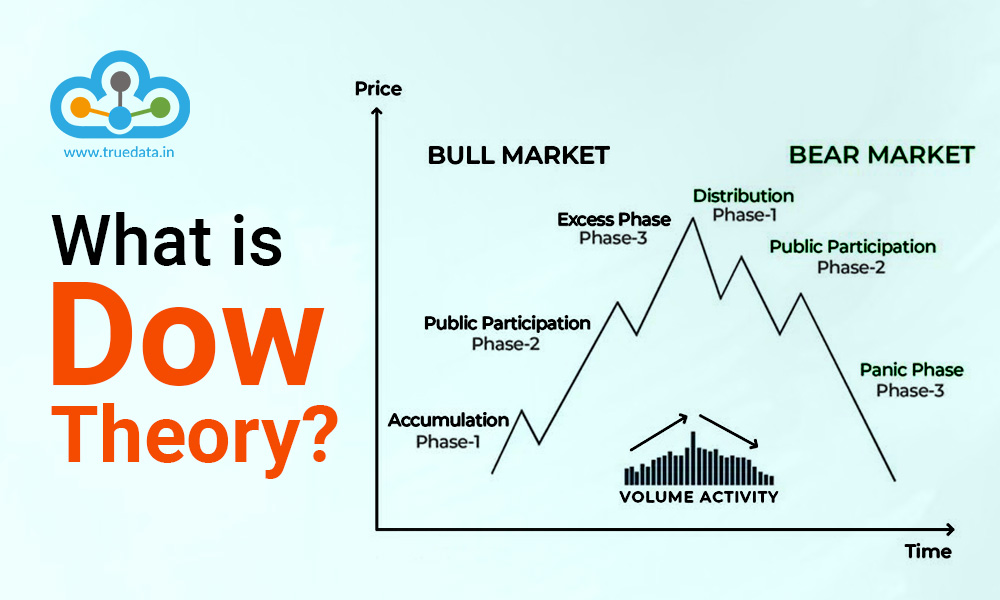
Understanding the Dow Jones Industrial Average (DJIA)
To understand where the Dow is today, one must first understand what it is. The Dow Jones Industrial Average (DJIA) is a price-weighted measurement of 30 prominent companies listed on stock exchanges in the United States. Founded by Charles Dow and Edward Jones in 1896, it is the second-oldest U.S. market index.
The History and Evolution of the Blue-Chip Index
Originally, the Dow consisted of just 12 companies, primarily in the industrial sector—railroads, cotton, gas, and tobacco. Today, the “Industrial” part of its name is largely historical. The index now includes giants from technology, healthcare, and consumer services, such as Apple, UnitedHealth Group, and Walmart.
The evolution of the Dow’s components reflects the evolution of the American economy itself. When we ask “where the Dow is,” we are essentially asking about the aggregate performance of 30 leaders of industry. Because these companies are “blue chips”—well-established and financially sound—the Dow is often seen as a barometer for the stability of the overall market, rather than its speculative fringes.
Price-Weighting vs. Market Cap: How the Dow Differs from the S&P 500
A crucial technical aspect of “where the Dow is” lies in its calculation. Unlike the S&P 500 or the Nasdaq, which are market-capitalization-weighted, the Dow is price-weighted. This means that companies with higher share prices have a greater influence on the index’s movement than those with lower share prices, regardless of the company’s actual size.
For example, a $1 move in a high-priced stock like Goldman Sachs has the same impact on the index as a $1 move in a lower-priced stock like Coca-Cola, even though their market caps and business models differ significantly. This unique structure means the Dow can sometimes head in a different direction than the rest of the market, providing a distinct perspective on financial health centered on share price performance.
Where the Dow Stands Today: Market Drivers and Sentiment
In the current financial climate, the Dow’s position is dictated by a complex interplay of domestic policy and global economic shifts. Investors asking “where is the Dow” are usually looking for clarity amidst uncertainty.
Interest Rates and the Federal Reserve’s Influence
Perhaps the most significant driver of the Dow in recent years has been the Federal Reserve’s monetary policy. Because the Dow is comprised of mature, capital-intensive companies, interest rate fluctuations have a profound impact.
When the Fed raises rates to combat inflation, the Dow often faces downward pressure. Higher rates increase borrowing costs for these massive corporations and can dampen consumer spending. Conversely, when the Fed signals a “pivot” toward lowering rates, the Dow tends to rally. The index is currently positioned in a “wait-and-see” zone, highly sensitive to every Federal Open Market Committee (FOMC) meeting and every report on the Consumer Price Index (CPI).
Corporate Earnings and the Health of American Industry
The Dow’s level is also a reflection of corporate earnings seasons. Because there are only 30 stocks, a single earnings miss from a heavyweight component can drag the entire index down. Currently, the Dow is navigating a landscape where profit margins are being squeezed by rising labor costs and supply chain adjustments.
However, many Dow components have demonstrated incredible “pricing power”—the ability to raise prices without losing customers. This resilience is why the Dow often outperforms tech-heavy indices during periods of economic contraction. It represents the “old guard” of the economy, which remains profitable even when growth stocks falter.
The “Where” of the Dow: Geopolitics and Global Positioning

The Dow may be a U.S. index, but the companies within it are global entities. To find where the Dow is truly located, one must look at international trade, geopolitical stability, and the global consumer.
Global Supply Chains and Multinationals
Companies like Boeing, Caterpillar, and 3M are deeply integrated into global supply chains. When there is tension in the South China Sea or instability in Eastern Europe, the Dow feels the impact. The index’s current position reflects a world moving toward “friend-shoring” and “near-shoring,” as companies attempt to de-risk their operations from geopolitical hotspots.
If you are tracking the Dow, you are tracking the success of American globalization. When international markets are open and trade flows are smooth, the Dow thrives. When trade wars or tariffs are on the horizon, the Dow’s growth is often stunted, reflecting the fears of its multinational components.
Inflationary Pressures and Consumer Spending
Consumer staples and discretionary stocks like Procter & Gamble and Home Depot are central to the Dow. The “where” of the index is therefore tied to the “where” of the consumer’s wallet. In an era of persistent inflation, the Dow’s stability depends on whether the average person can still afford the products these 30 giants produce.
Current market analysis suggests the Dow is acting as a hedge. While investors might flee speculative tech stocks when the economy cools, they often park their money in Dow stocks because people still need to buy soap, use credit cards (Visa/American Express), and purchase medicine (Amgen/Johnson & Johnson).
Using the Dow as a Compass for Your Portfolio
For the individual investor, knowing “where the Dow is” is only half the battle. The other half is knowing how to use that information to make sound financial decisions.
The Role of Blue-Chip Stocks in Long-Term Wealth
The Dow represents a conservative, value-oriented approach to investing. While it may not offer the explosive 1,000% gains seen in some Silicon Valley startups, it offers dividends and stability. Many of the companies in the Dow have paid and increased their dividends for decades.
For someone building a retirement fund, the “where” of the Dow is a signal of long-term sustainability. Investing in the Dow through an Index Fund or ETF (such as the SPDR Dow Jones Industrial Average ETF Trust, or DIA) is a strategy of betting on the continued dominance of the American corporate engine.
Limitations of the Dow: Diversification Beyond the 30
Despite its prestige, the Dow is not the entire market. In fact, it represents only a small fraction of the thousands of publicly traded companies. Relying solely on the Dow to tell you “where the market is” can be misleading.
The index is notably light on the fast-growing technology sectors that dominate the Nasdaq and lacks the mid-cap and small-cap exposure that drives much of the economy’s innovation. A sophisticated financial strategy involves using the Dow as a benchmark for stability while looking elsewhere for growth and diversification.
Future Outlook: Where is the Dow Headed?
Looking forward, the Dow faces a transformational era. The 30 companies that comprise the index today may look very different in a decade as the Committee that manages the index swaps out legacy firms for the leaders of the next industrial revolution.
Technological Disruption in Traditional Sectors
The “Industrial” average is increasingly becoming a “Digital” average. As AI and automation integrate into companies like Honeywell or Salesforce (a recent addition to the Dow), the index’s growth will be tied to technological adoption. The future of the Dow lies in how these 30 giants pivot to meet the demands of a low-carbon, high-tech world.
If these companies successfully navigate the energy transition and the AI revolution, the Dow’s ceiling is significantly higher. If they fail to innovate, the index may stagnate, even if the broader economy grows.

Conclusion: Looking Past the Daily Ticker
When we ask “where is the Dow,” we are ultimately looking for a sense of direction. In the short term, the Dow is a reflection of daily news cycles, interest rate jitters, and geopolitical headlines. In the long term, however, the Dow is a testament to the resilience of organized capital and corporate excellence.
For the savvy investor, the Dow is not just a number on a screen; it is a map of the current economic landscape. By understanding its components, its unique weighting, and the macroeconomic forces acting upon it, one can gain a much clearer picture of where the financial world stands today—and where it is likely to go tomorrow. Whether the Dow is at a record high or in the depths of a correction, it remains the most vital pulse check for the American dream in the context of the global marketplace.
aViewFromTheCave is a participant in the Amazon Services LLC Associates Program, an affiliate advertising program designed to provide a means for sites to earn advertising fees by advertising and linking to Amazon.com. Amazon, the Amazon logo, AmazonSupply, and the AmazonSupply logo are trademarks of Amazon.com, Inc. or its affiliates. As an Amazon Associate we earn affiliate commissions from qualifying purchases.