
In the modern corporate landscape, a headquarters is far more than a collection of desks and conference rooms. For a global titan like Amazon, its physical presence is a profound manifestation of its brand strategy, a tangible embodiment of its “Day 1” philosophy, and a lighthouse for its corporate identity. When people ask, “Where is Amazon’s headquarters?” they are often seeking a single GPS coordinate. However, the answer reveals a complex, multi-hub strategy that has redefined how technology companies interact with urban environments and how a brand communicates its values through glass, steel, and greenery.

The Heart of the Brand: Seattle and the Urban Campus Philosophy
Unlike many of its contemporaries in Silicon Valley who retreated to secluded, suburban “fortress” campuses, Amazon made a definitive brand statement by embedding itself in the urban core of Seattle, Washington. Amazon’s primary headquarters is located in the South Lake Union neighborhood, a choice that speaks volumes about its corporate identity.
Defying the Silicon Valley Mold
The decision to build an urban campus was a strategic move to align the Amazon brand with energy, diversity, and integration. While companies like Apple or Google created closed ecosystems where employees rarely leave the grounds, Amazon’s Seattle headquarters is woven into the city grid. This reflects a brand identity rooted in being a “peculiar” neighbor—one that values the friction and serendipity of city life over the sterile isolation of a corporate park. By choosing an urban setting, Amazon branded itself as a company for “builders” who want to be part of the real world, not tucked away in a private enclave.
The Spheres: A Living Symbol of Innovation
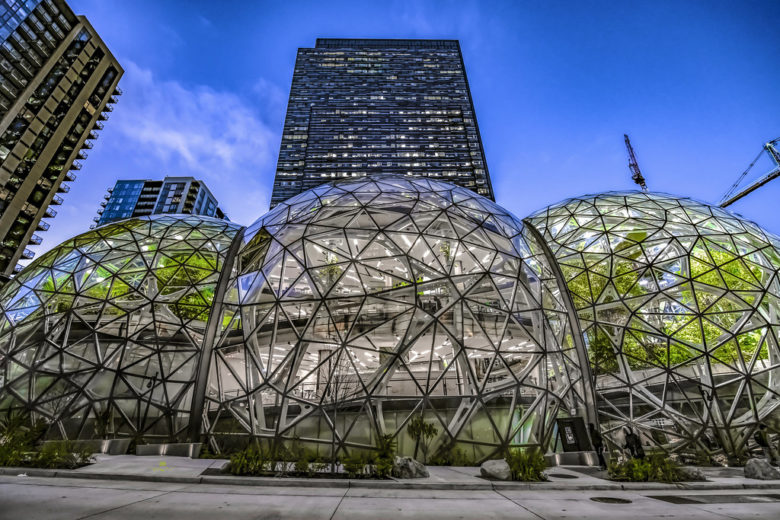
Perhaps no physical structure represents the Amazon brand better than “The Spheres.” Located at the heart of the Seattle campus, these three intersecting glass orbs house over 40,000 plants from more than 30 countries. From a brand strategy perspective, The Spheres serve as a powerful visual metaphor for “biophilia”—the innate human connection to nature.
They signal that Amazon is not just a data-driven machine, but a company that invests in radical creativity and employee well-being. As a landmark, The Spheres have become synonymous with Amazon’s visual identity, appearing in marketing materials and press releases as a shorthand for the company’s forward-thinking and unconventional approach to the workplace.
HQ2 and the Strategy of Geographic Expansion
As Amazon grew into a trillion-dollar entity, the brand required more than one heartbeat. The search for a second headquarters, famously known as “HQ2,” was one of the most significant brand-building exercises in recent corporate history. It wasn’t just a search for real estate; it was a global demonstration of Amazon’s economic gravity and its “Customer Obsession” applied to the scale of municipal partnerships.
Arlington and the Power of Proximity
After a highly publicized selection process, Amazon settled on Arlington, Virginia (specifically the National Landing neighborhood) for its HQ2. This choice was a masterstroke in brand positioning. By establishing a massive presence just across the Potomac River from Washington, D.C., Amazon reinforced its identity as a critical infrastructure provider for the modern world.
The Arlington headquarters, featuring the striking “Helix” design, serves as a physical bridge between the tech world and the public sector. This proximity reinforces a brand narrative of stability, national importance, and long-term commitment to the social and economic fabric of the United States.
Brand Consistency Across Secondary Hubs
While Seattle and Arlington are the “Dual HQs,” Amazon’s brand identity is maintained through a network of “Tech Hubs” in cities like New York, Austin, and Nashville. Each of these locations follows a strict brand guideline: they are centrally located, architecturally significant, and designed to foster a high-intensity, “Day 1” work culture. This geographic dispersion allows the brand to recruit diverse talent while maintaining a unified corporate identity that says: “Amazon is everywhere, and Amazon is local.”

Corporate Identity in Physical Spaces: The “Day 1” Mentality
The “where” of Amazon’s headquarters is deeply tied to the “how” of its culture. Every building within the Amazon ecosystem is named with intention, serving as a constant reminder of the company’s history and its peculiar brand values.
Designing for Frugality and High Standards
Amazon’s brand is built on the paradoxical combination of massive scale and lean operations. This is reflected in the interior design of its headquarters. You won’t find the opulent perks common in other tech giants; instead, the office spaces are designed for functionality and collaboration.
The names of the buildings themselves—such as Casper (the first dog on campus), Doppler (the code name for the original Echo), and Day 1 (the flagship tower)—serve as internal branding. They remind employees and visitors alike that despite its size, the company aims to retain the scrappy, inventive spirit of a startup. This “frugal but functional” aesthetic is a core part of the Amazon corporate identity, signaling to investors and customers that resources are directed toward innovation rather than vanity.
Integration with the Local Community
A key pillar of Amazon’s brand strategy in its headquarters locations is “Community Engagement.” In Seattle, the ground floors of many Amazon buildings are occupied by local retailers and restaurants, rather than private corporate cafeterias. The Mary’s Place family shelter, built into the heart of one of Amazon’s Seattle office buildings, is a physical manifestation of the brand’s commitment to social responsibility. By literally sharing a roof with a non-profit, Amazon communicates a brand identity that is concerned with the societal challenges of the cities it calls home.
The Future of Amazon’s Physical Footprint
As the world transitions to hybrid work and heightened environmental awareness, the location and nature of Amazon’s headquarters continue to evolve, reflecting new facets of its brand strategy.
Sustainability as a Brand Pillar
Amazon has co-founded “The Climate Pledge,” a commitment to be net-zero carbon by 2040. This brand promise is physically represented in its new headquarters developments. The HQ2 in Arlington, for instance, is designed to be powered by 100% renewable energy. The use of sustainable materials, energy-efficient climate control, and extensive green spaces are not just architectural choices; they are advertisements for Amazon’s commitment to the planet. For a brand that relies heavily on logistics and packaging, these green headquarters serve as essential counterweights in the public’s perception of its environmental impact.
The Hybrid Work Model’s Impact on Corporate Real Estate
The question of “where” is Amazon’s headquarters is becoming increasingly decentralized. While the company continues to invest billions in physical towers, its brand identity is adapting to a “hub-and-spoke” model. This flexibility is a key component of its employer branding, signaling that Amazon is an adaptable, tech-forward company that can thrive outside of traditional office constraints. However, the continued investment in landmark buildings in Seattle and Arlington suggests that the “center of gravity” remains vital for maintaining a cohesive brand culture.
Conclusion: More Than Just an Address
So, where is Amazon’s headquarters? Physically, it is a massive urban campus in Seattle and an burgeoning architectural marvel in Arlington. But strategically, Amazon’s headquarters is wherever its brand values are being put into practice.
The company’s physical presence is a sophisticated tool for brand storytelling. Through the glass of The Spheres, the height of the Day 1 tower, and the integration of HQ2 into the Virginia skyline, Amazon communicates a message of permanence, innovation, and relentless ambition. Its headquarters are not just places where work happens; they are monuments to the brand’s past, present, and future. By rejecting the isolation of the traditional tech park and embracing the complexity of the city, Amazon has ensured that its corporate identity is as visible, accessible, and formidable as the products and services it delivers to millions of doorsteps every day.
aViewFromTheCave is a participant in the Amazon Services LLC Associates Program, an affiliate advertising program designed to provide a means for sites to earn advertising fees by advertising and linking to Amazon.com. Amazon, the Amazon logo, AmazonSupply, and the AmazonSupply logo are trademarks of Amazon.com, Inc. or its affiliates. As an Amazon Associate we earn affiliate commissions from qualifying purchases.