
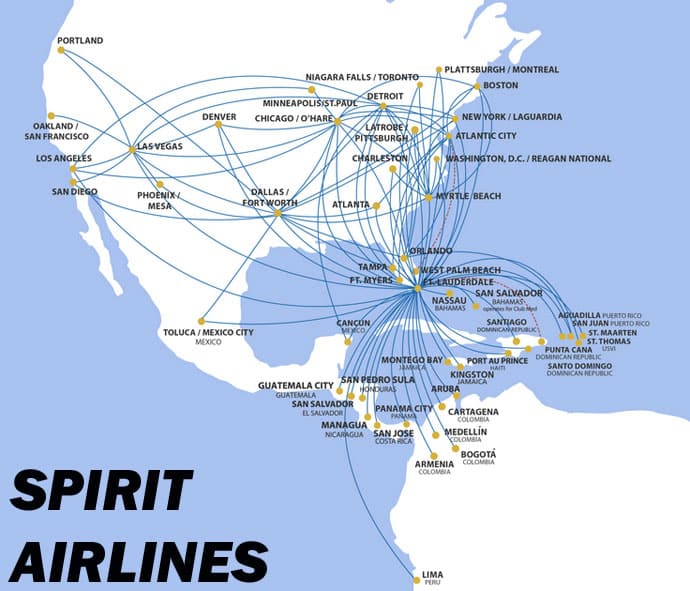
In the hyper-competitive landscape of commercial aviation, the question “where does Spirit fly?” transcends simple geographic coordinates or flight maps. While the physical answer involves a network stretching across the United States, the Caribbean, and Latin America, the strategic answer lies in the realm of brand positioning. Spirit Airlines has carved out a niche so distinct that it serves as a masterclass—and sometimes a cautionary tale—in brand strategy. To understand where Spirit “flies” is to understand the mechanics of the Ultra-Low-Cost Carrier (ULCC) model and how a brand can succeed by intentionally embracing a polarized identity.

The Yellow Rebellion: Defining the Spirit Brand Aesthetic
When Spirit Airlines underwent its massive rebranding in 2014, it didn’t just change a logo; it signaled a total departure from the traditional airline experience. The choice of “Taxiway Yellow” was not accidental. In a sea of corporate blues, greys, and whites used by Delta, United, and American, Spirit’s vibrant yellow stands out as a disruptor.
Color Psychology and Market Disruption
In branding, color is a primary communicator of value. Yellow is associated with clarity, energy, and, most importantly, affordability. By drenching their fleet in such a high-visibility hue, Spirit communicates a “loud and proud” message. The brand doesn’t want to blend in with the luxury of Emirates or the heritage of British Airways. It wants to be seen as the “taxi of the skies”—a functional, no-frills tool for getting from point A to point B. This visual identity reinforces the brand’s promise of the lowest possible price point, effectively setting expectations before a passenger even steps onto the jet bridge.
The “Bare Fare” Philosophy as a Brand Pillar
Central to the Spirit brand is the “Bare Fare.” This isn’t just a pricing strategy; it is a fundamental brand pillar. By unbundling every possible service—from carry-on bags to onboard water—Spirit positions itself as the champion of consumer choice. The brand narrative suggests that traditional airlines “hide” the costs of snacks and bags in expensive tickets. Spirit’s brand strategy is built on the “pay for what you use” model, which appeals directly to the price-sensitive demographic. This transparency, though often criticized, is the bedrock of their market identity.
Navigating the Turbulence of Public Perception
A brand is not just what a company says it is; it is what the public believes it is. Spirit Airlines occupies a unique space in the American zeitgeist, often finding itself at the center of late-night comedy monologues and viral social media complaints. However, from a brand strategy perspective, this “notoriety” is a calculated risk that has historically paid dividends.
The Love-Hate Paradox of Budget Branding
Spirit’s brand thrives on a specific paradox: it is one of the most complained-about airlines, yet it remains one of the most consistently full. This reveals a profound truth about modern branding—utility often trumps affinity. Spirit has successfully branded itself as the “necessary” choice for the budget-conscious traveler. They don’t try to win “Best In-Flight Service” awards; they aim to win the “Best Price” search result on Expedia. By leaning into their reputation as a bare-bones provider, they filter their audience. Their brand isn’t for the business traveler seeking a quiet cabin; it’s for the college student, the family on a budget, and the spontaneous adventurer.
Turning Controversy into Connectivity
Rather than shying away from its “cheap” image, Spirit’s marketing team has often used provocative, tongue-in-cheek advertising. During periods of high public scrutiny, Spirit has launched campaigns like the “Hug the Haters” initiative, which allowed customers to vent their frustrations in exchange for loyalty miles. This level of self-awareness is a sophisticated branding move. It humanizes the corporation and suggests that they are “in on the joke,” which can diffuse animosity and build a cult-like following among those who prioritize savings over status.

Strategic Flight Paths: Market Positioning and Competitor Differentiation
To understand the direction of the Spirit brand, one must look at how it positions itself against both legacy carriers and other low-cost competitors. The brand does not “fly” in a vacuum; its trajectory is defined by the gaps left by others.
Spirit vs. The Legacy Carriers
The “Big Three”—Delta, United, and American—have spent decades building brands around loyalty, comfort, and global reach. Spirit positions itself as the antithesis of this “stodgy” establishment. While legacy carriers focus on their “Premium Economy” and “First Class” offerings, Spirit’s brand strategy ignores the concept of class altogether (with the exception of the “Big Front Seat,” which is marketed as a functional upgrade rather than a luxury experience). By focusing on “Frill Control,” Spirit differentiates itself as a democratic alternative to the perceived elitism of traditional flying.
The Frontier Rivalry: A Battle for the Bottom Line
Spirit’s primary brand rival is Frontier Airlines. Both use bright colors (Frontier’s animals vs. Spirit’s yellow) and both use the ULCC model. However, Spirit has historically maintained a tighter grip on its “urban” and “high-frequency” brand identity. While Frontier brands itself around the “Greenest Airline” and nature-focused imagery, Spirit stays focused on the efficiency of the “Fit Fleet.” The branding battle here is about who can be the most reliable “low-cost” option. Spirit’s brand equity is tied to its “Go Big” mentality—expanding rapidly into major hubs to challenge the incumbents directly.
The Future of the Flight: Rebranding and Evolution
As the aviation industry faces economic shifts and consolidation, Spirit’s brand is at a crossroads. The failed merger with JetBlue and the ongoing challenges of the post-pandemic travel market have forced the brand to reconsider where it “flies” next in terms of its corporate identity.
Post-Merger Identity and the Quest for Quality
The attempt to merge with JetBlue was, at its heart, a brand identity crisis. JetBlue represents “high-quality low-cost,” while Spirit represents “lowest-cost regardless of frills.” Had the merger succeeded, the Spirit brand would likely have been absorbed or radically altered. In the wake of the merger’s collapse, Spirit must now double down on its solo identity. We are seeing a shift in Spirit’s brand messaging toward “enhanced reliability.” The brand is attempting to move away from the “cheap at all costs” reputation toward a “value with integrity” model, investing in better seating and improved operational performance without sacrificing the low-fare core.
Digital Transformation and the Modern Passenger Experience
A significant part of Spirit’s future brand strategy involves tech-driven “frictionless” travel. By investing in biometric check-ins, a streamlined mobile app, and high-speed Wi-Fi, Spirit is trying to redefine what “budget” feels like. The goal is to show that a brand can be inexpensive without being “low-tech.” In the digital age, a brand’s app experience is just as important as the physical product. If Spirit can master the digital interface, they can shift their brand perception from “frustratingly cheap” to “efficiently modern.” This technological evolution is the new frontier where the Spirit brand will truly take flight.
Conclusion: The Resilience of the Yellow Tail
“Where does Spirit fly?” It flies in the minds of consumers as the ultimate disruptor. It flies in the face of traditional aviation norms that suggest a brand must be “liked” to be successful. Through a combination of bold visual identity, a polarizing but clear value proposition, and a resilient marketing strategy, Spirit has built a brand that is impossible to ignore.
The brand’s success is a testament to the power of radical consistency. By never wavering from its “Bare Fare” promise, Spirit has built a level of brand recognition that many legacy companies would envy. As it navigates the future—balancing the need for improved service with the requirement for low costs—the Spirit brand will continue to be a bellwether for the airline industry. Whether it is expanding into new international markets or refining its digital guest experience, the “yellow” brand remains committed to its core mission: democratizing the skies for those who value the destination over the journey. In the world of branding, Spirit proves that you don’t need to be everything to everyone; you just need to be exactly what your customer needs at the right price point.
aViewFromTheCave is a participant in the Amazon Services LLC Associates Program, an affiliate advertising program designed to provide a means for sites to earn advertising fees by advertising and linking to Amazon.com. Amazon, the Amazon logo, AmazonSupply, and the AmazonSupply logo are trademarks of Amazon.com, Inc. or its affiliates. As an Amazon Associate we earn affiliate commissions from qualifying purchases.