
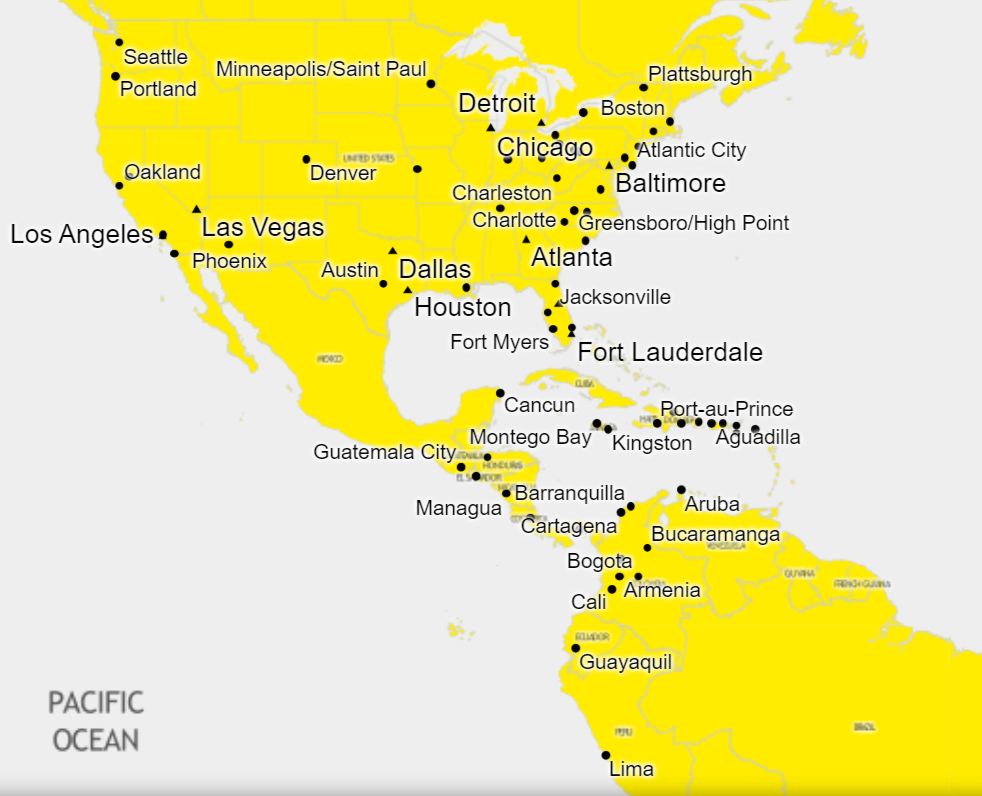
In the landscape of modern personal finance, travel is often viewed as one of the most significant discretionary expenses. For the savvy traveler looking to optimize their budget without sacrificing the breadth of their itinerary, understanding the route network of Spirit Airlines is essential. As a pioneer of the Ultra-Low-Cost Carrier (ULCC) model, Spirit Airlines operates on a financial philosophy of “unbundling,” allowing passengers to pay only for the services they use. This model has allowed Spirit to build a robust network that spans the United States, Latin America, and the Caribbean.

To maximize the return on your travel investment, it is not enough to simply find a cheap ticket. One must understand the geographic concentrations of the airline and how those routes align with economic centers and high-value vacation destinations. By analyzing where Spirit Airlines flies, travelers can leverage the airline as a tool for extreme cost-saving, enabling them to reallocate capital toward investments, savings, or more frequent experiences.
The Financial Hubs: Major Domestic Strongholds
Spirit Airlines does not operate like traditional legacy carriers that rely heavily on a “hub-and-spoke” system designed for business connectivity. Instead, Spirit focuses on “focus cities”—strategic geographic points where they have high frequency and a large volume of operations. For the budget-conscious traveler, these cities represent the best opportunities for low-cost transitions across the United States.
The Florida Corridor: Fort Lauderdale and Orlando
Florida serves as the operational epicenter for Spirit Airlines. Fort Lauderdale-Hollywood International Airport (FLL) is the primary gateway, offering the highest density of Spirit flights. From a financial perspective, FLL serves as a low-cost alternative to Miami International (MIA), providing lower landing fees that Spirit passes on to the consumer. For those living in the Northeast or Midwest, FLL serves as a cost-effective jumping-off point for both the Southern U.S. and international markets.
Orlando International Airport (MCO) is another critical hub. By maintaining a massive presence in Orlando, Spirit caters to the high-volume leisure market. For families managing a household budget, the availability of daily, direct flights from nearly every major U.S. city to Orlando makes Spirit a primary choice for minimizing the “fixed cost” of a vacation.
Las Vegas: The Western Anchor
In the Western United States, Harry Reid International Airport (LAS) in Las Vegas functions as Spirit’s primary anchor. Las Vegas is one of the most price-sensitive markets in the world, making it a perfect fit for Spirit’s business model. From a personal finance perspective, Spirit’s dominance in the Las Vegas market provides West Coast and Midwest travelers with a low-cost bridge to the entertainment capital. This route is often utilized by travelers who treat Las Vegas as a central node, using it to connect to other regional destinations at a fraction of the cost of legacy carriers.
Developing Focus Cities: Detroit, Chicago, and Atlanta
Spirit has strategically expanded its footprint in major metropolitan areas with high competitive density. Detroit (DTW), Chicago (ORD), and Atlanta (ATL) have become major focus cities. These routes are particularly valuable for business owners and freelancers who need to commute between major economic centers. By utilizing Spirit in these markets, one can significantly reduce overhead on travel expenses, directly impacting the net profit of a small business or the savings rate of a remote worker.
The International Portfolio: Maximizing the Value of the Dollar
One of the most overlooked aspects of Spirit Airlines’ route map is its extensive international network. For travelers looking to stretch their dollar further, international destinations in Latin America and the Caribbean offer a favorable exchange rate and lower costs of living. Spirit’s presence in these regions makes international travel accessible to demographics that might otherwise find it financially prohibitive.
The Caribbean Connection
Spirit serves a wide array of destinations in the Caribbean, including San Juan (SJU), St. Thomas (STT), and Punta Cana (PUJ). San Juan, in particular, is a major focus for Spirit, with dozens of daily flights from the U.S. mainland. Because Puerto Rico is a U.S. territory, it offers a unique financial advantage: no passport is required for U.S. citizens, and the currency is the U.S. dollar, eliminating exchange fees. This makes Spirit’s San Juan routes some of the most financially efficient international-style trips available.
Latin American Expansion
Spirit has significantly increased its presence in Central and South America. Key destinations include:
-
Colombia: Bogota (BOG), Medellin (MDE), and Cartagena (CTG).
-
Mexico: Cancun (CUN) and Los Cabos (SJD).
-
Costa Rica: San Jose (SJO).
For the digital nomad or the “slow traveler” focused on geo-arbitrage—living in a place with a lower cost of living while earning in a stronger currency—these routes are vital. Spirit provides a low-cost umbilical cord back to the United States, allowing individuals to maintain their financial life in the U.S. while enjoying the lower overhead of living abroad.

Analyzing the ULCC Business Model as a Financial Tool
To understand where Spirit flies, one must understand why they fly there. Spirit selects routes based on high leisure demand and the ability to undercut legacy carriers. As a consumer, you can use this knowledge to your advantage.
The “Bare Fare” Philosophy
Spirit’s “Bare Fare” is a core component of their brand strategy and your personal finance strategy. By unbundling the cost of a seat from the cost of bags, seat assignments, and snacks, Spirit allows you to control your travel ledger. For a traveler who can master “one-bag” travel (using only a personal item), the cost of flying to any of Spirit’s destinations can be lower than the cost of a tank of gas.
The ROI of the Spirit Saver$ Club
For frequent travelers, Spirit offers a membership program called the Saver$ Club. From an investment standpoint, this is a “low risk, high reward” play. For an annual fee, members get access to the lowest possible fares and discounts on bags. If you plan to fly more than twice a year on any of Spirit’s primary routes, the membership typically pays for itself within the first booking, representing a 100% or greater return on the membership fee.
Avoiding the “Ancillary Trap”
While Spirit offers low base fares, their profitability relies on ancillary revenue—fees for everything outside the ticket. To maintain the financial integrity of your budget, it is crucial to understand the fee structure before you book. Navigating Spirit’s route map successfully requires a disciplined approach to spending. Paying for a carry-on bag at the gate can cost more than the ticket itself, immediately eroding the financial advantage of choosing a ULCC.
The Economic Impact of Spirit’s Route Selection
Spirit’s entry into a new market often triggers what economists call the “Spirit Effect.” When a low-cost carrier enters a route, legacy carriers are often forced to lower their prices to remain competitive. This market dynamic benefits all travelers, regardless of which airline they ultimately fly.
Market Penetration and Competition
When Spirit adds a destination like Salt Lake City or Charlotte, they are often targeting “fortress hubs” where a single legacy carrier has long held a monopoly and charged premium prices. By knowing where Spirit is expanding, you can predict where airfare prices are likely to drop across the board. This is a valuable piece of “market intelligence” for anyone planning long-term travel or managing a corporate travel budget.
Strategic Use of Secondary Airports
Spirit often flies into secondary airports that offer lower operational costs. For example, they serve Latrobe (LBE) instead of Pittsburgh (PIT) for some routes, or use Burbank (BUR) as an alternative to LAX. These secondary airports often have cheaper parking, less traffic, and shorter security lines, saving the traveler both time and money—the two most valuable assets in any financial plan.
Future Outlook: Where Is Spirit Going?
The future of Spirit’s route map is closely tied to its fleet expansion. With hundreds of new Airbus Neo aircraft on order, the airline is positioned to reach deeper into South America and potentially more remote domestic markets. For the investor and the consumer alike, watching Spirit’s expansion provides insight into where the “leisure dollar” is moving.
If Spirit begins moving into more business-heavy corridors or mid-sized markets, it signals a shift in the economic landscape where price sensitivity is becoming a priority for a broader range of the population. Currently, their focus remains on high-utility, high-volume routes that allow them to keep their planes in the air as much as possible, maximizing their capital equipment.
Final Financial Considerations
Where Spirit Airlines flies is a map of opportunity for the financially literate traveler. Whether you are leveraging the Florida hubs for a quick domestic getaway or using the Latin American routes for a long-term stay in a low-cost region, the airline acts as a high-efficiency vehicle for your capital.
By treating air travel as a commodity rather than a luxury service, and by strategically choosing destinations within the Spirit network, you can significantly reduce your cost of living and increase your travel frequency. The key is discipline: understand the route map, master the fee structure, and always prioritize the bottom line. In the world of personal finance, Spirit Airlines is not just an airline; it is a strategic asset for those who know how to use it.
aViewFromTheCave is a participant in the Amazon Services LLC Associates Program, an affiliate advertising program designed to provide a means for sites to earn advertising fees by advertising and linking to Amazon.com. Amazon, the Amazon logo, AmazonSupply, and the AmazonSupply logo are trademarks of Amazon.com, Inc. or its affiliates. As an Amazon Associate we earn affiliate commissions from qualifying purchases.