
Navigating the federal tax system can often feel like deciphering a complex financial maze. For many, the annual tax season brings with it questions not just about how much they owe, but fundamentally, where and how to fulfill that obligation. Understanding the official channels and methods for paying federal taxes is crucial for financial well-being, avoiding penalties, and maintaining compliance with the Internal Revenue Service (IRS). This guide aims to demystify the process, providing a clear roadmap for individuals and businesses alike to confidently manage their federal tax payments.
Understanding Your Federal Tax Obligations
Before delving into the “where,” it’s essential to grasp the “what” and “who.” Federal taxes encompass various levies that fund government operations, from infrastructure to social programs. Not everyone pays the same amount, or even the same types of federal taxes.
Who Needs to Pay Federal Taxes?
Generally, any U.S. citizen or resident alien who earns income above a certain threshold is required to pay federal income tax. This threshold varies based on filing status, age, and other factors. Income can include wages, salaries, tips, self-employment earnings, investment gains, rental income, and more. Even if your income falls below the filing threshold, you might still want to file a return to claim refundable tax credits.
What Types of Federal Taxes Are There?
While the term “federal taxes” often conjures images of income tax, it’s a broader umbrella that includes several distinct components:
- Federal Income Tax: This is the largest component for most taxpayers, based on a progressive tax system where higher incomes are taxed at higher rates. Your taxable income is derived after accounting for deductions and exemptions.
- Social Security and Medicare Taxes (FICA): These are payroll taxes that fund social insurance programs. Employees typically see these withheld from their paychecks, with employers matching a portion. Self-employed individuals pay both the employee and employer portions, known as self-employment tax.
- Social Security: Funds retirement, disability, and survivor benefits. There’s an annual wage base limit for Social Security taxes.
- Medicare: Funds hospital insurance for the elderly and disabled, with no wage base limit.
- Other Federal Taxes: Depending on individual circumstances, other federal taxes may apply, such as estate taxes, gift taxes, and various excise taxes, though these are less common for the average taxpayer.
Grasping these different categories helps you understand your total tax liability and the various mechanisms through which these obligations are met throughout the year.
The Primary Methods of Payment
The IRS offers several avenues for taxpayers to remit their federal tax payments, designed to accommodate various income sources and financial situations. The method you use often depends on how you earn your income.
Withholding from Wages
For most employees, federal income taxes and FICA taxes are paid automatically throughout the year through payroll withholding. When you start a new job, you complete Form W-4, “Employee’s Withholding Certificate,” which informs your employer how much federal income tax to withhold from each paycheck. Your employer then remits these funds directly to the IRS on your behalf. This “pay-as-you-go” system ensures that your tax liability is largely covered by the time you file your annual return, often resulting in a refund if too much was withheld, or a small balance due if too little.
Estimated Tax Payments
Individuals who don’t have taxes withheld from wages—or don’t have enough withheld—are generally required to make estimated tax payments directly to the IRS. This applies to self-employed individuals, gig economy workers, those with significant investment income (e.g., dividends, interest, capital gains), rental income, or income from other sources not subject to withholding.
When to Make Estimated Payments
Estimated taxes are typically paid quarterly throughout the year. The payment due dates are:
- April 15: For income earned January 1 to March 31.
- June 15: For income earned April 1 to May 31.
- September 15: For income earned June 1 to August 31.
- January 15 of next year: For income earned September 1 to December 31.
If any of these dates fall on a weekend or holiday, the deadline shifts to the next business day. Failure to pay enough estimated tax throughout the year can result in penalties, even if you receive a refund when you file your annual return.
How to Calculate Estimated Payments
To avoid penalties, you generally need to pay at least 90% of your current year’s tax liability or 100% of your prior year’s tax liability (110% if your adjusted gross income was over a certain amount). This calculation is done using Form 1040-ES, “Estimated Tax for Individuals,” which helps you project your income, deductions, credits, and ultimately, your tax liability for the year. It’s often advisable to use tax software or consult a tax professional to accurately calculate these payments, especially if your income fluctuates.
Paying Taxes Owed with Your Return
Even with diligent withholding or estimated payments, it’s common to owe a small balance when you file your annual federal income tax return (Form 1040) by the April 15 deadline. This remaining balance must be paid by the filing deadline to avoid penalties and interest. If you’re due a refund, you don’t need to make a payment, and the IRS will send the money back to you.
Official Channels for Making Payments
Once you know how much you need to pay, the next step is selecting an approved method to send your money to the IRS. The IRS offers several secure and convenient options.
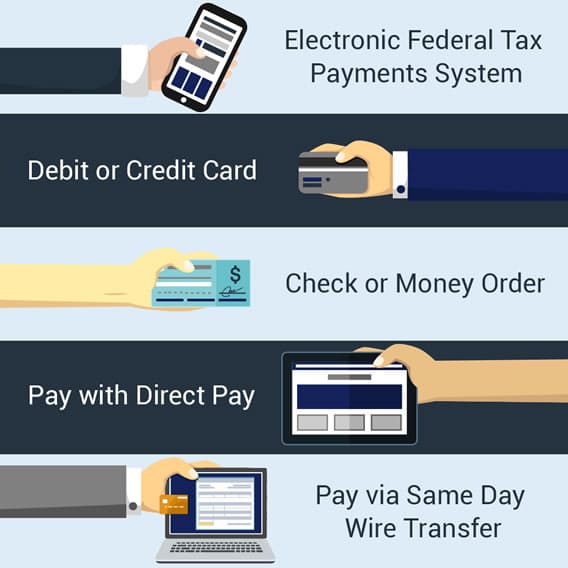
Direct Pay through IRS.gov
IRS Direct Pay is a free, secure web service that allows individuals to pay their federal taxes directly from their checking or savings account. You can make payments for Form 1040 series, estimated taxes, and various other forms. It’s user-friendly, requires no registration, and provides instant confirmation once the payment is scheduled. This method is generally preferred for its simplicity and directness.
Debit/Credit Card or Digital Wallet
You can pay your federal taxes using a debit card, credit card, or digital wallet (such as PayPal) through one of the IRS’s authorized third-party payment processors. While convenient, be aware that these processors charge a fee based on the payment amount. This option is useful for those who prefer to earn credit card rewards, need a few extra days to pay (as the payment date is the date of the transaction), or manage cash flow.
Electronic Federal Tax Payment System (EFTPS)
The Electronic Federal Tax Payment System (EFTPS) is a free service provided by the U.S. Department of the Treasury. It’s primarily used by businesses for various federal tax payments, including payroll and corporate income taxes, but individuals can also enroll and use it for estimated tax payments or balances due on their Form 1040. EFTPS requires prior enrollment and allows you to schedule payments up to 365 days in advance. It’s known for its security and the ability to view your payment history.
For those who prefer traditional methods, you can still pay federal taxes by mail using a check or money order. It’s crucial to make checks payable to “U.S. Treasury,” write your name, address, daytime phone number, Social Security number, the tax year, and the related tax form (e.g., “2023 Form 1040”) on the check or money order. You should also include a payment voucher, such as Form 1040-V, “Payment Voucher,” with your mailed payment. The mailing address varies depending on your location and the type of payment, so always consult IRS instructions for the correct address.
Cash Payments
While less common, the IRS does accept cash payments through retail partners like 7-Eleven, Family Dollar, and CVS. This requires you to first access a payment barcode from the IRS website, which is then scanned at the participating retailer. There may be transaction limits and a small service fee associated with cash payments. This option caters to individuals who primarily deal in cash and need a physical location to make their tax payment.
Payment Plans and Options for Difficulty
If you can’t pay your full tax bill by the deadline, the IRS offers several options:
- Short-Term Payment Plan: Allows you up to 180 additional days to pay, though interest and penalties still apply.
- Offer in Compromise (OIC): Allows certain taxpayers to resolve their tax liability for a lower amount than what they originally owe if they meet specific criteria, demonstrating financial hardship.
- Installment Agreement: Allows you to make monthly payments for up to 72 months. This option is available if you owe a combined total of under $50,000 in tax, penalties, and interest.
It’s vital to contact the IRS as soon as possible if you anticipate payment difficulties to discuss these options and potentially mitigate penalties.
Navigating the Tax Filing Process
Understanding where to pay often goes hand-in-hand with understanding how to file, as your tax return is the document that calculates your final tax liability. The filing process is integral to knowing your payment obligation.
Choosing Your Filing Method
Taxpayers have several choices for preparing and filing their federal income tax return:
- Tax Software: Popular options like TurboTax, H&R Block, and TaxAct guide you through the process, perform calculations, and can electronically file your return. Many offer integrated payment options.
- Tax Professional: Certified Public Accountants (CPAs) or Enrolled Agents (EAs) can prepare and file your return, especially useful for complex tax situations or business owners. They can also facilitate tax payments.
- IRS Free File: If your adjusted gross income (AGI) is below a certain threshold, you may qualify to use free tax preparation software provided by commercial partners through the IRS Free File program.
- Paper Forms: You can download forms directly from the IRS website, fill them out manually, and mail them in. This method is generally slower and increases the chance of errors.
The Role of Your Tax Return
Your annual tax return (Form 1040) is more than just a calculation sheet; it’s a comprehensive report to the government detailing your income, deductions, credits, and ultimately, your final tax liability. It reconciles any amounts withheld from your pay or paid via estimated taxes against your actual obligation. The outcome dictates whether you receive a refund, owe additional taxes, or break even. A well-prepared return is the foundation for making accurate and timely tax payments.
Common Pitfalls and How to Avoid Them
- Procrastination: Waiting until the last minute increases stress and the likelihood of errors or missed deadlines.
- Incorrect Information: Mistakes in income reporting, deductions, or credits can lead to audits or recalculations. Double-check all entries.
- Not Planning for Payments: Especially for the self-employed, failing to set aside money throughout the year for taxes can lead to a significant financial crunch when payment is due.
- Ignoring IRS Notices: Always open and respond promptly to any correspondence from the IRS.
The Importance of Planning and Record-Keeping
Effective tax payment and compliance are not just an annual event; they are a year-round commitment to smart financial planning and diligent record-keeping.
Year-Round Tax Planning
Proactive tax planning can significantly smooth out the payment process. This involves:
- Budgeting for Taxes: If you’re self-employed, regularly setting aside a percentage of your income for taxes can prevent a scramble at tax time.
- Adjusting Withholdings: Review your Form W-4 annually or whenever you have a life event (marriage, new child, new job) to ensure your employer is withholding the correct amount. Use the IRS Tax Withholding Estimator tool.
- Understanding Deductions and Credits: Familiarize yourself with common deductions (e.g., student loan interest, IRA contributions) and credits (e.g., Child Tax Credit, Earned Income Tax Credit) that can reduce your taxable income or directly lower your tax bill.
- Tax-Advantaged Accounts: Maximize contributions to 401(k)s, IRAs, and HSAs to reduce taxable income.
Essential Records to Keep
Maintaining meticulous records is paramount for accurate tax filing and to support any claims in case of an IRS inquiry. Key documents include:
- Income Statements: W-2s from employers, 1099s for various types of non-employee income (e.g., 1099-NEC for contract work, 1099-INT for interest, 1099-DIV for dividends).
- Receipts and Invoices: For deductible expenses, charitable contributions, and business-related costs.
- Investment Statements: Brokerage statements, K-1s from partnerships or S-corporations.
- Bank Statements: Proof of payments, interest earned.
- Prior Year Tax Returns: Essential for reference and for calculating certain carryovers.
By integrating these practices into your financial routine, you can navigate the complexities of federal tax payments with greater ease and confidence, ensuring timely compliance and optimized financial outcomes.
aViewFromTheCave is a participant in the Amazon Services LLC Associates Program, an affiliate advertising program designed to provide a means for sites to earn advertising fees by advertising and linking to Amazon.com. Amazon, the Amazon logo, AmazonSupply, and the AmazonSupply logo are trademarks of Amazon.com, Inc. or its affiliates. As an Amazon Associate we earn affiliate commissions from qualifying purchases.