
The transition to renewable energy is no longer a futuristic concept but a present-day imperative, driven by environmental consciousness, energy independence, and technological advancements. Among the array of green technologies, solar panels stand out as a highly effective and increasingly accessible solution for homeowners and businesses alike. However, before embarking on the solar journey, a critical first step is accurately determining the appropriate size and specifications of the solar photovoltaic (PV) system required to meet your specific energy demands. This calculation is not merely about installing as many panels as your roof can hold; it’s a precise engineering exercise that ensures optimal performance, efficiency, and a truly sustainable energy future for your property.
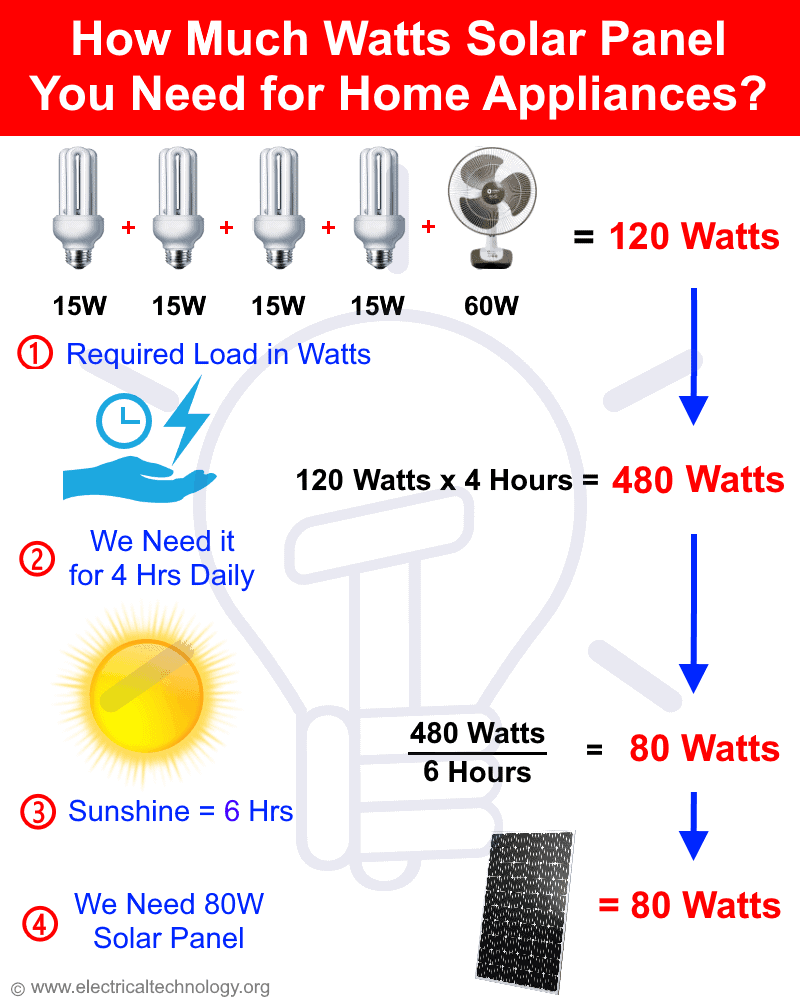
Understanding how to calculate your solar panel needs involves a comprehensive assessment of current energy consumption, environmental factors, system components, and future energy aspirations. It’s a blend of data analysis and practical application of solar technology principles, ensuring that the system you invest in is perfectly tailored to your lifestyle and location. This guide will walk you through the technical considerations and methodologies essential for accurately sizing your solar PV system, laying the groundwork for a successful and efficient renewable energy setup.
Understanding Your Energy Consumption Profile
The bedrock of any accurate solar panel calculation is a thorough understanding of your energy consumption patterns. Without knowing how much energy you use, it’s impossible to determine how much energy your solar system needs to generate. This initial phase involves data collection and analysis, providing a clear picture of your household’s or business’s energy footprint.
Analyzing Historical Electricity Bills
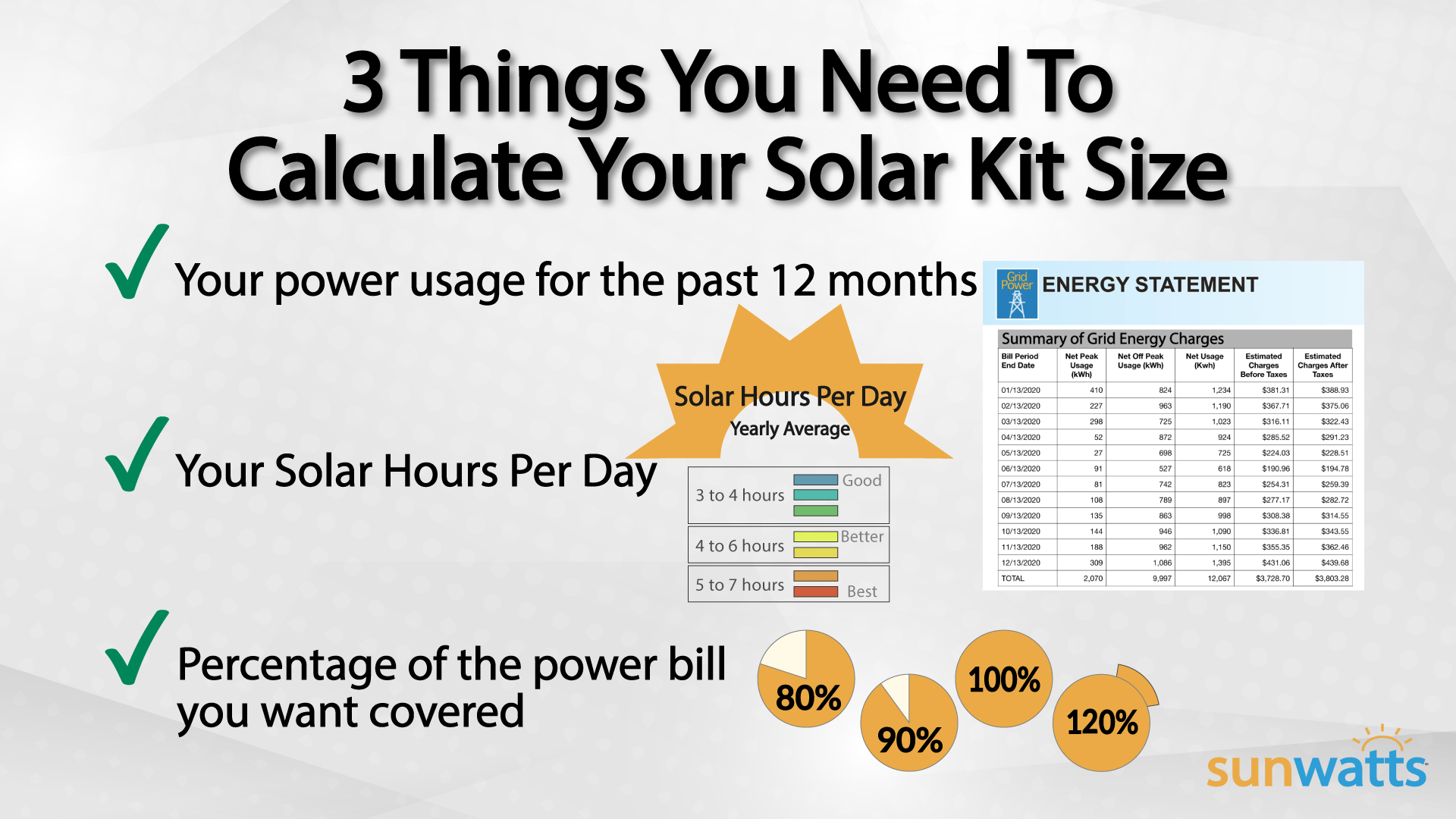
Your past electricity bills are a goldmine of information. They typically detail your monthly energy consumption in kilowatt-hours (kWh) over the past 12 to 24 months. Collecting this data is crucial because energy usage often fluctuates seasonally. For instance, air conditioning might dramatically increase consumption in summer, while heating or holiday lighting could spike it in winter. By averaging your consumption over a full year, you can account for these seasonal variations and derive a realistic daily or monthly average.
Look for the total kWh consumed for each billing cycle. Sum these up for a 12-month period and then divide by 12 to get your average monthly consumption. Dividing that by the average number of days in a month (e.g., 30.4) will give you your average daily kWh consumption. This number serves as your primary target for solar production. It’s also wise to note any demand charges or time-of-use tariffs, as these indicate patterns of peak usage that might influence battery storage considerations later.
Identifying Peak and Off-Peak Usage
While total consumption is vital, understanding when you use energy is equally important, especially if you’re considering battery storage or aiming for true grid independence. Many utility companies offer detailed usage data, sometimes even on an hourly basis through online portals or smart meters. Analyze this data to identify periods of high energy demand (peak usage) and low energy demand (off-peak usage).
For example, a household might see peak usage in the mornings when people are getting ready for work/school, and again in the evenings when cooking, watching TV, and running appliances. Understanding these peaks helps in designing a system that not only generates enough total energy but also delivers power efficiently during critical times, potentially reducing reliance on the grid during expensive peak hours or sizing battery banks appropriately.
Accounting for Future Energy Needs
Solar panels are a long-term investment, typically lasting 25-30 years or more. Therefore, it’s essential to project your future energy needs. Are you planning to purchase an electric vehicle (EV) in the coming years? EVs significantly increase household electricity consumption. Are you considering adding new energy-intensive appliances, renovating, or expanding your home? Perhaps you’re thinking about converting from a gas furnace to an electric heat pump, or installing a hot tub.
Factor these potential additions into your energy calculations. A common approach is to add a buffer (e.g., 10-25%) to your current average daily consumption to accommodate unforeseen increases or to proactively size your system for future growth. Over-sizing slightly can be more cost-effective in the long run than having to add panels later, which can involve additional installation costs and logistical challenges.
Factors Influencing Solar Panel Sizing
Once you have a clear picture of your energy demand, the next step involves understanding the environmental and technological factors that dictate how much electricity your solar panels can actually produce. These elements are critical for translating your energy needs into a practical system size.
Solar Irradiance and Sunlight Hours (Location Specific)
Solar irradiance refers to the amount of solar power received per unit area, typically measured in watts per square meter (W/m²). This value, along with the average number of “peak sun hours” your location receives, is paramount. Peak sun hours are not simply the number of hours the sun is visible; they represent the equivalent number of hours per day when solar irradiance averages 1,000 W/m². For example, a day with 10 hours of daylight might only have 5 peak sun hours if the sun’s intensity varies throughout the day.
This data is highly location-specific and can be obtained from resources like the National Renewable Energy Laboratory (NREL) PVWatts Calculator, local meteorological data, or reputable solar installers. A region with high irradiance and many peak sun hours will require fewer panels than a region with lower values to generate the same amount of electricity. This is a primary differentiator between, say, Arizona and Alaska.
Roof Space and Orientation
The physical characteristics of your property, particularly your roof, significantly impact solar panel feasibility and sizing.
- Available Roof Space: Measure the usable area on your roof. Panels require clear, unobstructed space, free from chimneys, vents, skylights, and other obstructions. Also, consider setbacks from edges and fire safety regulations that might limit placement.
- Roof Orientation: In the Northern Hemisphere, south-facing roofs receive the most direct sunlight throughout the day, making them ideal. East and west-facing roofs can also be viable, generating power more evenly throughout the morning and afternoon, respectively. North-facing roofs are generally less efficient for solar production and are often avoided unless absolutely necessary or compensated by very steep angles.
- Roof Tilt Angle: The optimal tilt angle for solar panels generally corresponds to your latitude for year-round production. However, fixed roof angles may necessitate adjustments in panel placement or the use of racking systems to achieve better sun exposure.
Panel Efficiency and Degradation
Not all solar panels are created equal. Panel efficiency, expressed as a percentage, indicates how much of the sunlight hitting the panel is converted into electricity. Modern residential panels typically range from 17% to 22% efficiency. Higher efficiency panels generate more power from a smaller footprint, which can be advantageous for limited roof space.
Furthermore, solar panels experience a gradual decline in power output over time, known as degradation. Most manufacturers guarantee that their panels will produce at least 80-85% of their original rated power after 25 years. When calculating your needs, it’s wise to factor in a slight buffer to account for this degradation, ensuring your system continues to meet your energy demands throughout its lifespan. Some calculations might use a degradation rate of 0.5% to 1% per year.
System Losses (Inverters, Wiring)
The journey of electricity from the solar panel to your home’s electrical system is not 100% efficient. Various components and environmental factors contribute to system losses, which can reduce the effective power output by 15-25% (or even more, depending on the system).
- Temperature: Solar panels operate most efficiently at cooler temperatures. As panel temperature increases, their efficiency decreases.
- Shading: Even partial shading from trees, chimneys, or neighboring buildings can drastically reduce the output of an entire string of panels if string inverters are used. Microinverters or power optimizers can mitigate this issue by allowing individual panels to operate independently.
- Wiring Losses: Resistance in the wiring causes some energy loss during transmission. Proper wiring gauge and length can minimize this.
- Inverter Efficiency: Inverters convert the DC electricity from panels into AC electricity usable by your home. They have their own efficiency ratings, typically 95-98%.
- Dust and Dirt: Accumulation of dust, pollen, and other debris on panels can block sunlight and reduce output.
These losses must be factored into the overall calculation to determine the actual system capacity required to meet your target energy production. A common approach is to divide the desired energy production by an assumed system loss factor (e.g., 0.75 to 0.85).
The Calculation Process: Step-by-Step
With your energy consumption data and an understanding of influencing factors, you can now proceed with the actual sizing calculation. This involves a series of logical steps to determine the ideal solar system capacity for your property.
Determine Daily Energy Demand (kWh)
Start with the average daily energy consumption derived from your electricity bills, as calculated in the first section. Let’s assume, for example, your average daily consumption is 30 kWh. This is the target amount of energy your solar system needs to generate on average each day.
Factor in Peak Sun Hours
Locate the average peak sun hours for your specific geographic location. This information is crucial. For instance, if your area receives an average of 4.5 peak sun hours per day.
Calculate Required System Size (kW)
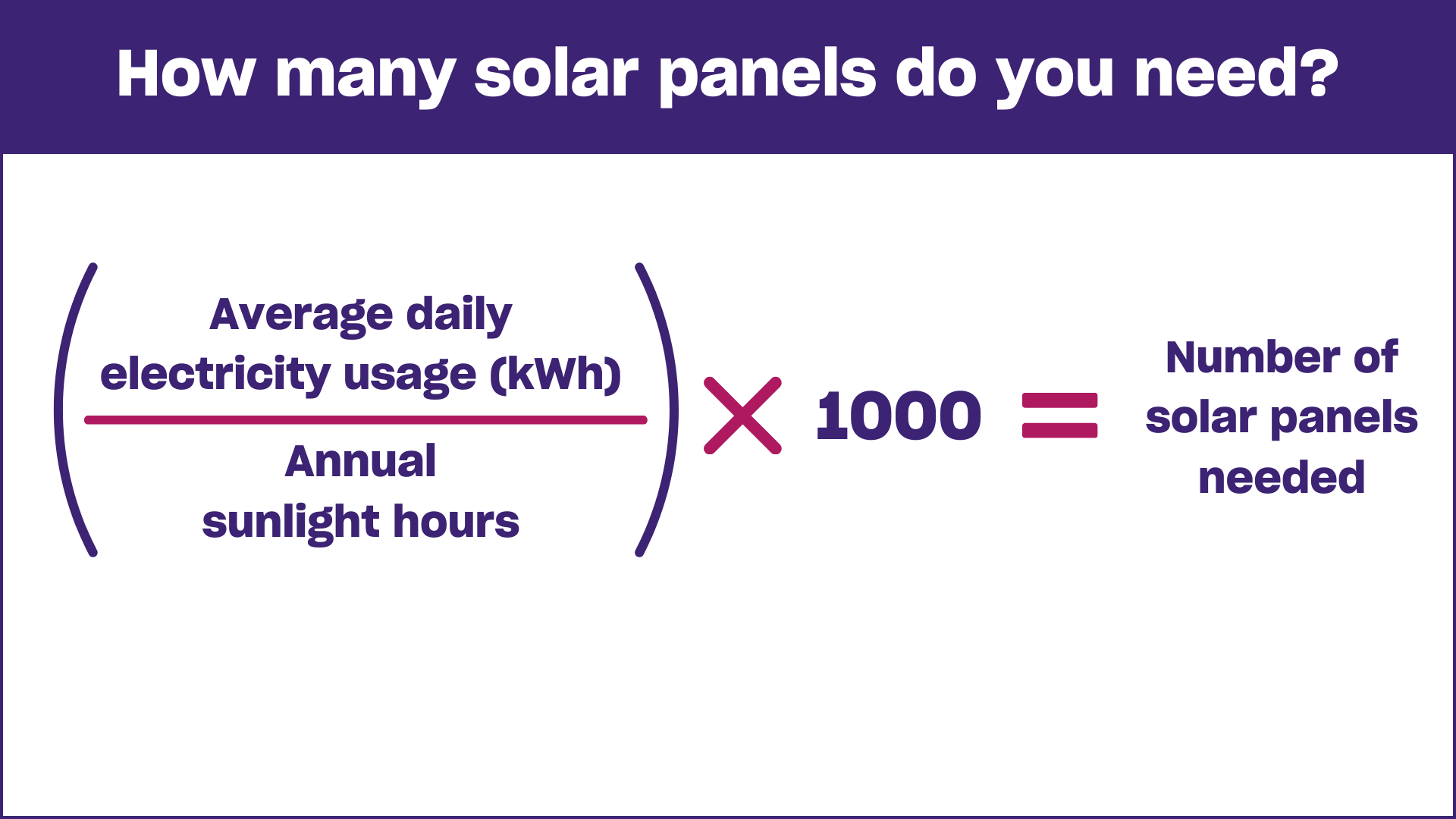
Now, divide your average daily energy demand (kWh) by the average peak sun hours to get the required system size in kilowatts (kW).
Required System Size (kW) = Daily Energy Demand (kWh) / Peak Sun Hours
Using our example:
30 kWh / 4.5 hours = 6.67 kW
This 6.67 kW represents the ideal power output capacity your system needs to have under standard test conditions (STC) to meet your daily energy needs. However, this preliminary calculation doesn’t yet account for system losses.
Adjust for System Losses
As discussed earlier, various factors cause system losses. A typical system loss factor ranges from 0.75 to 0.85. To get a more realistic required system size, divide your initial system size by this loss factor.
Adjusted System Size (kW) = Required System Size (kW) / System Loss Factor
Let’s assume a system loss factor of 0.80 (20% losses):
6.67 kW / 0.80 = 8.34 kW
So, to actually meet a daily 30 kWh demand, you’d need a system capable of producing 8.34 kW under ideal conditions, accounting for real-world inefficiencies. This 8.34 kW is the DC (Direct Current) rating of your solar array.
Convert to Number of Panels
Next, determine the number of individual solar panels needed. You’ll need to know the power rating (wattage) of the specific solar panels you intend to use. Common panel wattages for residential use range from 350 W to 450 W (or 0.35 kW to 0.45 kW).
Number of Panels = (Adjusted System Size in Watts) / (Individual Panel Wattage)
Using our example, if you choose 400-watt (0.4 kW) panels:
8340 Watts / 400 Watts/panel = 20.85 panels
Since you can’t install a fraction of a panel, you would round up to the nearest whole number. In this case, 21 panels.
21 panels * 400 Watts/panel = 8400 Watts or 8.4 kW total array size.
This 8.4 kW system would be designed to meet your 30 kWh daily energy demand, considering system losses and local sun hours.
Consider Battery Storage (Optional but Tech-Relevant)
While not strictly part of the panel sizing for generation, battery storage significantly impacts how you use the generated energy, especially if grid independence or backup power is a goal. If you want to store excess solar energy generated during the day to use at night or during grid outages, you’ll need to calculate battery capacity.
This calculation involves determining how much energy you want to store (e.g., enough to power critical loads for 12-24 hours) and then factoring in the battery’s depth of discharge (DoD) and efficiency. For example, if your critical loads consume 10 kWh over a 12-hour period and your battery has an 80% DoD and 90% round-trip efficiency, the required battery capacity would be higher than 10 kWh to account for these factors. This is a separate, but often complementary, technical calculation to your panel needs.
Beyond the Basics: Optimizing Your Solar System
Sizing your solar panels is just the beginning. Advanced technologies and strategic choices can further optimize your system’s performance, efficiency, and integration within your home’s energy ecosystem.
The Role of Advanced Inverter Technology (Microinverters vs. String Inverters)
The choice of inverter technology significantly impacts how your system handles shading and maximizes output:
- String Inverters: These are the traditional choice, connecting multiple panels in a series “string” to a central inverter. If one panel in the string is shaded or underperforms, it can reduce the output of the entire string. They are generally less expensive upfront.
- Microinverters: Installed on each individual panel, microinverters convert DC to AC at the panel level. This allows each panel to operate independently, maximizing output even if other panels are shaded or dirty. They also provide panel-level monitoring and can be more flexible for system expansion.
- Power Optimizers: A hybrid solution, optimizers are placed on each panel to condition the DC power before it goes to a central string inverter. They offer similar benefits to microinverters regarding shade tolerance and panel-level optimization but often at a lower cost than a full microinverter setup.
For complex roofs with varying angles or potential shading issues, microinverters or power optimizers are often the superior technical choice for maximizing overall system efficiency and longevity.
Monitoring and Performance Tracking Software
Modern solar systems come equipped with sophisticated monitoring capabilities. Through dedicated apps and online portals, you can track your system’s real-time energy production, consumption, and even individual panel performance. This data is invaluable for:
- Verifying System Performance: Ensuring your system is generating the expected amount of electricity.
- Troubleshooting: Quickly identifying if a panel or component is underperforming.
- Optimizing Usage: Adjusting your energy consumption patterns to maximize self-consumption of solar power.
- Maintenance: Detecting issues like excessive soiling that might require cleaning.
These software tools transform your solar array from a passive installation into an active, data-rich energy management system, providing insights that can help you make more informed energy decisions.
Smart Home Integration
The convergence of solar technology with smart home systems is creating increasingly sophisticated energy ecosystems. Integrating your solar panels and potentially battery storage with a smart home energy management system allows for intelligent automation:
- Load Management: Automatically turning off non-essential appliances during peak grid hours or when battery levels are low.
- Optimized Charging/Discharging: Programming your battery to charge during peak solar production and discharge during peak demand or grid outages.
- EV Charging Integration: Prioritizing charging your electric vehicle with excess solar power.
- Predictive Control: Some advanced systems can even use weather forecasts to anticipate solar production and adjust energy usage accordingly.
This level of integration ensures that your solar investment is not just generating power, but also intelligently managing it, leading to greater energy independence and efficiency.
Common Pitfalls and Professional Consultation
While this guide provides a detailed methodology, the complexity of solar system design means that certain common mistakes can undermine performance and investment. Engaging with professionals can mitigate these risks.
Underestimating Energy Needs
One of the most frequent errors is undersizing the system due to an inaccurate assessment of current or future energy needs. This can lead to continued high electricity bills or the need for costly system expansion down the line. Always err on the side of caution and consider potential increases in consumption.
Neglecting Shading Issues
Overlooking or underestimating the impact of shading is another critical pitfall. Even minor, intermittent shading from trees, chimneys, or even utility poles can significantly reduce the output of a string inverter system. A professional solar installer will conduct a thorough shade analysis, often using specialized tools, to optimize panel placement and recommend appropriate inverter technology (e.g., microinverters) to mitigate these effects.
The Value of a Professional Site Assessment
Ultimately, calculating solar panel needs is a complex undertaking best refined by experienced professionals. A qualified solar installer will conduct a detailed site assessment that includes:
- Structural Roof Analysis: Ensuring your roof can support the weight of the panels.
- Electrical System Review: Confirming your home’s electrical panel can handle the solar tie-in.
- Detailed Shading Analysis: Using solar pathfinders or drone technology to accurately map shading patterns throughout the year.
- Local Permitting and Zoning Knowledge: Navigating local regulations for installation.
- System Design and Optimization: Leveraging their expertise to design a system that maximizes energy production given your unique constraints and goals.
While understanding the calculation process empowers you as a consumer, professional consultation ensures that all technical nuances are addressed, leading to a safely installed, high-performing, and long-lasting solar energy system.
In conclusion, calculating your solar panel needs is a foundational step towards harnessing the power of the sun. It demands a systematic approach, beginning with a deep dive into your energy consumption, moving through an evaluation of environmental and technological factors, and culminating in a precise determination of system size. By meticulously following these technical guidelines and recognizing the invaluable role of professional expertise, you can confidently embark on a journey towards greater energy independence and a sustainable future powered by solar technology.
aViewFromTheCave is a participant in the Amazon Services LLC Associates Program, an affiliate advertising program designed to provide a means for sites to earn advertising fees by advertising and linking to Amazon.com. Amazon, the Amazon logo, AmazonSupply, and the AmazonSupply logo are trademarks of Amazon.com, Inc. or its affiliates. As an Amazon Associate we earn affiliate commissions from qualifying purchases.