
Paying taxes is an inescapable part of financial life for individuals and businesses alike. While the act of calculating what you owe can be complex, the process of sending those payments to the Internal Revenue Service (IRS) doesn’t have to be a source of confusion or anxiety. Understanding the various official channels available for submitting your tax payments is crucial for ensuring accuracy, timeliness, and avoiding unnecessary penalties. This guide will demystify the IRS payment landscape, empowering you to fulfill your tax obligations with confidence and ease, securely choosing the method that best suits your needs.
Understanding Your IRS Payment Obligations
Before you can decide how or where to send your payment, it’s essential to understand what you’re paying and when. The IRS collects various types of taxes, and misidentifying your payment type or missing a deadline can lead to penalties and interest.
Types of Tax Payments
The IRS manages a broad spectrum of tax payments, each with its own purpose and, sometimes, specific submission requirements:
- Annual Income Tax (Form 1040): This is the most common type of payment, submitted by individuals when filing their annual tax return. If your withholding or estimated tax payments throughout the year didn’t cover your total tax liability, you’ll owe a balance with your return.
- Estimated Taxes (Form 1040-ES): Many individuals, especially those who are self-employed, gig workers, retirees with significant investment income, or those with other income not subject to withholding, are required to pay estimated taxes quarterly. This ensures you pay income and self-employment taxes as you earn or receive income throughout the year, rather than a single lump sum at year-end. Businesses also make estimated tax payments.
- Business Taxes: This category is broad, encompassing various federal taxes for businesses, such as employer payroll taxes (federal income tax withholding, Social Security, and Medicare taxes), corporate income tax, and excise taxes. Businesses often use specific systems like EFTPS for these payments.
- Penalty and Interest Payments: If you underpay your taxes, miss a deadline, or fail to file, the IRS may assess penalties and interest. These additional amounts must also be paid to resolve your tax liability fully.
Key Deadlines to Remember
Adhering to tax deadlines is paramount to avoiding late payment penalties and interest charges. While the specifics can vary slightly year-to-year, the core dates remain consistent:
- April 15th: This is the primary deadline for filing individual income tax returns (Form 1040) and paying any taxes owed for the previous tax year. It’s also the deadline for the first quarter estimated tax payment. If April 15th falls on a weekend or holiday, the deadline shifts to the next business day.
- Quarterly Estimated Tax Deadlines:
- April 15: For income earned January 1 to March 31.
- June 15: For income earned April 1 to May 31.
- September 15: For income earned June 1 to August 31.
- January 15 (of the following year): For income earned September 1 to December 31.
Again, if these dates fall on a weekend or holiday, the deadline moves to the next business day.
- Extensions: While you can file for an extension of time to file your tax return (typically until October 15th for individuals), this is not an extension of time to pay your taxes. If you anticipate owing money, you should still estimate and pay by the original April 15th deadline to avoid interest and penalties.
Exploring Official IRS Payment Methods
The IRS offers a variety of payment methods, catering to different preferences and technological comfort levels. Electronic options are generally preferred for their speed, security, and convenience, but traditional methods are still available.
Electronic Payment Options (Recommended)
Electronic payments are the IRS’s recommended method due to their efficiency and reduced error rates. They provide immediate confirmation and streamline the process.
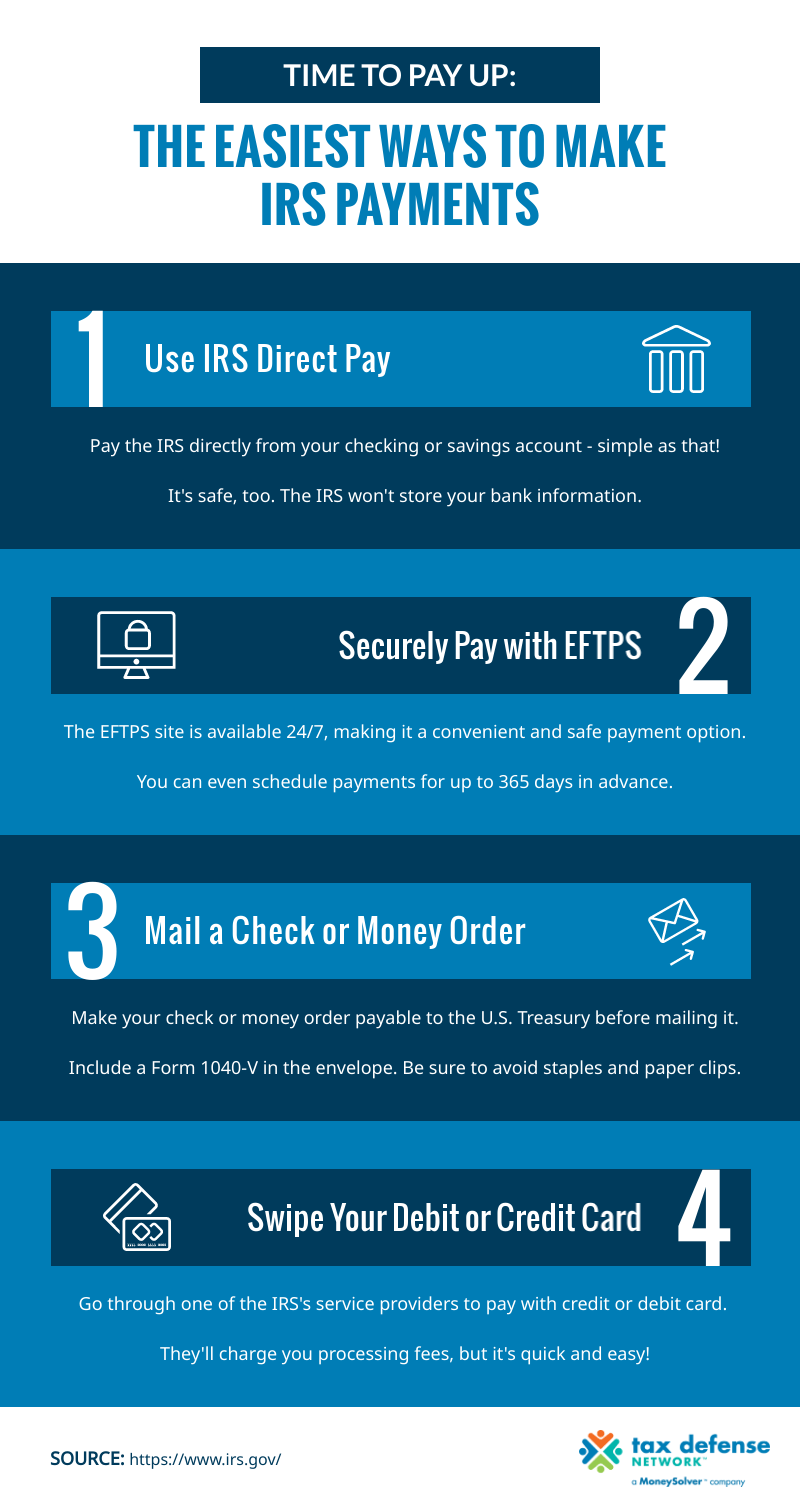
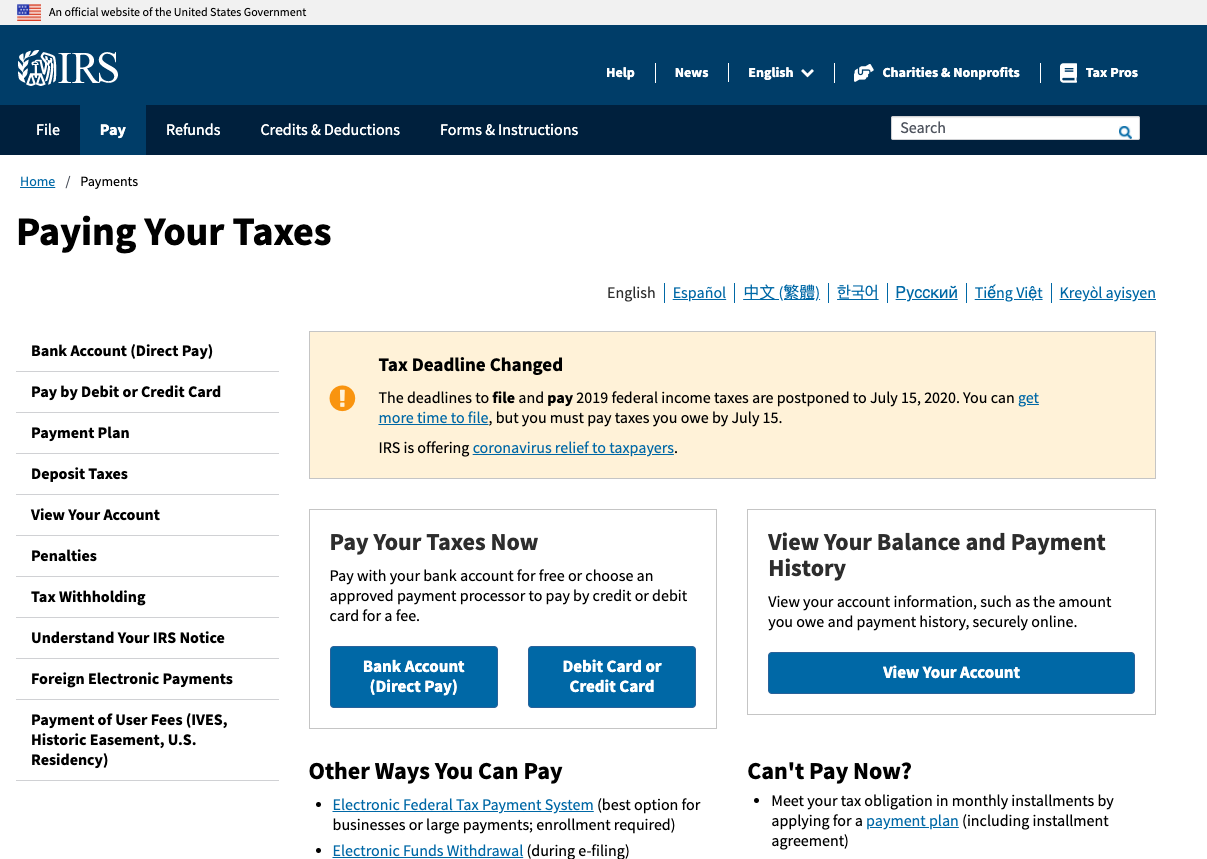
- IRS Direct Pay: This is arguably the simplest and most straightforward electronic payment method for individuals. It allows you to pay your tax bill directly from your checking or savings account for free. You don’t need to register, and you receive an immediate confirmation number. It can be used for annual tax payments, estimated taxes, and even some penalties. You’ll need your tax filing status, the exact amount of your payment, and your prior year’s adjusted gross income (AGI) for verification.
- EFTPS (Electronic Federal Tax Payment System): For individuals and, especially, businesses, EFTPS is a robust system for making all federal tax payments. While it requires a one-time enrollment process that can take a few days to a week to receive your PIN by mail, it offers significant advantages once set up. You can schedule payments up to 365 days in advance, view payment history, and make payments for nearly all federal tax types, including estimated taxes, payroll taxes, and corporate income taxes. It’s an indispensable tool for businesses and individuals with recurring tax obligations.
- Debit Card, Credit Card, or Digital Wallet: The IRS partners with several third-party payment processors that allow you to pay your taxes using a debit card, credit card, or digital wallet (like PayPal or Click to Pay). While convenient, these processors charge a small fee, which varies depending on the processor and the type of card used. This option can be appealing for those who want to earn credit card rewards, need a short-term cash flow solution, or simply prefer the ease of card payments. Ensure you understand the fees before choosing this method.
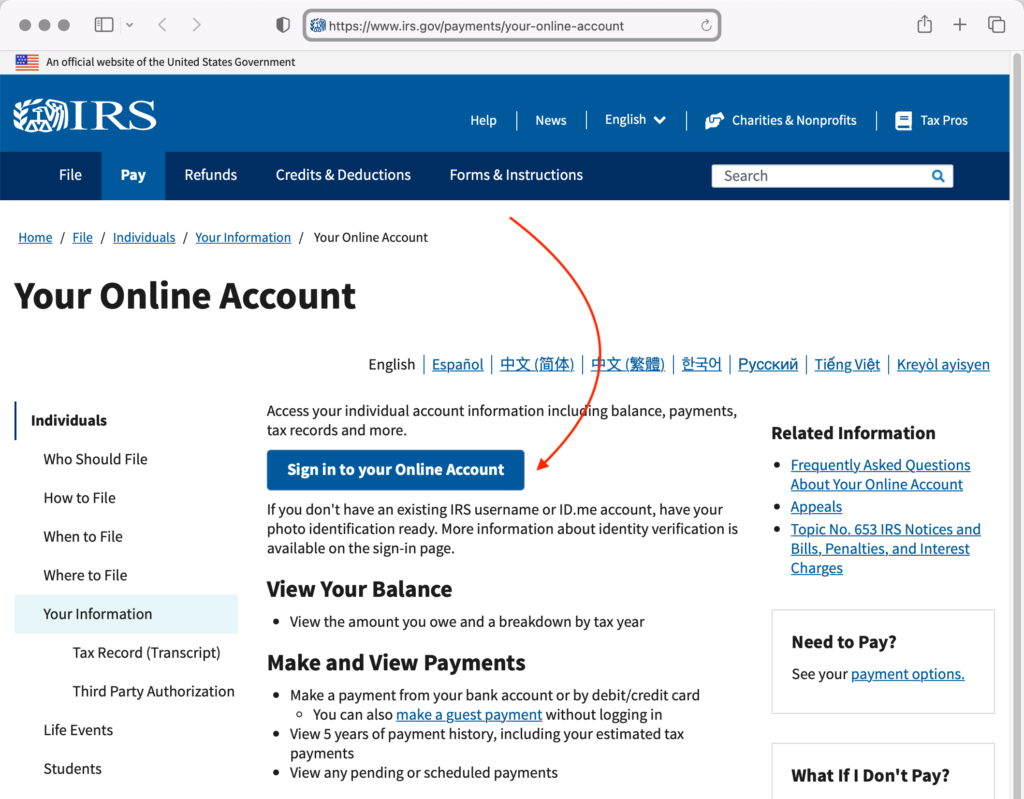
- Tax Software or Tax Professional: If you use tax preparation software (e.g., TurboTax, H&R Block, TaxAct), you often have the option to make your payment directly through the software when you e-file your return. Similarly, if you work with a tax professional, they can typically submit your payment electronically on your behalf as part of their service.
Traditional Payment Methods (Less Common, but Still Available)
While electronic methods are encouraged, the IRS still accommodates traditional payment forms for those who prefer or require them.
- Mail a Check or Money Order: This is the classic method. If you choose to pay by mail, it’s crucial to follow specific instructions:
- Make it out to the “U.S. Treasury.”
- Include your name, address, daytime phone number, Social Security number (SSN) or Employer Identification Number (EIN), the tax year, and the related tax form or notice number on the memo line of your check or money order.
- Attach Form 1040-V, Payment Voucher, if you are paying your individual income tax balance due. This voucher helps the IRS properly credit your payment.
- The Mailing Address: This is where the core question of “where do I send IRS payments” becomes very specific. The correct mailing address varies depending on the type of payment, the form you are filing, and the state you live in. You must consult the instructions for the specific tax form you are filing (e.g., Form 1040 instructions, Form 1040-ES instructions) or the IRS website’s “Where to File” page to find the precise mailing address for your situation. Sending it to the wrong address can cause significant delays and potential penalties. Always send via certified mail with a return receipt for proof of mailing.
- Cash Payments: The IRS does not accept cash payments directly at its offices. However, you can pay your federal taxes with cash through IRS retail partners, such as PayNearMe or MoneyGram. You’ll need to visit the IRS website or contact them to generate a payment barcode or authorization, which you then take to a participating retail location along with your cash payment. There may be a small fee involved, and transaction limits apply.
Best Practices for Making IRS Payments
Regardless of the method you choose, adopting best practices can help ensure your payments are processed correctly and on time, saving you potential headaches down the road.
Double-Check Everything
Before finalizing any payment, meticulously review all the details. This includes:
- Account numbers and routing numbers (for direct debit).
- Social Security Number (SSN) or Employer Identification Number (EIN) – ensuring it’s correct and matches the taxpayer.
- Payment amount – verify it matches your calculated tax liability or estimated tax payment.
- Tax year – confirming you’re applying the payment to the correct tax period.
- Confirmation numbers – if using an electronic method, save this immediately.
A small error in any of these details can lead to your payment being misapplied, delayed, or even returned, potentially incurring penalties.
Keep Meticulous Records
Documentation is your best defense in case of any discrepancy with the IRS. For electronic payments, save the confirmation number, print out the confirmation screen, and check your bank statement to ensure the payment cleared. For mailed checks, keep a copy of the check, the Form 1040-V, and send it via certified mail with a return receipt for proof of mailing and delivery. Store these records in a secure place with your other tax documents.
Pay On Time (or Early)
The simplest way to avoid penalties and interest is to pay your taxes by the due date. Better yet, consider paying a few days or even a week early, especially if using a traditional mailed check, to account for potential postal delays or processing times. Remember, an extension to file is not an extension to pay. If you know you will owe, send in an estimated payment by the original deadline.
What to Do If You Can’t Pay
Sometimes, despite your best efforts, you might find yourself unable to pay your full tax liability by the deadline. It’s crucial to address this proactively rather than ignore it:
- File your return on time: Even if you can’t pay, always file your tax return by the deadline (or file an extension to file) to avoid the Failure-to-File penalty, which is often much steeper than the Failure-to-Pay penalty.
- Pay as much as you can: Send in whatever amount you can afford to pay by the deadline. This will reduce the amount subject to interest and penalties.
- Contact the IRS: The IRS offers several payment relief options for taxpayers facing financial hardship:
- Short-Term Payment Plan: You might be granted up to 180 additional days to pay your tax liability in full, though interest and penalties still apply.
- Installment Agreement: If you need more time, you can request an installment agreement to make monthly payments for up to 72 months.
- Offer in Compromise (OIC): In certain circumstances, an OIC allows some taxpayers to resolve their tax liability with the IRS for a lower amount than what they originally owed. This is typically reserved for extreme financial hardship.
- Seek Professional Help: A qualified tax professional (like a CPA or Enrolled Agent) can help you navigate these options, understand their implications, and negotiate with the IRS on your behalf.
The Evolving Landscape of Tax Payments and Financial Tools
The world of tax payments is continually evolving, with a clear trend towards digital solutions. Understanding this shift and leveraging modern financial tools can simplify your tax journey.
The Shift Towards Digital
The IRS actively encourages taxpayers to use electronic payment methods. This push is driven by the benefits of digital transactions: increased efficiency, fewer processing errors, faster confirmations, and enhanced security compared to traditional paper-based methods. As technology advances, we can expect even more streamlined and integrated digital payment options. It’s also generally safer, reducing the risk of mailed payments getting lost or stolen.
Leveraging Financial Tools
Proactive tax planning and payment management can be significantly enhanced by utilizing modern financial tools:
- Budgeting Apps: Integrating your tax liabilities into your overall budget helps you set aside funds consistently throughout the year, especially for estimated taxes.
- Tax Planning Software: Beyond just filing, many software platforms offer tools to help you project your tax liability, track income and expenses, and plan for future payments.
- Financial Advisors: For complex financial situations or business owners, a financial advisor or tax professional can provide tailored guidance, help optimize your tax strategy, and ensure you’re using the most appropriate payment methods.
By embracing these tools, you transform tax payment from a year-end scramble into a manageable, integrated part of your financial strategy.
Conclusion
Paying your IRS obligations accurately and on time is a cornerstone of responsible financial management. While the specific question “where do I send IRS payments?” has a literal answer (the correct mailing address, if sending by mail), the modern landscape offers a far broader and more efficient array of electronic solutions. From the simple IRS Direct Pay to the comprehensive EFTPS, debit/credit card options, and integrated tax software, taxpayers have robust choices. By understanding the types of payments due, adhering to critical deadlines, choosing the most suitable payment method, and maintaining meticulous records, you can navigate your tax responsibilities with confidence and avoid unnecessary stress or penalties. Embrace the digital tools available and proactive planning to make your tax payment process as smooth and secure as possible.
aViewFromTheCave is a participant in the Amazon Services LLC Associates Program, an affiliate advertising program designed to provide a means for sites to earn advertising fees by advertising and linking to Amazon.com. Amazon, the Amazon logo, AmazonSupply, and the AmazonSupply logo are trademarks of Amazon.com, Inc. or its affiliates. As an Amazon Associate we earn affiliate commissions from qualifying purchases.