
Navigating the complexities of the American tax system can be a daunting task, particularly for those who have transitioned from traditional W-2 employment to the world of freelancing, entrepreneurship, or high-level investing. For the average employee, tax obligations are handled behind the scenes through payroll withholding. However, for those who earn income that is not subject to withholding, the responsibility shifts to the individual to “pay as you go” throughout the year. This is the essence of estimated tax payments.
Understanding where and how to send these payments is more than just a logistical hurdle; it is a critical component of personal financial management. Failing to submit these payments to the Internal Revenue Service (IRS) on time can lead to significant underpayment penalties and unnecessary financial stress. This guide provides a detailed roadmap for managing your quarterly obligations, ensuring you remain in good standing with the federal government while optimizing your business cash flow.
Understanding the Necessity of Estimated Tax Payments
The U.S. tax system is designed on a “pay-as-you-earn” basis. The government expects to receive tax revenue as income is generated, rather than in one lump sum at the end of the fiscal year. This applies to income from self-employment, interest, dividends, alimony, rent, gains from the sale of assets, prizes, and awards.
Who is Required to Pay?
Generally, individuals, including sole proprietors, partners, and S corporation shareholders, must make estimated tax payments if they expect to owe at least $1,000 in tax for the year after subtracting their withholding and credits. Corporations generally must make estimated tax payments if they expect to owe tax of $500 or more.
If you are a freelancer or a small business owner, you are essentially both the employer and the employee. Because there is no employer to withhold Social Security, Medicare, and income taxes from your checks, you must calculate these figures yourself and send them to the IRS four times a year.
The Threshold for Avoiding Penalties
To avoid an underpayment penalty, you generally must pay at least 90% of the tax for the current year or 100% of the tax shown on your return for the prior year, whichever is smaller. For high-income taxpayers—those with an adjusted gross income (AGI) of more than $150,000—the prior-year safe harbor percentage increases to 110%. Understanding these thresholds is the first step in determining not just where to send your money, but exactly how much you need to send to protect your financial health.
Digital Payment Methods: The Fastest and Safest Routes
In the modern financial landscape, the IRS has prioritized digital payment platforms. These methods are preferred because they provide immediate confirmation, reduce the likelihood of clerical errors, and eliminate the risks associated with physical mail, such as loss or theft.
IRS Direct Pay
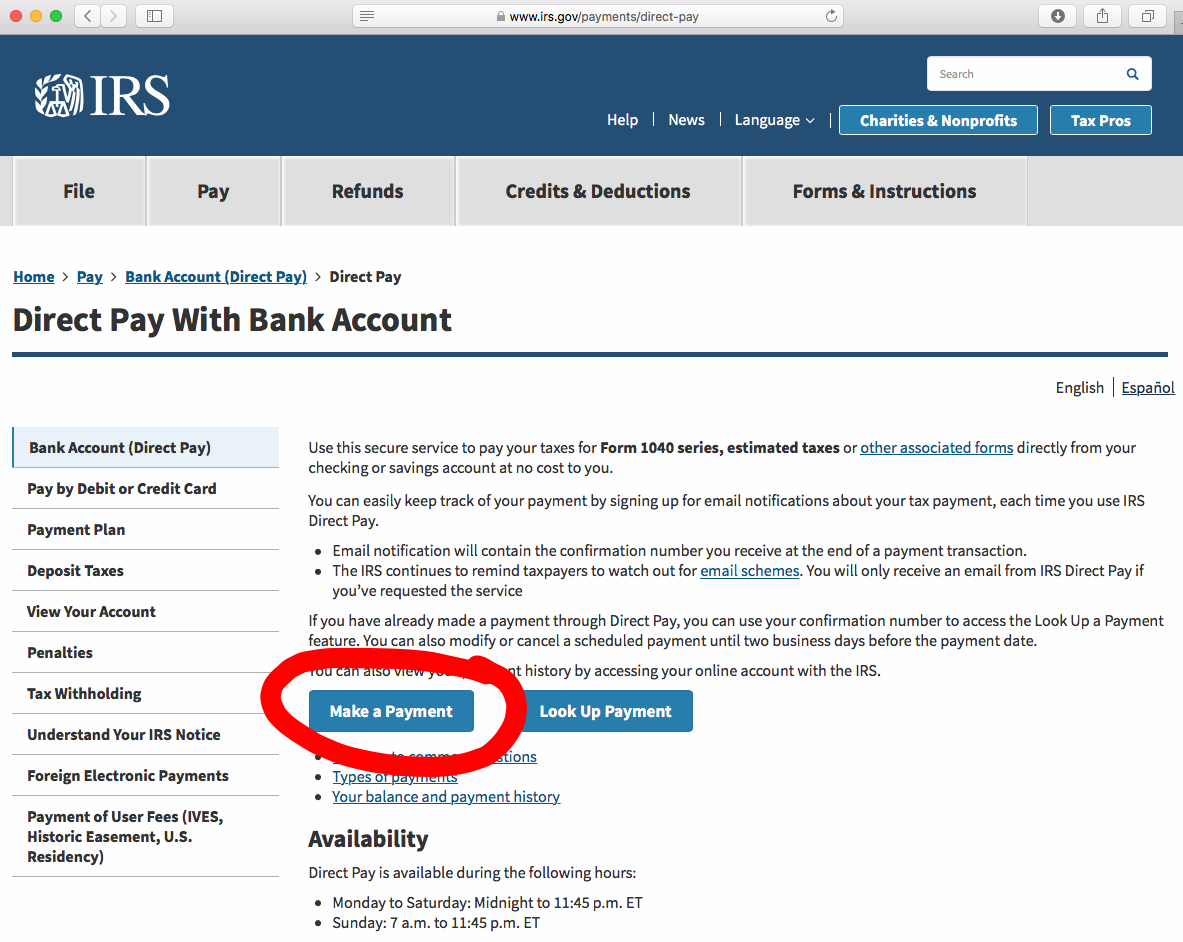
For individual taxpayers, IRS Direct Pay is the most streamlined and user-friendly option. This service allows you to pay your estimated tax directly from your checking or savings account without any additional fees. One of the primary advantages of Direct Pay is that it does not require a lengthy registration process.
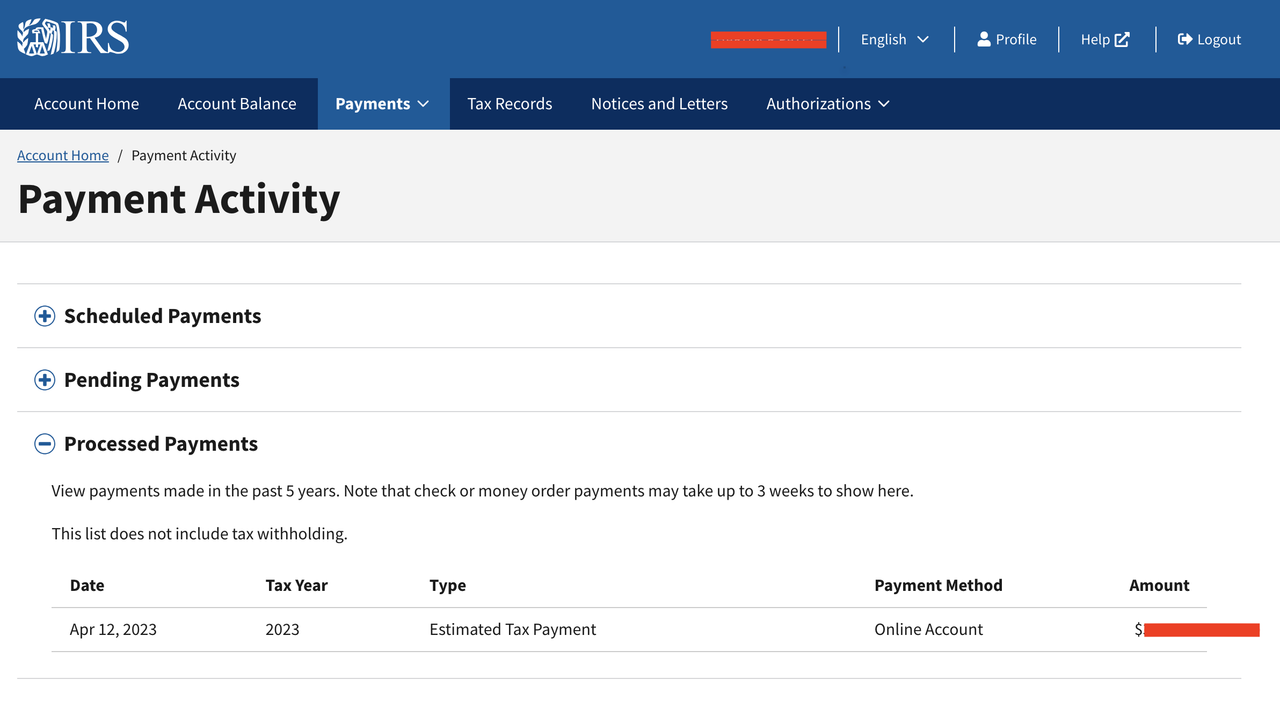
To use this service, you simply navigate to the IRS website, select “Make a Payment,” and choose the “Estimated Tax” reason for payment. You will need to verify your identity using information from a prior year’s tax return. Once the transaction is complete, you receive an immediate confirmation number, which is vital for your personal record-keeping.
Electronic Federal Tax Payment System (EFTPS)
The Electronic Federal Tax Payment System (EFTPS) is a free service provided by the Department of the Treasury. While Direct Pay is excellent for one-off payments, EFTPS is a more robust tool designed for both individuals and businesses who want more control over their tax history and scheduling.
EFTPS requires a registration process that involves receiving a PIN via physical mail, which can take five to seven business days. However, once registered, users can schedule payments up to 365 days in advance. This is an invaluable feature for financial planning; you can schedule all four quarterly payments at the beginning of the year, ensuring you never miss a deadline due to a busy schedule or forgetfulness.
Paying via Debit or Credit Card
The IRS utilizes third-party payment processors to handle debit and credit card transactions. While this offers convenience and the potential to earn “rewards” or “points” on your cards, it comes with a caveat: processing fees. These fees are a percentage of the total payment and are paid to the processor, not the IRS.
From a personal finance perspective, this method is usually only recommended if the value of the credit card rewards exceeds the processing fee, or if you are facing a temporary cash flow shortage and need to use credit to avoid an IRS underpayment penalty.
IRS2Go Mobile App
For those who manage their finances on the move, the IRS2Go mobile app provides a secure way to make estimated tax payments. The app connects directly to Direct Pay or the credit card processors, offering the same level of security and efficiency as the desktop versions. It is a helpful tool for the modern gig worker who may want to make smaller, more frequent payments throughout the quarter as they receive client payouts.
Mailing Your Payments: Addressing and Vouchers
While digital payments are encouraged, the IRS still accepts traditional paper checks and money orders. Some taxpayers prefer this method for the tangible “paper trail” it provides, or because they are more comfortable with traditional banking processes.
Using Form 1040-ES Vouchers
If you choose to mail your payment, you must include Form 1040-ES, Estimated Tax for Individuals. This form contains four payment vouchers (labeled 1 through 4) for the specific tax year. It is crucial to use the correct voucher for the corresponding period.
The voucher ensures that the IRS credits your payment to the correct account and the correct tax year. On the check or money order, you should always include your Social Security Number (SSN), the tax year (e.g., “2024 Form 1040-ES”), and your phone number. This prevents the payment from being misapplied in the event that the voucher becomes separated from the check during processing.
Determining the Correct IRS Mailing Address
The address to which you mail your estimated tax payment depends on the state in which you live. The IRS maintains several processing centers across the country. It is essential to consult the specific instructions for Form 1040-ES for the current year, as these addresses can occasionally change.
Commonly, taxpayers in states like Florida, Louisiana, Mississippi, or Texas might send their payments to a center in Charlotte, North Carolina. Conversely, those in California or Washington might send theirs to a center in San Francisco or Cincinnati. Sending your payment to the wrong service center can result in significant delays in processing, which might lead to an erroneous late-payment notice.
Best Practices for Physical Mailings
If you choose to mail your payment, the “mailbox rule” applies: the IRS considers the payment made on the date of the U.S. postmark. To protect yourself, always send tax payments via Certified Mail with a Return Receipt requested. This provides legal proof that the payment was mailed on time and received by the agency. In the world of finance, documentation is your best defense against administrative errors.
Scheduling and Calculation: Timing Your Payments Correctly
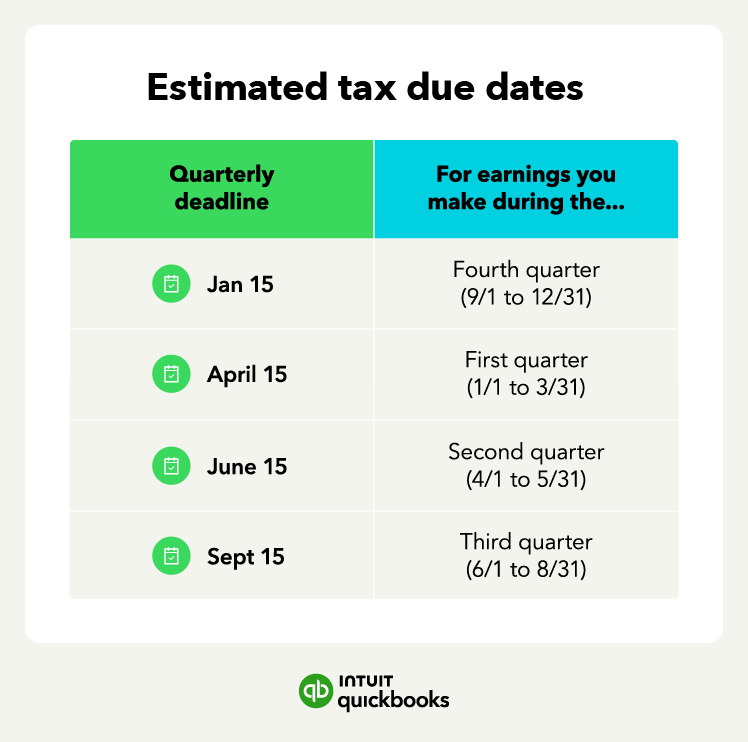
Knowing where to send your payments is only half the battle; knowing when to send them is equally critical. The IRS does not follow a standard three-month “quarterly” calendar. Instead, the deadlines are spread unevenly throughout the year.
The Quarterly Deadlines
For a standard calendar-year taxpayer, the deadlines are as follows:
-
April 15: Covers income earned from January 1 through March 31.
-
June 15: Covers income earned from April 1 through May 31.
-
September 15: Covers income earned from June 1 through August 31.
-
January 15 (of the following year): Covers income earned from September 1 through December 31.
If these dates fall on a weekend or a legal holiday, the deadline is pushed to the next business day. Missing these specific windows can result in penalties, even if you eventually pay the full amount due by the April tax filing deadline.
How to Calculate Your Estimated Tax
To calculate your estimated tax, you must estimate your expected adjusted gross income, taxable income, taxes, deductions, and credits for the year. Using your prior year’s tax return as a baseline is often the most effective strategy.
Many high-earners and business owners use a “safe harbor” approach. By paying 100% (or 110%) of their previous year’s tax liability divided into four equal payments, they can avoid penalties regardless of how much they actually earn in the current year. This provides a level of certainty in financial planning, allowing the taxpayer to keep any excess income in a high-yield savings account or investment vehicle until the final tax return is filed in April.
Strategic Financial Planning to Avoid Underpayment Penalties
Managing estimated tax payments is not just a regulatory chore; it is an exercise in cash flow management. Effective tax planning ensures that you are not caught off guard by a massive tax bill in April, while also ensuring you aren’t overpaying the government throughout the year and losing out on the time value of your money.
The Safe Harbor Rules
As mentioned previously, the safe harbor rules are a taxpayer’s best friend. If your income fluctuates significantly—perhaps you had a “unicorn” year in the stock market or your business saw a massive spike in sales—you don’t necessarily have to pay 90% of that huge current-year tax bill in real-time. By sticking to the 100%/110% of the prior year’s tax rule, you can defer the payment of the “extra” tax until April without penalty. This allows you to maintain liquidity and earn interest on that money in the interim.
Adjusting Withholding vs. Making Estimated Payments
If you have a side hustle but also maintain a regular W-2 job, you may not need to send separate estimated payments at all. An often-overlooked strategy is to simply increase the withholding on your W-2 job by filing a new Form W-4 with your employer.
The IRS treats tax withheld from wages as being paid evenly throughout the year, regardless of when the withholding actually occurred. This can be a highly effective way to “catch up” on tax obligations late in the year without triggering the underpayment penalties that might occur if you sent a large estimated payment in the fourth quarter.
Ultimately, whether you choose to use IRS Direct Pay, the EFTPS system, or traditional mail, the key to success is consistency and documentation. By understanding the “where” and “how” of estimated tax payments, you empower yourself to manage your business and personal finances with greater precision, keeping your focus on growth rather than the fear of an IRS audit or penalty.
aViewFromTheCave is a participant in the Amazon Services LLC Associates Program, an affiliate advertising program designed to provide a means for sites to earn advertising fees by advertising and linking to Amazon.com. Amazon, the Amazon logo, AmazonSupply, and the AmazonSupply logo are trademarks of Amazon.com, Inc. or its affiliates. As an Amazon Associate we earn affiliate commissions from qualifying purchases.