
The Cash App Card has rapidly become an indispensable tool for managing daily finances, offering a blend of digital convenience and traditional card functionality. For millions of users, it serves as a primary vehicle for spending, budgeting, and accessing funds. However, the fundamental question for many new and even existing users often revolves around the practicalities of funding this versatile card: “Where can you put money on a Cash App Card?” Understanding the various methods available is crucial for maximizing its utility as a personal finance tool, enabling seamless transactions whether you’re paying bills, shopping online, or withdrawing cash from an ATM.
This guide delves into the diverse avenues through which you can load funds onto your Cash App Card, transforming it into a robust component of your financial toolkit. From automated direct deposits to convenient in-store cash loading and instant transfers from linked bank accounts, we’ll explore each method with a focus on its financial implications, ease of use, and suitability for different personal finance strategies. By mastering these options, you gain greater control over your spending and ensure your Cash App Card is always ready when you need it.
Understanding Your Cash App Card and Its Funding Needs
Before diving into the “how-to,” it’s essential to grasp what the Cash App Card represents within the broader landscape of personal finance and why its funding mechanisms are so vital. It’s more than just a piece of plastic; it’s a direct extension of your digital Cash App balance, offering a tangible link to your funds.
The Cash App Card: A Gateway to Digital Spending
The Cash App Card is a free, customizable Visa debit card directly linked to your Cash App balance. Unlike a credit card, it spends only the money you have available in your Cash App account, making it an excellent tool for managing expenses and avoiding debt. It works anywhere Visa debit cards are accepted, both online and in physical stores, and can be used at ATMs to withdraw cash. This accessibility makes it a powerful financial instrument for those who prefer digital banking but still require the flexibility of a physical card for everyday transactions. Its integration with a user-friendly mobile application provides real-time transaction tracking, budgeting insights, and instant control over your funds, aligning perfectly with modern personal finance management.
Why Load Money Onto Your Card?
The primary reason to load money onto your Cash App Card is to enable spending. Without funds, the card is inactive. Beyond simple spending, there are several strategic financial benefits to keeping your card funded:
-
Budgeting and Expense Management: By funneling specific amounts into your Cash App, you can allocate funds for certain categories of spending, making it easier to stick to a budget.
-
Secure Transactions: Using a prepaid or debit card like the Cash App Card can offer an additional layer of security by limiting exposure of your primary bank account details during transactions.
-
Convenience: Having funds readily available on your card simplifies daily purchases, eliminating the need to carry physical cash or frequently transfer money from a traditional bank account.
-
Access to ATMs: A funded Cash App Card allows you to withdraw cash from ATMs, providing liquidity when digital payments aren’t an option.
-
Financial Inclusion: For individuals who may not have traditional bank accounts, the Cash App Card offers a pathway to participate in the digital economy and manage their money effectively.
Understanding these benefits underscores the importance of knowing all available funding methods, allowing you to choose the most efficient and cost-effective approach for your personal financial situation.
Direct Deposit: The Easiest Path to Funding
For many, direct deposit stands out as the most convenient and financially advantageous method for loading funds onto their Cash App Card. It automates the process, ensuring a steady stream of money flows directly into your account without manual intervention.
Setting Up Direct Deposit for Paychecks
One of the most powerful features of the Cash App Card for personal finance is its ability to receive direct deposits from employers. This transforms Cash App into a primary banking alternative for many. To set this up:
-
Locate Your Account and Routing Numbers: Within the Cash App, navigate to the Banking tab (the house icon). You’ll find your Cash App routing and account numbers listed there.
-
Provide to Your Employer: Share these numbers with your employer’s payroll department, typically by filling out a direct deposit form. You can usually choose to deposit your entire paycheck or a portion of it into your Cash App account.
-
Enjoy Early Access: A significant advantage is that Cash App often makes direct deposits available up to two days earlier than traditional banks, providing quicker access to your earnings – a distinct benefit for immediate financial needs.
This method streamlines your personal finance management, ensuring your spending card is regularly funded without effort, and can even help with budgeting by separating “spendable” income.
Using Direct Deposit for Government Benefits and Other Payments
Beyond paychecks, the direct deposit feature extends to various other income sources, enhancing its utility as a comprehensive financial tool:
-
Government Benefits: You can direct unemployment benefits, Social Security payments, tax refunds, and other government disbursements directly to your Cash App. This is particularly useful for individuals who prefer managing these funds digitally or lack a traditional bank account.
-
Pensions and Annuities: Retirees or beneficiaries of annuities can also opt to have these recurring payments deposited directly into their Cash App, simplifying their financial inflow.
The consistency and reliability of direct deposit make it an attractive option for managing all forms of regular income, integrating them seamlessly into your Cash App Card’s spendable balance.
Advantages of Direct Deposit
Embracing direct deposit for your Cash App Card offers numerous financial and practical benefits:
-
Automation: Once set up, the process is entirely automatic, saving you time and effort.
-
Speed and Timeliness: Funds arrive directly and often faster than with traditional banks, providing immediate access.
-
Cost-Effective: There are no fees associated with receiving direct deposits, making it a highly economical funding method.
-
Reliability: It eliminates the risk of lost checks or manual transfer errors, ensuring your funds are secure and accessible.
-
Improved Cash Flow Management: Consistent direct deposits enable better financial planning and ensure you always have funds on your card for necessary expenses.
For a streamlined approach to personal finance and ensuring your Cash App Card is always ready for use, direct deposit is often the recommended primary funding method.
Cash Deposits: Bringing Physical Money to Digital Life
While direct deposit handles digital income, there are times when physical cash needs to be transferred to your digital balance. Cash App facilitates this crucial link between the physical and digital financial worlds, allowing you to load paper money onto your card.
Finding Participating Retailers
Cash App has partnered with numerous major retailers to offer in-store cash deposit services. These partnerships are critical for financial inclusion, providing accessibility for those who primarily deal in cash or prefer physical transactions. You can typically find these services at:
-
Walmart
-
Walgreens
-
CVS Pharmacy
-
7-Eleven
-
Dollar General
-
Family Dollar
-
Pilot and Flying J travel centers
To locate the nearest participating store, use the “Paper Money” option within your Cash App, which often features a map or store locator function. This feature ensures you can easily find a convenient location to convert your cash into digital funds.
The In-Store Deposit Process
The process for depositing cash is straightforward and designed for convenience:
-
Generate a Barcode: Open your Cash App, navigate to the Banking tab, and select “Paper Money.” Follow the prompts to generate a unique barcode. This barcode is essential as it links the cash deposit directly to your account.
-
Visit a Participating Retailer: Head to your chosen store and inform the cashier that you wish to add money to your Cash App.
-
Present Barcode and Cash: The cashier will scan your barcode. Hand over the cash amount you wish to deposit. Be aware that most retailers have transaction limits (e.g., $500 per deposit) and may charge a small service fee (typically around $1-$5).
-
Confirm and Receipt: The funds are usually available instantly. Always request and keep the physical receipt as proof of your transaction, and verify that the amount has been credited to your Cash App balance.
This method bridges the gap for cash-reliant individuals, allowing them to participate in the digital economy and leverage the convenience of the Cash App Card.
Tips for Smooth Cash Deposits
To ensure a hassle-free cash deposit experience and optimal personal finance management:
-
Check Daily/Weekly Limits: Cash App and individual retailers may have different deposit limits. Verify these beforehand to avoid disappointment.
-
Confirm Store Participation: While major chains are generally reliable, it’s wise to confirm that a specific location offers Cash App deposits, especially if it’s your first time.
-
Be Aware of Fees: Factor in any service fees charged by the retailer. These small charges can add up if you make frequent cash deposits.
-
Keep Your Receipt: This is your primary record of the transaction. In case of any discrepancies or delays, it will be crucial for resolution.
-
Ensure Barcode Validity: Barcodes are typically time-sensitive. Generate it when you are ready to make the deposit.
By following these tips, you can efficiently convert your physical cash into usable digital funds on your Cash App Card, enhancing your flexibility in managing various forms of income.
Linking External Bank Accounts and Debit Cards
Beyond direct deposits and cash loads, Cash App offers seamless integration with your existing financial institutions, providing flexible options for transferring funds from traditional accounts directly to your Cash App Card. This connectivity is a cornerstone of modern financial tools, allowing users to consolidate and manage funds from multiple sources.
Linking a Bank Account for Transfers
Connecting your primary bank account to Cash App is a fundamental step for many users, offering a secure and controlled way to move money.
-
Securely Link Your Account: From the Banking tab in Cash App, select “Link Bank.” You will typically be prompted to choose your bank from a list and then log in using your online banking credentials. This process is usually secured by Plaid, a trusted third-party service, ensuring your login information is encrypted and not stored by Cash App.
-
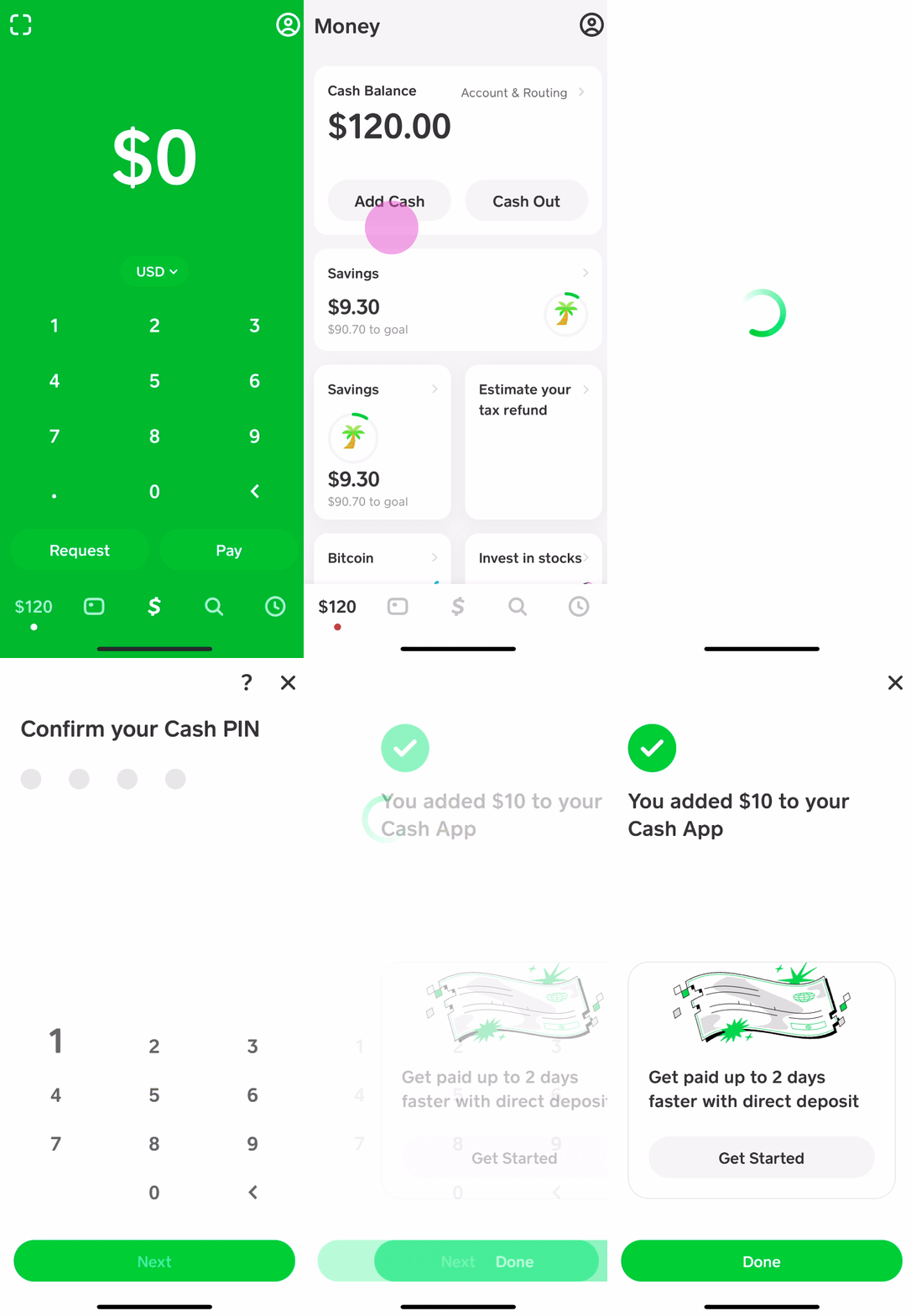
Initiating Transfers (Bank to Cash App): Once linked, you can initiate transfers from your bank account to your Cash App balance. This is done by tapping “Add Cash” within the Cash App and selecting your linked bank account as the source.
-
Transfer Timing: Standard bank transfers typically take 1-3 business days to clear and appear in your Cash App balance. While not instant, this method is free and suitable for non-urgent funding needs, making it a practical choice for routine top-ups.
This method offers a robust way to fund your Cash App Card using existing banking relationships, supporting a holistic approach to personal financial management.
Using a Linked Debit Card for Instant Transfers
For situations requiring immediate access to funds, linking a debit card offers an instant solution, albeit with potential fees.
-
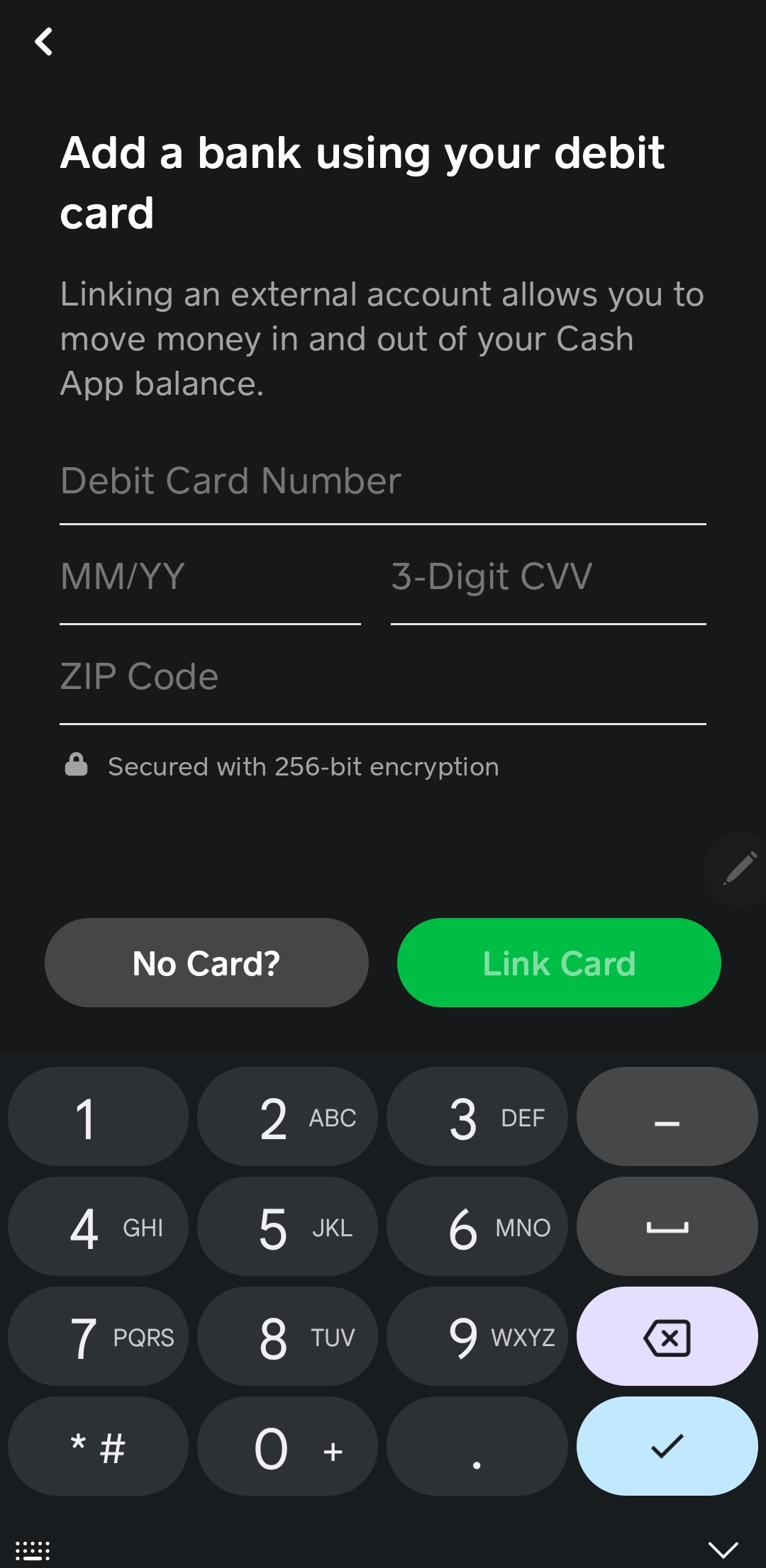
Link Your Debit Card: Similar to linking a bank account, you can add a debit card by navigating to the Banking tab and selecting “Link Debit Card.” You’ll need to enter your card number, expiration date, CVV, and ZIP code.
-
Instant Deposits: Once linked, you can use the “Add Cash” feature and select your linked debit card as the funding source. Funds transferred this way are usually available instantly on your Cash App Card.
-
Understanding Fees: While convenient, instant transfers from a linked debit card often incur a small fee (typically 0.5% to 1.75% of the transaction amount). This fee is important to consider in your personal budgeting, especially if you plan to use this method frequently. Forgoing the fee often means waiting for a standard bank transfer.
This option is invaluable for unexpected expenses or urgent top-ups, providing the financial agility that modern users often require.
Managing Multiple Linked Accounts
Many users have multiple bank accounts or debit cards. Cash App allows you to link several, offering flexibility in how you manage your funds:
-
Selecting Preferred Sources: You can easily switch between linked bank accounts or debit cards when adding cash, allowing you to choose the most appropriate funding source for each transaction or financial goal.
-
Consolidating Funds: This feature is particularly useful for consolidating funds from different sources (e.g., a savings account, a secondary checking account) onto your Cash App Card for specific spending purposes or budgeting.
-
Enhanced Financial Control: Managing multiple linked accounts provides greater control over your money, letting you move funds strategically to align with your personal finance objectives.
By leveraging these linking options, the Cash App Card becomes a central hub for managing funds from various external sources, simplifying your overall financial landscape.
Receiving Money from Others via Cash App
Beyond self-funding, a significant portion of the money on a Cash App Card often comes from other individuals or even businesses through peer-to-peer (P2P) transfers. This functionality is core to Cash App’s design as a social and accessible financial tool, facilitating easy money movement between users.
Peer-to-Peer Transfers
One of Cash App’s most popular features is its ability to send and receive money instantly from friends, family, or other contacts. This is often the quickest way to get money onto your Cash App balance.
-
Requesting Money: If someone owes you money, you can easily request it through the app. Enter the amount, tap “Request,” and select the contact. They will receive a notification and can approve the payment.
-
Receiving Money: When someone sends you money, it typically lands in your Cash App balance instantly. You’ll receive a notification, and the funds will be immediately available for use with your Cash App Card or for withdrawal.
-
No Fees for Standard Transfers: Generally, sending and receiving money between Cash App users is free for standard transfers. This makes it an incredibly cost-effective way to exchange funds, whether it’s splitting a dinner bill or sending a gift.
This P2P functionality makes the Cash App Card an excellent tool for managing shared expenses, receiving casual payments, and staying connected financially with your social network.
Payments from Businesses or Clients
For freelancers, small business owners, or those engaged in the gig economy, Cash App can also serve as a convenient platform for receiving payments from clients or customers.
-
Using Your $Cashtag: You can provide your unique $Cashtag to clients, who can then send you payments directly. This simplifies invoicing and payment collection for services rendered.
-
Integration for Small Businesses: Some smaller businesses use Cash App for customer payments, treating it as a point-of-sale solution. Funds received directly from clients will bolster your Cash App balance, making them available on your card.
-
Faster Access to Earnings: For independent contractors, receiving payments via Cash App can often mean quicker access to funds compared to traditional invoicing and payment processing methods, which can significantly improve cash flow and personal financial stability.
By facilitating both casual and business-related money transfers, Cash App enhances its utility as a multifaceted financial tool, ensuring your card is easily funded through various incoming revenue streams.
Important Considerations for Funding Your Cash App Card
While the methods for funding your Cash App Card are diverse and convenient, understanding the underlying financial parameters and best practices is crucial for effective money management and avoiding unexpected issues. Responsible use involves awareness of limits, potential fees, and security measures.
Understanding Limits (Daily, Weekly, Monthly)
Cash App implements various limits to comply with financial regulations and ensure security. These limits apply to how much you can add, send, and spend.
-
Deposit Limits: There are limits on how much cash you can deposit in-store (e.g., $500 per transaction, $1,000 per 24 hours, $4,000 per week). Direct deposit limits are typically much higher or virtually nonexistent once your identity is verified.
-
Sending Limits: Initial sending limits might be $250 per week and $1,000 per month.
-
Spending Limits: Card spending limits are usually higher than sending limits, often starting at $7,000 per week and $10,000 per month.
-
ATM Withdrawal Limits: These also apply, usually around $310 per transaction and $1,000 per 24 hours.
Verification for Higher Limits: To increase most of these limits, you’ll need to verify your identity within the app by providing your full name, date of birth, and the last four digits of your Social Security Number. This is a standard procedure for financial platforms to enhance security and regulatory compliance. Always check the current limits within your Cash App settings, as they can vary based on account status and verification level.
Fees Associated with Certain Transactions
While Cash App prides itself on being largely fee-free for basic services, certain transactions do incur charges:
-
Instant Deposits from Linked Debit Cards: As mentioned, these typically come with a fee of 0.5% to 1.75% of the transaction amount. Standard bank transfers are free but take longer.
-
Cash Deposits at Retailers: Most participating retailers charge a small service fee (e.g., $1 to $5) for facilitating cash deposits.
-
ATM Withdrawals: If you use an ATM outside of Cash App’s network or don’t meet the requirements for fee-free ATM withdrawals (e.g., receiving at least $300 in direct deposits monthly), you may incur a $2.50 Cash App fee, plus any fees charged by the ATM operator.
Being aware of these fees is essential for budgeting and choosing the most cost-effective funding and spending methods for your personal finance strategy.
Security Best Practices
Protecting your funds is paramount when using any financial tool. For your Cash App Card and balance:
-
Enable PIN and Face ID/Touch ID: Always set up a PIN for your card and enable biometric security for app access.
-
Monitor Activity: Regularly check your transaction history within the Cash App for any unauthorized activity.
-
Be Wary of Scams: Cash App is a frequent target for scammers. Never share your PIN, sign-in code, or account details with anyone, and be skeptical of unsolicited offers or requests for money. Cash App support will never ask for your sign-in code or full debit card number.
-
Link Trusted Accounts: Only link bank accounts and debit cards that you own and trust.
-
Use Strong, Unique Passwords: Ensure your Cash App password is robust and not reused from other services.
Adhering to these security measures is critical for safeguarding your financial well-being when using the Cash App Card.
Troubleshooting Common Funding Issues
Occasionally, you might encounter issues when trying to fund your Cash App Card. Here are some common problems and solutions:
-
Declined Bank/Debit Card Transfers: This could be due to incorrect card details, insufficient funds in the linked account, bank security flags, or exceeding daily transaction limits set by your bank. Double-check details and contact your bank if issues persist.
-
Cash Deposit Problems: If a retail store deposit doesn’t go through or the amount is incorrect, first refer to your receipt. Contact Cash App support immediately with your transaction details.
-
Delayed Direct Deposits: While direct deposits are usually fast, occasional delays can occur. Verify with your employer or benefit provider that the payment was sent to the correct Cash App account and routing numbers. Allow for typical bank processing times (1-3 business days) before becoming concerned.
-
Account Verification Issues: If you’re encountering limits and having trouble verifying your identity, ensure all provided information is accurate and matches your official documents. Contact Cash App support if the automated verification fails.
Proactive monitoring and understanding these potential issues empower you to quickly resolve problems and maintain consistent access to your funds, ensuring the Cash App Card remains a reliable component of your financial strategy.
Conclusion
The Cash App Card stands as a highly adaptable and accessible financial tool, offering a diverse array of methods for keeping your funds topped up. From the seamless automation of direct deposit that integrates your earnings directly into your spendable balance, to the pragmatic convenience of in-store cash deposits that bridge the gap between physical and digital money, and the instant flexibility of transfers from linked bank accounts or debit cards – the options are tailored to suit various financial lifestyles and needs.
Each funding method, while distinct, contributes to the overall utility of the Cash App Card as a comprehensive solution for personal finance management. Whether you prioritize cost-efficiency, speed, or accessibility, there’s a method that aligns with your specific requirements. By understanding these avenues, coupled with a diligent awareness of limits, potential fees, and crucial security protocols, you can maximize the benefits of your Cash App Card. This knowledge empowers you to manage your money effectively, make informed financial decisions, and maintain consistent control over your spending and savings. The Cash App Card, when understood and utilized wisely, truly simplifies the complexities of modern personal finance, putting financial control directly into your hands.
aViewFromTheCave is a participant in the Amazon Services LLC Associates Program, an affiliate advertising program designed to provide a means for sites to earn advertising fees by advertising and linking to Amazon.com. Amazon, the Amazon logo, AmazonSupply, and the AmazonSupply logo are trademarks of Amazon.com, Inc. or its affiliates. As an Amazon Associate we earn affiliate commissions from qualifying purchases.