
In the intricate world of personal and business finance, certain numerical identifiers serve as crucial lynchpins for smooth and secure transactions. Among these, the routing number stands out as a fundamental component of the American banking system. Often overshadowed by the more frequently used account number, the routing number is silently at work behind every direct deposit, automated bill payment, and wire transfer, ensuring that funds reach their intended destination accurately. For anyone managing their finances, whether paying bills, receiving their paycheck, or setting up new financial services, knowing how to locate this nine-digit code is not just convenient – it’s essential.

This guide delves into the various reliable methods available for finding your routing number, demystifying its purpose and empowering you with the knowledge to navigate your financial transactions with confidence. From the tangible details on your checks to the digital pathways of online banking, we’ll cover every avenue, ensuring you’re never left wondering where to find this vital piece of financial information. Understanding where and how to access your routing number is a key step in financial literacy and efficient money management.
Understanding the Importance of Your Routing Number
Before diving into where to find your routing number, it’s crucial to grasp what it is and why it holds such significance in the financial ecosystem. This foundational understanding will underscore its value and help you appreciate its role in safeguarding your funds and facilitating seamless financial operations.
What is a Routing Number and Why Does It Matter?
A routing number, also known as an ABA (American Bankers Association) routing transit number (RTN), is a nine-digit code that identifies your financial institution in the United States. Established in 1910, its primary purpose is to identify the specific bank responsible for processing a payment. Think of it as your bank’s unique address in the vast network of the U.S. financial system. Without it, funds wouldn’t know which bank to go to, leading to delays or even misdirected payments.
While your account number identifies your specific account within your bank, the routing number identifies the bank itself. They work in tandem: the routing number gets the money to the correct bank, and the account number directs it to the correct recipient within that bank. It’s a system designed for precision and efficiency, handling billions of transactions daily across various platforms.
Key Scenarios Where a Routing Number is Required
The need for your routing number arises in numerous common financial activities, making its location a frequent query for individuals and businesses alike.
- Direct Deposit: Perhaps the most common use, your employer will require your routing number (along with your account number) to set up direct deposit for your paycheck. Similarly, government benefits like Social Security or tax refunds are often disbursed via direct deposit, necessitating this information.
- Automated Clearing House (ACH) Transfers: ACH is an electronic network for financial transactions. This includes direct deposits, but also encompasses recurring bill payments (e.g., utilities, mortgage, rent, credit cards) and electronic funds transfers (EFTs) between bank accounts. Anytime you set up an automatic payment or transfer funds electronically between your own accounts at different institutions, your routing number is essential.
- Wire Transfers: For expedited and often larger transfers of money, particularly domestically, a wire transfer requires a routing number. It’s important to note that some banks use different routing numbers for wire transfers versus ACH transfers, so always verify the correct number for this specific purpose.
- Online Payment Services and Apps: Many financial technology (fintech) apps and online payment platforms require you to link your bank account using both your routing and account numbers to facilitate transfers to and from your bank.
- Tax Refunds: When filing your taxes, providing your bank’s routing number ensures your refund is deposited directly into your designated account, accelerating its receipt.
In each of these scenarios, providing the correct routing number is paramount to avoiding delays, fees, or the inconvenience of tracing misdirected funds.
Direct & Reliable Methods to Locate Your Routing Number
When you need your routing number, reliability and accuracy are key. Fortunately, financial institutions have made it relatively straightforward to find this information through several readily accessible and secure channels.
On Your Checks
For many, the physical checkbook remains the most intuitive place to find their routing number. This method is quick, reliable, and requires no internet access.
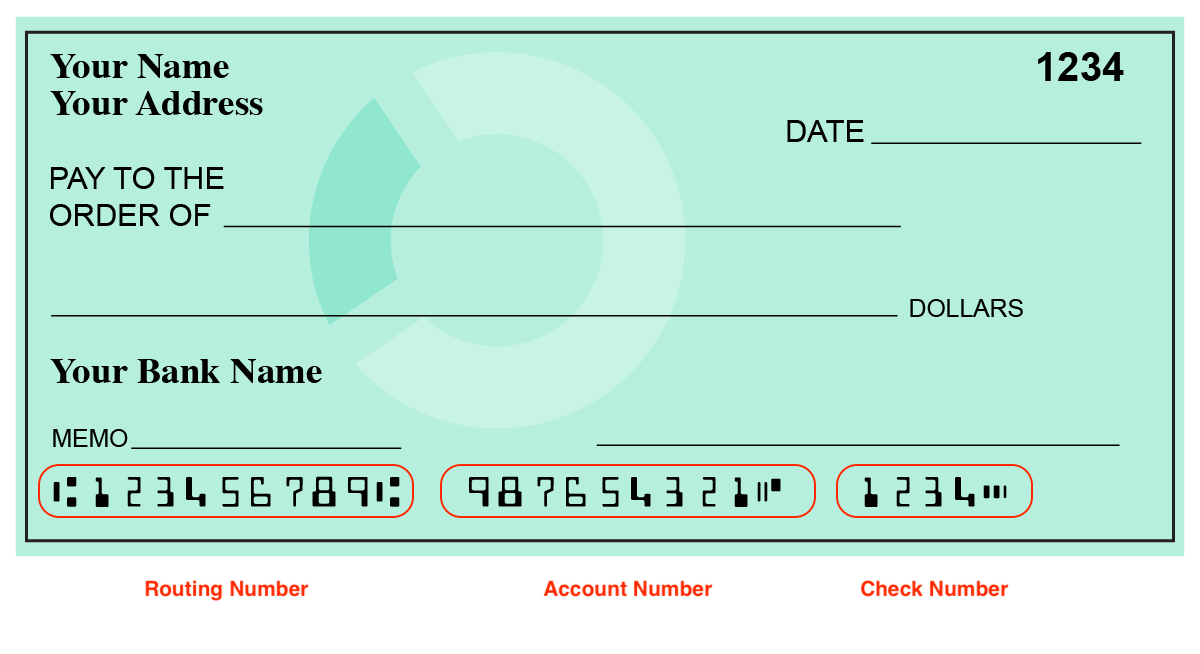
- Location on Personal Checks: Look at the bottom left-hand corner of your check. You’ll typically find three sets of numbers printed in magnetic ink characters (MICR). From left to right, these numbers represent:
- Your Bank’s Routing Number (9 digits)
- Your Account Number
- The Check Number
- Identifying the Routing Number: The routing number is always the first set of nine digits. It’s usually clearly separated from your account number and the check number by special symbols.
- Caution for Starter Checks: If you’re using temporary or “starter” checks provided directly by a bank branch, they might not always have the correct routing number printed on them. These are primarily for basic transactions and should not be relied upon for setting up direct deposits or recurring payments. Always verify with the bank if in doubt.
Through Your Online Banking Portal or Mobile App
In our increasingly digital world, online banking platforms and mobile apps have become primary tools for managing finances. They are also excellent sources for locating your routing number.
- Navigation: Log in to your bank’s secure online banking portal or mobile app.
- Common Sections: Look for sections like “Account Details,” “Account Summary,” “Statements,” or “Direct Deposit Information.” Many banks display the routing number prominently alongside your account number. Some might have it under a “Contact Us” or “FAQs” section related to direct deposits.
- Security: This method is highly secure as you are accessing information directly from your bank’s verified platform. Be sure to use strong passwords and two-factor authentication for added protection.
By Contacting Your Bank Directly
When in doubt, or if you prefer direct interaction, your bank’s customer service channels are always a dependable source.
- Customer Service Phone Number: Call the customer service number provided on your bank’s official website, your bank statement, or the back of your debit card. Be prepared to verify your identity with security questions or account details to ensure you are the legitimate account holder.
- Visiting a Branch: If there’s a local branch of your bank, you can visit in person. A teller or customer service representative will be able to provide you with the correct routing number after verifying your identity. This is particularly useful if you have specific questions about different routing numbers for various transaction types.
- Importance of Verification: Always ensure you’re contacting your bank through official channels to avoid phishing attempts or fraudulent activities.
Bank Statements
Your monthly or quarterly bank statements are another reliable document that typically includes your routing number.
- Location: Whether you receive paper statements in the mail or access digital statements online, the routing number is usually listed near your account number and other bank information at the top or bottom of the statement.
- Accessibility: Digital statements, accessible through your online banking portal, offer a convenient way to find this information without sifting through physical documents.
Utilizing Online Resources for Routing Number Lookups
Beyond your personal banking documents and portals, official online resources can also serve as valuable tools for identifying routing numbers, especially if you need to look up a routing number for a different institution.
Official Bank Websites
The vast majority of banks make their routing numbers easily accessible on their public websites, often without requiring a login.
- Navigation: Visit the official website of the bank in question.
- Common Locations: Look for sections like “Contact Us,” “FAQs,” “Help,” “About Us,” or a dedicated “Direct Deposit” or “Wire Transfer” page. Many banks will list their routing number(s) prominently on these pages.
- Search Functionality: Utilize the website’s search bar and type in “routing number” or “direct deposit” to quickly pinpoint the relevant information.
- Verification: While these are official sources, always double-check against another method if possible, especially if the routing number seems unusual or if you are dealing with a significant transaction.
ABA Routing Number Directory (e.g., FedLookup)
The American Bankers Association (ABA) maintains an official directory of all routing numbers. The Federal Reserve also provides a public search tool based on this directory, often referred to as “FedLookup.”
- Purpose: These directories are comprehensive databases of all registered U.S. financial institutions and their associated routing numbers. They are the authoritative source for this information.
- How to Use: You can typically search by bank name, city, or state. If a bank has multiple routing numbers (e.g., for different regions or transaction types), the directory will usually list them all, sometimes with notes indicating their specific use.
- Caveats: While authoritative, some larger banks may have different routing numbers for various regions or purposes (e.g., ACH vs. wire transfers). Always confirm the specific routing number required for your transaction. If using a third-party directory, ensure it is reputable and up-to-date, preferably linking back to official Federal Reserve or ABA data.
Common Pitfalls and Best Practices
While finding your routing number is generally straightforward, being aware of common pitfalls and adhering to best practices can prevent errors and enhance your financial security.
Distinguishing Between Different Routing Numbers
One of the most common sources of confusion stems from the fact that some financial institutions, particularly larger ones, may use different routing numbers for different types of transactions or even for different geographic regions.
- ACH vs. Wire Transfer Routing Numbers: This is a crucial distinction. The routing number used for Automated Clearing House (ACH) transactions (like direct deposits and electronic bill payments) may not be the same as the one used for domestic wire transfers. Wire transfers often require a specific “wire transfer routing number.” Always explicitly ask your bank or check their official resources for the correct number for the specific transaction you intend to make.
- Regional Variations: Large national banks might have multiple routing numbers, each corresponding to different regions or states where their branches are located. While often interchangeable for ACH transactions, it’s always best to use the routing number associated with the state where you opened your account.
- Branch-Specific Numbers (Less Common): In the past, some smaller or regional banks had routing numbers specific to individual branches. This is much less common now, with most banks consolidating to a single or a few routing numbers. However, if you bank with a very small or local institution, it’s worth a quick verification.
Security Tips for Handling Your Routing Number
While your routing number is not as sensitive as your full account number or Social Security number, it’s still a piece of private financial information that should be handled with care.
- Less Sensitive Than Account Numbers: On its own, a routing number cannot grant access to your account. It merely identifies your bank. However, when combined with your account number, it becomes potent.
- Beware of Phishing Scams: Be cautious of unsolicited requests for your routing and account numbers, especially via email or unverified phone calls. Financial institutions will rarely ask for this information in a way that feels insecure or unexpected.
- Verify Recipients: Before providing your routing and account numbers for direct deposit or automatic payments, always verify the legitimacy of the recipient (e.g., your employer, a utility company). Double-check the company’s official contact information.
- Secure Storage: Avoid writing your routing and account numbers on easily accessible notes or unsecured digital files. If you must record them, use secure, password-protected methods.
What to Do if You Can’t Find It
If, after trying all the methods above, you’re still unable to locate your routing number or are unsure about its accuracy, don’t guess.
- Reiterate Direct Contact with the Bank: The most reliable and secure action is to contact your bank’s customer service directly via phone or by visiting a branch. They are the ultimate authority on your account details.
- Avoid Unofficial Third-Party Sites: While some third-party websites claim to offer routing number lookups, they can be outdated, inaccurate, or even malicious. Stick to official bank websites, your online banking portal, or direct contact with your bank for guaranteed accuracy and security.

Conclusion
The routing number, though a seemingly simple nine-digit code, is a cornerstone of the U.S. financial system, enabling the seamless and secure flow of money between institutions. From receiving your paycheck to setting up automatic bill payments, its accurate identification is indispensable for managing your personal and business finances effectively.
Fortunately, locating your routing number is a straightforward process, with multiple reliable avenues at your disposal. Whether you refer to your physical checks, log into your secure online banking portal, consult your bank statements, or simply pick up the phone to call your bank, the information is readily accessible. By understanding its importance, knowing where to find it, and adhering to best practices for handling financial information, you empower yourself to navigate your financial landscape with confidence and precision. Master this fundamental aspect of banking, and ensure your money always knows where to go.
aViewFromTheCave is a participant in the Amazon Services LLC Associates Program, an affiliate advertising program designed to provide a means for sites to earn advertising fees by advertising and linking to Amazon.com. Amazon, the Amazon logo, AmazonSupply, and the AmazonSupply logo are trademarks of Amazon.com, Inc. or its affiliates. As an Amazon Associate we earn affiliate commissions from qualifying purchases.