
Tax season is an inevitable milestone in the financial calendar, often met with a mix of anxiety and administrative fatigue. For many taxpayers, the complexity of the internal revenue code is compounded by the perceived cost of compliance. Historically, the premium software market dominated the landscape, leading many to believe that professional-grade filing required a significant financial investment. However, the modern financial ecosystem has evolved. Today, a robust array of free filing options exists, ranging from government-sponsored programs to disruptive fintech platforms that offer high-level functionality at zero cost.
Navigating these options requires an understanding of your specific financial profile, including your Adjusted Gross Income (AGI), the complexity of your income streams, and your comfort level with digital interfaces. By identifying the right tools, taxpayers can bypass the “tax prep tax” and keep more of their hard-earned capital.
The IRS Free File Program: The Foundation of No-Cost Compliance
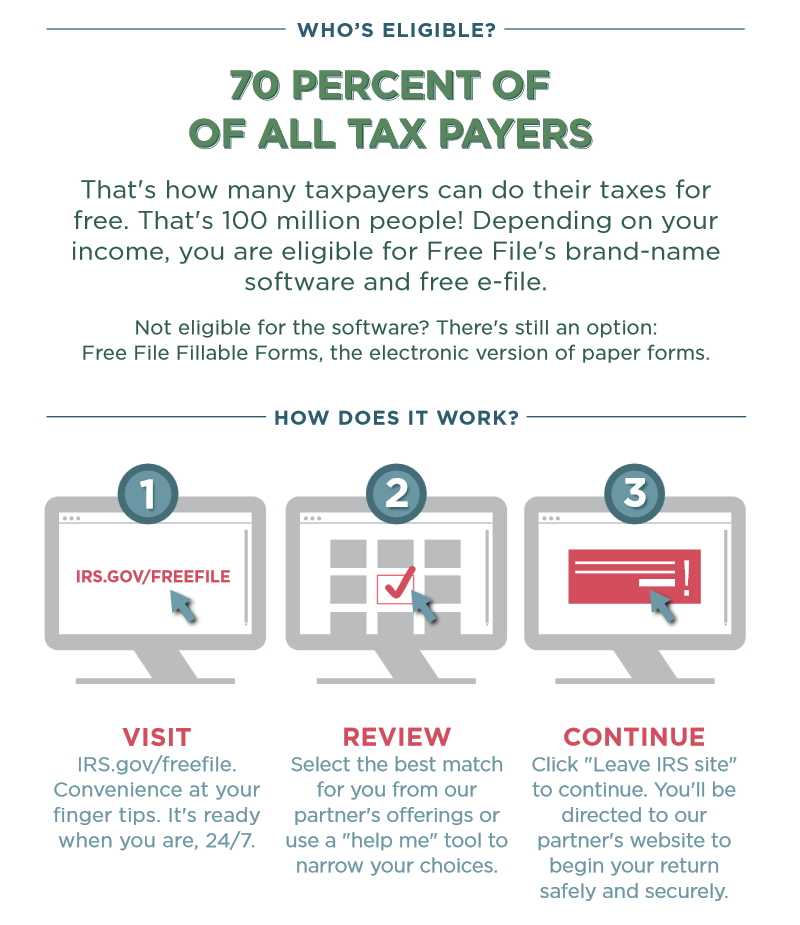
The most significant initiative in the realm of free tax preparation is the IRS Free File program. This is a public-private partnership between the Internal Revenue Service and the Free File Inc., a group of industry-leading tax software companies. The program is designed to provide high-quality electronic filing services to low-to-moderate-income taxpayers at no cost.
Understanding Eligibility and Income Thresholds
The primary gatekeeper for the IRS Free File program is the taxpayer’s Adjusted Gross Income. For the most recent tax cycle, the threshold is generally set at an AGI of $79,000 or less. If your income falls within this bracket, you are eligible to use full-featured software from participating providers like TaxSlayer, TurboTax, or FreeTaxUSA through the IRS portal. It is crucial to access these services directly through the IRS.gov website; navigating directly to the software provider’s commercial site may result in being directed toward paid products.
The Guided Software Experience
Unlike basic paper forms, the Free File program offers “guided software.” This means the platform uses an interview-style format, asking questions about your life events, income, and expenses to automatically populate the necessary forms. This technology reduces the margin for human error and ensures that common deductions—such as the Standard Deduction or the Earned Income Tax Credit (EITC)—are correctly applied. For many, this level of automation provides the same security as a paid professional without the associated invoice.
The Rise of IRS Direct File
In a landmark shift for the American tax system, the IRS has launched a pilot program known as Direct File. Unlike the Free File program which relies on third-party software, Direct File is a government-owned and operated system that allows taxpayers to file directly with the IRS. While currently limited to specific states and taxpayers with relatively simple tax situations (such as W-2 income and standard deductions), it represents the future of free filing. It eliminates the middleman entirely, providing a streamlined, mobile-friendly experience that integrates seamlessly with federal records.
Top Private Software Options for Comprehensive Filing
While the IRS Free File program is excellent for those under the income cap, some private-sector tools have disrupted the market by offering free filing to almost everyone, regardless of income. These platforms often serve as “loss leaders” for fintech companies looking to bring users into their wider financial ecosystems.
Cash App Taxes: The Truly Free Disruptor
Formerly known as Credit Karma Tax, Cash App Taxes has become the gold standard for truly free tax preparation. Unlike many competitors that charge for state returns or complex schedules, Cash App Taxes remains free for both federal and state filings.
The platform supports a wide array of tax situations, including self-employment income (Schedule C), capital gains from stock or crypto sales, and rental property income. Its primary limitation is that it requires the use of the Cash App mobile interface for certain login functions, but the filing itself is done via a highly intuitive web browser experience. For freelancers and independent contractors who are often upcharged by other “free” services, this is an invaluable resource.
FreeTaxUSA: The Hidden Gem for Complex Returns
FreeTaxUSA is frequently cited by personal finance experts as the best balance between cost and capability. While they do charge a small, flat fee for state returns (typically under $20), their federal filing is completely free for all complexity levels. This includes filers who need to report business losses, K-1s, or complex investment portfolios—scenarios that usually trigger a “Premium” or “Self-Employed” upgrade costing $60 to $120 on other platforms. The interface is less flashy than its big-name competitors, but its transparency and lack of aggressive upselling make it a favorite for the budget-conscious savvy filer.

Navigating the “Limited” Free Versions of Major Brands
Industry giants like TurboTax and H&R Block offer free versions, but users must exercise caution. These versions are strictly for “simple returns,” which usually means a W-2, standard deduction, and limited interest income. If you have student loan interest, unemployment income, or any form of 1099 income, these platforms will often prompt you to upgrade to a paid version mid-way through the process. To avoid “sunk cost” traps—where you spend hours inputting data only to be told you must pay $80 to file—it is essential to read the eligibility requirements before starting.
Specialized Resources for Seniors, Military, and Low-Income Households
For many taxpayers, software isn’t enough. They may require human intervention or specialized knowledge that accounts for unique life circumstances. Fortunately, several federally funded and non-profit programs provide expert assistance for free.
VITA and TCE: Community-Based Human Assistance
The Volunteer Income Tax Assistance (VITA) program offers free tax help to people who generally make $64,000 or less, persons with disabilities, and limited English-speaking taxpayers. These sites are staffed by IRS-certified volunteers who provide one-on-one sessions to ensure returns are accurate.
Similarly, the Tax Counseling for the Elderly (TCE) program focuses on taxpayers aged 60 and older. TCE volunteers specialize in questions about pensions and retirement-related issues unique to seniors. Both programs are invaluable for those who are uncomfortable using digital software or who have concerns about navigating the tax implications of social security and retirement distributions.
MilTax: Dedicated Support for the Armed Forces
Members of the military and their families face unique tax challenges, including combat zone exclusions, multi-state filings due to frequent moves, and specialized allowances. MilTax is a Department of Defense program provided through Military OneSource. It offers free tax prep and e-filing software specifically designed to handle these complexities. Furthermore, it provides access to consultants who are trained in military tax law, ensuring that service members maximize their credits and remain in compliance regardless of where they are stationed.
Maximizing Your Refund and Avoiding Hidden Costs
Finding a free place to file is only half the battle; the other half is ensuring that you don’t inadvertently pay fees during the “refund phase.” Many tax preparation services, even those that offer free filing, monetize their users through high-interest financial products or hidden service fees.
The Pitfall of Refund Anticipation Loans and Checks
When you finish your return and see a refund amount, many platforms will offer an “instant” refund or a “Refund Anticipation Loan” (RAL). While these products provide immediate liquidity, they often come with exorbitant interest rates or administrative fees that eat into your refund. Similarly, choosing to have your filing fees (if any) deducted from your refund often incurs a “refund processing fee” of $30 to $50. To keep your filing truly free, always choose direct deposit to your own bank account and opt for the standard processing time.
Strategic Documentation: Preparation is Profit
The efficiency of free filing software depends heavily on the quality of the data provided. To ensure you are capturing every possible credit—such as the Child Tax Credit (CTC) or the American Opportunity Tax Credit (AOTC) for students—you must have your documentation organized before you begin.
For those using free tools like FreeTaxUSA or Cash App Taxes, having digital copies of your W-2s, 1099-NECs, and 1098-Ts ready for upload can significantly speed up the process. Furthermore, understanding the difference between a tax deduction (which lowers your taxable income) and a tax credit (which reduces your tax bill dollar-for-dollar) can help you prioritize which information to hunt down.
Monitoring Changes in Tax Law
Tax laws are not static. Each year, inflation adjustments change tax brackets, and legislative updates may phase out certain pandemic-era credits or introduce new incentives for green energy or retirement savings. Using reputable free software is beneficial because these platforms are updated annually to reflect these changes. However, staying informed through personal finance resources ensures you know which questions to ask the software, ensuring that no “free money” is left on the table due to an overlooked eligibility.
Ultimately, the democratization of tax filing tools has made it possible for the vast majority of Americans to fulfill their civic duty without a financial penalty. Whether through the IRS Direct File pilot, robust third-party disruptors, or community-led volunteer programs, the resources are available to ensure that your path to a refund is both accurate and entirely free of charge.
aViewFromTheCave is a participant in the Amazon Services LLC Associates Program, an affiliate advertising program designed to provide a means for sites to earn advertising fees by advertising and linking to Amazon.com. Amazon, the Amazon logo, AmazonSupply, and the AmazonSupply logo are trademarks of Amazon.com, Inc. or its affiliates. As an Amazon Associate we earn affiliate commissions from qualifying purchases.