
The transition from physical media to digital streaming has fundamentally altered how we consume visual storytelling. A decade ago, “where can I watch films” might have been answered with a local cinema address or a rental store location. Today, the answer lies within a complex infrastructure of global data centers, advanced video codecs, and sophisticated software ecosystems. Navigating this landscape requires more than just a subscription; it requires an understanding of the technology that drives high-definition delivery, the hardware that displays it, and the security protocols that keep the digital library accessible.

The Architecture of Modern Streaming Platforms
At the heart of the question “where can I watch films” is the technology that makes instant playback possible. The shift from downloading entire files to streaming them in real-time has necessitated a massive overhaul of internet infrastructure.
From Bitrates to 4K: Understanding Compression Tech
The primary challenge of streaming high-quality films is the sheer size of the data. A raw 4K movie file is far too large to stream over a standard residential internet connection. To solve this, software engineers utilize advanced video codecs such as H.264 (AVC), H.265 (HEVC), and the emerging AV1. These codecs use complex mathematical algorithms to compress video data by removing redundant information that the human eye cannot perceive. For example, if a scene features a static blue sky, the codec instructs the player to “keep these pixels blue” for several frames rather than re-sending the data for every single frame. This efficiency is what allows platforms like Netflix or Apple TV+ to deliver crisp 4K HDR content even on modest bandwidth.
Content Delivery Networks (CDNs) and Edge Computing
When you press “play” on a film, the data does not typically travel from a single central server halfway across the world. Instead, streaming services utilize Content Delivery Networks (CDNs). Companies like Akamai, Cloudflare, and Amazon Web Services (AWS) maintain thousands of edge servers located in cities globally. By caching popular films on a server physically close to the user, these platforms reduce “latency”—the delay between the request and the start of the video—and prevent buffering. This decentralized architecture is the technical backbone that ensures a viewer in Tokyo and a viewer in London can watch the same film simultaneously without performance degradation.
Leading Software Ecosystems and Platform Interoperability
Choosing where to watch films often comes down to the software interface and the specific technical features offered by various applications. The modern viewer must choose between centralized “Big Tech” platforms and decentralized or niche software solutions.
The Big Players: Features and Integration
The major streaming applications—Netflix, Disney+, Amazon Prime Video, and Max—are more than just content repositories; they are sophisticated pieces of software. These apps are optimized for “cross-platform interoperability,” meaning they are designed to provide a seamless experience whether you are moving from a smartphone to a tablet to a Smart TV.
Technically, these platforms excel in “Adaptive Bitrate Streaming” (ABR). This technology monitors your internet speed in real-time. If your bandwidth drops because someone else in the house started a video call, the software automatically switches to a lower-resolution stream (e.g., from 1080p to 720p) without stopping the film. This ensures the viewing experience remains uninterrupted, prioritizing continuity over momentary pixel density.
Niche Platforms and Open-Source Alternatives
For those looking beyond mainstream cinema, the “where” expands into specialized software. MUBI focuses on curated arthouse films, often providing higher bitrates for cinephiles who demand visual fidelity. On the more technical end of the spectrum, many users turn to media server software like Plex or Jellyfin.
Plex allows users to host their own film libraries on personal hardware (like a NAS—Network Attached Storage) and stream them to any device. This “self-hosting” tech trend is growing among enthusiasts who want to avoid the fragmentation of streaming licenses and maintain a high-quality, local digital archive. These tools often utilize “transcoding” technology, where a home server re-encodes a video file on the fly to match the specific playback capabilities of the device receiving the stream.
Hardware and the Future of Immersive Viewing

The software is only as good as the hardware it runs on. The evolution of gadgets and display technology has transformed the “where” of film watching from a static living room experience to a mobile and even virtual one.
Smart TVs and Integrated Operating Systems
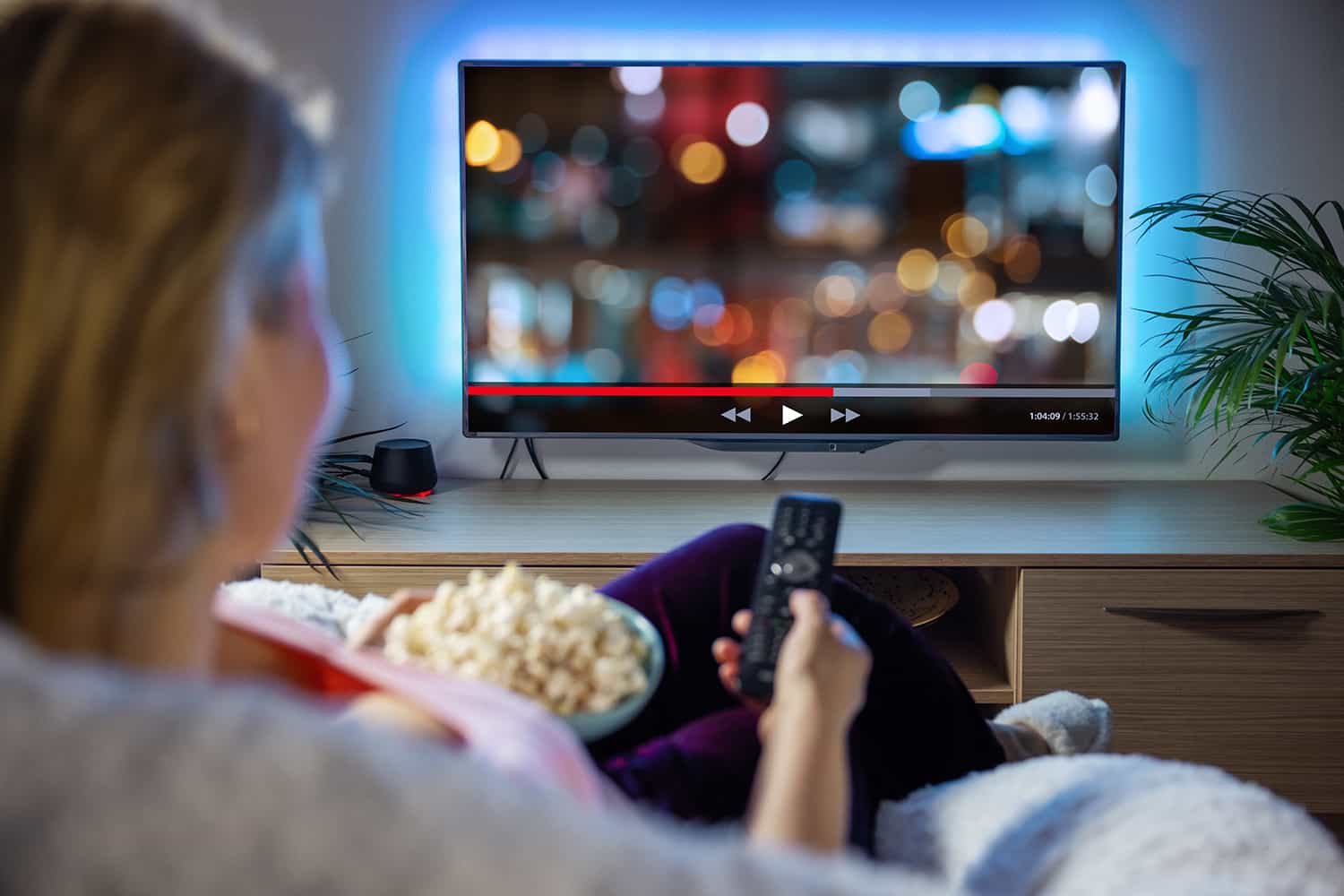
Modern Smart TVs are essentially specialized computers. Operating systems like LG’s webOS, Samsung’s Tizen, and Google TV serve as the gateway to film consumption. These systems are now integrating AI-powered “upscaling” processors. These hardware chips use machine learning to analyze low-resolution content (like an old 480p film) and intelligently predict and insert pixels to make it look like 4K. This intersection of hardware and AI ensures that even older digital libraries look modern on high-end OLED or QLED displays.
The Rise of Spatial Computing and VR Cinema
The most significant shift in the “where” of film watching is the move toward “Spatial Computing.” Devices like the Apple Vision Pro or the Meta Quest 3 allow users to watch films in a virtual cinema environment. Technically, this involves rendering a massive, high-resolution 2D or 3D screen within a 3D space.
This hardware uses “Spatial Audio” technology, which employs head-tracking sensors to adjust the soundscape in real-time. If you turn your head to the left, the audio shifts to maintain the illusion that the sound is coming from the virtual screen in front of you. This creates a level of immersion that mimics a physical IMAX theater, all contained within a wearable headset.
Digital Security and Accessibility in Global Streaming
As the ecosystem of film watching expands, so do the technical challenges surrounding security, regional locks, and digital rights management (DRM).
Encryption and DRM: Protecting the Stream
Every time you watch a film on a legal platform, you are interacting with Digital Rights Management technology, such as Google’s Widevine or Apple’s FairPlay. DRM is a systematic approach to copyright protection for digital media. It involves complex encryption keys that ensure the video file is only decrypted and played on authorized devices. For tech-savvy viewers, understanding DRM levels (like L1 vs. L3) is crucial, as some devices may be hardware-restricted to SD quality if they lack the necessary security certifications, even if the user has a 4K subscription.
Navigating Geo-Restrictions with VPN Technology
Because of licensing agreements, the answer to “where can I watch films” often depends on your IP address. This has led to the widespread use of Virtual Private Networks (VPNs). A VPN creates an encrypted “tunnel” between your device and a server in another country.
From a technical standpoint, this involves “IP masking” and “DNS redirection.” By routing your traffic through a server in the United States, for example, a viewer in Europe can access libraries restricted to the American region. However, streaming platforms have engaged in a technical “arms race” against VPN providers, using sophisticated AI to detect and block known VPN server clusters. This constant back-and-forth represents a significant frontier in modern digital networking.
AI and the Future of Film Discovery
The final piece of the “where to watch” puzzle is the “what to watch,” which is increasingly governed by artificial intelligence and machine learning algorithms.
Algorithmic Recommendations and Machine Learning
The “Discovery Engine” is perhaps the most critical piece of software in a streaming app. Platforms like Netflix use “collaborative filtering” and “deep learning” to analyze billions of data points—not just what you watch, but when you pause, what you skip, and what thumbnails you hover over. These algorithms create a “taste profile” that organizes the interface, effectively personalizing the digital cinema for every individual user. The technology ensures that the viewer spends less time searching and more time watching, solving the “choice paralysis” often found in massive digital libraries.
Generative AI in Post-Production and Up-scaling
Beyond just finding films, AI is changing the very nature of the films we watch. Generative AI tools are now being used for “de-aging” actors or providing “Neural Dubbing,” where the actor’s lip movements are digitally altered to match a dubbed language. For the viewer, this means “where to watch” becomes less about location and more about the quality of the localized version. High-tech localization ensures that a film produced in Korea can be watched in Brazil with perfect lip-sync and localized cultural nuances, powered entirely by server-side AI processing.
In conclusion, the question of where to watch films has evolved into a sophisticated technological inquiry. From the codecs that shrink data to the VPNs that bypass borders, and from the OLED screens to the VR headsets that project them, the modern film experience is a testament to rapid digital innovation. As we move further into the era of AI and spatial computing, the “where” will continue to blur the lines between the physical and the digital, making the world’s cinematic history available at the touch of a button, anywhere on the planet.
aViewFromTheCave is a participant in the Amazon Services LLC Associates Program, an affiliate advertising program designed to provide a means for sites to earn advertising fees by advertising and linking to Amazon.com. Amazon, the Amazon logo, AmazonSupply, and the AmazonSupply logo are trademarks of Amazon.com, Inc. or its affiliates. As an Amazon Associate we earn affiliate commissions from qualifying purchases.