
In the modern entertainment landscape, the question “where can I watch AMC channel?” is more complex than it once was. Gone are the days when a simple cable subscription was the only answer. Today, thanks to rapid advancements in technology, viewers have an unprecedented array of options, from traditional satellite dishes to cutting-edge streaming apps and smart devices. This guide delves into the technological ecosystem that brings AMC’s acclaimed programming – from “The Walking Dead” universe to “Better Call Saul” and classic movies – directly to your screens, no matter your preference for traditional TV or cord-cutting solutions. We’ll explore the platforms, devices, and digital intricacies that define how you access your favorite content, focusing squarely on the technological facets of each viewing method.
Navigating Traditional Access: Cable, Satellite, and Authentication Technologies
Before the streaming revolution, cable and satellite providers were the undisputed kings of television distribution. These established systems still serve millions of households, delivering AMC through robust infrastructure and sophisticated signal delivery. Understanding their technological backbone is key to appreciating how far we’ve come.
The Foundation of Cable and Satellite Distribution
At its core, traditional television delivery relies on a vast network of coaxial cables or geostationary satellites. Cable providers like Xfinity, Spectrum, and Cox utilize extensive underground and overhead cable networks to transmit hundreds of channels directly to your home. Satellite services, such as DirecTV and Dish Network, employ satellites orbiting Earth to broadcast signals, which are then captured by a dish antenna and decoded by a receiver box. Both systems require a dedicated set-top box, a piece of hardware that acts as a digital intermediary, decrypting encrypted signals and converting them into a format your television can display. These boxes often come equipped with advanced features like digital video recorders (DVRs) for time-shifting content, on-demand libraries for accessing previously aired shows, and interactive program guides, all managed by proprietary software interfaces.
The Evolving Role of Provider Apps and Digital Authentication
While the set-top box remains central to traditional viewing, technology has extended access beyond the living room TV. Most major cable and satellite providers now offer companion apps (e.g., Xfinity Stream, Spectrum TV app) for mobile devices, smart TVs, and streaming platforms. These apps leverage digital authentication protocols, allowing subscribers to log in with their existing provider credentials. This process, often facilitated by secure single sign-on (SSO) technologies or direct username/password entry, verifies your subscription status and grants access to live channels and on-demand content through an internet connection. This technological bridge allows for multiscreen viewing, transforming your smartphone, tablet, or laptop into an additional TV, and exemplifies how traditional providers are adapting their tech to meet contemporary viewing habits. It’s a blend of legacy infrastructure with modern digital distribution, ensuring that your subscription extends across various personal devices.
The Cord-Cutting Revolution: Live TV Streaming Services and Platform Compatibility
The rise of live TV streaming services has fundamentally reshaped how many viewers consume television. These services leverage internet protocol (IP) to deliver linear channels, mirroring the traditional cable experience but with enhanced flexibility and often at a lower cost, all while riding the wave of expanding broadband internet access.
Demystifying Live TV Streaming Platforms with AMC
Live TV streaming platforms are essentially digital aggregators, packaging dozens or even hundreds of channels into customizable bundles delivered over the internet. Services like Sling TV, YouTube TV, Hulu + Live TV, DirecTV Stream, and FuboTV have emerged as popular alternatives to cable. Each platform employs sophisticated content delivery networks (CDNs) and adaptive bitrate streaming technology to ensure a smooth, high-quality viewing experience across varying internet speeds. AMC is a common offering on many of these platforms, but availability can vary by package tier. For instance, Sling TV often features AMC in its base “Sling Orange” or “Sling Blue” packages, while YouTube TV includes it in its comprehensive single plan. These services also typically offer cloud DVR functionalities, allowing users to record shows digitally to a remote server rather than a physical hard drive, and multi-stream capabilities, enabling simultaneous viewing on several devices within a household – features made possible by robust server-side processing and advanced user management systems.
Device Agnosticism: Streaming to Any Screen
A major technological advantage of live TV streaming services is their remarkable platform compatibility. Unlike traditional cable, which often ties you to specific hardware, streaming apps are designed to run on a vast ecosystem of internet-connected devices. This includes:

-
Smart TVs: Modern smart televisions from brands like Samsung, LG, Sony, and Vizio come with integrated operating systems (e.g., Tizen, WebOS, Android TV) that host native apps for these streaming services.
-
Dedicated Streaming Devices: Gadgets such as Roku streaming sticks/boxes, Amazon Fire TV devices, Apple TV, and Google Chromecast with Google TV plug into your TV’s HDMI port, transforming any television into a smart TV capable of running streaming apps.
-
Mobile Devices and Tablets: Apps for iOS and Android allow for on-the-go viewing, often with features like picture-in-picture and casting capabilities.
-
Gaming Consoles: Popular consoles like Xbox and PlayStation also host these apps, turning them into multimedia entertainment hubs.
-
Web Browsers: Most services offer a web-based portal, allowing viewing directly through Chrome, Firefox, Safari, or Edge on any computer.
This device agnosticism is a testament to standardized app development frameworks and the universal accessibility of internet protocols, making it incredibly easy for users to access AMC on virtually any screen they own.
The Premium Path: AMC+ and On-Demand Streaming Technologies
Beyond linear channels, AMC has also embraced the direct-to-consumer model with its premium streaming service, AMC+, offering an enhanced viewing experience with exclusive content and early access. This represents a significant shift in content monetization and delivery strategy within the digital realm.
AMC+ Explained: Exclusives and Early Access Through Subscription Technology
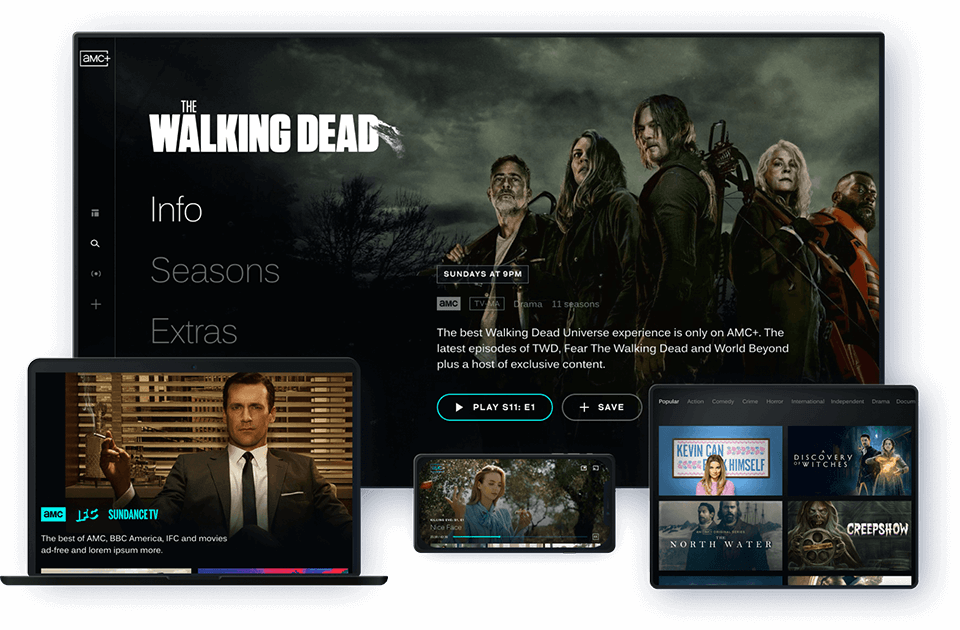
AMC+ is AMC Networks’ flagship subscription video-on-demand (SVOD) service, designed to cater to dedicated fans and those seeking an ad-free experience. Technologically, AMC+ operates as a standalone streaming platform, leveraging a subscription management system that handles user accounts, payment processing, and content entitlements. It aggregates content from AMC, Shudder (horror), Sundance Now (indie films/series), and IFC Films Unlimited (independent cinema), often offering exclusive series and early access to new episodes of popular AMC shows before they air on the linear channel. This “stacking” of niche streaming services under one premium umbrella demonstrates a sophisticated approach to content packaging and digital rights management. The service uses advanced content delivery networks to stream high-definition video efficiently to subscribers worldwide, often supporting 4K HDR content where available, pushing the boundaries of consumer-grade video technology.
Accessing AMC+ and On-Demand Libraries: Apps and Integrations
Accessing AMC+ is primarily done through its dedicated app, available on a wide array of devices including smart TVs, streaming media players (Roku, Fire TV, Apple TV), mobile devices, and web browsers. The app’s interface is designed for intuitive navigation, featuring personalized recommendations driven by machine learning algorithms that analyze viewing habits. Furthermore, AMC+ can often be subscribed to as a premium add-on through third-party platforms like Amazon Prime Video Channels, Apple TV Channels, and Sling TV. This integration leverages the existing technological infrastructure and billing systems of these larger platforms, simplifying the subscription process for users while expanding AMC+’s reach. It highlights the growing trend of content providers distributing their services not just independently, but also as components within larger digital storefronts, relying on robust API integrations to connect disparate systems seamlessly.
Hardware and Network Considerations: Optimizing Your AMC Viewing Experience
The quality of your AMC viewing experience is not solely dependent on the chosen service; it’s also heavily influenced by your home technology setup. From the devices you use to the strength of your internet connection, every component plays a crucial role.
The Role of Streaming Devices and Smart TV Operating Systems
As previously mentioned, dedicated streaming devices (Roku, Fire TV, Apple TV) and integrated smart TV operating systems (Android TV, WebOS, Tizen) are the primary conduits for delivering streaming content to your television. Each platform boasts its own user interface, app ecosystem, and processing power. Higher-end devices and newer smart TVs feature faster processors and more memory, resulting in quicker app loading times, smoother navigation, and enhanced video decoding capabilities, which are essential for streaming high-resolution content like 4K HDR. Ensuring your device’s firmware and apps are regularly updated is a key technical maintenance step to guarantee optimal performance, security, and access to the latest features and bug fixes. These updates often improve streaming efficiency and compatibility with new content formats.
Internet Bandwidth and Home Network Performance
The bedrock of any high-quality streaming experience is a robust internet connection. Streaming standard definition (SD) content typically requires a minimum of 3-5 Mbps, while high definition (HD) content demands 5-10 Mbps. For ultra-high definition (UHD) or 4K streaming, particularly with HDR, a consistent speed of 25 Mbps or more is recommended. Beyond raw speed, the stability and efficiency of your home network are paramount. A modern Wi-Fi router (e.g., Wi-Fi 6) can significantly improve signal strength and reduce latency, especially in homes with multiple connected devices. For critical streaming, a wired Ethernet connection is always superior to Wi-Fi, as it eliminates potential wireless interference and provides a more stable, higher-bandwidth connection directly to your streaming device or smart TV. Understanding these technical specifications helps ensure that buffering and pixelation become a thing of the past, allowing for an uninterrupted AMC marathon.
In conclusion, watching AMC Channel in today’s tech-driven world offers unparalleled flexibility. Whether you prefer the traditional reliability of cable, the modern convenience of live TV streaming services, or the exclusive content of AMC+, technology has evolved to meet diverse viewing preferences. By understanding the underlying platforms, device compatibilities, and network requirements, you can optimize your setup to enjoy AMC’s compelling lineup with the best possible viewing experience. The future of television is about choice, empowered by innovation, making access to your favorite shows easier and more personalized than ever before.
aViewFromTheCave is a participant in the Amazon Services LLC Associates Program, an affiliate advertising program designed to provide a means for sites to earn advertising fees by advertising and linking to Amazon.com. Amazon, the Amazon logo, AmazonSupply, and the AmazonSupply logo are trademarks of Amazon.com, Inc. or its affiliates. As an Amazon Associate we earn affiliate commissions from qualifying purchases.