
For many individuals and families, tax season can be a source of significant stress, not just due to the complexities of filing, but also the associated costs. Professional tax preparation services can easily run into hundreds of dollars, cutting into hard-earned savings or potential refunds. However, the good news is that numerous legitimate, reliable options exist for getting your taxes done completely free of charge. These services are often overlooked but can provide invaluable financial relief, especially for those on tighter budgets or with simpler tax situations.

Navigating the landscape of free tax preparation requires a bit of understanding about eligibility requirements and the types of assistance available. From government-sponsored programs to free tiers of popular tax software, and even community-based initiatives, there’s a wealth of resources designed to help taxpayers meet their obligations without incurring additional expenses. This comprehensive guide will illuminate these options, helping you identify the best free solution for your specific financial circumstances, ensuring accuracy, compliance, and peace of mind without touching your wallet.
Understanding Your Eligibility for Free Tax Services
The key to accessing free tax preparation services lies in understanding the specific criteria that different programs and platforms impose. Eligibility is primarily determined by income levels, age, and sometimes disability status, ensuring that these resources reach those who need them most. Before diving into the various offerings, it’s crucial to assess which categories you might fall into.
Income Thresholds: Who Qualifies for IRS Free File and VITA/TCE?
The most common determinant for free tax services is your Adjusted Gross Income (AGI). The Internal Revenue Service (IRS) offers two primary programs that cater to different income brackets:
- IRS Free File Program: This program is a partnership between the IRS and various tax software companies. It provides free federal tax preparation and e-filing for taxpayers whose AGI falls below a specific threshold. For the 2023 tax year (filed in 2024), this threshold was generally $79,000 for individuals and families. Each participating software provider sets its own additional criteria, which might include age, state residency, or specific forms filed. If your income is above this threshold, you might still qualify for Free File Fillable Forms, which is a more basic electronic version of paper forms, offering no guided preparation.
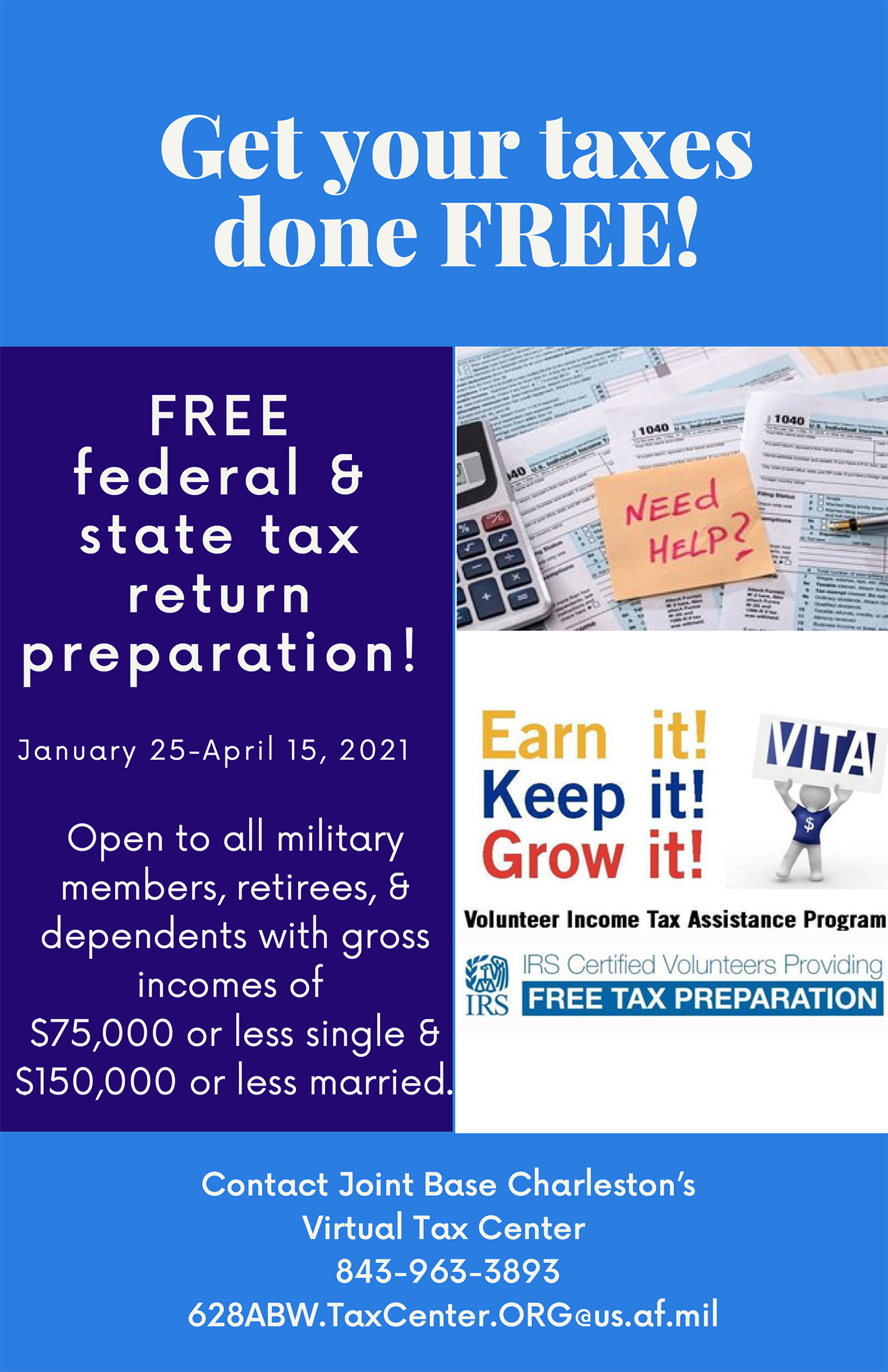
- Volunteer Income Tax Assistance (VITA): VITA offers free tax help to people who generally make $64,000 or less, persons with disabilities, and limited English-speaking taxpayers who need assistance in preparing their own tax returns. These sites are staffed by IRS-certified volunteers who provide free basic income tax return preparation with electronic filing.
- Tax Counseling for the Elderly (TCE): TCE offers free tax help, especially to people who are 60 years of age and older, specializing in questions about pensions and retirement-related issues unique to seniors. While the primary focus is on seniors, the income threshold for TCE is often similar to VITA, roughly $64,000 or less.
It’s important to check the current year’s specific AGI limits, as they can be adjusted annually. Many state tax departments also have their own free filing programs, often mirroring federal criteria or offering specific assistance.
Age and Disability Considerations for Tax Counseling for the Elderly (TCE)
While VITA serves a broad demographic, TCE specifically targets seniors. Taxpayers aged 60 and older often have unique tax situations, such as Social Security benefits, pension income, and retirement account distributions, which can add complexity to their returns. TCE volunteers are trained to handle these specific scenarios, providing specialized guidance that general tax preparers might not be as familiar with.
Similarly, individuals with disabilities are explicitly included in the VITA program’s target demographic. This recognition ensures that taxpayers who may face additional challenges in accessing or understanding tax preparation can receive the personalized support they need from certified volunteers.
Geographic and Residency Requirements for Certain Programs
While federal programs like IRS Free File are generally available nationwide, the availability of VITA and TCE sites can vary by location. These programs rely on local organizations—such as community centers, libraries, schools, and non-profits—to host volunteer-staffed sites. Therefore, you’ll need to locate a VITA or TCE site near you, which can be done through the IRS website.
State residency is also a critical factor, especially when considering free state tax filing. Many free federal tax software options will prompt you to pay for state filing, but some states offer their own free e-filing portals or participate in the IRS Free File program for state returns as well. It’s always worth checking your state’s department of revenue website for specific free filing options.
Leveraging Government-Sponsored Free Tax Programs
The U.S. government, primarily through the IRS, actively promotes and supports several programs designed to provide free tax preparation assistance. These initiatives are foundational pillars in helping millions of Americans meet their tax obligations without financial burden. Understanding the nuances of each program can help you select the most appropriate and beneficial option.
IRS Free File Program: A Deep Dive into Partner Software Options
The IRS Free File Program is perhaps the most widely accessible free tax preparation resource for eligible taxpayers. It’s not a single IRS-branded software but rather a collection of commercial tax software products offered free of charge to taxpayers meeting specific income criteria.
- How it Works: The IRS partners with several leading tax software companies (e.g., TaxSlayer, FreeTaxUSA, H&R Block, TurboTax). Each partner company agrees to provide a free federal tax filing service through the IRS Free File website if your AGI is at or below the specified limit ($79,000 for the 2023 tax year). Crucially, you must access these products through the IRS.gov Free File landing page to ensure you get the free version. Navigating directly to a company’s website might route you to a paid product.
- Benefits: These services often include guided preparation, allowing users to input their information in a user-friendly interface, answer questions, and have the software calculate their tax liability. Many also offer free state tax filing for certain taxpayers, though this varies by software provider and state. They typically support common tax forms and schedules.
- Limitations: The primary limitation is the AGI threshold. If your income exceeds this, you generally won’t qualify for the guided software through Free File. While Free File Fillable Forms is available for higher incomes, it’s essentially an electronic version of paper forms with no interview-style guidance, making it suitable only for those comfortable doing their taxes manually. Additionally, some complex tax situations (e.g., business income beyond a Schedule C, certain investment forms) might not be fully supported by all free partner software.
Volunteer Income Tax Assistance (VITA): In-Person Support for Low to Moderate Incomes
VITA is a community-based program that offers hands-on, in-person tax preparation assistance. It’s ideal for those who prefer personal guidance, lack access to reliable internet, or have specific questions best answered by a human.
- How it Works: VITA sites are typically located in neighborhood centers, libraries, schools, shopping malls, and other convenient community locations. These sites are staffed by IRS-certified volunteers who receive extensive training to prepare basic tax returns. They help taxpayers with various forms, including those related to earned income tax credit (EITC), child tax credit (CTC), and education credits.
- Benefits: The main advantage of VITA is the personalized, one-on-one support. Volunteers can answer questions, explain tax concepts, and ensure accuracy, which is particularly beneficial for those with limited English proficiency or disabilities. It removes the burden of navigating complex tax software alone.
- Eligibility: Generally available to people who make $64,000 or less, persons with disabilities, and limited English-speaking taxpayers.
- Finding a Site: You can locate the nearest VITA site using the IRS VITA/TCE Locator tool on the IRS website. It’s advisable to call ahead for appointment availability and required documentation.
Tax Counseling for the Elderly (TCE): Specialized Assistance for Seniors
TCE is a specialized program designed to address the unique tax needs of older adults. It functions similarly to VITA but with a specific focus on senior-related tax issues.
- How it Works: Administered through non-profit organizations, particularly AARP Foundation Tax-Aide, TCE sites are staffed by volunteers who are experts in tax issues pertinent to seniors. This includes income from pensions, annuities, Social Security benefits, and distributions from retirement accounts (e.g., IRAs, 401(k)s).
- Benefits: Seniors often have tax situations that differ from younger taxpayers, and TCE volunteers are specifically trained to handle these complexities. This specialization ensures that seniors receive accurate advice and maximize any benefits or deductions they are entitled to.
- Eligibility: Primarily for individuals aged 60 and older, though the income thresholds are generally similar to VITA (around $64,000).
- Finding a Site: Like VITA, TCE sites can be found using the IRS VITA/TCE Locator. AARP Foundation Tax-Aide also has its own locator tool on its website.
Exploring Free Tax Software and Online Resources
Beyond the government-backed programs, the commercial tax software market also offers significant opportunities for free filing, particularly for those with relatively straightforward tax situations. These options provide the convenience of filing from home and often boast user-friendly interfaces.
Major Tax Software Providers Offering Free Tiers (e.g., TurboTax Free Edition, H&R Block Free Online)
Many prominent tax software companies offer “free” editions of their products. These typically cover basic tax situations, such as W-2 income, standard deductions, and simple interest/dividend income.

- TurboTax Free Edition: This popular option allows users to file federal and state taxes for free if they have simple tax returns. This usually means W-2 income, claiming the standard deduction, unemployment income, and limited interest and dividend income. If your situation becomes more complex (e.g., itemizing deductions, self-employment income, rental income), you’ll likely be prompted to upgrade to a paid version.
- H&R Block Free Online: Similar to TurboTax, H&R Block offers a free online version for simple returns. It also covers W-2 income, standard deductions, and basic credits. Like TurboTax, it will guide you to a paid upgrade if your tax situation moves beyond the “simple” definition.
- Cash App Taxes (formerly Credit Karma Tax): This platform prides itself on offering free federal and state filing for a broader range of tax situations, including W-2 income, unemployment, child tax credit, EITC, itemized deductions, student loan interest, and even some self-employment income (though not all small business forms). It aims to be truly free for most common scenarios without requiring upgrades.
- FreeTaxUSA: This provider offers free federal tax filing for all major forms and schedules. The primary cost comes from filing your state taxes, though their state filing fees are often considerably lower than competitors’ basic paid tiers. This makes it an attractive hybrid option for those willing to pay a small fee for state filing but want robust federal coverage.
Understanding the Limitations of “Free” Tax Software: When Does It Cost?
The term “free” in commercial tax software often comes with caveats. It’s essential to read the fine print to avoid unexpected charges.
- Complexity Creep: The biggest limitation is that “free” typically applies only to the simplest tax returns. As soon as you have anything beyond basic W-2 income and standard deductions (e.g., itemized deductions, self-employment income, stock sales, rental property, business expenses, health savings accounts, student loan interest, education credits), you’ll often be prompted to upgrade to a paid version. This can be frustrating if you start with a “free” option only to find you need to pay midway through.
- State Filing Fees: While many commercial “free” editions offer free federal filing, they frequently charge a separate fee for state tax filing. This can range from $20-$60 per state. Some providers, like Cash App Taxes, are exceptions and include free state filing.
- Add-on Services: Even with a “free” federal and state offering, you might be charged for add-ons like audit protection, expert review, or expedited refund options. These are usually optional but can increase the total cost.
- IRS Free File vs. Commercial Free: Remember the distinction: accessing a software company’s “free” product through the IRS Free File website generally ensures more comprehensive coverage for incomes below $79,000. Going directly to a company’s website might subject you to more restrictive “free” offerings that quickly push you to paid upgrades.
State Tax Considerations with Free Federal Filings
Many taxpayers forget about state taxes until they’ve completed their federal return. It’s crucial to factor state filing into your free tax preparation strategy.
- Integrated Solutions: Some IRS Free File partners or commercial free software (like Cash App Taxes) include free state filing. This is the most convenient option.
- State-Specific Programs: Many states offer their own free e-filing portals directly through their Department of Revenue websites, particularly if you have a simple return. These can often be used independently of your federal filing method.
- Hybrid Approach: You might use a truly free federal option (like FreeTaxUSA for federal) and then pay a small fee for state filing through the same platform, or use your state’s free portal if available.
- No State Income Tax: If you live in one of the states without a state income tax (Alaska, Florida, Nevada, New Hampshire – though it taxes interest and dividends, South Dakota, Tennessee – though it only taxes interest and dividends, Texas, Washington, Wyoming), this concern is moot.
Alternative Strategies for Low-Cost or DIY Tax Preparation
While formal free programs and software cover many, there are also viable alternative strategies for those who don’t qualify or prefer a more hands-on approach to keeping costs down. These often involve utilizing publicly available resources and a willingness to learn.
Utilizing IRS.gov Resources and Forms for Manual Filing
For the truly budget-conscious and those comfortable navigating tax forms, the IRS website is a treasure trove of information and tools.
- Downloadable Forms and Instructions: The IRS provides all necessary forms and publications (like Publication 17, Your Federal Income Tax) for free on IRS.gov. You can print them out, fill them in manually, and mail them. This is the absolute cheapest way to file, costing only the price of paper, ink, and a stamp.
- IRS Direct File (Pilot Program): For the 2024 tax season (2023 taxes), the IRS launched a pilot Direct File program for taxpayers in select states with simple returns. This free, guided digital service allows eligible taxpayers to file their federal income tax returns directly with the IRS for free. This is a significant development and could expand in future years, potentially revolutionizing free filing.
- Withholding Calculator: The IRS Tax Withholding Estimator helps you adjust your W-4 to ensure you’re not over- or under-paying throughout the year, preventing large tax bills or excessively large refunds (which means you’re giving the government an interest-free loan).
- Interactive Tax Assistant (ITA): This online tool is designed to answer tax law questions and provide answers to common questions about credits, deductions, and filing requirements.
Public Libraries and Community Centers: Beyond VITA/TCE Sites
Even if a VITA or TCE site isn’t located within a library or community center, these public institutions often offer resources that can indirectly aid in free or low-cost tax preparation.
- Free Computer and Internet Access: For those without home computers or internet, libraries provide essential access to navigate online tax software, the IRS Free File program, or the IRS.gov website.
- Tax Form Availability: Many libraries stock common paper tax forms during tax season, saving you printing costs.
- Workshops and Clinics: Some community centers or non-profits might host their own local tax clinics or workshops, sometimes collaborating with local accounting students or professionals offering pro bono assistance. These are less structured than VITA/TCE but can still provide valuable guidance.
Employer-Provided Tax Assistance and Financial Wellness Programs
Some employers recognize the financial stress of tax season and offer resources as part of their employee benefits or financial wellness programs.
- Discounted Tax Software: While not strictly free, some employers partner with tax software providers to offer significant discounts or even fully subsidized access to premium tax preparation software to their employees.
- Financial Counseling: Larger corporations might offer access to financial counselors or employee assistance programs (EAPs) that can provide basic tax guidance or direct employees to free resources.
- Payroll-Based Assistance: Employers play a crucial role in accurate W-2 reporting. Ensuring your W-4 is correctly filled out with your employer can prevent surprises at tax time. They might also offer resources on managing your withholdings.
Maximizing Your Savings and Avoiding Pitfalls
Successfully getting your taxes done for free isn’t just about finding the right program; it also involves proactive planning and diligent attention to detail. Maximizing your savings means not only avoiding preparation fees but also ensuring you claim all eligible deductions and credits.
The Importance of Accurate Record-Keeping for Smooth Filing
Regardless of whether you use free software or a volunteer preparer, the quality of your tax return hinges on the accuracy and completeness of your records.
- Organize Documents Throughout the Year: Don’t wait until April 15th. Keep a dedicated folder (physical or digital) for all tax-related documents: W-2s, 1099s (for interest, dividends, freelance income), 1098s (for mortgage interest, student loan interest, tuition), receipts for deductible expenses (charitable donations, medical expenses, business expenses), and records of any estimated tax payments.
- Digital Records: Consider scanning important documents and storing them securely in cloud storage or on an encrypted drive. This creates backups and ensures easy access.
- Bank and Credit Card Statements: These can be invaluable for identifying deductible expenses if you haven’t kept meticulous receipts.
- Previous Year’s Returns: Always have a copy of your prior year’s tax return. It contains important information like carryovers, AGI (often needed to start new software), and helps you remember deductions you claimed.
Recognizing Red Flags and Avoiding Scams
Unfortunately, where there’s money, there are often scams. Tax season is a prime time for fraudsters.
- IRS Will Not Call or Email First: The IRS primarily communicates via mail. They will never initiate contact by phone calls demanding immediate payment, threatening lawsuits, or asking for personal financial information via email or social media.
- Unsolicited Offers of “Free Money”: Be wary of schemes promising large, guaranteed refunds for a fee. If it sounds too good to be true, it almost certainly is.
- Preparers Promising Large Refunds Before Seeing Documents: A legitimate preparer will never guarantee a specific refund amount before reviewing all your financial information.
- Charging for VITA/TCE Services: VITA and TCE are always free. If someone at a supposed VITA/TCE site asks for payment, leave immediately and report them.
- “Refund Anticipation Loans”: These are high-interest loans against your expected refund, often disguised as quick cash. While not strictly a scam, they are predatory and should be avoided. Free direct deposit of your refund is the fastest and safest way to get your money.
Planning Ahead: Strategies for Next Year’s Tax Season
Getting your taxes done for free this year is a great achievement, but intelligent financial planning can make next year even smoother and potentially more beneficial.
- Adjust Withholding: Use the IRS Tax Withholding Estimator to review and adjust your W-4 form with your employer. Aim to have enough withheld to avoid a large tax bill but not so much that you’re giving the government an interest-free loan through an excessively large refund.
- Understand Your Tax Situation: Take time to understand why you qualified for free filing this year. Did your income meet the threshold? Was your return simple enough for free software? Knowing this helps you plan for next year.
- Explore Retirement Accounts: Contribute to tax-advantaged accounts like 401(k)s and IRAs. Contributions to traditional accounts can reduce your taxable income, potentially keeping you within free filing income thresholds or qualifying you for additional credits.
- Educate Yourself: The more you understand about basic tax principles, deductions, and credits, the better equipped you’ll be to manage your finances and navigate tax season effectively, whether filing for free or otherwise.
In conclusion, navigating the world of free tax preparation is entirely feasible and highly recommended for eligible taxpayers. By understanding your options—from government-backed volunteer programs to commercial software’s free tiers—and by maintaining diligent records, you can significantly reduce the financial burden of tax season. This allows you to retain more of your hard-earned money and focus on your broader financial goals, transforming a potentially stressful obligation into an empowering financial win.
aViewFromTheCave is a participant in the Amazon Services LLC Associates Program, an affiliate advertising program designed to provide a means for sites to earn advertising fees by advertising and linking to Amazon.com. Amazon, the Amazon logo, AmazonSupply, and the AmazonSupply logo are trademarks of Amazon.com, Inc. or its affiliates. As an Amazon Associate we earn affiliate commissions from qualifying purchases.