
Navigating the world of retirement investing can feel like charting an unknown ocean, but for many, the Roth IRA stands out as a lighthouse of tax-advantaged growth. A Roth IRA is more than just a savings account; it’s a powerful investment vehicle that allows your contributions to grow completely tax-free, and qualified withdrawals in retirement are also tax-free. This unique benefit makes the Roth IRA an exceptionally attractive option for long-term wealth building, especially for those who anticipate being in a higher tax bracket during retirement than they are today.
However, simply opening a Roth IRA isn’t enough. The real power lies in what you choose to invest in within that account. Unlike employer-sponsored plans where investment options might be limited, a Roth IRA, typically held through a brokerage firm, offers a vast universe of investment choices. This freedom can be empowering but also overwhelming. The key to successful Roth IRA investing lies in understanding your options, aligning them with your financial goals and risk tolerance, and committing to a consistent, long-term strategy. This comprehensive guide will illuminate the diverse investment landscape available within a Roth IRA, helping you make informed decisions to secure your financial future.
Understanding Your Roth IRA Investment Landscape
Before diving into specific investments, it’s crucial to grasp the fundamental nature of the Roth IRA as an investment wrapper. It’s not an investment itself, but rather a special account that holds investments. This distinction is vital because it means you, the account holder, are largely in control of your investment choices.
The Power of Tax-Free Growth
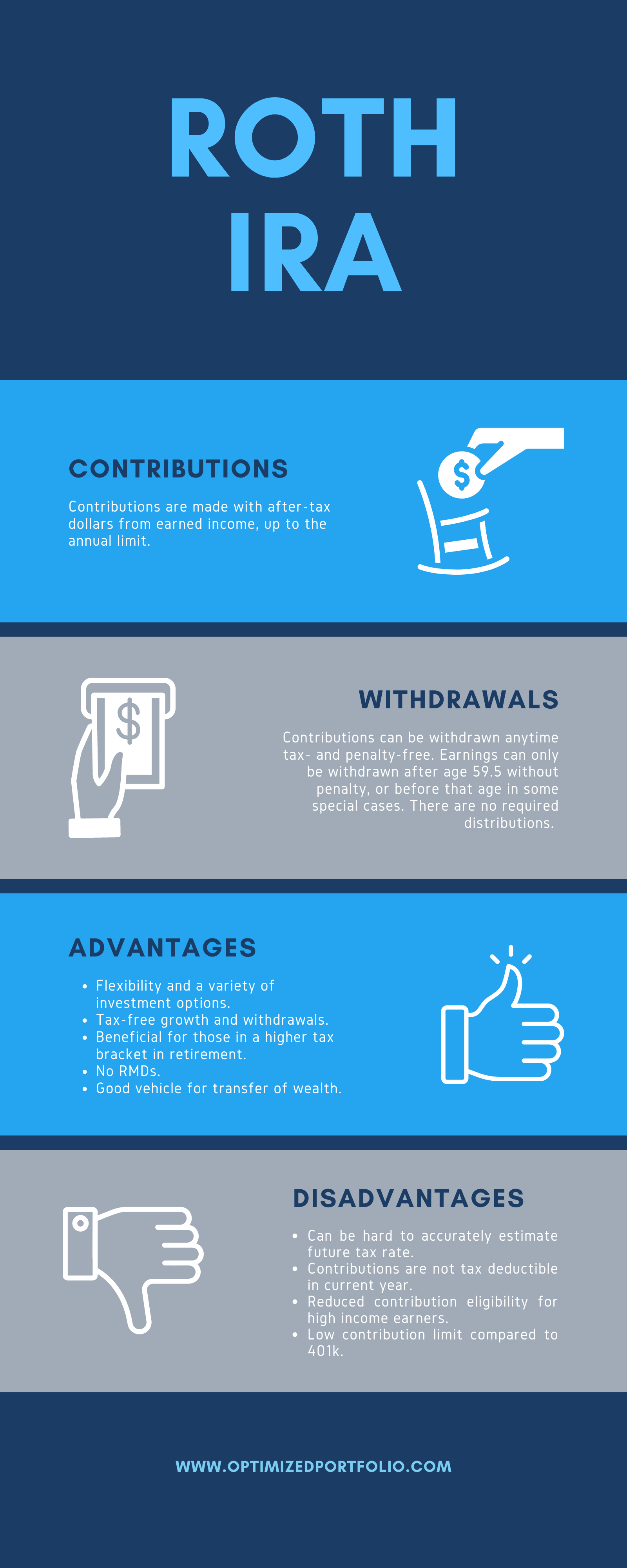
The most significant advantage of a Roth IRA is the tax treatment. Your contributions are made with after-tax dollars, meaning you don’t get an immediate tax deduction like with a traditional IRA. However, once those contributions are in, all qualified earnings grow and can be withdrawn tax-free in retirement, provided you’ve had the account for at least five years and are age 59½ or older. This tax-free growth, especially over decades, can lead to a substantial difference in your net wealth compared to taxable investment accounts. This makes it particularly advantageous to choose investments that are expected to generate significant long-term capital gains, as those gains will never be subject to taxes.
Self-Directed Investing within a Roth IRA
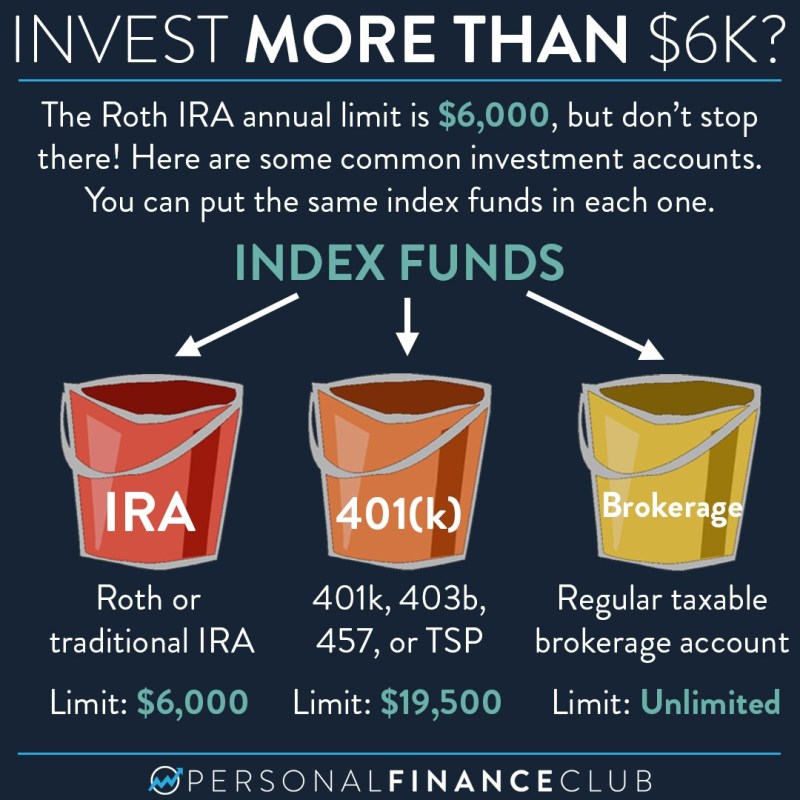
Unlike some employer-sponsored retirement plans (like 401(k)s) where the investment options are curated and sometimes limited by the plan administrator, a Roth IRA is typically a self-directed account. This means you, as the investor, are responsible for selecting the specific assets within the account. You choose whether to invest in stocks, bonds, mutual funds, exchange-traded funds (ETFs), or other assets. This autonomy requires a certain level of engagement and understanding, but it also offers the flexibility to tailor your portfolio precisely to your preferences and market outlook.
Choosing Your Brokerage Platform
The first practical step after deciding to open a Roth IRA is selecting a brokerage firm. These firms provide the platform through which you buy and sell investments. Major brokerage houses like Fidelity, Vanguard, Charles Schwab, and E*TRADE offer a wide array of investment products, research tools, and customer support. When choosing a broker, consider factors such as:
- Fees: Look for commission-free trading on stocks and ETFs, and low expense ratios on mutual funds.
- Investment Selection: Ensure they offer the types of investments you’re interested in.
- Research Tools: Access to quality research and analytical tools can be invaluable.
- Customer Service: Good support can be crucial, especially for newer investors.
- Minimums: Some platforms have minimum initial deposit requirements.
Your choice of brokerage will directly impact the ease and cost of implementing your investment strategy within your Roth IRA.
Core Investment Options for Your Roth IRA
With your Roth IRA established at a brokerage, the next critical step is populating it with investments. The range of options is broad, but certain asset classes are particularly well-suited for the long-term, tax-free growth objectives of a Roth IRA.
Low-Cost Index Funds and ETFs
These are often considered the backbone of a robust Roth IRA portfolio for good reason.
- Index Funds: These are mutual funds that aim to replicate the performance of a specific market index, such as the S&P 500 (tracking 500 of the largest U.S. companies) or a total stock market index (tracking thousands of U.S. companies). They offer instant diversification at a very low cost.
- Exchange-Traded Funds (ETFs): Similar to index funds in their diversification and low-cost approach, ETFs trade like stocks on an exchange throughout the day. They can track various indexes (stocks, bonds, commodities, sectors, international markets).
Why they are excellent for Roth IRAs:
- Diversification: By owning a broad market index fund or ETF, you’re investing in hundreds or thousands of companies, significantly reducing the risk associated with individual stock picking.
- Low Fees: Passive index funds and ETFs typically have very low expense ratios (annual fees), which compound over decades into substantial savings.
- Simplicity: They are easy to understand and manage, making them ideal for both beginners and experienced investors looking for a hands-off approach.
- Long-Term Growth: Historically, broad market indexes have provided strong long-term returns, perfectly aligning with the retirement savings goal of a Roth IRA.
Examples include Vanguard Total Stock Market Index Fund (VTSAX or VTI), SPDR S&P 500 ETF Trust (SPY), or iShares Core S&P 500 ETF (IVV).
Individual Stocks
For investors with a higher risk tolerance and an interest in specific companies, individual stocks can be held within a Roth IRA. Investing in individual stocks means buying shares of ownership in a single company.
- Potential for Higher Returns: A successful individual stock pick can outperform the broader market, leading to significant capital appreciation.
- Research Required: This approach demands thorough research into a company’s financials, industry, competitive landscape, and growth prospects.
- Higher Risk: Individual stocks carry higher risk than diversified funds. A single company’s poor performance can significantly impact your portfolio.
For a Roth IRA, holding individual stocks of companies you believe have strong long-term growth potential and which you’ve researched thoroughly can be highly rewarding, especially since all future capital gains will be tax-free. It’s often advisable to allocate a smaller portion of your Roth IRA to individual stocks while maintaining a diversified core.
Mutual Funds (Actively Managed)
While index funds are a type of mutual fund, traditional “actively managed” mutual funds involve a professional fund manager making buy and sell decisions with the goal of outperforming a specific benchmark.
- Professional Management: You’re paying for the expertise of a fund manager and their research team.
- Diversification: They offer diversification across many securities within a specific investment style or sector.
- Higher Fees: Actively managed funds typically have higher expense ratios than passive index funds, which can eat into long-term returns.
- Performance Risk: There’s no guarantee an active manager will outperform the market after fees. Many fail to do so over the long run.
For hands-off investors, especially those nearing retirement, target-date funds are a popular type of mutual fund. These funds automatically adjust their asset allocation over time, becoming more conservative as you approach a specific retirement year.
Bonds and Bond Funds
Bonds represent loans made to governments or corporations, which pay interest to the bondholder. Bond funds hold a portfolio of various bonds.
- Lower Volatility: Bonds are generally less volatile than stocks and can provide a stable income stream, making them a good diversifier, especially as retirement approaches.
- Capital Preservation: They can help preserve capital during stock market downturns.
- Lower Returns: Historically, bonds offer lower returns than stocks over the long term.

Including bonds or bond funds in your Roth IRA can help moderate overall portfolio risk, which becomes more important as your time horizon shortens and capital preservation becomes a higher priority.
Real Estate Investment Trusts (REITs)
REITs are companies that own, operate, or finance income-producing real estate across a range of property sectors. They trade on stock exchanges, offering a way to invest in real estate without directly owning physical properties.
- Real Estate Exposure: Provides diversification and exposure to the real estate market.
- Income Potential: Many REITs pay high dividends, as they are required to distribute at least 90% of their taxable income to shareholders annually.
- Liquidity: Unlike direct real estate ownership, REIT shares are highly liquid.
For a Roth IRA, REITs can offer a unique blend of growth and income, and their dividends, if reinvested, benefit from the tax-free growth environment.
Crafting Your Roth IRA Investment Strategy
Choosing what to invest in is only part of the equation; developing a coherent strategy is equally important. Your strategy should be personal, dynamic, and forward-looking.
Assess Your Risk Tolerance
This is perhaps the most crucial first step. How comfortable are you with the potential for your investments to fluctuate in value, including significant drops?
- High Risk Tolerance: You might be comfortable with a larger allocation to stocks and more volatile assets, understanding that short-term losses are possible for greater long-term gains.
- Low Risk Tolerance: You might prefer a more conservative portfolio with a higher allocation to bonds and less volatile assets, even if it means potentially lower returns.
Your risk tolerance isn’t just about emotions; it’s also about your financial situation. Can you afford to lose a portion of your capital in the short term without it jeopardizing your immediate needs?
Determine Your Time Horizon
The time horizon refers to how long you plan to invest before you need to access the money. For a Roth IRA, this is typically until retirement.
- Long Time Horizon (e.g., 20+ years until retirement): You can afford to be more aggressive, leaning heavily into growth-oriented investments like stocks, as there’s ample time to recover from market downturns.
- Short Time Horizon (e.g., 5-10 years until retirement): A more conservative approach might be warranted, gradually shifting towards income-generating and less volatile assets like bonds to preserve capital.
A longer time horizon allows you to ride out market cycles and fully harness the power of compounding.
Asset Allocation and Diversification
Asset allocation is the process of dividing your investment portfolio among different asset categories, such as stocks, bonds, and cash. Diversification means spreading your investments within those categories to reduce risk.
- Strategic Asset Allocation: This involves setting target percentages for various asset classes based on your risk tolerance and time horizon (e.g., 80% stocks, 20% bonds).
- Rebalancing: Periodically (e.g., annually), you should rebalance your portfolio to bring it back to your target allocation. If stocks have performed exceptionally well, you might sell some stock funds and buy bond funds to return to your desired percentages. This helps manage risk and ensures you’re not overexposed to any single asset class.
Diversification across different industries, geographies, and company sizes (large-cap, mid-cap, small-cap) further enhances risk mitigation.
The Role of Compounding and Regular Contributions
The power of a Roth IRA is dramatically amplified by compounding interest and consistent contributions. Compounding is the process where the earnings from your investments generate their own earnings. The earlier you start and the more consistently you contribute, the more time your money has to grow exponentially, tax-free.
- Start Early: Even small, consistent contributions made early in your career can grow into a substantial sum over decades.
- Max Out Contributions: If possible, aim to contribute the maximum allowable amount to your Roth IRA each year to fully leverage its tax advantages.
- Dollar-Cost Averaging: By investing a fixed amount regularly (e.g., monthly), you buy more shares when prices are low and fewer when prices are high. This strategy, known as dollar-cost averaging, can reduce the impact of market volatility and often leads to a lower average cost per share over time.
Practical Considerations and Next Steps
Building a successful Roth IRA portfolio is an ongoing process that requires diligence and occasional adjustments.
Research and Due Diligence
Never invest in something you don’t understand. Take the time to research any investment before committing your capital.
- Understand the Fundamentals: What does the company do? How does the fund operate? What are the underlying assets?
- Review Performance History (with caution): Past performance is not indicative of future results, but it can provide context.
- Check Fees: High fees can erode returns significantly over the long term.
Monitor and Adjust Your Portfolio
Your investment strategy shouldn’t be set in stone.
- Periodically Review: At least once a year, review your portfolio’s performance, your asset allocation, and ensure it still aligns with your goals and risk tolerance.
- Life Changes: Major life events (marriage, children, new job, nearing retirement) might necessitate adjustments to your investment strategy.
- Market Shifts: While you shouldn’t react to every market fluctuation, significant economic or market shifts might warrant a thoughtful re-evaluation of your holdings.
Seek Professional Advice
While self-directed investing is powerful, there’s no shame in seeking guidance.
- Financial Advisor: A qualified financial advisor can help you define your goals, assess risk, create a personalized investment plan, and keep you on track.
- Fee-Only Advisors: Consider fee-only advisors who don’t earn commissions on products, ensuring their advice is solely in your best interest.
Stay Disciplined and Avoid Emotional Investing
The most successful long-term investors are often those who stay disciplined through market ups and downs.
- Don’t Panic Sell: Market corrections are normal. Reacting emotionally by selling during a downturn can lock in losses and prevent you from participating in the eventual recovery.
- Stick to Your Plan: Develop a solid investment plan and stick to it, even when headlines are scary or market euphoria tempts you to chase hot stocks.
In conclusion, a Roth IRA is an invaluable tool for retirement savings, offering unparalleled tax benefits on growth and withdrawals. The flexibility it provides in choosing investments allows you to tailor a portfolio that truly reflects your individual goals, risk tolerance, and time horizon. By focusing on low-cost, diversified investments like index funds and ETFs, selectively choosing individual stocks or other assets, and maintaining a consistent, disciplined approach, you can harness the full potential of your Roth IRA to build substantial tax-free wealth for a secure and comfortable retirement. Start today, stay informed, and commit to your financial future.
aViewFromTheCave is a participant in the Amazon Services LLC Associates Program, an affiliate advertising program designed to provide a means for sites to earn advertising fees by advertising and linking to Amazon.com. Amazon, the Amazon logo, AmazonSupply, and the AmazonSupply logo are trademarks of Amazon.com, Inc. or its affiliates. As an Amazon Associate we earn affiliate commissions from qualifying purchases.