
In the realm of personal finance, travel is often viewed as a significant discretionary expense that can disrupt even the most disciplined budget. However, viewed through the lens of strategic financial management, the quest for cheap airline tickets is not merely about finding a “deal,” but about mastering market arbitrage, understanding the economics of the aviation industry, and leveraging financial tools to maximize the value of every dollar spent.
Securing affordable airfare requires a shift from passive consumerism to active financial strategy. By treating airfare acquisition as a form of investment optimization, travelers can unlock premium experiences for a fraction of the market price, ensuring that their personal capital is preserved for long-term wealth building or further lifestyle enhancements.

The Financial Architecture of the Airline Industry
To understand where to find cheap airline tickets, one must first understand the pricing algorithms that govern the industry. Airline pricing is a masterpiece of dynamic yield management. Unlike a retail store where a shirt has a fixed price until it goes on clearance, airline seats are “perishable inventory.” Once a flight departs, any empty seat represents a 100% loss of potential revenue for that asset.
Understanding Dynamic Pricing and Yield Management
Airlines utilize sophisticated algorithms that adjust prices in real-time based on demand, historical data, and competitor pricing. This is known as yield management. For the financially savvy traveler, this means that the “price” of a ticket is a fluid concept. To capitalize on this, one must identify the periods of low demand where the airline is more willing to lower prices to cover their marginal costs.
The Concept of Error Fares and System Glitches
From a financial perspective, error fares represent a rare opportunity for significant arbitrage. These occur when an airline or a Global Distribution System (GDS) incorrectly inputs a fare—for example, listing a $1,200 flight for $120 due to a currency conversion error or a misplaced decimal point. While these are becoming rarer due to improved software, monitoring sites like Secret Flying or Scott’s Cheap Flights (now Going) allows a traveler to capitalize on these high-ROI opportunities before the airline corrects the mistake.
Optimizing Your Capital: The Power of Credit Card Rewards and Points
In the modern financial landscape, the cheapest airline ticket is often the one paid for with points rather than cash. “Travel hacking,” a subset of personal finance, involves the strategic accumulation and redemption of credit card rewards to offset travel costs.
The ROI of Sign-Up Bonuses
The most efficient way to acquire “cheap” tickets is through the strategic acquisition of credit card sign-up bonuses (SUBs). By opening a new credit card and meeting a minimum spending requirement that aligns with existing expenses (such as rent, groceries, or business costs), a consumer can earn enough points for an international round-trip flight. When the value of the points earned is weighed against the annual fee of the card, the “effective cost” of the flight often drops by 80% or more.
Point Valuation and Transfer Partners
Not all points are created equal. To maximize financial efficiency, travelers should focus on “transferable currencies” offered by major financial institutions like American Express, Chase, or Capital One. These points can be transferred to various airline loyalty programs. For example, transferring 60,000 points to a partner airline to book a flight that retails for $1,500 yields a valuation of 2.5 cents per point. This is a significantly higher return on investment than redeeming those same points for a statement credit at a standard rate of 1 cent per point.
The Role of Business Credit in Travel Funding
For entrepreneurs and side-hustlers, business credit cards offer an even greater avenue for cheap travel. Business cards often have higher spending limits and larger bonuses, and the points earned are typically categorized as non-taxable rebates on business expenses. This creates a powerful synergy where business operations fund personal luxury travel, effectively removing airfare from the personal budget entirely.
Strategic Booking Windows and Market Timing
Timing the market is a controversial strategy in stock investing, but in the world of airfare, timing is a measurable variable that can lead to substantial savings.

The “Goldilocks Window” for Domestic and International Travel
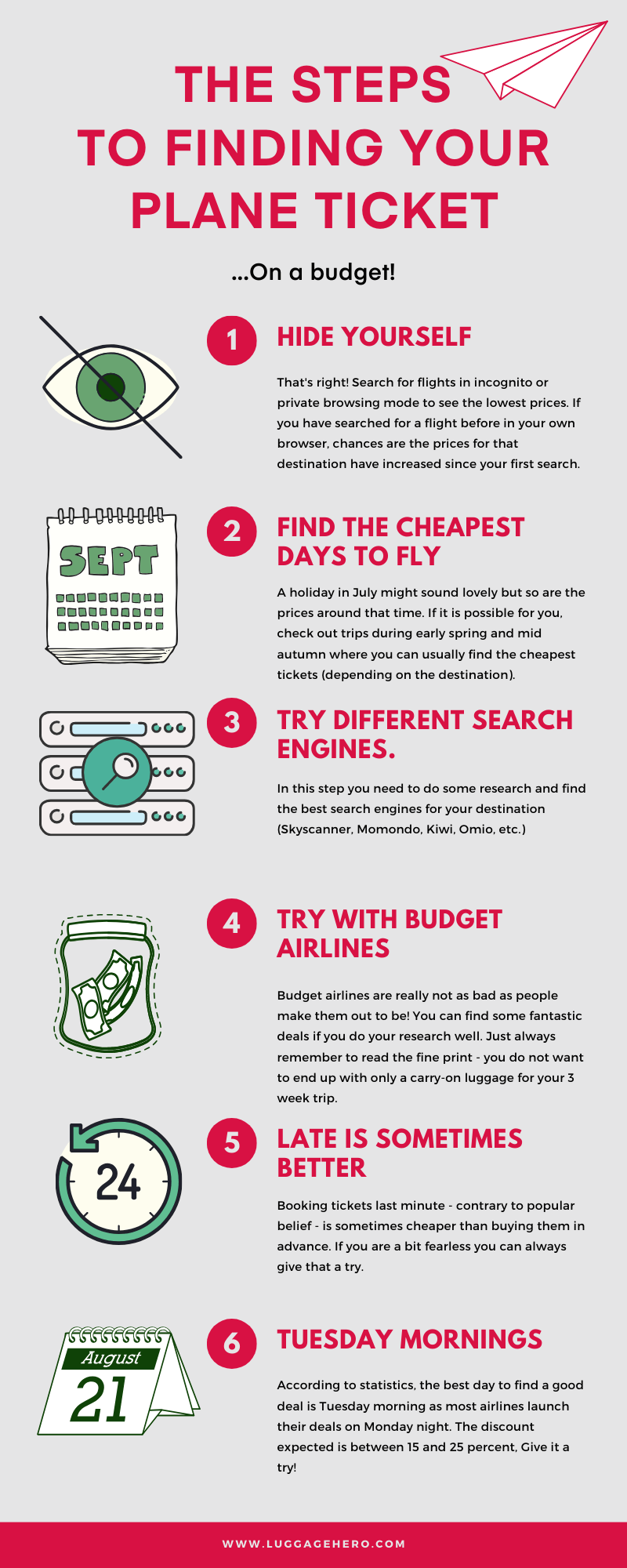
Data from financial analysts in the travel sector suggests that there is a “Goldilocks window”—not too early and not too late—where prices are at their statistical low. For domestic flights within the same continent, this window is typically 1 to 3 months before departure. For international long-haul flights, the window expands to 2 to 8 months. Booking outside these windows usually results in paying a “convenience premium” (for last-minute bookings) or an “uncertainty premium” (for booking too far in advance when schedules are not yet optimized).
Seasonal Arbitrage and the Shoulder Season
Market volatility in the airline industry is heavily dictated by the calendar. The most expensive tickets are sold during “peak” times (holidays and school breaks). To find the cheapest tickets, one must practice seasonal arbitrage—traveling during the “shoulder season.” This is the period between peak and off-peak seasons. By traveling in late September or early May, for instance, a traveler can often find fares that are 40-60% cheaper than those in July or December, while still enjoying favorable weather and fewer crowds.
The Tuesday/Wednesday Myth vs. Reality
There is a persistent myth in personal finance circles that booking on a Tuesday at midnight leads to cheaper fares. Modern data suggests this is largely obsolete. While the flight itself might be cheaper if it departs on a Tuesday or Wednesday (mid-week travel), the act of booking can happen any day. The key is to use price tracking tools that alert you to fluctuations regardless of the day of the week.
Digital Arbitrage: Using Comparison Tools and Hidden Gems
The digital economy has provided consumers with powerful tools to compare prices across hundreds of vendors simultaneously. Utilizing these tools is essential for any financial plan involving travel.
Leveraging Aggregators and Meta-Search Engines
Google Flights is arguably the most powerful financial tool for airfare. Its ability to show a price grid and a price graph allows the user to see exactly how much they can save by shifting their travel dates by just a day or two. Other aggregators like Skyscanner or Momondo often search smaller, regional “Online Travel Agencies” (OTAs) that might have access to private fares not listed on the airline’s own website.
Hidden City Ticketing: A High-Risk, High-Reward Strategy
“Hidden city ticketing” (or skiplagging) is a controversial but effective method of digital arbitrage. This occurs when a traveler finds a flight with a layover in their actual destination that is cheaper than a direct flight to that destination. For example, a flight from New York to Dallas might be $300, but a flight from New York to Los Angeles with a layover in Dallas might be $150. The traveler simply exits the airport in Dallas. While this can lead to significant savings, it comes with financial risks, such as the airline canceling the return leg of the trip or banning the traveler from their loyalty program. It is a strategy that requires a deep understanding of airline Terms of Service.
The Budget Carrier Breakdown: Analyzing Total Cost of Ownership
When looking for cheap tickets, low-cost carriers (LCCs) like Spirit, Ryanair, or AirAsia often appear as the winners. However, a savvy financial mind must calculate the “Total Cost of Ownership” (TCO) for that ticket. Once you add fees for carry-on bags, seat selection, and boarding passes, an LCC can sometimes be more expensive than a legacy carrier. Always run a full-cost analysis before assuming the lowest “sticker price” is the best deal.
Managing Hidden Costs and Protecting Your Investment
Finding a cheap ticket is only half the battle; the other half is ensuring that unexpected costs don’t inflate your travel budget after the purchase.
Foreign Transaction Fees and Currency Conversion
When booking on international sites to find cheaper fares, always use a credit card with no foreign transaction fees. Additionally, always choose to pay in the “local currency” of the airline’s home country. If you allow the website to convert the price to your home currency, they will almost always use an unfavorable exchange rate, adding a hidden 3-5% markup to the cost of your “cheap” ticket.
The Financial Utility of Travel Insurance
From a risk management perspective, a cheap ticket can become very expensive if your plans change and the ticket is non-refundable. For high-value international trips, purchasing travel insurance or using a credit card that offers built-in trip cancellation protection is a vital hedge. This ensures that your capital is protected against unforeseen circumstances, allowing you to re-allocate those funds if the trip is canceled.
Maximizing the 24-Hour Refund Rule
In the United States, the Department of Transportation mandates that for any flight booked at least seven days before departure, the airline must allow the consumer to cancel the booking within 24 hours without penalty. This allows for a “lock-in” strategy: if you see a great price, book it immediately to hold the fare, and use the next 24 hours to finalize your plans or check for even better deals.
By applying these financial principles—leveraging credit rewards, understanding market cycles, and utilizing digital arbitrage—the question of “where to get cheap airline tickets” moves from a matter of luck to a matter of calculated strategy. Travel, when managed with the same rigor as an investment portfolio, becomes an accessible luxury rather than a financial burden.
aViewFromTheCave is a participant in the Amazon Services LLC Associates Program, an affiliate advertising program designed to provide a means for sites to earn advertising fees by advertising and linking to Amazon.com. Amazon, the Amazon logo, AmazonSupply, and the AmazonSupply logo are trademarks of Amazon.com, Inc. or its affiliates. As an Amazon Associate we earn affiliate commissions from qualifying purchases.