
In the intricate world of personal finance, understanding the fundamental components of your banking operations is paramount. While digital banking has streamlined many financial tasks, the humble paper check still holds significant relevance for various transactions, from receiving paychecks via direct deposit to paying bills or sending money. At the heart of a check’s functionality lies a critical piece of information: your bank account number. Often required for setting up direct deposits, automatic payments, or linking external financial accounts, knowing precisely where to locate this number—and understanding its significance—is an essential aspect of financial literacy. This guide will demystify the structure of a check, walk you through exactly where to find your account number, and explore other reliable methods to access this vital information, all while emphasizing the importance of protecting your financial details.
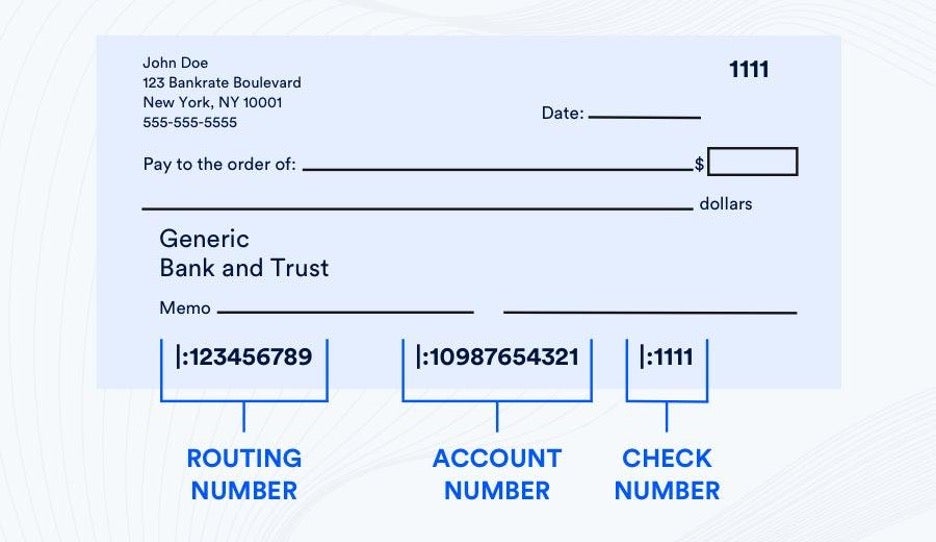
Deciphering the Anatomy of a Check: The MICR Line
Before we pinpoint your account number, it’s crucial to understand the foundational elements of a check. Every standard check features a unique series of numbers printed at the bottom, known as the MICR line. This line is the backbone of check processing, enabling banks to quickly and accurately process transactions.
What is the MICR Line?
MICR stands for Magnetic Ink Character Recognition. This technology uses specialized ink containing magnetic particles, allowing machines to read the numbers even if they are obscured by stamps or smudges. The MICR line is designed for automated processing, ensuring that checks can be sorted and cleared efficiently through the banking system. It’s distinct from regular printing and is critical for the seamless flow of funds. Without it, manual processing would be incredibly slow and prone to errors.
The Three Key Components: Routing, Account, and Check Numbers
The MICR line is not a single, undifferentiated string of digits. Instead, it is precisely structured into three distinct numerical segments, each serving a unique purpose in the financial ecosystem. Understanding these components is the first step to confidently identifying your account number.
-
The Routing Number (Bank Identifier): This is typically the first set of nine digits on the far left of the MICR line. The routing number serves as an identification code for your bank or financial institution. It tells the banking system which bank to send the funds to or pull funds from. Think of it as the bank’s address within the financial network. Each bank has one or more routing numbers, depending on its size and the states it operates in.
-
The Account Number (Your Specific Account Identifier): Following the routing number, usually in the middle section of the MICR line, is your bank account number. This sequence of numbers uniquely identifies your specific account within your bank. It tells the banking system which specific individual or entity’s account the funds are intended for. Account numbers can vary in length, typically ranging from 10 to 12 digits, but this can differ slightly between institutions. This is the number you are most likely searching for when setting up direct deposits or other account-linking services.
-
The Check Number (Sequential Document Identifier): The final set of numbers on the far right of the MICR line is the check number. This number matches the pre-printed check number found in the upper right-hand corner of the check (and sometimes also on the stub). Its purpose is to help you and your bank keep track of individual checks issued from your account, aiding in record-keeping and reconciliation.
Why the MICR Line is Crucial for Transactions
The integrated design of the MICR line allows for highly efficient and secure processing of checks. When you write a check, the information embedded in this line facilitates the movement of money from your account to the recipient’s account. This automated system minimizes human error, speeds up transaction times, and helps prevent fraud by standardizing the identification of banks and accounts involved in a transaction. Any error in transcribing these numbers can lead to delayed payments, returned checks, or even funds being directed to the wrong account, underscoring the importance of accuracy when providing your account details.
Pinpointing Your Account Number on a Standard Check
With a foundational understanding of the MICR line, locating your account number becomes straightforward. While checks may have varying designs, the placement of these critical numbers is largely standardized across financial institutions.
Locating the Account Number
On a typical personal or business check, your account number will be the middle series of digits found in the MICR line at the bottom.
Let’s visualize it:
- [9-digit Routing Number] [Your Account Number] [3 or 4-digit Check Number]
Often, the routing number is preceded and followed by a specific symbol (e.g., transit symbol ⑆). The account number might also have symbols around it (e.g., ⑈). However, for practical purposes, identifying the distinct segments by their position (left, middle, right) is usually sufficient. The account number is the most variable in length among the three, but its central position on the MICR line is consistent.
Differentiating Your Account Number from the Check Number
One common source of confusion for individuals is mistaking the account number for the check number, or vice versa. It’s vital to distinguish between them due to their different functions.
-
Account Number: This is the identifier for your entire bank account. It allows money to be directly deposited into or withdrawn from your specific account.
-
Check Number: This is the identifier for that specific physical check document. It helps you track which check you’ve written, but it does not identify your bank account itself for electronic transfers.
Remember, the check number is typically shorter than the account number and always appears in two locations: in the upper right-hand corner of the check and as the last series of digits on the far right of the MICR line. If you are asked for your account number for a direct deposit, do not provide the check number.
Variations in Check Layouts
While the order of the routing number, account number, and check number on the MICR line is standard, the exact visual spacing or the presence of specific symbols might vary slightly between banks or check printing services. Some checks might use different symbols to separate the number groups, while others might have the numbers slightly closer or further apart. However, the fundamental structure—routing on the left, account in the middle, and check number on the right—remains consistent. If you ever have doubt, compare the last set of numbers on the MICR line to the check number printed in the top right corner; they should match, confirming the placement of the check number and, by extension, your account number.
Beyond the Physical Check: Other Ways to Find Your Account Number
While a physical check is the most direct source for your account number, there are numerous other convenient and secure ways to access this information, especially in our increasingly digital financial landscape.
Online Banking Portals and Mobile Apps
For most people, online banking platforms and mobile apps are the quickest and easiest way to find their account number without needing a physical check.
-
Online Banking: After logging into your bank’s website, navigate to the specific account you need information for (e.g., “Checking Account”). Look for sections like “Account Details,” “Account Summary,” “Statements,” or “Direct Deposit Information.” Your account number, along with your routing number, is almost always listed there. Some banks might require an additional security step (like a one-time password) to display sensitive information.
-
Mobile Apps: Bank mobile apps typically offer similar functionality. Log in, select your account, and look for an option to view “Account Info,” “Details,” or “Statements.” Many apps even have a dedicated section for “Direct Deposit Info” where both your routing and account numbers are clearly displayed, often with a convenient copy function.
Bank Statements (Paper and Digital)
Your bank statement, whether received by mail or accessed digitally, is another reliable source for your account number.
-
Paper Statements: If you still receive paper statements, your full account number is usually prominently displayed at the top of the statement or within the account summary section.
-
Digital Statements: Accessing digital statements through your online banking portal or mobile app provides the same information. You can often download these statements as PDFs, making it easy to reference or print.

Contacting Your Bank Directly
If you don’t have access to checks, online banking, or statements, or if you prefer direct assistance, contacting your bank is always an option.
-
Phone Support: Call your bank’s customer service line. Be prepared to verify your identity through a series of security questions, which may include your full name, address, date of birth, Social Security number, or answers to security questions you’ve set up. Once your identity is confirmed, the representative can provide your account number.
-
In-Person Visit: Visit a local branch of your bank. A teller or customer service representative can provide your account number. Remember to bring a valid form of identification, such as a driver’s license or passport, to verify your identity.
Deposit Slips
When you make a cash or check deposit at a bank, you often use a deposit slip. These slips are pre-printed with your routing and account numbers at the bottom, just like a check. If you have any unused deposit slips, they can serve as a quick reference for your account details.
The Importance of Knowing Your Account Number and How to Protect It
Beyond simply knowing where to find it, understanding why your account number is important and how to safeguard it are crucial aspects of responsible personal finance. This sensitive piece of information, when combined with your routing number, forms the bedrock of most electronic financial transactions.
When You Need Your Account Number
Your account number is frequently requested for a variety of legitimate financial activities:
-
Direct Deposit Setup: This is perhaps the most common reason. Employers, government agencies (for tax refunds or benefits), and other income sources require your routing and account numbers to automatically deposit funds into your account.
-
Automatic Bill Payments (ACH Transfers): To set up recurring payments for utilities, loans, credit cards, or subscription services directly from your bank account, you will typically provide your routing and account numbers. This method is often preferred over debit card payments due to lower transaction fees for the merchant and stable account details (unlike card numbers which change upon expiry or reissuance).
-
Wire Transfers or ACH Transfers (Sending Money): If you need to send money directly from your bank account to someone else’s, particularly for larger sums or international transfers, you’ll need the recipient’s routing and account numbers, and they will need yours to send money to you.
-
Linking External Accounts: Many investment platforms, budgeting apps, or other financial services require you to link your primary bank account by providing your routing and account numbers. This allows for seamless transfers between institutions.
-
Tax Refunds: The IRS offers direct deposit for tax refunds, requiring your account details for efficient and secure delivery of your refund.
Security Best Practices: Protecting Your Financial Information
Given the utility and sensitivity of your account number, protecting it from unauthorized access is paramount to preventing financial fraud and identity theft.
-
Shred Old Checks and Statements: Never simply throw away old checks, deposit slips, or bank statements. These documents contain your full account number and other sensitive data. Always shred them thoroughly before discarding.
-
Be Wary of Sharing: Only share your account number with trusted institutions or individuals for legitimate purposes. Be extremely cautious about sharing it over unsecured channels, such as unencrypted emails or social media messages.
-
Use Strong Passwords for Online Banking: Ensure your online banking accounts are protected by strong, unique passwords and, where available, enable two-factor authentication (2FA) for an extra layer of security.
-
Monitor Account Activity Regularly: Periodically review your bank statements and online transaction history for any suspicious or unauthorized activity. Report discrepancies to your bank immediately.
-
Phishing Awareness: Be skeptical of unsolicited emails, texts, or calls asking for your bank account details. Banks will rarely ask for this information directly via email or text. Always verify the sender or caller’s identity.
Recognizing and Avoiding Common Scams
Scammers frequently attempt to trick individuals into divulging their bank account information. Be aware of common tactics:
-
Impersonation Scams: Scammers might pretend to be from your bank, the IRS, a utility company, or a familiar business, claiming there’s an issue with your account or a refund due. They then ask for your bank details “to resolve the problem.”
-
Prize/Lottery Scams: You might be told you’ve won a large sum of money but need to provide your bank account details to receive the funds, often under the guise of paying “taxes” or “fees.”
-
“Overpayment” Scams: A common check fraud scheme where a scammer sends a check for more than the agreed amount and asks you to deposit it and wire back the “overpayment” using your account number. The original check later bounces, leaving you responsible for the wired amount.
Always remember: if an offer seems too good to be true, or if you feel pressured to provide sensitive information, it’s likely a scam. When in doubt, contact the organization directly using a verified phone number or website, not through the contact information provided by the potential scammer.
Common Misconceptions and Troubleshooting
Despite the standardized nature of banking information, certain aspects can still lead to confusion. Addressing these misconceptions and outlining troubleshooting steps can further empower you in managing your finances.
Confusing Account Number with Debit Card Number
A significant point of confusion for many is the distinction between a bank account number and a debit card number. While both are associated with your funds, they serve entirely different functions and should not be used interchangeably.
-
Debit Card Number: This is the 16-digit number printed on the front of your debit card. It is linked to your bank account but is primarily used for transactions processed through card networks (Visa, Mastercard, etc.) at point-of-sale terminals, online retailers, or ATMs. It also includes an expiration date and a CVV (Card Verification Value) for online security.
-
Bank Account Number: As discussed, this is the number used for direct bank-to-bank transfers (ACH transactions, wire transfers). It does not have an expiration date or CVV and is not used for swiping or tapping at a merchant.
Never provide your debit card number when a bank account number is requested, and vice-versa. Using the wrong number can lead to failed transactions or, worse, expose you to different types of fraud.
What to Do if You Can’t Find It
Even with all the guidance, there might be times when you simply cannot locate your account number. Don’t panic.
-
Re-check all your physical documents: Look through your checkbook, any old deposit slips, and recent bank statements.
-
Access your online banking: Log into your bank’s website or mobile app. This is often the most reliable digital method.
-
Call customer service: If digital methods fail, call your bank’s customer service number. They are equipped to help you after verifying your identity.
-
Visit a branch: For absolute certainty or if other methods are inaccessible, a trip to your local branch with proper identification will resolve the issue.
It’s important to keep a record of your bank’s customer service number and know where your nearest branch is located for such instances.

Business vs. Personal Checks: Any Differences?
From the perspective of finding your account number, there are generally no significant differences between business checks and personal checks. Both types of checks adhere to the same MICR line standards. The routing number, account number, and check number will be found in the same respective positions on the bottom of the check.
The main differences between business and personal checks are typically:
-
Design and Layout: Business checks often have more space for company logos, addresses, and sometimes additional fields for invoice numbers or memo lines.
-
Signatories: Business checks may require multiple authorized signatures, or specific titles alongside the signature.
-
Account Type: They are drawn from a business checking account, which may have different fee structures, transaction limits, and services compared to a personal checking account.
Regardless of whether it’s a personal or business account, the fundamental method for identifying your account number on the MICR line remains unchanged.
In conclusion, understanding where to find your bank account number on a check is more than just a trivial detail; it’s a foundational element of sound personal finance management. By familiarizing yourself with the structure of the MICR line, knowing how to access this information through various channels, and diligently protecting your financial data, you can navigate your banking needs with confidence, security, and peace of mind. Empowering yourself with this knowledge is a critical step towards greater financial autonomy and safeguarding your assets in an increasingly interconnected world.
aViewFromTheCave is a participant in the Amazon Services LLC Associates Program, an affiliate advertising program designed to provide a means for sites to earn advertising fees by advertising and linking to Amazon.com. Amazon, the Amazon logo, AmazonSupply, and the AmazonSupply logo are trademarks of Amazon.com, Inc. or its affiliates. As an Amazon Associate we earn affiliate commissions from qualifying purchases.