
Changing your name is a significant life event, often accompanying milestones such as marriage, divorce, or a personal legal name change. While the emotional and logistical aspects of such a transition are numerous, one critical area that often gets overlooked, or postponed, is updating your financial identity. Specifically, ensuring your bank account reflects your new legal name is not just a mere administrative task; it’s a fundamental step in maintaining financial security, preventing future complications, and ensuring seamless access to your funds and services.
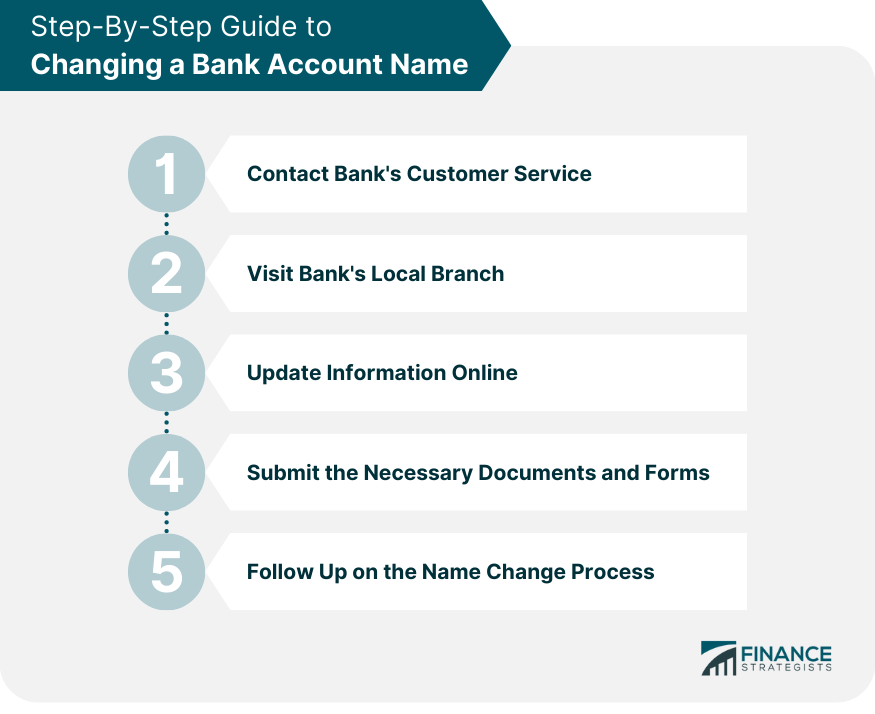
This guide provides a detailed walkthrough of the process, outlining the necessity, required documents, step-by-step procedures, and specific considerations to help you navigate updating your name on your bank account with confidence and ease. By proactively managing this change, you safeguard your financial well-being and ensure all your financial dealings accurately represent your legal identity.
Understanding the Necessity of a Name Change on Your Bank Account
The request to change your name on a bank account might seem like a simple paperwork exercise, but it carries significant weight within the financial system. It’s more than just aesthetics; it’s about legal compliance, identity verification, and maintaining the integrity of your financial records.
Legal Implications and Identity Verification
Financial institutions operate under strict regulatory frameworks, notably “Know Your Customer” (KYC) and Anti-Money Laundering (AML) laws. These regulations mandate that banks accurately identify and verify their account holders. When your legal name changes, your bank needs to update its records to align with your current legal identity. Failure to do so can lead to discrepancies that trigger red flags within their compliance systems, potentially causing your account to be flagged, frozen, or even closed. This isn’t punitive; it’s a measure designed to prevent identity theft, fraud, and illicit financial activities, protecting both you and the institution. Your bank account is the cornerstone of your financial life, and its accuracy is paramount for legal adherence.
Impact on Transactions and Financial Services
An outdated name on your bank account can create a ripple effect across various financial transactions and services, leading to inconvenient, and sometimes costly, disruptions. Imagine trying to cash a cheque made out to your new name when your bank account still reflects your old one, or conversely, depositing a cheque with your old name after your account has been updated. These mismatches can lead to delays or rejection of funds.
Furthermore, many other financial services are linked to your primary bank account name. This includes:
-
Direct Deposits: Paycheques, government benefits, or tax refunds might be delayed or rejected if the name on the payment doesn’t precisely match the name on your bank account.
-
Automated Payments and Withdrawals: Recurring bill payments or automatic withdrawals set up under your old name might fail.
-
Credit and Debit Cards: Your existing cards will carry your old name, and new ones will need to be issued. More critically, credit checks performed by other lenders for loans or mortgages will pull information linked to your current legal name, which might not match your bank’s records, causing verification issues.
-
Loans and Mortgages: When applying for credit, lenders cross-reference your identity across multiple financial accounts. Inconsistencies can delay or even jeopardize loan approvals.
-
Investment Accounts: Brokerage accounts, IRAs, or 401(k)s often link back to your bank account for transfers. Name discrepancies can complicate these transactions.
Maintaining Financial Continuity
Beyond legal and transactional concerns, updating your name ensures seamless financial continuity. Your bank account is the central hub for your financial identity. Any discrepancy can cause administrative headaches, requiring you to spend valuable time explaining and rectifying issues that could have been avoided. Keeping your financial records current across all institutions simplifies your life, reduces stress, and ensures that your financial planning and day-to-day operations remain uninterrupted. It’s an investment in your peace of mind and financial efficiency.
Essential Documents Required for a Name Change
To successfully change your name on a bank account, you’ll need to provide specific documentation that legally verifies your identity and the reason for your name change. Banks are meticulous about these requirements, so having everything in order before you visit or contact them will streamline the process.
Primary Identification Documents
Your bank will require current, government-issued photo identification that reflects your new legal name. This is crucial for verifying your identity against your updated information. Examples include:
-
Driver’s License or State ID: Must be current and show your new name.
-
Passport: A valid passport with your updated name is an excellent form of ID.
-
Permanent Resident Card (Green Card): If applicable, with your new name.
Ensure these documents are not expired. Some banks may require two forms of primary ID, so it’s always wise to bring an additional one if you have it.
Proof of Name Change
This is the legal document that officially validates your name change. The type of document depends on the reason for the change:
-
Marriage Certificate: If your name change is due to marriage. This must be the official certificate issued by the government, not a ceremonial copy.
-
Divorce Decree: If you are reverting to a maiden name or adopting a new name after a divorce. The decree must clearly state the name change or restoration.
-
Court Order for Legal Name Change: For any other legal name change that is not related to marriage or divorce, such as adopting a completely new name. This document must be issued by a court of law.
It’s imperative to bring the original document. Banks typically require sight of the original to verify its authenticity, although they will often make a copy for their records.
Supporting Bank Documents
While not always explicitly requested, having these on hand can facilitate the process by confirming your existing account details:
-
Existing Bank Statements: A recent statement can help locate your account quickly.
-
Debit/Credit Cards: Your current cards, even with the old name, link directly to your account.
-
Account Numbers: Knowing your account number(s) will speed up identification.
Additional Requirements
Some banks might have specific internal requirements:
-
Signature Verification: You may need to provide a new signature for your file, especially if your signature has changed along with your name. This often involves signing a new signature card.
-
Social Security Card (or equivalent): While not always required by the bank itself for a name change, you must update your Social Security Administration (SSA) records first. Most financial institutions will not change your name until your Social Security Number (SSN) is updated with your new name in the SSA database, as they often cross-reference this information. Therefore, ensure you have updated your SSN with the SSA and ideally bring your new Social Security card reflecting the updated name.
The Step-by-Step Process: Navigating Your Bank’s Procedures
The process for changing your name on a bank account is relatively standardized across most financial institutions, although minor variations may exist. Following these steps will help you navigate it efficiently.
Step 1: Notify Your Bank
The first step is to inform your bank of your intention to change your name.
-
In-Person Visit: This is often the most recommended method. Visit a local branch of your bank. It allows for direct interaction with a bank representative who can guide you through the process, verify documents on the spot, and answer any questions.
-
Phone Call: You can call your bank’s customer service line to inquire about their specific procedures and what documents they require. However, you will almost certainly still need to complete the actual change in person or by mail.
-
Online Portal/Secure Message: Some banks may allow you to initiate the request online or via secure message within your banking portal, but you will still need to submit physical documentation. Be prepared to be directed to a branch or to mail documents.
It’s crucial to confirm if you need an appointment for this service, especially for more complex situations or during busy periods.
Step 2: Gather and Present Documentation
Once you know the specific requirements, gather all necessary original documents as outlined in the previous section: your new government-issued photo ID, proof of name change (marriage certificate, divorce decree, or court order), and potentially your updated Social Security card.
-
Bring Originals: Banks require original documents for verification. They will typically make copies for their records and return your originals. Do not mail original irreplaceable documents unless explicitly instructed to do so with a secure, trackable method.
-
Be Prepared for Questions: The bank representative may ask clarifying questions about your name change and verify your identity.
Step 3: Complete Bank Forms
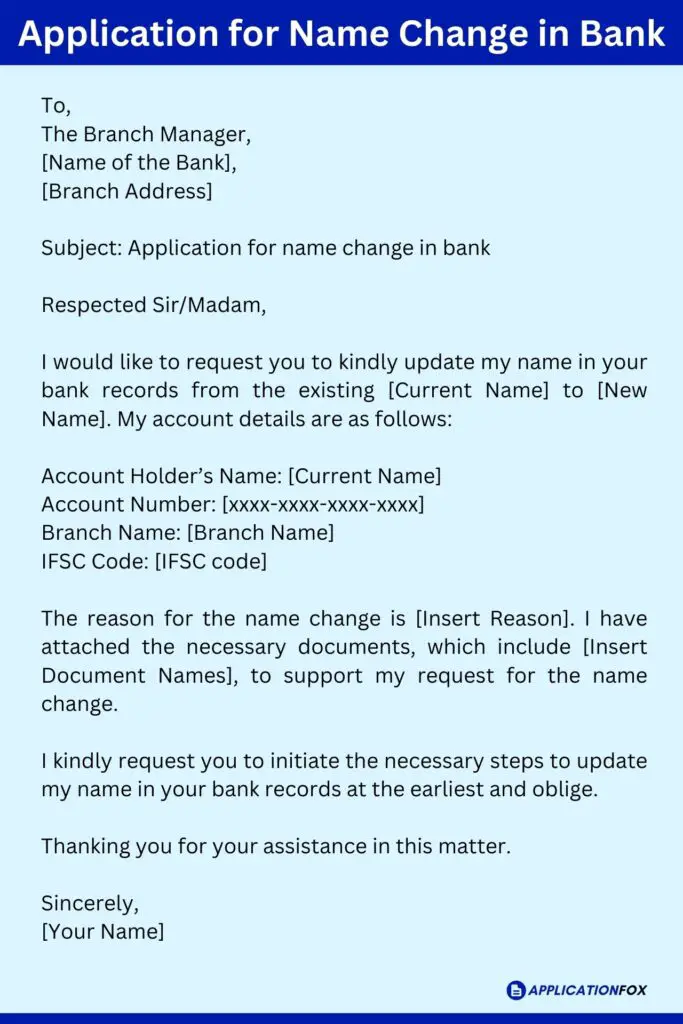
You will likely be asked to fill out one or more forms provided by the bank. These forms officially request the name change and may include:
-
Name Change Request Form: A specific form for updating personal details.
-
New Signature Card: If your signature has changed or if the bank requires an updated one for its records.
-
Consent Forms: For verifying information with third parties (like the Social Security Administration).
Fill out these forms accurately and legibly. A bank representative will usually be available to assist you if you have any questions.
Step 4: Verification and Processing Time
After submitting your documents and forms, the bank will process your request.
-
Internal Verification: The bank will verify your documents and update their internal systems. This might involve cross-referencing your information with government databases, especially the Social Security Administration.
-
Processing Time: The time it takes for the change to be fully reflected can vary. It might be immediate for some systems, while others (like ordering new checks or cards) can take several business days or even weeks. Ask the bank representative about the expected timeline.
-
Follow-Up: If you don’t see the changes reflected within the estimated timeframe, don’t hesitate to follow up with the bank. Keep a record of who you spoke with and when.
Step 5: Update Other Connected Accounts
Once your name change is complete at your bank, ensure all related services and products are updated:
-
New Debit/Credit Cards: Your old cards will have your previous name. New cards with your updated name will typically be ordered automatically.
-
New Cheques: Order new chequebooks with your updated name printed on them.
-
Online Banking Profile: Verify your name is updated in your online banking portal and any linked mobile apps.
-
Joint Accounts: If you have joint accounts, ensure your name change is reflected there as well. The other account holder may need to be present or provide separate consent depending on the bank’s policy.
Common Scenarios and Specific Considerations
While the general process remains consistent, certain scenarios come with unique considerations that are important to address.
Name Change Due to Marriage
This is perhaps the most common reason for a name change.
-
Documents: You will primarily need your official marriage certificate and your new government-issued photo ID (driver’s license, passport). Ensure your Social Security card is updated first, as many banks require this pre-condition.
-
Timing: It’s often recommended to update your Social Security card and driver’s license before heading to the bank, as these are primary forms of ID that need to reflect your new name.
-
Joint Accounts: If you’re combining finances or opening joint accounts, ensure the name change is coordinated across all relevant accounts.
Name Change Due to Divorce
Reverting to a maiden name or adopting a new name after a divorce requires specific documentation.
-
Documents: Your official divorce decree is essential. This document must clearly state that you are legally permitted to revert to your former name or adopt a new one. Again, an updated government-issued ID and Social Security card are critical.
-
Joint Accounts: Divorce often involves the separation of assets. If you have joint accounts with your ex-spouse, discuss with your bank how the name change impacts these accounts. You might need to close joint accounts and open new individual ones, or transfer funds, depending on your divorce settlement. Legal counsel is advisable for complex separations.
Legal Name Change (Court Order)
If your name change is a result of a direct court order (not related to marriage or divorce), the process is generally straightforward.
-
Documents: The official court order granting the name change is your primary proof. Alongside this, your updated government-issued ID and Social Security card are necessary.
-
Clarity: Ensure the court order is clear, unambiguous, and includes all necessary identifying information.
Joint Accounts
Changing a name on a joint account requires coordination, as it affects all account holders.
-
Presence of All Parties: Some banks may require all account holders to be present when a name change is processed, especially if the change is significant or impacts the account’s primary identification.
-
Consent: If not all parties can be present, the bank will likely require written and notarized consent from the absent account holder(s) or specific powers of attorney.
-
Communication: Open communication with co-owners of the account is vital to avoid any misunderstandings or service disruptions.
Online-Only Banks and Digital Processes
For online-only banks or those with a limited physical presence, the process might differ slightly but will still require physical document verification.
-
Mail-In Documents: You might be required to mail certified copies or original documents (via secure, trackable mail) to a central processing unit. Always confirm if originals are needed and the best way to send them.
-
Video Verification: Some modern digital banks might use video calls with a representative to verify your identity and documents.
-
Secure Uploads: While some banks allow secure uploads of scanned documents, they will often require further verification or a subsequent physical submission.
Always check the specific procedures of your online bank, as they can vary more widely than traditional brick-and-mortar institutions.
Post-Change Checklist: Ensuring a Smooth Transition
Once you’ve successfully updated your name on your bank account, the job isn’t quite finished. A few crucial steps remain to ensure complete financial consistency and avoid future issues.
Verify New Information
-
Bank Statements: When your next statement arrives (physical or electronic), carefully check that your new name is correctly displayed.
-
Online Portal/Mobile App: Log into your online banking and mobile app to confirm that your name has been updated across all linked accounts and profiles.
-
Transaction Confirmation: Perform a small transaction or inquiry to ensure full functionality under your new name.
Order New Cheques and Cards
-
Debit/Credit Cards: Most banks will automatically issue new debit cards with your updated name. Confirm this and follow up if they don’t arrive within the expected timeframe. If you have credit cards with the same bank, ensure new ones are issued for those as well.
-
Cheques: Order new chequebooks with your new name printed on them. Do not continue to use cheques with your old name, as they may be rejected or raise suspicion.
Inform Other Financial Institutions
Your bank account is just one piece of your financial puzzle. Ensure your new name is reflected everywhere else:
-
Credit Card Companies: Contact all credit card issuers.
-
Investment Firms: Update your name on brokerage accounts, retirement accounts (401k, IRA), and other investment portfolios.
-
Loan Providers: Inform student loan providers, mortgage lenders, and car loan companies.
-
Insurance Companies: Health, auto, home, and life insurance policies need to reflect your correct legal name.
Update Bills and Subscriptions
Prevent payment disruptions by updating your name and billing information with various service providers:
-
Utility Companies: Electricity, gas, water, internet, and phone providers.
-
Subscription Services: Streaming services, gym memberships, online software subscriptions.
-
Employers/Payroll: Ensure your employer has your new name for payroll, direct deposit, and tax documents (W-2s).
-
Government Agencies: Update with tax authorities (e.g., IRS in the US), passport agency, and driver’s license bureau if you haven’t already.
Review Credit Report
Within a few months, obtain a copy of your credit report from the major credit bureaus (Equifax, Experian, TransUnion). Verify that your new name is appearing correctly and consistently across all listed accounts. If you find any discrepancies, follow the procedures outlined by the credit bureau to dispute and correct the information. A consistent financial identity is crucial for your credit health.

Conclusion
Changing your name on your bank account is a pivotal step in affirming your new legal identity within the financial landscape. While it involves gathering documents and following specific procedures, the effort is well worth it to prevent potential headaches, ensure legal compliance, and maintain seamless access to your financial resources. By approaching this task systematically and proactively informing all relevant institutions, you secure your financial continuity and reinforce your personal financial integrity. Remember, your financial identity is as important as your personal one – keep it accurate, updated, and consistent.
aViewFromTheCave is a participant in the Amazon Services LLC Associates Program, an affiliate advertising program designed to provide a means for sites to earn advertising fees by advertising and linking to Amazon.com. Amazon, the Amazon logo, AmazonSupply, and the AmazonSupply logo are trademarks of Amazon.com, Inc. or its affiliates. As an Amazon Associate we earn affiliate commissions from qualifying purchases.