
In an era of market volatility and shifting interest rates, the search for stability often leads investors back to the fundamentals of personal finance. The Certificate of Deposit (CD) remains one of the most reliable pillars of a conservative investment strategy. As a low-risk, fixed-income product, a CD offers a guaranteed return over a specified period, making it an ideal choice for those looking to preserve capital while earning more than a standard savings account. However, knowing where to buy a CD is just as important as knowing why you should buy one. The landscape of financial institutions is vast, ranging from the bank on your corner to digital-only platforms and specialized brokerage houses.

Understanding the Landscape of CD Issuers
The first step in purchasing a CD is identifying the type of institution that best aligns with your financial goals and your preference for customer service. Not all CDs are created equal, and the “best” place to buy one often depends on whether you prioritize high interest rates, physical accessibility, or a pre-existing relationship with a lender.
Traditional Brick-and-Mortar Banks
For many, the most obvious place to buy a CD is at a local or national retail bank. These institutions, such as Chase, Bank of America, or Wells Fargo, offer the convenience of physical branches where you can speak face-to-face with a banker. While traditional banks offer the highest level of brand recognition and security, they often provide lower interest rates (APY) than their digital competitors. This is largely due to the high overhead costs of maintaining physical locations. However, they may offer “relationship rates”—boosted APYs for customers who already hold significant balances in checking or savings accounts.
Online-Only Banks and Neo-Banks
In the last decade, online-only banks like Ally, Marcus by Goldman Sachs, and Capital One have revolutionized the CD market. Because these institutions do not have the expense of physical branches, they pass those savings on to the consumer in the form of significantly higher interest rates. Online banks are often the best place to buy a CD if your primary goal is maximizing yield. Their platforms are designed for a seamless digital experience, allowing you to open and fund an account within minutes from your smartphone or computer.
Credit Unions: The Member-Owned Alternative
Credit unions are non-profit organizations owned by their members. Because they aren’t beholden to shareholders, they frequently offer competitive rates on what they call “Share Certificates” (the credit union equivalent of a CD). To buy a CD at a credit union, you must first become a member, which usually involves meeting certain criteria related to your location, employer, or involvement with specific organizations. Credit unions often provide a more personalized level of service and can be a hidden gem for high-yield CD options.
Beyond the Local Bank: Brokerage CDs and Platforms
While most people think of banks when they consider CDs, the financial markets offer sophisticated alternatives through brokerage accounts. These instruments operate differently than standard bank CDs and offer unique advantages for diversified portfolios.
What are Brokered CDs?
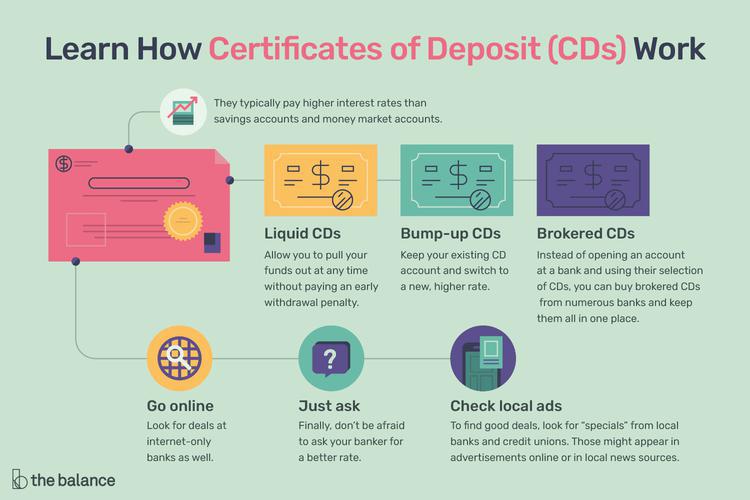
A brokered CD is a certificate of deposit that is purchased through a brokerage firm rather than directly from a bank. Brokerages like Fidelity, Charles Schwab, and Vanguard negotiate with multiple banks to offer their CDs to the brokerage’s clients. One of the primary advantages of a brokered CD is the ability to see a wide array of offers from different banks in one central dashboard. This allows for easier comparison and the ability to manage multiple CDs without opening accounts at ten different banks.
The Liquidity Advantage of Brokered CDs
Standard bank CDs usually come with an “Early Withdrawal Penalty” (EWP) if you need your money before the term ends. Brokered CDs, however, often do not allow for early withdrawal in the traditional sense. Instead, they can be sold on the “secondary market.” If interest rates have fallen since you bought the CD, you might even sell it for a profit. Conversely, if rates have risen, you might have to sell it at a discount. This provides a layer of liquidity that traditional CDs lack, though it comes with the risk of market fluctuations.
Deposit Placement Services (CDARS)
For high-net-worth individuals looking to invest more than the $250,000 federal insurance limit, deposit placement services like IntraFi (formerly CDARS) are an essential tool. These services allow you to buy large sums of CDs across a network of banks while staying under the FDIC insurance limit at each one. You deal with a single relationship bank, but your money is spread out automatically to ensure 100% of it is protected by the federal government.
Factors to Evaluate Before You Buy
Choosing where to buy a CD is not just about finding the highest number on a screen. You must evaluate the terms and conditions that govern the account to ensure your money is working as hard as possible while remaining protected.
Interest Rates and APY
The Annual Percentage Yield (APY) is the most critical metric. It accounts for the effect of compounding interest over the year. When comparing institutions, ensure you are looking at the APY rather than the base interest rate. In a rising interest rate environment, you might look for “Bump-Up CDs,” which allow you to request a rate increase if the bank’s standard rates go up during your term. Alternatively, “Step-Up CDs” have a pre-scheduled rate increase built into the contract.
Term Lengths and Liquidity Needs
CD terms can range from as short as seven days to as long as ten years. Generally, the longer the term, the higher the interest rate. Before buying, you must assess your future cash needs. If you are saving for a house down payment in two years, a 5-year CD is a poor choice, regardless of the rate. If you are worried about locking your money away, look for “No-Penalty CDs,” which allow you to withdraw your principal and earned interest after a short initial period without paying a fee.
Security: FDIC vs. NCUA Insurance
The primary reason people buy CDs is safety. Ensure that any bank you choose is insured by the Federal Deposit Insurance Corporation (FDIC) and any credit union is insured by the National Credit Union Administration (NCUA). This insurance covers up to $250,000 per depositor, per insured bank, for each account ownership category. This federal backing means that even if the bank fails, your principal and accrued interest are guaranteed by the U.S. government.
Strategies for Maximizing Your CD Investment
Once you have identified where to buy your CDs, the next step is determining how to structure them. Sophisticated investors rarely put all their money into a single CD; instead, they use strategic frameworks to balance yield and liquidity.
The CD Ladder Strategy
The CD ladder is the most popular strategy for fixed-income investors. Instead of putting $50,000 into one 5-year CD, you might put $10,000 into five different CDs with terms of 1, 2, 3, 4, and 5 years. Each year, one CD matures. If you don’t need the cash, you reinvest that $10,000 into a new 5-year CD. This strategy ensures that you have access to a portion of your money every year while always having some funds committed to the higher rates offered by long-term certificates.
Barbell and Bullet Strategies
The “Barbell” strategy involves splitting your investment between very short-term CDs and very long-term CDs. This allows you to take advantage of high long-term rates while keeping some cash “active” for immediate needs or to capture sudden rate hikes. The “Bullet” strategy involves buying CDs at different times that all mature in the same year. This is often used by people who know they will have a major expense in the future—such as a child’s college tuition—and want all their interest and principal to become available at exactly that moment.
Tax Implications of CD Interest
It is important to remember that the interest earned on a CD is generally taxed as ordinary income at the federal level, and usually at the state level as well. You will receive a Form 1099-INT at the end of the year if you earn more than $10 in interest. To maximize your returns, consider buying CDs within a tax-advantaged account like an IRA (Individual Retirement Account). Many banks and brokerages offer “IRA CDs,” which allow the interest to grow tax-deferred or tax-free, depending on the type of IRA.
Step-by-Step: How to Open Your First CD
Opening a CD is a straightforward process, but being prepared can help you avoid common pitfalls and ensure you get the rate you were promised.
Gathering Documentation
Whether you are opening a CD online or in person, you will need a few key items. These include a government-issued ID (like a driver’s license or passport), your Social Security number or Taxpayer Identification Number, and your physical address. If you are opening a joint account, the other person will need to provide their information as well.
Funding the Account
You can fund a CD via an electronic transfer from an existing checking or savings account, a wire transfer, or by mailing a check. Most CDs have a “Minimum Deposit Requirement.” This can range from as little as $500 at online banks to $10,000 or more for “Jumbo CDs,” which often offer slightly higher rates for larger balances. Be sure your funds are ready to move quickly to “lock in” the current quoted rate.
Maturity and Renewal Decisions
When your CD reaches the end of its term (maturity), you enter what is known as a “Grace Period,” which usually lasts 7 to 10 days. During this time, you can withdraw your money or change the term of the CD. If you do nothing, most banks will automatically renew the CD for the same term at the current market rate—which might be lower than what you were previously earning. It is vital to set a calendar reminder for your maturity date so you can shop around and ensure you are still getting the best possible deal.
By understanding the nuances of where to buy a certificate of deposit—from high-yield online banks to flexible brokered options—you can build a financial foundation that offers both peace of mind and steady growth. In a world of complex financial instruments, the CD remains a clear, effective tool for those who value the security of knowing exactly what their money will earn.
aViewFromTheCave is a participant in the Amazon Services LLC Associates Program, an affiliate advertising program designed to provide a means for sites to earn advertising fees by advertising and linking to Amazon.com. Amazon, the Amazon logo, AmazonSupply, and the AmazonSupply logo are trademarks of Amazon.com, Inc. or its affiliates. As an Amazon Associate we earn affiliate commissions from qualifying purchases.