
For the modern investor, the question “when will the stock market open?” is about more than just a specific time on a clock. It represents the starting gun for global capital flow, the moment when price discovery begins, and the window of opportunity for executing financial strategies. While the digital age allows us to check our portfolios 24/7, the actual buying and selling of equities on major exchanges follow a strict schedule rooted in tradition, regulation, and the practicalities of international finance.
Understanding the opening and closing times of the stock market is foundational for anyone involved in personal finance and investing. Whether you are a long-term retirement planner or a more active tactical investor, the timing of your trades can significantly impact the execution price, liquidity, and overall success of your financial goals.
The Standard Trading Schedule: Knowing When the Bell Rings
The primary hub of global equity trading remains the United States, specifically the New York Stock Exchange (NYSE) and the NASDAQ. For the vast majority of retail investors, these are the venues where their orders are filled.
The New York Stock Exchange (NYSE) and NASDAQ Basics
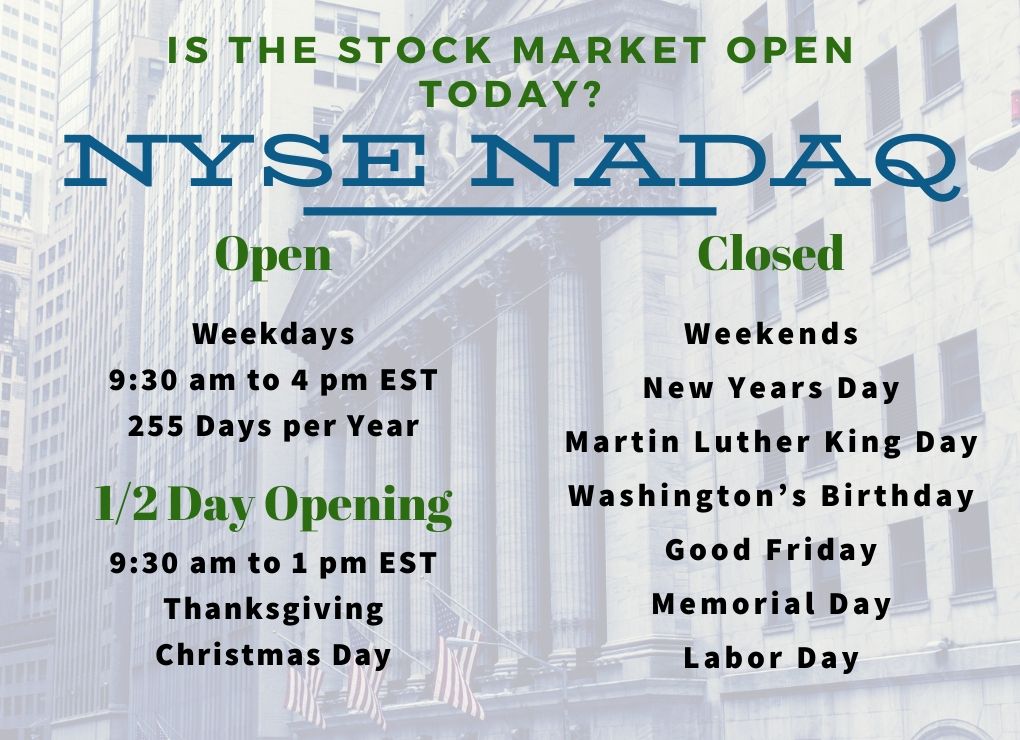
In the United States, the standard trading hours for the NYSE and the NASDAQ are from 9:30 AM to 4:00 PM Eastern Time (ET), Monday through Friday. This 6.5-hour window is often referred to as “core trading hours.” During this time, the market is at its most liquid, meaning there is a high volume of buyers and sellers, which generally results in narrower “bid-ask spreads” (the difference between the highest price a buyer is willing to pay and the lowest price a seller is willing to accept).
Lunch Breaks and Mid-Day Volatility
Unlike some international markets, U.S. exchanges do not close for a lunch break. However, seasoned investors often notice a “mid-day lull” between 12:00 PM and 2:00 PM ET. During this period, trading volume typically thins out as floor traders and institutional desk managers take breaks. This lower volume can sometimes lead to increased volatility or stagnant price action, making it a less-than-ideal time for executing large orders that require high liquidity.
Weekly Schedules and Weekend Closures
The stock market is closed on Saturdays and Sundays. While the world of cryptocurrency trades 24/7, the traditional stock market utilizes the weekend to allow for clearing houses to settle trades, companies to release news without causing immediate panic selling, and for market participants to recalibrate their strategies. If you place an order on a Saturday, it will remain “pending” until the market opens the following Monday morning.
Beyond 9:30 to 4:00: Pre-Market and After-Hours Trading
While core hours are the most popular, technology has enabled “Extended-Hours Trading.” This allows investors to react to news that happens outside of the traditional 9:30 AM to 4:00 PM window.
What is Pre-Market Trading?
Pre-market trading in the U.S. can begin as early as 4:00 AM ET, though most activity picks up around 8:00 AM ET. This session allows investors to react to overnight developments, such as international economic data, geopolitical events, or early-morning corporate announcements. For many retail investors using apps like Schwab, Fidelity, or Robinhood, access to pre-market trading is available, though it often requires the use of “limit orders” rather than “market orders” to protect against price swings.
The Risks and Rewards of Extended Hours
The primary appeal of trading before the market opens is the ability to get ahead of a trend. However, the risks are substantial. Because there are fewer participants, the volume is much lower than during standard hours. This lack of liquidity can cause massive price gaps. A stock might be trading at $100 at 4:00 PM, but due to a small number of trades at 7:00 AM, it could appear to be $90 or $110. This “slippage” can be costly for the unwary investor.
After-Hours Trading: Reacting to Earnings Reports
The “After-Hours” session runs from 4:00 PM to 8:00 PM ET. This is perhaps the most critical time for fundamental investors because the majority of publicly traded companies release their quarterly earnings reports immediately after the closing bell. If a company misses its revenue targets, the stock may plummet within minutes during the after-hours session. Conversely, a positive surprise can send shares soaring before the next day’s official open.
Global Market Perspectives: When Does the Rest of the World Open?
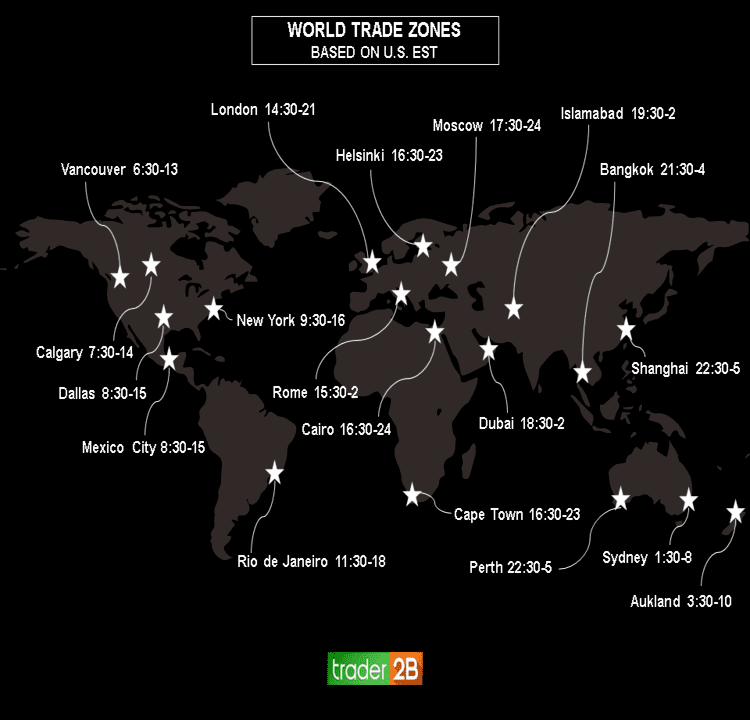
If you are interested in international diversification or trading foreign-listed companies via American Depositary Receipts (ADRs), you must account for global time zones. The “market open” is a rolling event that follows the sun across the globe.
European Markets: The London and Frankfurt Sync
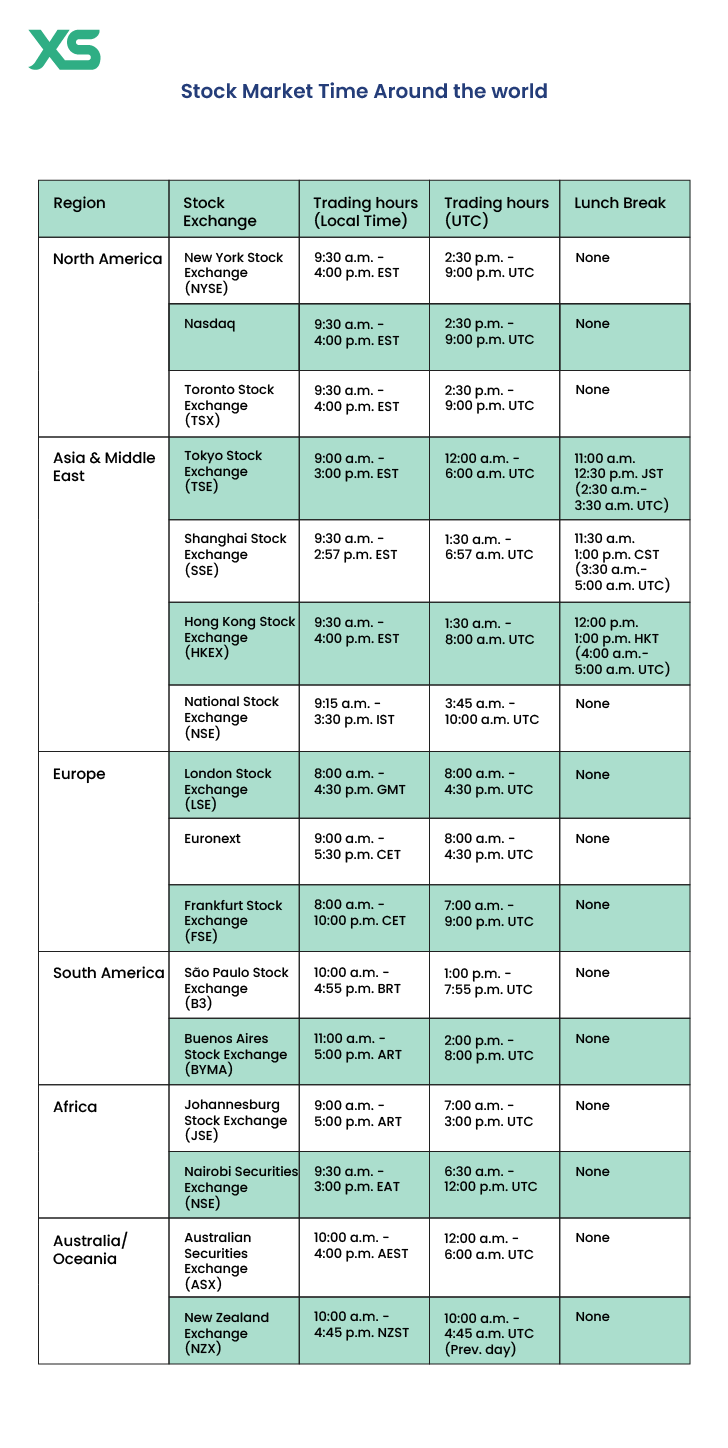
The London Stock Exchange (LSE) is one of the world’s oldest and most influential. It typically opens at 8:00 AM local time (GMT) and closes at 4:30 PM. For an investor on the East Coast of the U.S., the London market opens at 3:00 AM ET. There is a crucial “overlap” period between 9:30 AM and 11:30 AM ET when both the U.S. and European markets are open simultaneously. This is often the period of highest global liquidity for currency pairs and multi-national equities.
Asian Markets: Tokyo, Hong Kong, and Shanghai
The trading day technically begins in Asia. The Tokyo Stock Exchange (TSE) opens at 9:00 AM local time, which is 8:00 PM ET the previous day in the U.S. Many Asian markets, including the Hong Kong Stock Exchange, include a scheduled lunch break (typically between 12:00 PM and 1:00 PM local time), a practice that differs from the continuous trading seen in New York and London.
Managing Time Zone Differences for Global Portfolios
For a personal finance enthusiast, managing a global portfolio requires an awareness of these shifts. Economic “shocks” in the Asian markets often serve as a precursor for how the U.S. market will open. If the Nikkei 225 (Japan) and the Hang Seng (Hong Kong) close down significantly, it is highly likely that the U.S. markets will open in the “red” as investors digest the global sentiment.
Market Holidays and Early Closures: Planning Your Trading Calendar
The stock market does not follow the same holiday schedule as the post office or every private business. To manage your money effectively, you must be aware of “bank holidays” versus “exchange holidays.”
Major U.S. Stock Market Holidays
The NYSE and NASDAQ close for nine major holidays each year:
- New Year’s Day
- Martin Luther King, Jr. Day
- Presidents’ Day (Washington’s Birthday)
- Good Friday
- Memorial Day
- Juneteenth National Independence Day
- Independence Day (July 4th)
- Labor Day
- Thanksgiving Day
- Christmas Day
If a holiday falls on a weekend, the market typically closes on the preceding Friday or the following Monday.
Early Closing Days: What to Expect
There are also “half-days” where the market closes early, usually at 1:00 PM ET. This typically occurs on the day after Thanksgiving (Black Friday) and sometimes on Christmas Eve, depending on which day of the week it falls. Volume on these days is notoriously thin, and many professional traders take the day off, leading to “erratic” price movement that may not reflect a stock’s true value.
The “Santa Claus Rally” and Seasonal Timing
While not an official “opening” or “closing,” seasonal timing is a significant factor in business finance. The period between Christmas and the New Year is often characterized by the “Santa Claus Rally,” where markets tend to rise due to tax-loss harvesting, year-end portfolio rebalancing, and general holiday optimism. Understanding these seasonal cycles helps investors decide whether to buy before a holiday closure or wait for the new year’s open.
Why Timing Matters: Strategies for Market Open and Close
Knowing when the market opens is a logistical necessity, but knowing how to trade those times is a financial strategy. The first and last hours of the trading day are widely considered the most important.
The “Opening Cross” and Initial Volatility
The first 30 minutes of the trading day (9:30 AM to 10:00 AM ET) are often the most volatile. This is when the “opening cross” occurs—the process where the exchange matches all the buy and sell orders that accumulated overnight. For many retail investors, the best advice is to avoid trading during these first 30 minutes. Prices can be erratic as the market “finds” its equilibrium. Professional traders often call this “amateur hour,” as many emotional reactions to overnight news are flushed out during this time.
The “Closing Bell” and Institutional Rebalancing
The final hour of trading, from 3:00 PM to 4:00 PM ET, is known as the “Power Hour.” This is when institutional investors—pension funds, mutual funds, and hedge funds—execute their large-scale rebalancing. This period often sees a massive surge in volume. For those focused on personal finance, the closing price of a stock is highly significant, as it is the price used to calculate the Net Asset Value (NAV) of mutual funds and the official value of your portfolio for tax and reporting purposes.
Best Practices for Retail Investors
In the context of business finance and personal wealth management, consistency usually beats timing. However, being aware of when the market opens allows you to:
- Avoid Bad Fills: Don’t place “market orders” when the market is closed or in the first minutes of the open.
- Monitor Economic Reports: Most major government economic data (like Inflation or Jobs reports) are released at 8:30 AM ET, exactly one hour before the market opens.
- Manage Liquidity: Ensure you are trading when the most participants are active to get the best possible price.
In conclusion, while the stock market’s opening bell at 9:30 AM ET marks the start of the official day, the “market” is a living, breathing global entity that operates across various time zones and sessions. By mastering the schedule of the exchanges, understanding the nuances of extended-hours trading, and respecting the volatility of the opening and closing hours, you can better navigate the complexities of investing and protect your financial future.
aViewFromTheCave is a participant in the Amazon Services LLC Associates Program, an affiliate advertising program designed to provide a means for sites to earn advertising fees by advertising and linking to Amazon.com. Amazon, the Amazon logo, AmazonSupply, and the AmazonSupply logo are trademarks of Amazon.com, Inc. or its affiliates. As an Amazon Associate we earn affiliate commissions from qualifying purchases.