
The housing market has undergone a seismic shift over the last few years. For over a decade, homeowners and prospective buyers were accustomed to historically low borrowing costs, culminating in the sub-3% era of 2020 and 2021. However, the rapid ascent of mortgage rates in response to post-pandemic inflation has left many sitting on the sidelines, asking one critical question: When will mortgage rates go back down?
Understanding the trajectory of mortgage rates requires a deep dive into the macroeconomic forces that dictate the cost of capital. While no one possesses a crystal ball, analyzing the relationship between the Federal Reserve, inflation, and the bond market provides a roadmap for what to expect in the coming months and years.
Understanding the Drivers Behind High Mortgage Rates
To predict when rates will fall, we must first understand why they rose so sharply. Mortgage rates are not set by a single government entity; rather, they are the result of a complex interplay between federal policy, investor appetite, and economic data.
The Role of the Federal Reserve and the Federal Funds Rate
While the Federal Reserve does not set mortgage rates directly, its influence is paramount. The Fed controls the federal funds rate—the interest rate at which commercial banks borrow and lend to one another overnight. When the Fed raises this rate to combat inflation, it increases the cost of borrowing across the entire economy, including credit cards, auto loans, and business lines of credit.
Mortgage lenders track these movements closely. As the “risk-free” rate of return increases, lenders must raise mortgage rates to remain profitable and to attract investors who purchase mortgage-backed securities (MBS). Until the Federal Reserve feels confident that the economy has cooled sufficiently, the downward pressure on mortgage rates will remain limited.
Inflation and the Consumer Price Index (CPI)
Inflation is the primary enemy of fixed-income investments like mortgages. Because a mortgage is a long-term loan with a fixed return, inflation erodes the purchasing power of the interest the lender collects over time. When the Consumer Price Index (CPI) shows that prices are rising faster than expected, investors demand higher yields to compensate for that lost value.
Historically, mortgage rates tend to follow the trend of inflation. For rates to experience a sustained decline, we must see a consistent “cooling” of the CPI toward the Fed’s target of 2%. When inflation reports come in lower than anticipated, the market often responds with a slight dip in mortgage rates in anticipation of a more dovish monetary policy.
The 10-Year Treasury Yield Connection
If you want to track mortgage rates in real-time, the best indicator is the 10-year Treasury yield. There is a strong historical correlation between the yield on the 10-year Treasury note and the interest rate on a 30-year fixed mortgage. Typically, there is a “spread” of about 1.7 to 2 percentage points between the two.
In volatile markets, this spread can widen to 3 percentage points or more as lenders price in the risk of economic uncertainty. For mortgage rates to drop significantly, we need to see both a decrease in the 10-year Treasury yield and a narrowing of this spread as the market stabilizes.
Expert Forecasts and Economic Indicators for the Near Future
The consensus among major housing authorities—such as Fannie Mae, Freddie Mac, and the Mortgage Bankers Association (MBA)—is that we have likely moved past the peak of the current rate cycle. However, the descent is expected to be a slow “glide path” rather than a sudden drop.
Analyzing Recent Trends in Housing Market Data
Recent data suggests that the aggressive rate hikes of 2022 and 2023 are finally starting to take hold. We are seeing a moderation in wage growth and a slight cooling in the labor market. These are the indicators the Federal Reserve needs to see before they consider cutting the federal funds rate.
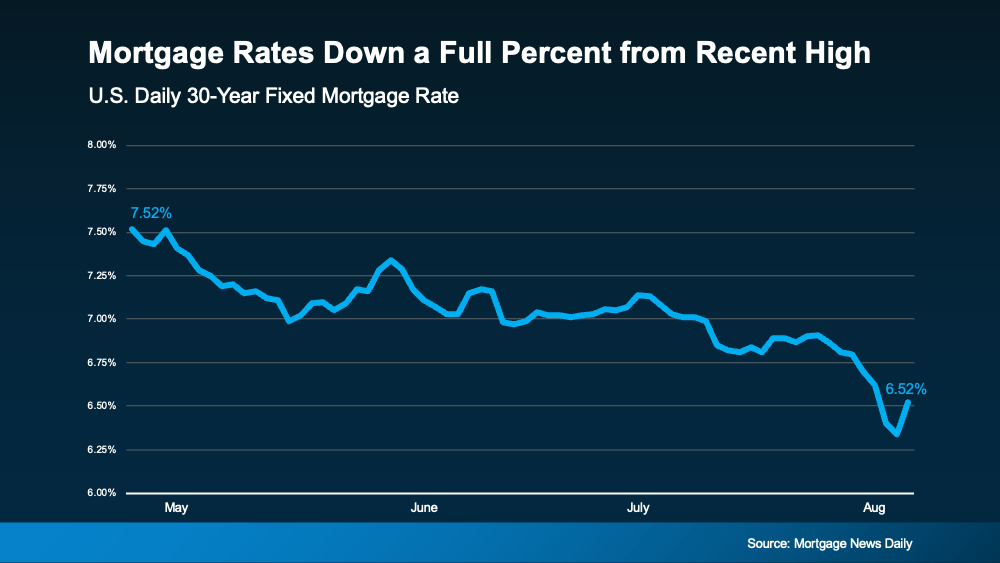
Most analysts expect rates to fluctuate within a specific range throughout the current year, with incremental decreases as more positive inflation data is released. The housing market is currently in a state of “price discovery,” where buyers and sellers are adjusting to the new reality of 6% or 7% rates, compared to the 3% rates of the past.
When Can We Expect a “Pivot”?
The financial world is obsessed with the “pivot”—the moment the Federal Reserve switches from raising rates to cutting them. Market sentiment suggests that while the Fed may be done with hikes, they are in a “higher for longer” stance.
A significant drop in mortgage rates likely won’t occur until the Fed initiates its first round of rate cuts. Even then, the impact may be gradual. If the economy enters a mild recession, the Fed might cut rates more aggressively to stimulate growth, which would lead to a faster decline in mortgage costs. Conversely, if the economy remains “too hot,” rates could stay elevated well into the next fiscal year.
Strategic Financial Moves While Waiting for Lower Rates
For many, waiting for the “perfect” rate is a losing game. The cost of waiting can often outweigh the benefits of a lower rate if home prices continue to appreciate. Instead of waiting indefinitely, savvy buyers are employing financial strategies to manage high borrowing costs.
Boosting Your Credit Score to Secure the Best Tiers
In a high-rate environment, the difference between a “good” credit score and an “excellent” credit score can save you tens of thousands of dollars over the life of a loan. Mortgage rates are tiered based on credit risk. A borrower with a 760 score may receive a rate significantly lower than someone with a 680 score.
Focusing on debt-to-income (DTI) ratios and ensuring all payments are on time can move you into a higher credit tier. In today’s market, maximizing your personal financial profile is the most effective way to “lower” your rate manually.
Exploring Alternative Financing Options
Standard 30-year fixed mortgages are the most popular, but they aren’t the only option.
-
Adjustable-Rate Mortgages (ARMs): These often offer lower initial rates for a set period (such as 5, 7, or 10 years). If you plan to sell or refinance before the rate adjusts, an ARM can provide immediate relief.
-
Temporary Buy-downs: Some sellers or builders offer “2-1 buy-downs,” where the interest rate is subsidized for the first two years of the loan. This can help a buyer ease into their mortgage payments while waiting for a future opportunity to refinance.
The “Date the Rate, Marry the House” Philosophy
This popular real estate adage suggests that the physical property and its location are permanent (the marriage), while the interest rate is temporary (the date). If you find a home that fits your needs and budget at today’s prices, it may be better to secure the asset now and refinance later when rates drop. If rates go down, everyone currently on the sidelines will rush back into the market, potentially driving up home prices and creating fierce competition. By buying now, you avoid the bidding wars and benefit from future rate decreases through refinancing.
The Long-Term Outlook: Will We Ever See 3% Again?
To maintain a healthy perspective on mortgage rates, it is essential to look at the historical context. The sub-3% rates seen during the pandemic were an anomaly, driven by unprecedented government intervention and a global crisis.
Historical Context of Mortgage Rates
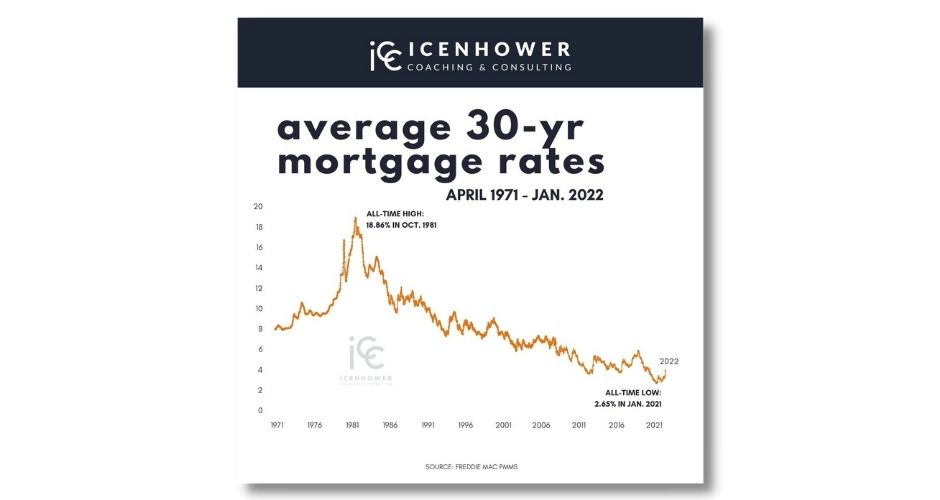
Since 1971, the average interest rate for a 30-year fixed mortgage has hovered around 7.7%. In the early 1980s, rates famously peaked at over 18%. When viewed through a historical lens, current rates in the 6% to 7% range are actually quite average.
The “sticker shock” many feel today is a result of how quickly we moved from the all-time lows of 2021 to the current levels. While we may see rates return to the 5% range if inflation is fully tamed, the era of 2% or 3% mortgages is likely over for the foreseeable future, unless the global economy faces another catastrophic event that requires massive stimulus.
The New “Normal” for Borrowing Costs
Moving forward, a “normal” mortgage rate environment will likely settle between 5.5% and 6.5%. This range allows for healthy bank lending while keeping housing relatively affordable for those with strong financial foundations. For investors and homeowners, the focus should shift from “waiting for 3%” to “planning for 6%.”
Financial planning in this new normal requires a greater emphasis on larger down payments and disciplined budgeting. As the market stabilizes, the volatility that caused sudden spikes will diminish, leading to a more predictable environment for all participants.
Conclusion: Balancing Patience with Action
The question of when mortgage rates will go back down is inherently tied to the health of the broader economy. As inflation trends toward the Federal Reserve’s target and the labor market finds its equilibrium, we will see a gradual softening of borrowing costs. However, waiting for a return to historical lows may result in missed opportunities as home prices continue to climb due to limited inventory.
The most successful financial participants in today’s market are those who remain proactive. By improving credit profiles, exploring creative financing, and keeping a close eye on the 10-year Treasury yield, you can position yourself to take advantage of the market regardless of the current headline rate. The journey toward lower rates has likely begun, but it will require patience and strategic planning to navigate the road ahead.
aViewFromTheCave is a participant in the Amazon Services LLC Associates Program, an affiliate advertising program designed to provide a means for sites to earn advertising fees by advertising and linking to Amazon.com. Amazon, the Amazon logo, AmazonSupply, and the AmazonSupply logo are trademarks of Amazon.com, Inc. or its affiliates. As an Amazon Associate we earn affiliate commissions from qualifying purchases.