
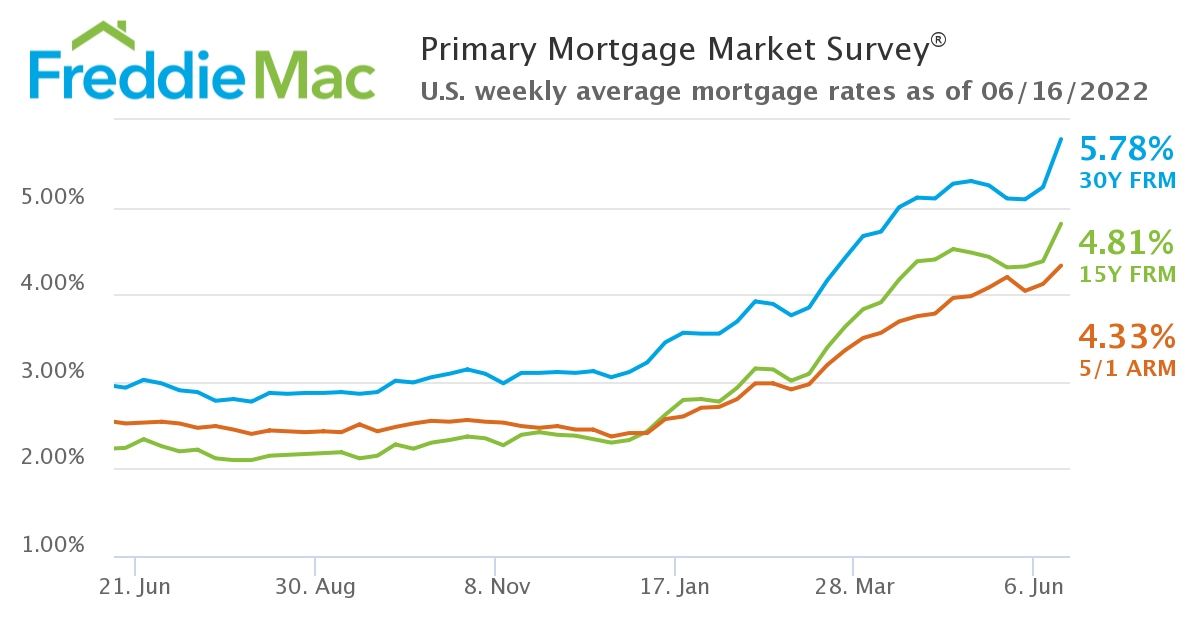
For the past two years, the housing market has been defined by a singular, looming question: when will interest rates finally descend? After a decade of historically low borrowing costs, the rapid ascent of mortgage rates—climbing from sub-3% levels in 2021 to peaks exceeding 7% and 8%—has fundamentally reshaped the landscape of personal finance. For prospective homebuyers, current homeowners looking to move, and real estate investors, the trajectory of these rates is the most critical variable in their financial planning.
Understanding when housing interest rates will go down requires a deep dive into the mechanics of the Federal Reserve, the volatility of the bond market, and the stubborn persistence of inflationary pressures. While no one possesses a crystal ball, a careful analysis of macroeconomic indicators provides a roadmap for what to expect in the coming quarters.
Decoding the Federal Reserve’s Influence on Mortgage Rates
To understand when rates will drop, one must first understand why they rose. The primary catalyst for the current high-rate environment is the Federal Reserve’s aggressive campaign to combat inflation. By raising the federal funds rate, the central bank increases the cost of borrowing across the entire economy, which is intended to cool spending and bring prices under control.
The Disconnect Between the Fed Funds Rate and Mortgages
It is a common misconception that the Federal Reserve directly sets mortgage rates. In reality, mortgage rates are determined by the secondary market, specifically the yield on the 10-year Treasury note. However, the federal funds rate serves as a benchmark. When the Fed signals that it will keep rates “higher for longer,” investors demand higher yields on mortgage-backed securities (MBS) to compensate for the risk and the opportunity cost of their capital.
The “spread”—the difference between the 10-year Treasury yield and the 30-year fixed mortgage rate—is currently wider than historical averages. Typically, this spread is around 1.7 to 2 percentage points. Recently, it has hovered closer to 3 percentage points. This indicates that even if the Fed stops raising rates, mortgage rates may only drop significantly once market volatility stabilizes and the spread narrows back to historical norms.
The “Higher for Longer” Narrative
Throughout the early months of 2024, the prevailing sentiment among central bankers has been caution. Despite inflation cooling significantly from its 9% peak in mid-2022, it remains above the Fed’s 2% target. As long as the labor market remains resilient and consumer spending stays robust, the Federal Reserve has little incentive to pivot toward aggressive rate cuts. For the borrower, this means that the “downward” move is likely to be a slow grind rather than a sudden plunge.
Economic Indicators to Watch for a Potential Downward Trend
Financial markets are forward-looking. Mortgage rates often begin to drop before the Federal Reserve actually announces a rate cut, as investors price in future expectations. To identify when this shift will occur, investors and homebuyers should monitor three specific economic pillars.
The Consumer Price Index (CPI) and Core Inflation
Inflation is the ultimate enemy of low interest rates. When inflation is high, the purchasing power of the fixed payments on a mortgage diminishes over time, leading lenders to demand higher rates up front. We are looking for “disinflationary” trends—not necessarily falling prices, but a consistent slowing in the rate of price increases. Specifically, “Core CPI,” which excludes volatile food and energy prices, is the metric the Fed watches most closely. A consistent string of reports showing inflation moving toward 2% will be the strongest signal that housing rates are ready to retreat.
The Strength of the Labor Market
The Federal Reserve has a “dual mandate”: price stability and maximum sustainable employment. Surprisingly, the job market has remained incredibly strong despite high interest rates. While a strong job market is good for the economy, it makes the Fed’s job harder. High employment leads to wage growth, which can fuel further inflation. A cooling in the labor market—manifested as a slight uptick in the unemployment rate or a decrease in monthly job creation—would provide the “cover” the Fed needs to begin lowering the federal funds rate, subsequently dragging mortgage rates lower.
Global Economic Stability and the “Flight to Quality”
Mortgage rates are also influenced by global events. In times of international conflict or global economic instability, investors often rush to the safety of U.S. Treasuries. This “flight to quality” increases demand for bonds, which drives bond prices up and yields down. Because mortgage rates track these yields, global cooling or geopolitical shifts can occasionally cause a temporary dip in housing interest rates regardless of domestic policy.
Expert Predictions: What to Expect in 2024 and 2025
Financial institutions and housing authorities like Fannie Mae, the Mortgage Bankers Association (MBA), and the National Association of Realtors (NAR) frequently update their forecasts. While their specific numbers vary, a general consensus has emerged regarding the timeline for rate relief.
The Short-Term Outlook (The Remainder of 2024)
Most analysts expect mortgage rates to remain volatile but generally move sideways or slightly downward for the rest of 2024. The expectation of “imminent” rate cuts that dominated market sentiment at the start of the year has been pushed back. If the economy continues its current “soft landing” trajectory—where inflation cools without a recession—we may see 30-year fixed rates settle in the mid-to-high 6% range by year-end.
The Long-Term Outlook (2025 and Beyond)
2025 is widely viewed as the year where a more meaningful decline could occur. As the lag effect of previous rate hikes fully permeates the economy, the Federal Reserve is expected to begin a cycle of incremental cuts. Many forecasts suggest that rates could return to the high 5% or low 6% range in 2025.
It is important to manage expectations: the era of 3% mortgage rates was an anomaly fueled by a global pandemic and unprecedented monetary stimulus. Financial experts largely agree that we are unlikely to see those levels again in the foreseeable future. A “new normal” for a healthy economy is likely between 5.5% and 6.5%.
Strategic Financial Planning in a High-Rate Environment
Waiting for rates to hit a specific floor can be a risky financial strategy. The “cost of waiting” includes the potential for rising home prices, which often climb when rates drop due to increased competition. For those looking to navigate the current market, several financial strategies can mitigate the impact of high interest rates.
The “Marry the House, Date the Rate” Philosophy
This popular real estate adage suggests that buyers should purchase the home they need now and plan to refinance later. If you find a property that fits your long-term needs and the monthly payment is manageable at today’s rates, the potential for a future refinance provides an “upside” hedge. If rates go down, you refinance; if rates go up, you’ve secured a lower rate than future buyers.
Exploring Adjustable-Rate Mortgages (ARMs) and Buydowns
In a high-rate environment, alternative loan products become more attractive. An Adjustable-Rate Mortgage (ARM) typically offers a lower initial interest rate for a fixed period (such as 5, 7, or 10 years). For a buyer who plans to sell or refinance before the adjustment period begins, this can save thousands of dollars.
Additionally, “temporary buydowns” (like a 2-1 buydown) are becoming common. In this scenario, the seller or builder pays a lump sum to reduce the buyer’s interest rate by 2% in the first year and 1% in the second year. This provides immediate relief and a bridge to a period where market-wide rates may be lower.
Improving Your Financial Profile
Interest rates are not just determined by the market; they are determined by your personal “risk score.” A borrower with a 780 credit score will receive a significantly better rate than one with a 680 score. While waiting for the market to shift, prospective buyers should focus on:
-
Reducing debt-to-income (DTI) ratios by paying down high-interest credit card debt.
-
Ensuring credit reports are accurate and free of errors.
-
Increasing the down payment to reduce the Loan-to-Value (LTV) ratio, which can lower the interest rate tier.
The Bottom Line: When Will the Shift Happen?
The transition to lower housing interest rates is not a single event, but a process. Based on current financial data and Federal Reserve signaling, the shift has already begun in terms of sentiment, but the data-driven reality requires patience.
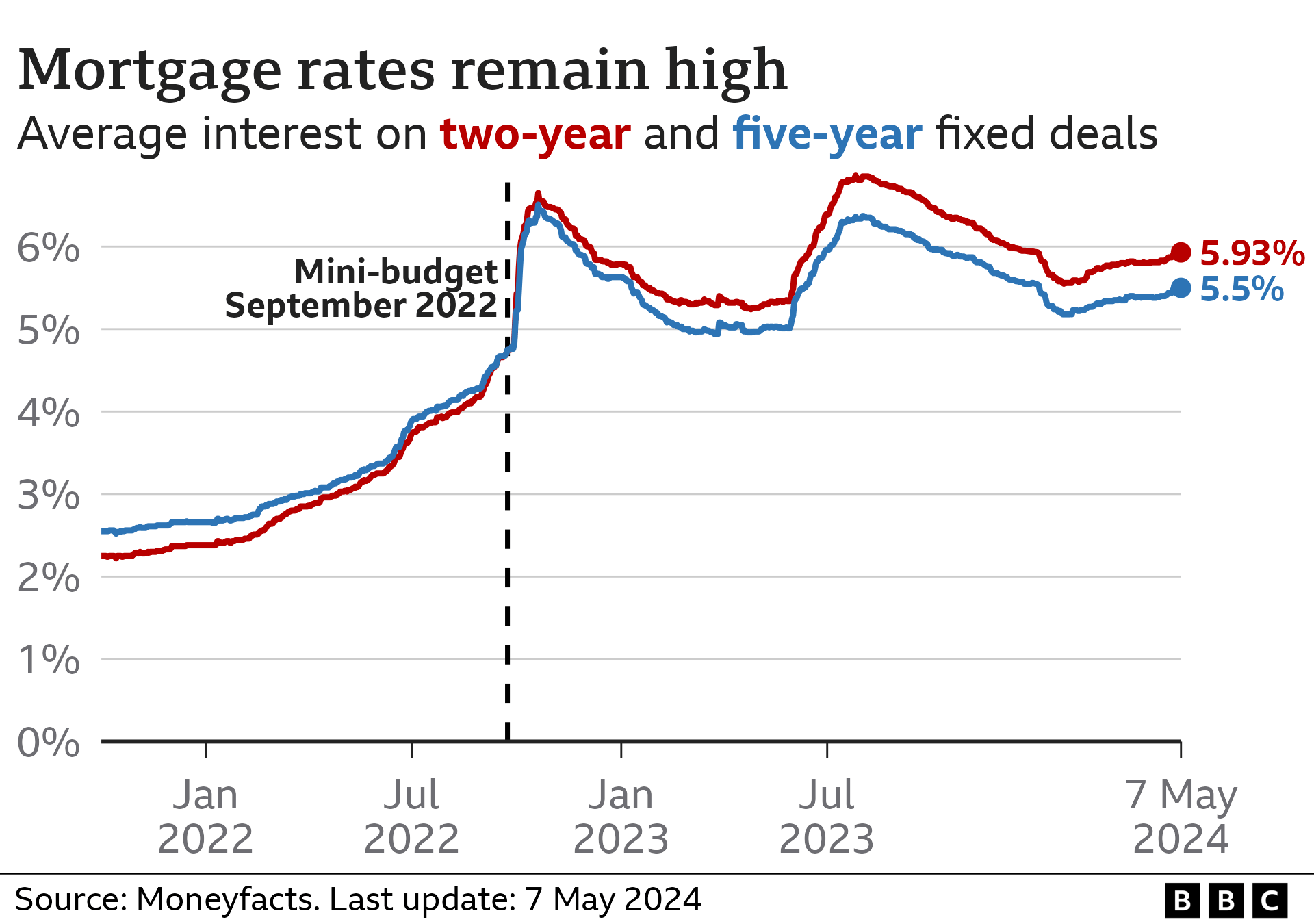
We are likely past the peak of this interest rate cycle. The extreme highs of late 2023 appear to be behind us. However, the descent will be gradual. Borrowers should look toward the latter half of 2024 for stabilization and the mid-months of 2025 for a more perceptible decline.
In the world of personal finance, the best strategy is rarely to time the market perfectly, but to ensure that your individual financial foundation—your savings, your credit, and your budget—is prepared to move when the opportunity arises. Whether rates are at 7% or 5%, the fundamental value of homeownership as a long-term investment remains, provided the purchase is made with a clear-eyed understanding of the underlying economic forces at play.
aViewFromTheCave is a participant in the Amazon Services LLC Associates Program, an affiliate advertising program designed to provide a means for sites to earn advertising fees by advertising and linking to Amazon.com. Amazon, the Amazon logo, AmazonSupply, and the AmazonSupply logo are trademarks of Amazon.com, Inc. or its affiliates. As an Amazon Associate we earn affiliate commissions from qualifying purchases.