
In the dynamic landscape of fintech, few applications have achieved the widespread adoption and cultural penetration of Cash App. Launched by Block Inc. (formerly Square) in 2013, it swiftly evolved beyond a simple peer-to-peer payment service into a comprehensive financial ecosystem. Millions of users leverage Cash App for everything from sending money to friends to investing in stocks and Bitcoin. Yet, beneath the seamless user experience and popular features, lies a sophisticated and increasingly diversified revenue model. Understanding how Cash App generates its substantial income provides critical insights into the economics of modern digital finance and the ingenuity required to monetize user engagement at scale.
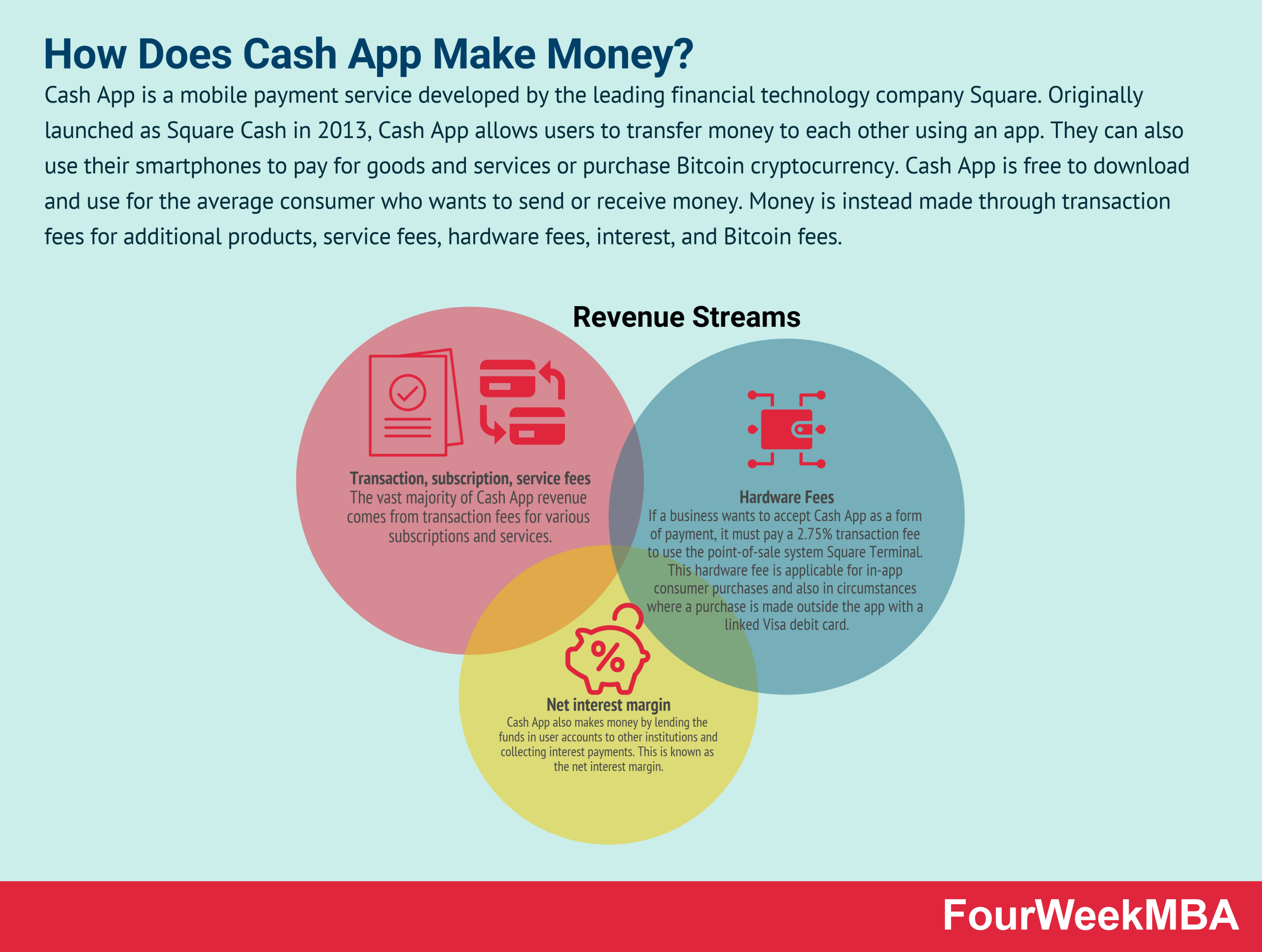
Initially perceived primarily as a free service, Cash App’s profitability stems from a clever blend of transaction fees, premium services, strategic partnerships, and leveraging the sheer volume of its user base. It’s a testament to a strategy that prioritizes user acquisition and engagement, knowing that once users are deeply embedded within the platform, numerous avenues for monetization open up. Far from being a loss leader, Cash App has become a significant growth driver for Block Inc., consistently reporting impressive gross profit figures. Let’s dissect the primary mechanisms through which this ubiquitous financial tool turns user activity into revenue.
The Foundation: Core Transaction Fees and Expedited Services
At its most fundamental level, Cash App, like many financial services, generates revenue through charges associated with specific transactions or premium features. These fees, often small percentages, accumulate rapidly given the app’s expansive user base and high transaction volumes.
Instant Deposit Fees
One of Cash App’s most common revenue generators is its fee for instant deposits. While standard deposits from Cash App balances to a linked bank account are free and typically clear within 1-3 business days, users who require immediate access to their funds can opt for an “Instant Deposit.” For this expedited service, Cash App charges a small fee, typically between 0.5% and 1.75% of the transaction amount. For users in urgent need of cash, this convenience fee is often a small price to pay, and collectively, these charges contribute significantly to Cash App’s top line. It’s a classic model of monetizing speed and convenience, a valuable commodity in today’s fast-paced digital economy. This mechanism taps into the immediate needs of users, providing a valuable service while securing a consistent revenue stream.
Bitcoin Transaction Fees
Cash App’s foray into cryptocurrency trading, particularly Bitcoin, proved to be a masterstroke, attracting a new demographic of users interested in digital assets. While the app positions itself as an accessible entry point for Bitcoin, it actively monetizes these transactions. Cash App generally charges two types of fees for buying and selling Bitcoin: a service fee and an additional fee based on price volatility across different exchanges. The service fee is a fixed amount or a percentage, while the additional fee is often a spread embedded into the purchase or sale price, meaning users might buy Bitcoin slightly above market price and sell it slightly below. This spread can vary depending on market conditions. This revenue stream has proven particularly lucrative, especially during periods of high cryptocurrency trading volume and volatility, demonstrating Cash App’s agility in capitalizing on emerging financial trends.
Cash Card ATM Withdrawal Fees
The Cash Card, a customizable Visa debit card linked to the user’s Cash App balance, extends the app’s utility into the physical world. While using the Cash Card for purchases is free, and direct deposit users can waive ATM fees, Cash App charges a fee for ATM withdrawals for users who do not meet certain direct deposit criteria. Typically, this fee is around $2.50 per withdrawal, in addition to any charges levied by the ATM operator. This fee targets users who rely on the Cash Card for physical cash access but haven’t fully integrated their payroll into the Cash App ecosystem, adding another layer to its transactional revenue model.
Diversifying Revenue: Investment and Banking-Like Features
Beyond basic transactions, Cash App has strategically expanded its offerings to mimic aspects of traditional banking and investment platforms, each with its own monetization strategies. These features not only increase user stickiness but also open up new, substantial revenue streams.
Stock and ETF Trading (Fractional Shares)
In a bid to democratize investing, Cash App introduced commission-free stock and Exchange Traded Fund (ETF) trading, allowing users to buy fractional shares for as little as $1. While marketed as “commission-free,” Cash App primarily generates revenue from this service through Payment for Order Flow (PFOF). In this model, brokerage firms route customer orders to market makers, who execute the trades and pay the broker for the order flow. The market makers profit from the bid-ask spread, sharing a portion with the broker (Cash App, in this case). Although a controversial practice for some, PFOF is a common and legal revenue stream for many commission-free trading platforms, allowing Cash App to offer seemingly free trading while indirectly profiting from every transaction.
Interchange Fees (Cash Card)
The Cash Card functions much like a standard debit card. When a user makes a purchase with their Cash Card, Cash App earns a portion of the “interchange fee” charged to the merchant by the merchant’s bank. Interchange fees are standard fees collected by the card-issuing bank (in this case, Cash App’s banking partner) for processing a transaction. These fees, though a small percentage of each transaction (typically 1-2%), add up significantly given the millions of Cash Card transactions occurring daily. This “swipe fee” revenue is a robust and steady income stream, directly proportional to the spending activity of Cash Card users.
Interest on User Balances
While not as explicitly advertised or large a revenue stream for a consumer-facing fintech as it is for traditional banks, Cash App does hold a substantial amount of user funds in its linked bank accounts. These aggregated funds, even if individual balances are small, amount to billions of dollars. Like traditional banks, Cash App’s banking partners can earn interest on these pooled deposits, and a portion of this interest can be shared back with Cash App. While Cash App does not pay interest on user balances, it can benefit from the “float”—the temporary possession of funds before they are withdrawn or spent—earning interest or yield on these assets, particularly in a rising interest rate environment.
Strategic Monetization: Boosts, Business Accounts, and Partnerships
Cash App’s revenue strategy also extends to leveraging its platform for business services, marketing partnerships, and data-driven insights, creating a vibrant ecosystem that benefits various stakeholders.
Cash App for Business
Recognizing the need for small businesses and sole proprietors to accept digital payments easily, Cash App introduced “Cash App for Business.” This service allows individuals and businesses to receive payments from customers using their Cashtag or QR code. Unlike peer-to-peer payments between friends, business transactions incur a fee, typically 2.75% per transaction. This positions Cash App as a direct competitor to traditional point-of-sale systems and other payment processors like Stripe or Square’s main POS service, offering a simplified and mobile-first solution for a growing segment of the economy. This revenue stream directly taps into the burgeoning gig economy and small business market.
Boosts and Merchant Partnerships
A highly popular feature of the Cash Card is “Boosts,” which offer instant discounts at specific merchants (e.g., 10% off at DoorDash, $5 off at a coffee shop). While seemingly a benefit purely for the user, Boosts represent a sophisticated marketing and revenue-sharing mechanism. Merchants often pay Cash App to be featured in the Boost program, or they agree to subsidize the discounts in exchange for increased customer traffic and sales driven by Cash App users. This creates a mutually beneficial ecosystem: users save money, merchants gain customers, and Cash App earns revenue through partnership fees or data insights derived from increased spending at specific vendors. It’s a powerful way to monetize user engagement and spending patterns.
Affiliate Marketing and Referrals
Like many digital platforms, Cash App utilizes affiliate marketing and referral programs to expand its user base. While the primary goal of referral bonuses (e.g., “get $5 when you refer a friend”) is user acquisition, these programs can be structured in ways that eventually lead to profit. For instance, if a referred user becomes a highly engaged customer, generating significant transaction fees, the initial referral bonus becomes a worthwhile investment. Additionally, Cash App might engage in broader affiliate partnerships, promoting other services or products within its app for a commission, though this is a less explicit or dominant revenue stream compared to core financial services.
The Data Advantage: Monetizing User Insights (Indirectly)
In the digital age, data is currency, and Cash App, with its vast trove of user financial behavior, sits on a goldmine. While Cash App maintains a strong commitment to user privacy and does not directly sell individual user data, aggregated and anonymized data provides immense strategic value that indirectly contributes to its profitability and growth.
Aggregated Spending Data
The collective spending habits of millions of users across various categories (retail, dining, entertainment, travel, etc.) provide invaluable market intelligence. While individual transactions are private, Cash App can analyze aggregated, anonymized data to identify trends, consumer preferences, and market shifts. This macro-level data can be used internally to inform product development, identify potential partnership opportunities, and optimize the Boosts program. It can also be leveraged in discussions with potential corporate partners, demonstrating the immense purchasing power and demographic reach of Cash App users.
Targeted Marketing and Product Development
Understanding how users interact with the app, what features they use most, and where they spend their money allows Cash App to develop more relevant and profitable features. Data insights can lead to the creation of new financial products or services that directly address user needs, thereby opening new revenue streams. It also enables highly targeted marketing within the app, promoting features or partners that are most likely to resonate with specific user segments, thereby increasing engagement and monetization potential. This data-driven approach ensures that Cash App’s evolution is guided by actual user behavior, maximizing the return on investment for new features.
Sustaining Growth: Ecosystem Expansion and Future Opportunities
Cash App’s journey from a simple payment app to a comprehensive financial platform is far from over. Its success lies in continually identifying and integrating new services that enhance its ecosystem and open fresh avenues for revenue generation.
Lending and Credit Products (Potential Future)
Given its deep insight into user financial behavior and transaction history, Cash App is uniquely positioned to expand into lending or credit products. Offering small-dollar loans, credit lines, or buy-now-pay-later (BNPL) options to eligible users could be a natural and highly lucrative progression. This would not only provide a valuable service to its users but also introduce significant interest income and fee-based revenue, much like traditional banks or more specialized fintech lenders. Early pilots of a “borrow” feature have already indicated this direction.
International Expansion
While highly successful in the United States and the UK, Cash App still has vast untapped markets globally. Expanding into new countries and regions, particularly those with a high mobile penetration and demand for accessible digital financial services, could unlock massive new user bases and, consequently, new revenue streams. Adapting its model to local regulations and financial landscapes would be a significant undertaking but holds immense potential for scaling its existing monetization strategies.

Conclusion
Cash App’s financial success is a masterclass in modern fintech monetization. It has skillfully woven together a complex tapestry of revenue streams, ranging from straightforward transaction fees on instant deposits and Bitcoin trades to sophisticated interchange fees from its Cash Card and strategic partnerships through its “Boosts” program. Its foray into stock trading, albeit through Payment for Order Flow, further solidifies its position as a multi-faceted financial institution.
What began as a convenient way to split a dinner bill has blossomed into a full-fledged financial ecosystem, continually expanding its offerings and finding innovative ways to generate value from its massive and engaged user base. Cash App’s ability to leverage user data for strategic development, while maintaining privacy, and its forward-looking approach to services like lending and international expansion, underscores a robust and adaptive business model. For anyone wondering how a seemingly “free” app can become so incredibly profitable, the answer lies in its meticulous, multi-pronged approach to turning every interaction, convenience, and financial need into a carefully considered revenue opportunity.
aViewFromTheCave is a participant in the Amazon Services LLC Associates Program, an affiliate advertising program designed to provide a means for sites to earn advertising fees by advertising and linking to Amazon.com. Amazon, the Amazon logo, AmazonSupply, and the AmazonSupply logo are trademarks of Amazon.com, Inc. or its affiliates. As an Amazon Associate we earn affiliate commissions from qualifying purchases.