
The question of whether and when a high-flying stock like Costco (COST) might undergo a stock split is a common point of discussion among investors. Stock splits are often seen as a signal of a company’s robust growth and investor confidence, making shares more accessible to a broader range of retail investors. While not affecting the company’s underlying fundamentals or an investor’s total portfolio value, a split can significantly alter market perception and trading dynamics.
Understanding Stock Splits: What and Why?
A stock split is a corporate action in which a company divides its existing shares into multiple shares. For instance, in a 2-for-1 split, each shareholder receives two shares for every one share they previously owned. The total market value of the company remains unchanged, and consequently, the total value of an investor’s holdings also stays the same. If you owned one share worth $800 before a 2-for-1 split, you would own two shares each worth $400 immediately after the split.
The Mechanics of a Stock Split
The primary mechanism involves adjusting the number of outstanding shares and the par value per share. The company’s board of directors approves the split, and shareholders are typically informed in advance. On the effective date, the stock’s price is automatically adjusted downwards in proportion to the split ratio, while the number of shares held by investors increases proportionally. This process is seamless for shareholders, with their brokerage accounts reflecting the changes automatically.
Reasons Companies Opt for Stock Splits
Companies typically pursue stock splits for several strategic reasons:
- Increased Accessibility and Liquidity: A high stock price can deter smaller retail investors who might find it difficult to purchase a full share. By lowering the per-share price, a split makes the stock more “affordable” and accessible, potentially broadening the investor base. This can lead to increased trading volume and greater liquidity in the market.
- Psychological Appeal: A lower share price can create a perception of value, making the stock appear more attractive to new investors. While fundamentally incorrect (the value remains the same), this psychological effect can sometimes contribute to short-term upward momentum.
- Options Trading: For options traders, a lower share price can make options contracts more appealing and manageable. The price per share directly influences the cost of options premiums and the strike prices available.
- Inclusion in Indices: While less common for market-capitalization-weighted indices, a lower share price can sometimes facilitate inclusion in certain price-weighted indices (like the Dow Jones Industrial Average, though Costco is already a large-cap stock). More importantly, increased liquidity generally benefits a stock’s overall market presence.
- Signaling Confidence: A stock split can signal to the market that management believes the company’s strong growth trajectory will continue, and they anticipate the stock price will eventually climb back up to a high level again.
Costco’s Historical Stock Splits and Growth Trajectory
Costco Wholesale Corporation (COST) has been a remarkable growth story, evolving from a warehouse club pioneer into a retail behemoth. Its stock performance has mirrored this success, delivering substantial returns to long-term shareholders. Examining its history reveals a pattern of growth punctuated by strategic corporate actions.
Previous Splits and Market Context
Costco has executed three stock splits in its history since its IPO:
- 3-for-2 split on January 16, 1991
- 2-for-1 split on May 15, 1993
- 2-for-1 split on January 13, 1999
These splits occurred during periods of significant expansion for the company, reflecting its increasing market capitalization and the rising price of its individual shares. The 1990s were a formative decade for Costco, seeing it expand its footprint and establish its unique membership-based business model as a dominant force in retail. Each split was a response to the stock reaching a level where the board likely felt it was prudent to reset the per-share price to maintain accessibility and liquidity for a growing investor base.
Current Growth and Valuation
In recent years, Costco has continued its impressive growth, driven by strong membership retention, robust sales, and effective supply chain management. Its defensive business model, offering bulk goods at competitive prices, has proven resilient through various economic cycles. This sustained performance has propelled its stock price to new highs, often placing it in the upper echelon of per-share stock prices among major corporations. The company’s market capitalization frequently places it among the largest retailers globally, underscoring its financial strength and market influence. The high trading price per share naturally brings the topic of another stock split back into focus.
Factors Influencing a Potential Costco Stock Split
The decision to execute a stock split is complex and rests entirely with the company’s board of directors. Several factors typically weigh into this decision, especially for a mature, well-established company like Costco.
High Share Price
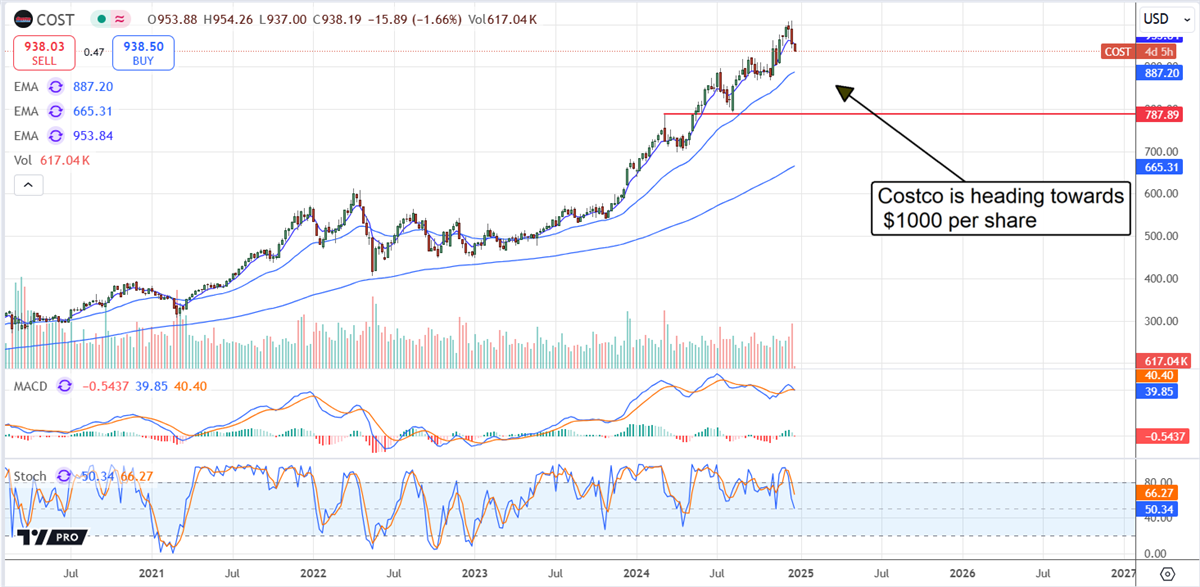
The most obvious trigger for a stock split is a significantly high share price. When a single share becomes prohibitively expensive for many retail investors, it can limit the pool of potential buyers. Costco’s share price has consistently been among the highest of widely held retail stocks, often trading in the hundreds of dollars. This makes it a prime candidate for a split purely based on its nominal share price. Companies like Apple, Tesla, Amazon, and Nvidia, which have all seen their shares trade at similar or even higher levels, have recently undergone splits for this very reason.
Peer Comparison and Market Trends
The actions of other large-cap companies also play a role. When peers in the tech or consumer discretionary sectors, particularly those with similar growth trajectories and high share prices, opt for splits, it can create an expectation or a sense of necessity for other companies. Seeing major players like Amazon and Google (Alphabet) split their shares in recent years might prompt Costco’s board to re-evaluate their stance on maintaining a high per-share price, especially if they aim to broaden their appeal to individual investors who might shy away from a $700+ stock.
Board Philosophy and Corporate Strategy
Ultimately, the decision comes down to the board’s philosophy and overall corporate strategy. Some boards prefer to maintain a high share price, believing it attracts a more “serious” or institutional investor base. Others prioritize broader accessibility and liquidity, seeing it as beneficial for long-term shareholder engagement. There is no universal rule, and each company’s leadership weighs the pros and cons based on their unique objectives. Costco has a history of splits, suggesting a historical inclination towards managing share price accessibility, which could hint at future actions.
Financial Health and Future Outlook
A company’s financial health and future growth prospects also underpin any decision to split. A split is often seen as an affirmation of confidence in continued strong performance. Costco’s consistent revenue growth, strong free cash flow generation, and high member retention rates indicate robust financial health. If the board projects continued strong earnings and revenue, a split might be viewed as a way to allow more investors to participate in that anticipated future growth without feeling priced out.
Implications for Investors: What a Split Means
For existing shareholders, a stock split is largely a non-event in terms of their overall investment value. However, it does carry certain implications, both practical and psychological.
No Change in Fundamental Value
It is crucial to understand that a stock split does not change the fundamental value of the company or an investor’s total holding. If an investor owns 10 shares at $800 each (total value $8,000) and the stock splits 2-for-1, they will then own 20 shares at $400 each, still totaling $8,000. The company’s market capitalization remains the same, and the investor’s percentage ownership of the company is also unchanged. Earnings per share (EPS) will be proportionately reduced, but the price-to-earnings (P/E) ratio will remain constant.
Increased Liquidity and Market Perception
The main tangible benefit for investors post-split is often increased liquidity. With more shares available at a lower price, trading volume can increase. This means it might be easier to buy or sell shares, particularly for large blocks, without significantly impacting the market price. Psychologically, a lower share price can make the stock appear more attractive and “affordable” to new investors, potentially stimulating buying interest and contributing to short-term price appreciation, although this is not guaranteed and often temporary.
Impact on Options and DRIPs
For investors involved in options trading, a stock split typically results in adjustments to option contracts. The number of shares per contract and the strike prices are altered to reflect the split ratio, ensuring options traders are not disadvantaged. For those participating in Dividend Reinvestment Plans (DRIPs), a lower share price means that dividend payouts can purchase more full shares or fractions of shares, potentially accelerating compounding if the plan allows for fractional share purchases.
The Waiting Game: Predicting the Next Move
Pinpointing the exact timing of Costco’s next stock split is purely speculative. Unlike dividend announcements or earnings reports, stock splits are not typically on a predictable calendar. They are strategic decisions made by the board when they deem it appropriate.
Current Conditions Pointing Towards a Split
Given Costco’s consistently high share price, its continued strong financial performance, and the trend of other major companies splitting their stock, the conditions certainly seem ripe for another split. The company’s last split was over two decades ago, and the stock price has appreciated enormously since then. The current share price levels are arguably well within the range that has historically prompted other companies to split their stock.
What to Watch For
Investors interested in a potential split should monitor several indicators:
- Continued Share Price Appreciation: A sustained high and rising share price makes a split more likely.
- Board Commentary: While rare, occasional hints or discussions from company leadership regarding capital allocation strategies or shareholder accessibility could be interpreted.
- Peer Actions: If other large, high-value consumer retail or discretionary stocks undertake splits, it might increase the pressure or incentive for Costco to do the same.
Ultimately, investors should remember that a stock split is a cosmetic change that does not alter the underlying investment thesis for Costco. Its value as an investment stems from its robust business model, strong brand loyalty, consistent growth, and effective management. While a split could enhance liquidity and broaden its appeal, it should not be the primary driver for an investment decision. The best approach for investors is to focus on Costco’s long-term fundamentals and enjoy the benefits of its ongoing success, regardless of the nominal share price.
aViewFromTheCave is a participant in the Amazon Services LLC Associates Program, an affiliate advertising program designed to provide a means for sites to earn advertising fees by advertising and linking to Amazon.com. Amazon, the Amazon logo, AmazonSupply, and the AmazonSupply logo are trademarks of Amazon.com, Inc. or its affiliates. As an Amazon Associate we earn affiliate commissions from qualifying purchases.