
Tesla, Inc. has revolutionized the automotive and energy industries with its pioneering approach to electric vehicles (EVs), battery storage, and artificial intelligence. The question “When were Tesla’s made?” delves into the company’s fascinating technological genesis, tracing its evolution from an ambitious startup to a global tech powerhouse. This article explores the timeline of Tesla’s creation, product development, and technological milestones, exclusively through the lens of innovation and engineering.
The Genesis of an Electric Revolution: Tesla’s Founding and Early Vision
The story of Tesla’s vehicles begins before any car was physically manufactured, rooted in a bold vision to accelerate the world’s transition to sustainable energy. This vision required not just an electric car, but a technologically superior product that could outcompete traditional gasoline vehicles.

Founding and Ideological Bedrock (2003-2004)
Tesla Motors was officially incorporated in July 2003 by Martin Eberhard and Marc Tarpenning. Their primary motivation was to prove that electric cars could be better, quicker, and more fun to drive than gasoline cars, rather than the anemic golf carts often associated with early EVs. They envisioned a high-performance sports car that would leverage cutting-edge battery technology, then primarily used in laptops.
Elon Musk joined Tesla in February 2004 as the largest investor and became chairman of the board. He brought a crucial strategic vision: to build a high-performance, expensive sports car first (the Roadster), use the profits to fund a more affordable luxury sedan (the Model S), and then use those profits to fund a truly mass-market, affordable vehicle. This “secret master plan,” as Musk later called it, was fundamentally a technological roadmap, progressively bringing advanced EV technology to wider audiences. The early team’s focus was squarely on engineering a viable electric powertrain, battery management systems, and a novel vehicle architecture from the ground up.
Overcoming Early Technological Hurdles
The initial phase was fraught with significant technological challenges. Integrating thousands of small, commodity lithium-ion battery cells into a safe, reliable, and high-performance automotive battery pack was unprecedented. Engineers had to develop sophisticated battery management systems (BMS) to monitor individual cells, manage temperature, prevent thermal runaway, and optimize power delivery and longevity. The development of a robust electric motor and power electronics capable of delivering sports car performance while maintaining efficiency was another critical area of focus. These foundational technological developments laid the groundwork for all future Tesla vehicles.
Paving the Way: The Roadster and Model S Innovations
Tesla’s first two production vehicles were not merely cars; they were statements of technological intent, demonstrating the viability and superiority of electric propulsion when executed with advanced engineering.
The Roadster’s Bold Statement (2008-2012)
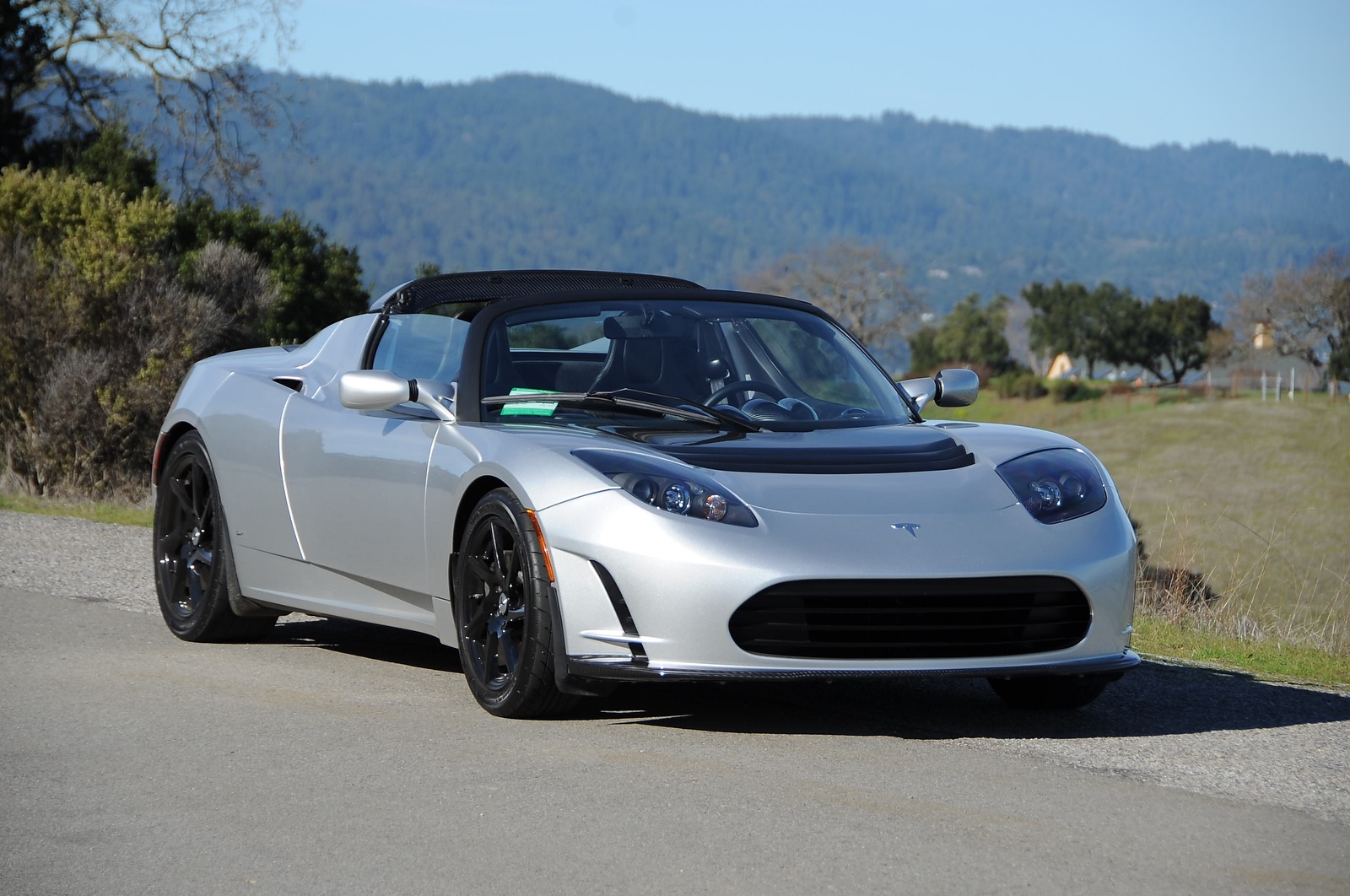
The Tesla Roadster, first delivered to customers in 2008, marked a pivotal moment in automotive history. It was the world’s first production electric vehicle to use lithium-ion battery cells and the first to travel more than 200 miles on a single charge. Built on the chassis of a Lotus Elise, the Roadster was a testbed for Tesla’s nascent powertrain technology.
-
Battery Technology: The Roadster’s 53 kWh battery pack consisted of 6,831 individual lithium-ion cells, showcasing Tesla’s innovative approach to energy storage. The development of its liquid-cooled battery pack and sophisticated BMS was a monumental engineering feat, directly addressing concerns about range anxiety and battery degradation.
-
Electric Powertrain: Tesla engineered its own power electronics module (PEM) and a two-pole AC induction motor, capable of delivering instant torque and impressive acceleration (0-60 mph in under 4 seconds for later versions). This performance shattered preconceived notions about electric cars being slow or impractical.
-
Software Integration: While not as prominent as in later models, the Roadster featured early iterations of software-controlled vehicle diagnostics and power management, hinting at the deep software integration that would become a Tesla hallmark.
The Roadster, though limited in production, was instrumental in proving that electric vehicles could be exciting, high-performance, and technologically advanced, attracting early adopters and crucial investor confidence.
The Model S: A Game-Changer in Design and Software (2012 onwards)
The Model S, introduced in 2012, was Tesla’s first ground-up vehicle design and truly cemented its position as a disruptive technology company. It moved beyond merely electrifying a existing platform to reimagining the entire car experience.
-
Integrated Platform: The Model S was designed from inception as an EV, allowing for a novel “skateboard” architecture where the battery pack was integrated into the floor. This design offered a low center of gravity for superior handling, maximum interior space, and enhanced safety, setting a new standard for EV design.
-
Software-Defined Vehicle: Perhaps the most revolutionary aspect of the Model S was its deep integration of software. A massive 17-inch touchscreen controlled most vehicle functions, replacing an array of physical buttons. More importantly, the Model S introduced Over-The-Air (OTA) software updates, a concept borrowed from smartphones but entirely new to the automotive industry. These updates allowed Tesla to add new features, improve performance, and fix bugs remotely, constantly improving the vehicle’s technology post-purchase. This capability transformed the car from a static piece of hardware into an evolving technological platform.
-
Powertrain Refinements: The Model S saw significant advancements in motor efficiency and battery energy density. Tesla moved towards larger battery packs (up to 100 kWh) and introduced dual-motor All-Wheel Drive (AWD) variants, offering unprecedented performance and range for a production EV.
-
Autopilot Hardware Introduction: By late 2014, Tesla began equipping all Model S (and soon Model X) vehicles with hardware designed for autonomous driving – cameras, radar, and ultrasonic sensors. This proactive integration of advanced sensor technology underscored Tesla’s commitment to developing sophisticated AI for driver assistance and eventually full self-driving capabilities.
Accelerating Towards Autonomy: The Era of Mass Market EVs and AI
With the Model S establishing Tesla’s technological credibility, the company turned its attention to bringing its innovations to a much broader audience, simultaneously pushing the boundaries of autonomous driving.
Mass Market Adoption: Model 3 and Model Y (2017 onwards)
The Model 3, unveiled in 2016 and entering production in 2017, was designed to be Tesla’s mass-market offering, bringing advanced EV technology to a more accessible price point. The Model Y, a compact SUV based on the Model 3 platform, followed in 2020. These vehicles required unprecedented levels of manufacturing innovation and technological scaling.
-
Manufacturing Innovation: To achieve mass production at lower costs, Tesla heavily invested in advanced manufacturing techniques, including large casting machines (“Giga Press”) to simplify body construction, and highly automated production lines. The company’s efforts in optimizing battery cell production and pack assembly (e.g., structural battery packs with 4680 cells) are continuous technological pursuits aimed at reducing cost and increasing energy density.
-
Simplified Interior Design: The Model 3 pushed the boundaries of minimalist interior design, consolidating nearly all controls onto a central touchscreen. This design choice was driven by a philosophy of a “software-defined car,” where physical buttons are redundant, and features are controlled through an intuitive interface.
-
Heat Pump Technology: The Model Y notably introduced an advanced heat pump system across its lineup, significantly improving energy efficiency for cabin heating and cooling, especially in colder climates, and thus extending range. This was a critical technological advancement for real-world EV performance.
The Drive Towards Full Self-Driving (FSD)
Simultaneously with mass-market production, Tesla aggressively pursued its vision for autonomous driving, centered around a unique, camera-centric approach.
-
Hardware and Software Stack: From 2016 onwards, Tesla iterated on its “Autopilot” hardware, progressing from HW1 to HW4, each generation featuring more powerful custom-designed processors (like the FSD Computer) and an expanded array of cameras (up to 12). Tesla’s approach is distinct for its reliance primarily on computer vision and neural networks, eschewing LiDAR sensors common in other autonomous driving efforts.
-
Neural Network Training: Tesla leverages a vast fleet of customer vehicles to collect real-world driving data, which is then used to train its neural networks. This “data engine” approach, combined with supercomputing power (like Dojo), allows for rapid iteration and improvement of its FSD software. The development of advanced AI algorithms for perception, planning, and control is at the core of Tesla’s autonomous driving technology.
-
FSD Beta and Future Iterations: The ongoing “Full Self-Driving (Beta)” program allows select customers to test increasingly advanced autonomous capabilities, demonstrating Tesla’s commitment to continuous software development and over-the-air updates for its autonomous features. The technological ambition here is to move from advanced driver assistance to true Level 4/5 autonomy.
Beyond Vehicles: Tesla’s Broader Technological Ecosystem
Tesla’s technological innovation extends far beyond electric vehicles, encompassing a comprehensive ecosystem aimed at sustainable energy and advanced AI.
Energy Storage Solutions (Powerwall, Megapack)
Recognizing that sustainable energy requires robust storage solutions, Tesla developed advanced battery systems for homes (Powerwall) and utilities (Megapack). These products leverage the same core battery technology and thermal management principles perfected in their vehicles, scaled for stationary applications. The Powerwall, introduced in 2015, allows homeowners to store solar energy, manage peak demand, and provide backup power. The Megapack, designed for utility-scale projects, enables grid stabilization and large-scale renewable energy integration, showcasing Tesla’s commitment to a holistic energy transition.
Solar Technology Integration (Solar Roof)
Tesla acquired SolarCity in 2016, expanding its technological portfolio to include solar energy generation. The Solar Roof, introduced in 2016, is a notable innovation, integrating solar cells directly into aesthetically pleasing roof tiles. This technology combines durable roofing materials with high-efficiency photovoltaic cells, offering a seamless and integrated solar solution for residential customers, further blurring the lines between energy generation and consumption.
Advancements in AI and Robotics (Dojo, Optimus)
Tesla’s pursuit of advanced AI for autonomous driving naturally extends into broader AI and robotics research.
-
Dojo Supercomputer: To accelerate the training of its massive neural networks for FSD, Tesla developed its own custom supercomputer called Dojo. This high-performance computing platform is designed specifically for AI machine learning workloads, allowing for faster and more efficient processing of vast amounts of video data from its fleet. Dojo represents a significant technological investment in AI infrastructure.
-
Optimus Humanoid Robot: Unveiled in 2021, the Optimus humanoid robot is a long-term project demonstrating Tesla’s ambition in general-purpose AI and robotics. The robot aims to perform repetitive and dangerous tasks, leveraging the same AI and neural network expertise developed for its vehicles. This project underscores Tesla’s vision of applying its advanced AI to solve real-world problems beyond driving.

The Future of Tesla’s Technological Frontier
From its initial vision of a high-performance EV to its current sprawling ecosystem of vehicles, energy products, and advanced AI, Tesla has consistently pushed the boundaries of technological innovation. The question “When were Tesla’s made?” isn’t just about a point in time, but a continuous journey of creation and refinement. Each product, from the Roadster to the Cybertruck, and each development, from battery chemistry to FSD software, represents a milestone in engineering ingenuity.
As Tesla continues to develop new vehicle platforms, refine its autonomous driving technology, and expand its energy and robotics initiatives, its story remains fundamentally one of technological advancement. The company’s commitment to vertically integrated design, software-first development, and aggressive iteration positions it at the forefront of several rapidly evolving tech sectors, promising further disruptive innovations in the years to come. The “making” of Tesla is an ongoing process, continually redefining what is possible through relentless technological pursuit.
aViewFromTheCave is a participant in the Amazon Services LLC Associates Program, an affiliate advertising program designed to provide a means for sites to earn advertising fees by advertising and linking to Amazon.com. Amazon, the Amazon logo, AmazonSupply, and the AmazonSupply logo are trademarks of Amazon.com, Inc. or its affiliates. As an Amazon Associate we earn affiliate commissions from qualifying purchases.