
Wall Street. The name alone conjures images of towering skyscrapers, bustling trading floors, and the relentless pulse of global finance. It’s a place synonymous with ambition, wealth, innovation, and, at times, spectacular crises. But before it became the legendary district it is today, a powerful symbol of American capitalism and a nerve center of the world economy, Wall Street was merely a street, a simple boundary in a nascent colonial settlement. Understanding “when Wall Street was created” is not just about pinpointing a date, but about charting the organic evolution of a physical space into a powerful, abstract concept that has shaped nations and fortunes.
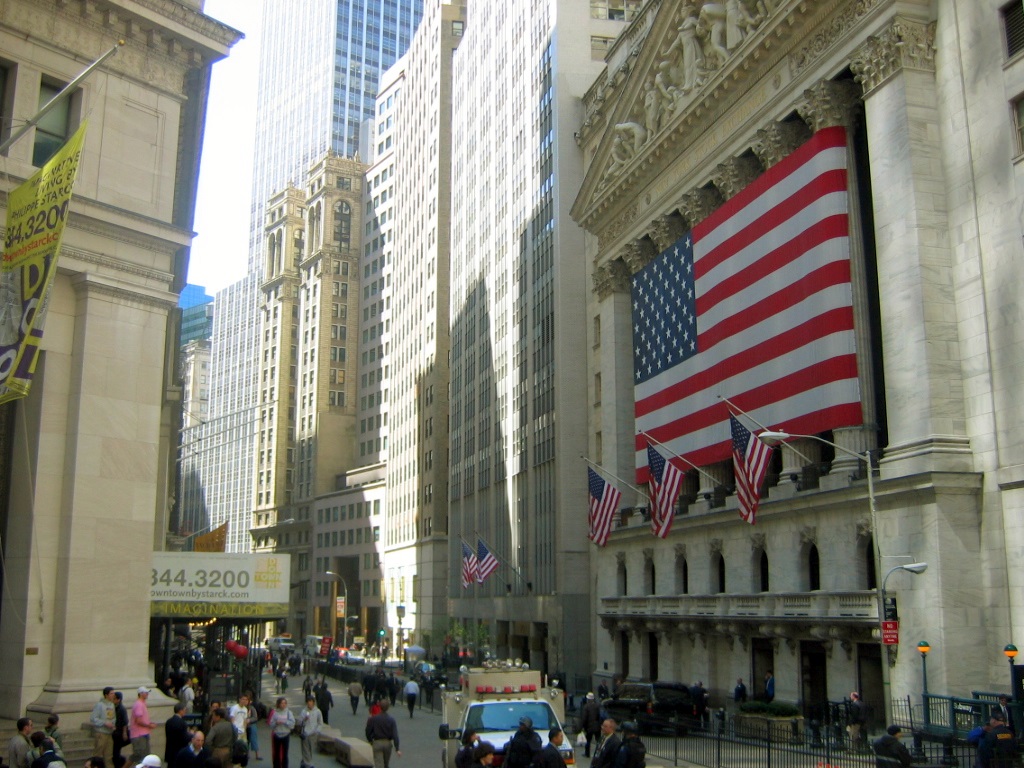
The journey of Wall Street from a defensive palisade to a global financial titan is a fascinating narrative, interwoven with the economic and political development of the United States itself. It’s a story of pragmatic beginnings, revolutionary agreements, rapid industrialization, global expansion, and an unceasing drive for capital formation and market efficiency. To truly grasp its creation, we must look beyond a single event and instead embrace the series of pivotal moments that collectively forged this iconic financial district.
The Humble Beginnings: A Defensive Wall and a Budding Marketplace (Early 17th Century – Late 18th Century)
The genesis of Wall Street is surprisingly grounded, far removed from the complex financial instruments it would later host. Its origins are rooted in the practical necessities of a colonial outpost, highlighting how even the most sophisticated financial centers often emerge from simple commercial interactions.
New Amsterdam’s Northern Boundary: From Defense to Commerce
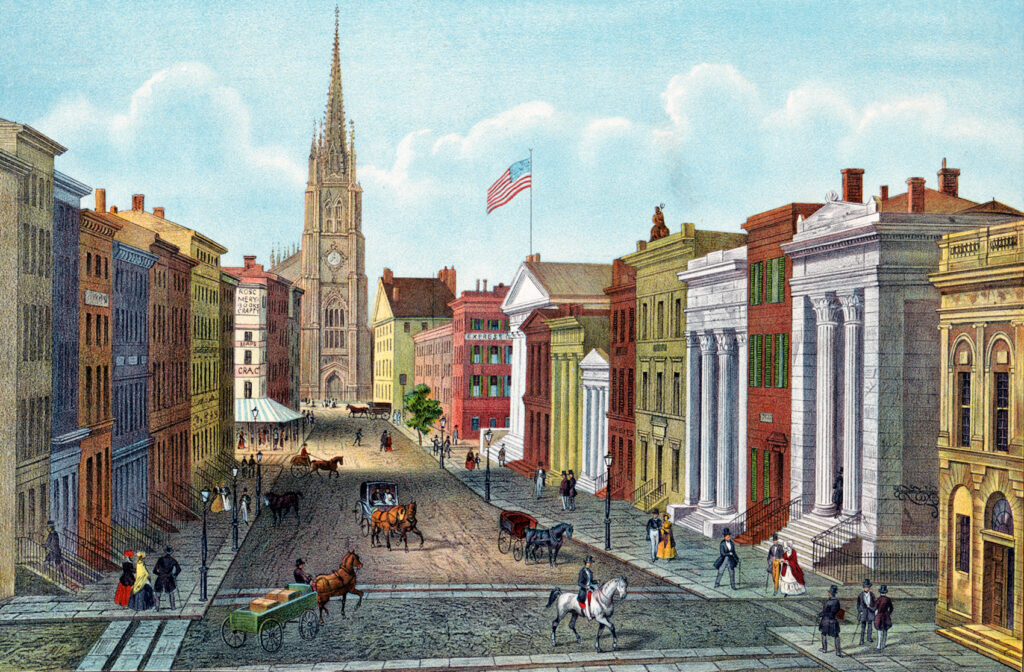
The story of Wall Street begins not with finance, but with defense. In the early 1600s, the Dutch settlement of New Amsterdam, located at the southern tip of Manhattan Island, was a small, vulnerable trading post. Faced with potential threats from Native Americans and rival English colonists, the Dutch West India Company decided to erect a protective barrier. In 1653, a palisade of logs, approximately 12 feet high, was built across the island’s northern boundary, stretching from river to river. This wooden wall, intended to protect the burgeoning settlement, gave the adjacent thoroughfare its enduring name: Wall Street.
While initially a defensive structure, the area around the wall quickly became a vibrant commercial hub. Farmers and traders gathered outside the palisade, creating an informal marketplace where goods, including enslaved people, were bought and sold. This early aggregation of buyers and sellers, facilitated by the strategic location of the wall, laid the groundwork for future organized commerce, though it was still a far cry from a modern financial market.
The Buttonwood Agreement: The Genesis of Organized Trading (1792)
The true “creation” of Wall Street as a financial center, in a meaningful sense, can be traced to a pivotal moment in American history: the signing of the Buttonwood Agreement on May 17, 1792. Following the American Revolution, the newly formed United States government faced the immense task of funding its operations and consolidating its war debt. This led to the issuance of government bonds and the establishment of the First Bank of the United States. A market for these securities quickly emerged in New York City, which was then the nation’s capital.
Trading initially occurred in a rather chaotic manner, often through auctioneers or informal dealings. However, a desire for greater order, transparency, and the elimination of “surburbanites” (non-brokers) led a group of 24 stockbrokers and merchants to gather under a buttonwood tree on Wall Street. Their agreement, simple yet revolutionary, established rules for trading, set fixed commissions, and, crucially, committed them to “preferring each other” in their transactions. This pact, which eventually led to the formation of the New York Stock & Exchange Board (later the NYSE), marked the birth of organized securities trading in America, directly on Wall Street.
Early Financial Instruments and Markets: Loans, Securities, and Commodities
Even before the formal Buttonwood Agreement, the economic landscape of New York facilitated early forms of financial activity. Merchants regularly extended credit, offered loans, and engaged in commodity trading. Land speculation was also rampant. The establishment of the Bank of New York in 1784 further solidified the city’s financial infrastructure, providing credit and handling transactions for businesses and individuals.
The Buttonwood Agreement formalized the trading of government bonds and bank stocks, which were among the earliest publicly traded securities. Over time, as canal companies, insurance companies, and early industrial enterprises emerged, their shares also found their way to Wall Street, traded among the brokers. These initial instruments, though rudimentary by today’s standards, represented capital, debt, and ownership, forming the fundamental building blocks upon which the complex modern financial system would be constructed.
From Street to Institution: The 19th Century Expansion and Formalization
The 19th century witnessed Wall Street transform from an informal gathering place for brokers into a powerful, institutionalized financial hub, driven by the nation’s westward expansion, industrial revolution, and increasing demand for capital.
The Birth of the New York Stock Exchange: Formalizing the Buttonwood Agreement
The Buttonwood Agreement laid the groundwork, but it took time and further organization to evolve into the formidable institution we know today. In 1817, the Buttonwood signatories formalized their association, creating the New York Stock & Exchange Board. This marked a significant step towards a more structured and regulated market. They rented rooms, established formal hours, and began to publish prices, bringing much-needed transparency and order to securities trading.
The NYSE, which moved to its iconic location at 11 Wall Street in 1865, became the central marketplace for American enterprise. As the nation grew, so did the number and variety of companies seeking public capital. The NYSE provided the mechanism for millions of Americans to invest in the nation’s future, and for businesses to fund their growth, thus cementing Wall Street’s role as the primary engine of capital formation.
Growth Fueled by Industrialization and Infrastructure: Railroads, Canals, and Capital
The 19th century was an era of explosive growth for the United States, characterized by ambitious infrastructure projects and rapid industrialization. The construction of canals (like the Erie Canal in 1825) and, more significantly, the vast expansion of the railroad network across the continent, required unprecedented amounts of capital. Wall Street was instrumental in raising this capital.
Investment bankers and brokers on Wall Street facilitated the sale of stocks and bonds for these massive undertakings, channeling savings from individuals and institutions into productive investments. Railroad bonds, in particular, became a dominant feature of the market. This symbiotic relationship between Wall Street and industrial development propelled both the district and the nation forward, solidifying Wall Street’s reputation as the financial nexus for American progress.
The Rise of Investment Banking: Facilitating Large-Scale Capital Formation
As companies grew larger and their capital needs became more complex, a new type of financial intermediary emerged: the investment bank. Firms like J.P. Morgan & Co., founded in 1871, began to play a crucial role, not just in brokering existing securities but in underwriting new issues. Investment banks would advise companies on how to raise capital, structure their offerings, and then often purchase the entire issue of stocks or bonds themselves, reselling them to investors.
This development transformed Wall Street from primarily a trading hub into a sophisticated ecosystem capable of structuring and distributing vast amounts of capital. Investment banks became powerful entities, not only funding corporations but also influencing their strategic direction, merging companies, and shaping entire industries. This period saw the emergence of the titans of finance whose names are still synonymous with Wall Street today.
Wall Street in the 20th Century: Booms, Busts, and Global Dominance
The 20th century witnessed Wall Street’s dramatic expansion onto the global stage, characterized by periods of unprecedented prosperity, devastating crashes, and the continuous evolution of financial regulation and innovation.
The Roaring Twenties and the Great Crash of 1929: Lessons in Regulation
The post-World War I era ushered in a period of spectacular economic growth in the United States, famously known as the Roaring Twenties. Wall Street was at the epicenter of this boom, with stock market prices soaring to unprecedented heights. Speculation became rampant, fueled by easy credit and a widespread belief in unending prosperity. Ordinary Americans, not just the wealthy, poured their savings into the market, often buying on margin (borrowing money to purchase stocks).
However, this unsustainable bubble burst dramatically with the stock market crash of October 1929. The “Black Tuesday” collapse triggered a cascade of events that led to the Great Depression, shaking the foundations of the American economy and challenging the very principles of unregulated capitalism. The crash forced a reckoning and led to significant government intervention and the creation of regulatory bodies like the Securities and Exchange Commission (SEC) in 1934, aimed at preventing future abuses and protecting investors. This period underscored the critical need for oversight in financial markets.
Post-War Prosperity and the Bretton Woods Era: America’s Financial Hegemony
Following the immense economic mobilization of World War II, the United States emerged as the undisputed economic superpower. The Bretton Woods Agreement of 1944 established a new international monetary system, pegging the world’s major currencies to the U.S. dollar, which in turn was convertible to gold. This arrangement effectively positioned the dollar as the world’s reserve currency and cemented Wall Street’s role as the global financial capital.
During the post-war decades, Wall Street facilitated an era of sustained economic growth. American corporations expanded internationally, funded by capital raised in New York. The financial markets became more sophisticated, handling larger volumes of transactions and a greater diversity of securities. Wall Street firms, backed by the strength of the U.S. economy and the stability of the dollar, became increasingly influential on the global stage.
Deregulation and Innovation: The Rise of Modern Financial Engineering
The latter half of the 20th century saw a significant shift towards deregulation in financial markets, particularly in the 1980s and 1990s. This period unleashed a wave of innovation, leading to the creation of complex new financial instruments such as derivatives, mortgage-backed securities, and collateralized debt obligations. Technology also began to play an increasingly central role, with computers transforming trading from manual outcry to electronic platforms.
While fostering efficiency and new avenues for investment, this era of rapid innovation and reduced oversight also sowed the seeds for future crises. The ability to securitize and trade virtually any asset, combined with sophisticated algorithms and global interconnectedness, created a highly dynamic but also potentially volatile financial landscape.
Wall Street Today: A Global Nexus of Capital and Influence (21st Century and Beyond)
As the 21st century unfolds, Wall Street continues to evolve at a breathtaking pace, grappling with new technologies, complex global challenges, and an ever-present debate about its role and responsibilities.
Navigating the Digital Age: High-Frequency Trading and FinTech
The digital revolution has profoundly reshaped Wall Street. Traditional trading floors, once bustling with human brokers, have largely been replaced by sophisticated computer networks. High-frequency trading (HFT) firms, using powerful algorithms and ultra-low latency connections, execute millions of trades in fractions of a second, dominating market volumes. The rise of FinTech (financial technology) has brought innovations ranging from robo-advisors and blockchain-based systems to new payment platforms, challenging traditional banking models and expanding financial access.
This digital transformation has made markets more efficient and globally interconnected but has also introduced new complexities and risks, including systemic vulnerabilities and the potential for “flash crashes.” Wall Street firms are continuously investing in technology to stay competitive, integrating AI, machine learning, and big data analytics into every aspect of their operations, from risk management to personalized financial advice.
Regulatory Challenges and Ethical Considerations: Crises and Reforms
The 21st century has also brought significant challenges and periods of introspection for Wall Street. The Dot-com bubble burst in 2000, and more notably, the 2008 global financial crisis, exposed deep flaws in the financial system, particularly related to subprime mortgages, securitization practices, and the interconnectedness of major institutions. These crises led to widespread calls for stricter regulation and a renewed focus on ethical conduct.
The Dodd-Frank Wall Street Reform and Consumer Protection Act of 2010 was a direct response to the 2008 crisis, aiming to increase transparency, accountability, and consumer protection. Debates over regulation, capital requirements, and the “too big to fail” dilemma continue to shape the financial landscape, reflecting a constant tension between market freedom and systemic stability. Wall Street remains under intense scrutiny, grappling with its societal impact and the need to balance profit motives with broader economic well-being.

The Enduring Symbolism: Power, Wealth, and Economic Impact
Despite its transformations, Wall Street endures as a powerful symbol. It represents the pinnacle of American economic might, a place where vast wealth is created, capital is deployed on a monumental scale, and global economic decisions are influenced. It is a magnet for talent and ambition, drawing individuals from around the world to participate in the dynamic and high-stakes world of finance.
However, Wall Street also remains a lightning rod for criticism, often symbolizing inequality, corporate greed, and the perceived detachment of financial markets from the realities of everyday life. Its history is a testament to the powerful, often contradictory, forces at play in a capitalist society: the drive for innovation and progress alongside the risks of excess and collapse. Its economic impact, both positive and negative, is undeniable, making it an indispensable, albeit complex, part of the national and global conversation.
Conclusion:
The question “When was Wall Street created?” doesn’t have a single, simple answer. It wasn’t born on a specific day like a corporate entity; rather, it evolved through a series of crucial historical milestones. From the erection of a defensive palisade in New Amsterdam in the 17th century to the Buttonwood Agreement in 1792 that formalized securities trading, and through centuries of industrialization, technological advancement, and regulatory reform, Wall Street has continually reinvented itself. It is a living, breathing entity, a dynamic crucible where ambition meets capital, shaping not just the American economy but the global financial order. Its journey is a testament to the enduring human drive for commerce, innovation, and the fundamental role that well-organized markets play in channeling wealth to build the future.
aViewFromTheCave is a participant in the Amazon Services LLC Associates Program, an affiliate advertising program designed to provide a means for sites to earn advertising fees by advertising and linking to Amazon.com. Amazon, the Amazon logo, AmazonSupply, and the AmazonSupply logo are trademarks of Amazon.com, Inc. or its affiliates. As an Amazon Associate we earn affiliate commissions from qualifying purchases.